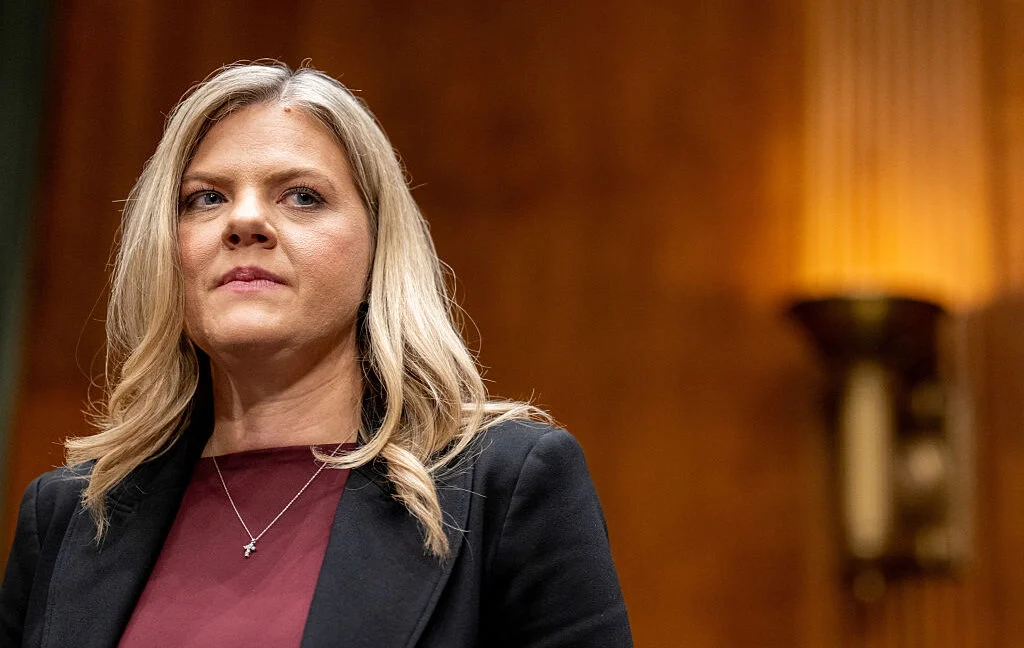
Washington — Capitol Hill became the epicenter of a high-stakes political clash as Senate committees pressed senior administration officials on a series of contentious public health controversies. Lawmakers focused heavily on a wave of scientifically disputed claims originating from the White House, the practical implications of proposed vaccine alterations, and the turbulent leadership vacuum at the Food and Drug Administration (FDA). The hearings brought to light deep tensions between the legislative branch and the executive branch regarding scientific integrity, political influence in public health agencies, and the transparency of regulatory decision-making processes.
At the center of the legislative interrogation was a recurring theme: the difficulty administration surrogates face when asked to publicly correct or contextualize factually incorrect assertions made by the president. Senators from both sides of the aisle—though led primarily by concerned Democrats—demanded direct answers regarding statements made concerning childhood vaccines, prenatal medication safety, and the commercial authorization of flavored e-cigarettes.
The Tylenol And Autism Controversy
The legislative confrontation intensified when Senator Maggie Hassan turned the questioning toward a widely debunked narrative frequently repeated by the executive branch: the false claim that taking acetaminophen, commonly known by the brand name Tylenol, during pregnancy is directly linked to the development of autism in children.
Major medical organizations, including the American College of Obstetricians and Gynecologists (ACOG) and the Society for Maternal-Fetal Medicine, have repeatedly emphasized that there is no established causal link between the standard use of acetaminophen during pregnancy and autism spectrum disorder. Despite the clarity of the scientific consensus, administration officials appearing before the committee struggled to plainly refute the president’s previous assertions.
When pressed directly by Senator Hassan with a binary question—asking whether the president was factually incorrect when propagating the claim—the witness demurred, refusing to offer a direct confirmation or denial. Instead, the official offered a guarded response, noting only that current medical science shows no evidence of a causal link between the common pain reliever and neurodevelopmental conditions.
This semantic dance drew sharp rebukes from the dais. "I wish it wasn’t so difficult for members of the administration to just plainly say that the president’s wrong," Senator Hassan stated during the proceedings. "And it’s really concerning to me that you are equivocating on it here." Observers noted that the exchange highlighted a broader dilemma for modern political appointees: balancing institutional loyalty to the chief executive against the professional obligation to uphold established scientific facts.
Scrutiny Over Proposed Vaccine Modifications
The hearings also explored reports surrounding potential modifications to childhood immunization schedules. Senator Lisa Blunt-Rochester of Delaware directed her inquiries toward proposals to alter combination vaccines—specifically the Measles, Mumps, and Rubella (MMR) inoculation—by splitting them into separate individual shots.
Reports preceding the hearing suggested that the witness herself may have floated the concept of dividing combination vaccines to the president as a potential policy option. Public health experts immediately cautioned that such an undertaking would not be a simple administrative tweak. To bring individually manufactured single-antigen vaccines to market in the United States would require massive financial investments, years of rigorous clinical trials, and comprehensive re-evaluations by federal regulators to prove safety, potency, and efficacy.
When Senator Blunt-Rochester asked whether these proposals constituted "good options" for the American healthcare system, the witness maintained that her official duty was merely to provide a range of policy choices to the president.
"You wouldn’t have provided bad options, right?" the senator pressed.
When the witness declined to validate the quality of the options provided, the exchange grew increasingly tense. "This is just a simple question," Senator Blunt-Rochester interjected, visibly frustrated. "This, I thought, was the easy question." Further inquiries into whether the witness had reviewed quantitative data regarding vaccine component sizing or manufacturing logistics similarly went unanswered, leaving lawmakers to question the empirical foundation of the administration’s internal policy debates.
The FDA Leadership Crisis And The Flavored Vape Policy
Beyond vaccine and medication disputes, the hearings cast a harsh spotlight on the Food and Drug Administration, an agency currently operating without a confirmed permanent commissioner. The leadership vacuum dates back to May, when former FDA Commissioner Marty Makary abruptly resigned from his post. Reports surrounding his departure indicated that he stepped down after fiercely resisting intense pressure from the executive branch to approve the commercial sale of flavored electronic nicotine delivery systems—commonly known as flavored vapes.
The FDA’s unexpected reversal in early May—issuing regulatory guidance that paved the way for the commercial distribution of these flavored products—drew swift, bipartisan condemnation from lawmakers. Public health advocates have long argued that flavored e-cigarettes are deliberately marketed to minors, fueling a youth nicotine addiction epidemic across American middle and high schools.
During the committee session, Senator Chris Murphy of Connecticut laid out a detailed chronological timeline regarding the events leading up to the policy shift, connecting a major corporate political donation directly to the sudden regulatory change at the agency.
According to Senator Murphy’s presented timeline, the sequence of events unfolded rapidly over a matter of days:
- April 30 (Thursday afternoon): Reynolds American, one of the largest domestic tobacco conglomerates, allegedly made an $8 million financial contribution.
- May 2 (Saturday): Representatives from the tobacco firm reportedly attended a weekend lunch meeting with the president, during which they advocated for a substantial rollback of restrictive FDA rules governing flavored tobacco and vape products.
- Subsequent Action: Following the meeting, communications were allegedly made to leadership within the Department of Health and Human Services (HHS) and the FDA.
- May 5 (Tuesday, three days after the meeting): New, highly consequential regulatory guidance was officially issued by federal health authorities, effectively greenlighting the sale of flavored vape products.
When Senator Murphy asked the witness whether she perceived a direct causal connection between the multimillion-dollar corporate donation and the rapid implementation of the new policy—and whether such transactional mechanics aligned with how a federal regulatory agency ought to function—the official firmly rejected the premise of the inquiry.
"I reject the framing of that question," the witness replied, reiterating that the administration remains entirely dedicated to achieving the best possible health outcomes for the citizenry.
Broader Implications For Public Health Governance
The explosive committee hearings underscore a critical juncture for federal health governance in the United States. Analysts point out that public trust in agencies such as the FDA, the Centers for Disease Control and Prevention (CDC), and the Department of Health and Human Services relies heavily on the perception of scientific independence and regulatory impartiality.
When political considerations appear to override empirical data—whether regarding the safety of over-the-counter medications, the integrity of childhood immunization programs, or the commercial regulation of addictive substances—institutional credibility suffers. Public health experts have consistently warned that eroding public confidence in regulatory bodies can lead to diminished vaccine uptake, the resurgence of preventable infectious diseases, and widespread confusion over medical best practices.
Furthermore, the ongoing vacancy at the helm of the FDA leaves the agency uniquely vulnerable during a period of intense public scrutiny. Without a Senate-confirmed commissioner to buffer career scientists from political pressure, critics argue that regulatory decisions risk being viewed through a cynical lens of political favoritism and corporate lobbying influence.
As the legislative sessions concluded, members of the Senate signaled that their oversight efforts are far from over. Lawmakers vowed to continue demanding transparency from executive branch health officials, threatening further legislative subpoenas, budgetary restrictions, and intensive investigations into how federal health policies are formulated and executed. The fundamental question hanging over Washington remains whether federal health agencies can successfully reclaim their role as objective arbiters of science in an increasingly polarized political landscape.