
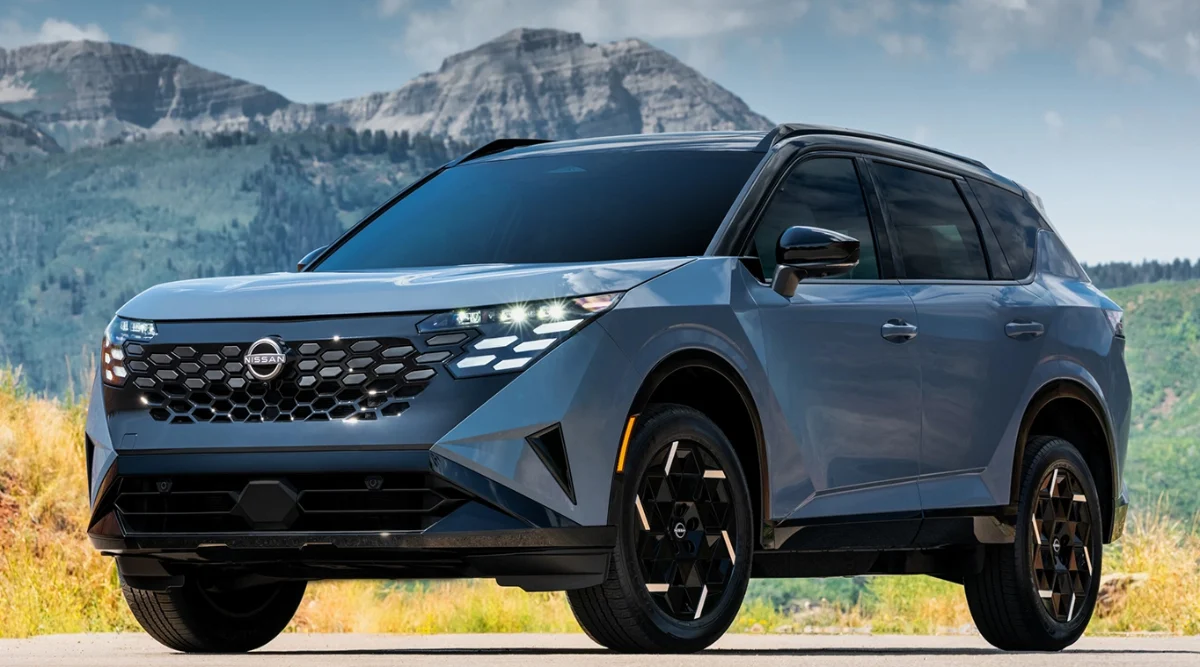
The introduction of the 2027 Nissan Rogue Hybrid marks a significant shift in Nissan’s North American powertrain strategy. By debuting its proprietary e-POWER technology in the United States, the automaker is attempting to bridge the gap between traditional internal combustion engine (ICE) vehicles and the rapidly expanding battery electric vehicle (BEV) segment. While the model adopts the familiar chassis and aesthetic of the popular Rogue SUV, the underlying architecture represents a departure from conventional hybrid systems, utilizing an electric-drive configuration that relies exclusively on a gasoline engine for electricity generation.
Understanding the e-POWER Architecture
Unlike parallel hybrid systems—such as those popularized by the Toyota Prius—where both an electric motor and an internal combustion engine provide mechanical torque to the wheels, the Nissan e-POWER system operates as a series hybrid. In the 2027 Rogue Hybrid, the 1.5-liter, three-cylinder turbocharged gasoline engine has no direct mechanical linkage to the drivetrain. Instead, its sole purpose is to function as a stationary generator. It burns fuel to power an onboard generator, which in turn feeds electricity into a 1.67 kWh battery pack or directly to the electric motors that drive the wheels.
This configuration eliminates the need for a traditional multi-gear transmission. Consequently, the vehicle delivers the characteristic linear acceleration and instant torque associated with electric vehicles. The powertrain features a dual-motor setup, with a front motor capable of 202 horsepower and 242 lb-ft of torque, and a rear motor providing 134 horsepower and 144 lb-ft of torque. Although the combined output is rated at 225 horsepower, the integration allows for precise, software-controlled torque vectoring.
Chronology of e-POWER Development
The deployment of the Rogue Hybrid is the culmination of a decade-long global rollout for Nissan. The e-POWER system was first introduced in Japan in 2016 with the Nissan Note e-POWER. Following its initial success, the technology was expanded across various international markets, including Southeast Asia and Europe.
By late 2026, Nissan began signaling a pivot in its North American strategy. Facing fluctuating consumer demand for full BEVs and a competitive landscape dominated by entrenched hybrid leaders, the company announced it would prioritize the production of high-efficiency SUVs and trucks over pure battery-electric models for the U.S. market. The 2027 Rogue Hybrid, arriving in dealerships this fall, serves as the cornerstone of this transition, aimed at consumers who desire the driving dynamics of an EV without the reliance on public charging infrastructure.
Performance and Efficiency Metrics
In terms of fuel economy, the 2027 Rogue Hybrid is projected to achieve 40 mpg in city driving, 36 mpg on the highway, and 38 mpg combined, according to internal testing. While these figures are competitive within the compact SUV segment, they highlight the inherent limitations of a small-battery, fuel-reliant system compared to true electric vehicles.
A standard BEV with an EPA-rated efficiency of 120 MPGe would be significantly more energy-efficient than the Rogue Hybrid. Critics point to the relatively small 1.67 kWh battery as a primary constraint. Compared to the Chevrolet Volt—a plug-in hybrid electric vehicle (PHEV) that featured a 17 kWh battery capable of 50 miles of all-electric range—the Rogue Hybrid is fundamentally different. It cannot be plugged into a wall outlet, meaning its efficiency is entirely dependent on the thermal efficiency of its gasoline engine, which Nissan claims is 42 percent.

Corporate Perspectives and Strategic Intent
Ponz Pandikuthira, the chief product and planning officer for Nissan Americas, has characterized the vehicle as a direct response to consumer feedback. According to official statements, the company identified a market segment seeking the packaging and utility of a traditional SUV paired with a more dynamic, quiet, and efficient driving experience.
"The all-new Rogue Hybrid is exactly what customers have been asking for," Pandikuthira stated in the vehicle’s press release. "By listening closely to customers and designing around their needs, we’ve created a hybrid SUV that delivers an agile and spirited driving experience while adding the benefits of a hybrid powertrain."
Despite this positive framing, industry analysts suggest that Nissan is navigating a complex landscape. The nomenclature used to describe hybrid systems often leads to consumer confusion. While Nissan refers to the Rogue as an "electric drive" vehicle, industry standards maintain that because the vehicle derives 100 percent of its propulsion energy from gasoline, it is fundamentally a combustion-powered machine. This mirrors previous industry marketing efforts—most notably by Toyota—to frame hybrids as "self-charging electric cars," a term that has drawn scrutiny from consumer advocacy groups for potentially misrepresenting the role of the battery and the source of energy.
Market Positioning and Pricing
The 2027 Rogue Hybrid enters a crowded segment, competing against established hybrid offerings from Toyota, Honda, and Hyundai. Its pricing strategy suggests an intent to capture a broad demographic, with the base SV trim starting at $37,065. At the upper end, the Platinum trim is priced at $45,065, reflecting the integration of advanced driver-assistance systems, including the "Smooth Stop" braking modulation feature. This system is designed to minimize the "head-toss" sensation often experienced in vehicles with aggressive regenerative braking, creating a smoother transition to a full stop.

The phased rollout begins this fall with the high-end SR Tech package, followed by the remainder of the trim levels in early 2027. This staggered approach allows Nissan to gauge market reception and manage inventory levels during the initial launch phase.
Broader Implications for the Automotive Industry
The arrival of the Rogue Hybrid in the U.S. underscores a broader trend among major automotive manufacturers. As the industry faces the dual pressures of stringent emissions regulations and a leveling off of early-adopter EV demand, many companies are doubling down on hybrid technology.
For Nissan, the Rogue Hybrid is a tactical play to maintain market share in the SUV segment while it continues to develop its long-term battery-electric portfolio. However, the move carries risks. By focusing on non-plug-in hybrid technology, the company is committing capital to an internal combustion engine architecture at a time when many competitors are moving toward longer-range PHEVs or full BEVs.
Ultimately, the success of the 2027 Rogue Hybrid will depend on whether consumers perceive the "EV-like" driving experience—characterized by instant torque and regenerative braking—as a sufficient value proposition to offset the ongoing cost and environmental impact of gasoline consumption. As the automotive market continues to evolve, the Rogue Hybrid stands as a testament to the industry’s current uncertainty, reflecting a transitionary period where the distinction between electric and fuel-based propulsion remains a subject of intense debate among manufacturers, regulators, and consumers alike.









Leave a Reply