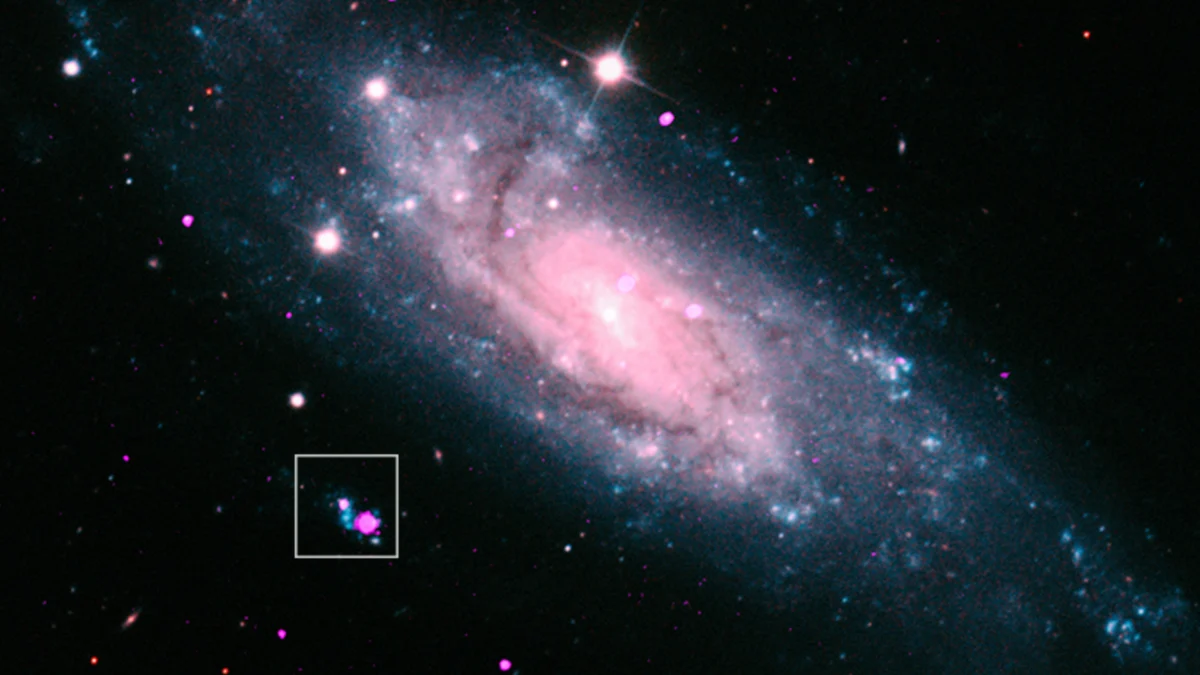
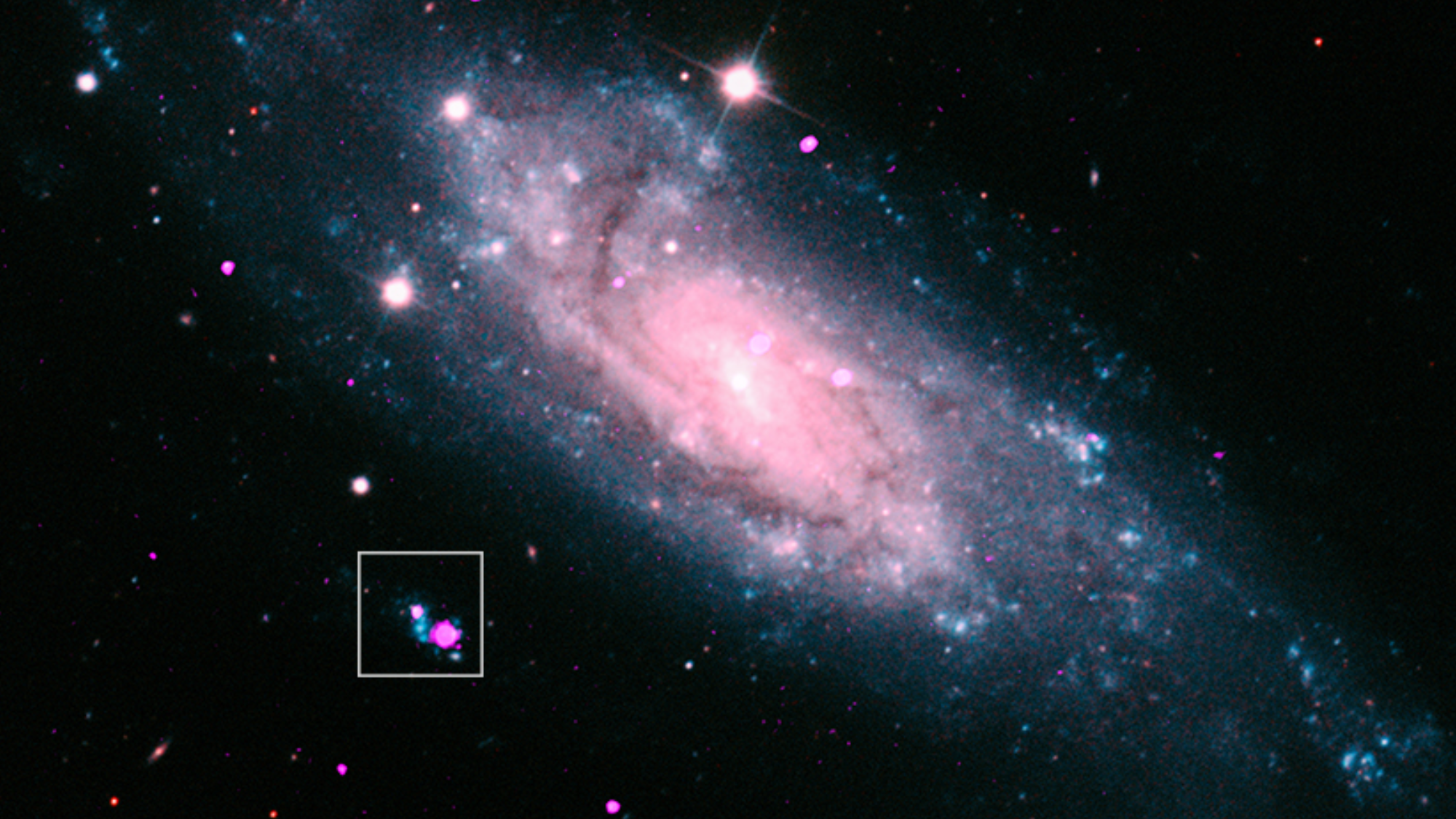
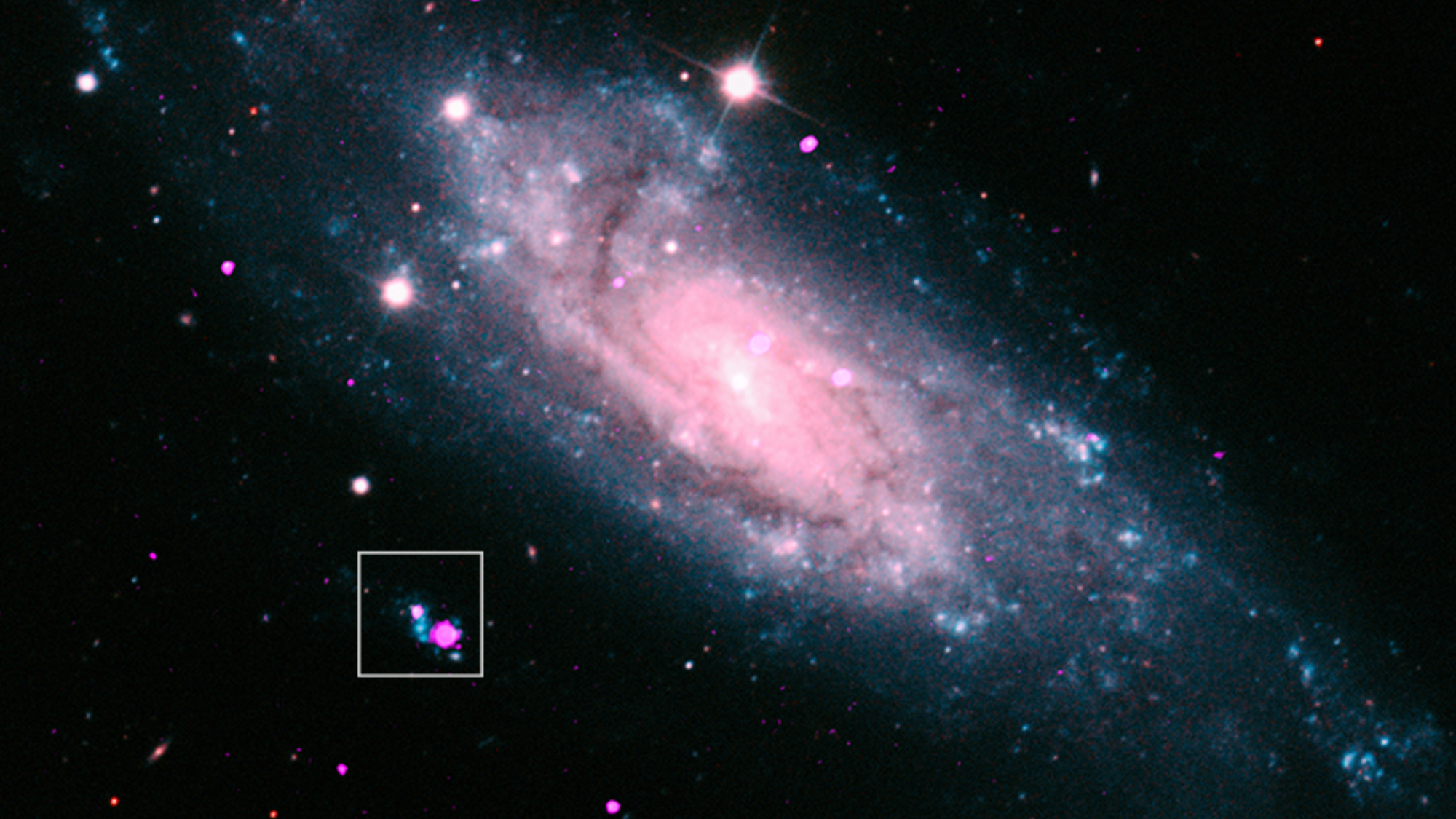
For over a decade, astronomers have been captivated by a celestial phenomenon in the spiral galaxy NGC 4559, located 25 million light-years away in the constellation Coma Berenices. Since January 2012, a particular object—designated AT 2016blu—has repeatedly exhibited the telltale signatures of a supernova, a cataclysmic stellar explosion that typically marks the terminal phase of a massive star’s life. However, unlike a true supernova, which leaves behind only a remnant and a rapidly fading light curve, this object has staged an encore performance 27 times. Recent observations from NASA’s Chandra X-ray Observatory have finally unmasked this "supernova imposter," revealing that it is not a dying star, but rather a victim of a parasitic relationship with a compact, high-gravity companion.
A Chronology of Cosmic Deception
The mystery began in 2012 when researchers identified a sudden brightening on the outskirts of NGC 4559. Given the distance and the luminosity of the event, it was cataloged as a supernova. Standard models of stellar evolution dictate that once a massive star exhausts its nuclear fuel, core collapse is inevitable. Yet, as weeks turned into months, the expected decay of the light curve did not signal the end of the object. Instead, the star persisted, defying the conventional timeline of stellar death.
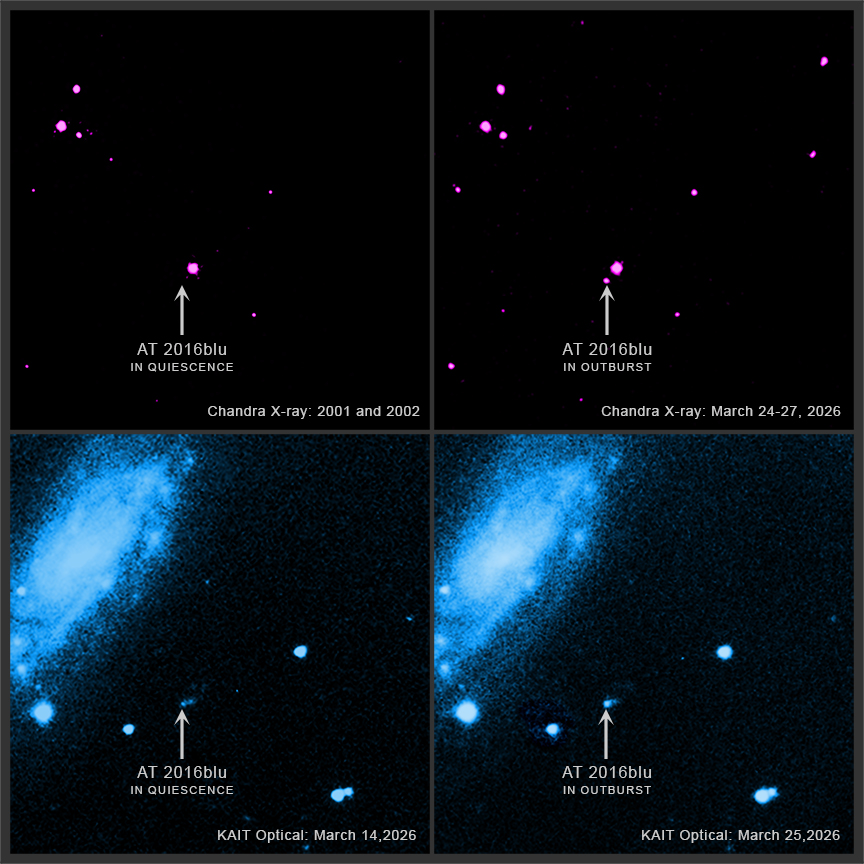
By 2016, it became clear that the event was recurring. The object demonstrated a rhythmic pattern of brightening and dimming, with a period of approximately 113 days. Astronomers were baffled; no known mechanism for a single, isolated star could account for 27 distinct outbursts over such a short geological timeframe. For 15 years, the scientific community watched as the star engaged in this periodic "crying wolf," oscillating in brightness with remarkable regularity. The enigma remained unresolved until researchers at the University of Virginia and their collaborators utilized the unique capabilities of the Chandra X-ray Observatory to catch the star in the act of its most recent outburst in March 2026.
The Physics of the Vampire Star
The identification of AT 2016blu as a Luminous Blue Variable (LBV) provided the first clue. LBVs are among the most massive and unstable stars in the universe. They are prone to violent mass-loss episodes where they shed outer layers of material into space. However, these natural outbursts do not typically repeat with such clockwork precision. The breakthrough came when the team managed to synchronize Chandra’s X-ray observations with a predicted outburst phase.
The data revealed a powerful, concentrated burst of X-rays, a signature that is absent in standard supernova events. This emission suggests the presence of an unseen, compact object—likely a neutron star or a stellar-mass black hole—orbiting the massive LBV. The two objects are locked in an elliptical orbit. As the compact object approaches its closest point to the LBV, its immense gravitational field begins to strip material from the larger star. This "stolen" matter forms an accretion disk around the compact companion. The material in this disk is accelerated to extreme speeds and reaches temperatures high enough to emit X-rays, which then ionize and heat the surrounding gas clouds previously ejected by the LBV. This secondary heating effect causes the gas to glow in visible light, creating the illusion of a brilliant supernova explosion.
Supporting Data and Quantitative Analysis
The scale of this energy transfer is immense. According to the study published in The Astrophysical Journal, the compact object consumes at least 440 billion trillion pounds of material per year. In astrophysical terms, this represents approximately 800 millionths of the Sun’s mass annually. While this may seem infinitesimal compared to the total mass of the host LBV—which is at least 33 times more massive than our Sun—the rate of accretion far exceeds the "Eddington limit."
The Eddington limit is the maximum luminosity a star or compact object can achieve when the outward force of radiation pressure balances the inward gravitational pull. By exceeding this limit, the system becomes inherently unstable, explaining the periodic, violent outbursts. The sheer energy involved in this accretion process is what allows the system to mimic the luminosity of a genuine supernova, effectively fooling telescopes for nearly two decades.
Perspectives from the Research Team
"For 15 years, astronomers have been watching this star get really bright and then dim again on a regular basis," stated Mojgan Aghakhanloo of the University of Virginia. The team’s efforts to capture the event were methodical, requiring the coordination of space-based assets to observe the system at the precise moment of its peak activity.
Nathan Smith, a co-author from the University of Arizona, provided further insight into the mechanism: "We suspected that the bright repeating flashes at optical wavelengths might actually be powered by periodic blasts of high-energy X-rays. The dense gas surrounding the system is heated by the X-rays and then glows in the optical." This confirmation bridges the gap between theoretical models of binary systems and the observed reality of "imposter" transients.
Implications for Ultra-Luminous X-ray Sources
The discovery of the nature of AT 2016blu has significant implications for the broader study of Ultra-Luminous X-ray (ULX) sources. ULXs are objects that emit X-rays at rates significantly higher than typical binary systems but lower than active galactic nuclei. Their nature has long been a point of contention in astrophysics, with debates centered on whether they represent intermediate-mass black holes or simply highly efficient accretion onto stellar-mass objects.
AT 2016blu acts as a potential "Rosetta stone" for this field. By confirming that a supernova imposter can be powered by a compact companion, researchers have a template to re-examine other mysterious transients in distant galaxies. However, the researchers are cautious. While SN 2010da is another known supernova imposter, it involves a companion that is a red supergiant, not a compact object. This suggests that the category of "supernova imposters" is heterogeneous, containing a variety of binary configurations that lead to similar observational outcomes.
Broader Scientific Context and Future Research
The study of AT 2016blu highlights the critical importance of multi-wavelength astronomy. Without the X-ray data provided by Chandra, the periodic brightening might have been incorrectly attributed to internal stellar processes rather than external gravitational interaction. This discovery also underscores the prevalence of binary systems in the evolution of massive stars. It is now understood that the majority of massive stars do not live their lives in isolation but are instead part of binary or multiple-star systems, which fundamentally alters their evolutionary trajectory.
Moving forward, the challenge for the astronomical community is to determine how many other "supernovae" in the catalogs are actually these vampiric binary systems. As observational technology improves, particularly with the deployment of next-generation wide-field survey telescopes, the detection rate of such imposters is expected to rise. The case of AT 2016blu serves as a reminder that the universe often presents complex, multi-layered phenomena that defy simple categorization. By continuing to observe these systems at multiple wavelengths, scientists hope to map the life cycles of massive binary stars and better understand the extreme physics of accretion, radiation pressure, and the eventual transition of stars into compact remnants.
The research, detailed in The Astrophysical Journal, represents a significant step forward in stellar astrophysics. It not only provides a definitive answer to a 15-year-old mystery but also broadens the scientific understanding of how binary systems can mimic the most violent events in the cosmos, ultimately challenging our definitions of what constitutes a "true" supernova and what is merely a cosmic deception.