
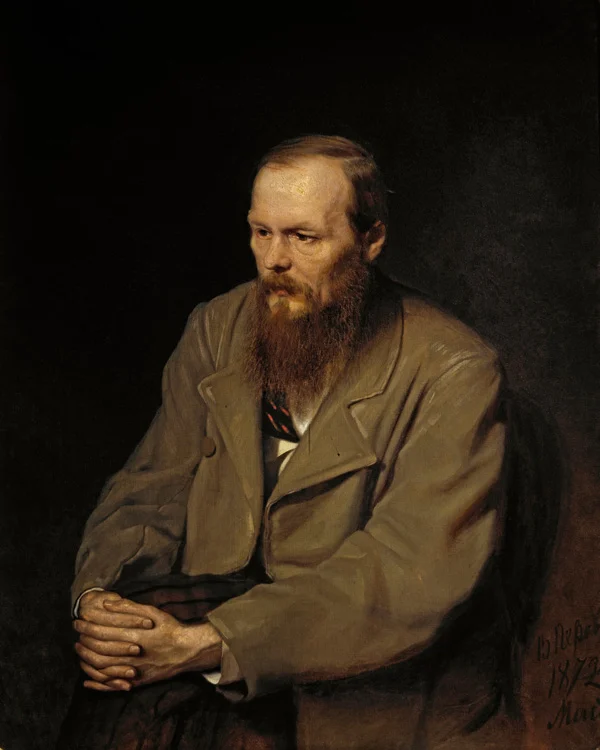
In the late 1870s, as the Russian Empire teetered on the brink of profound socio-political transformation, Fyodor Dostoevsky produced one of the most haunting and philosophically resonant pieces of his later career. Originally published in his expansive collection A Writer’s Diary in 1877 under the title The Dream of a Queer Fellow, the short story—now widely known as The Dream of a Ridiculous Man—serves as a distillation of the existential inquiries that defined the author’s life. While Dostoevsky is frequently cited for his sprawling, polyphonic novels like Crime and Punishment and The Brothers Karamazov, this shorter narrative provides a singular, concentrated lens into his views on suicide, nihilism, and the potential for moral redemption.
Historical and Biographical Context
To understand the gravity of this narrative, one must consider the historical climate of 19th-century Russia. The 1870s were characterized by a rising tide of radical nihilism among the intelligentsia, a movement that rejected traditional religious and moral authority in favor of a strictly materialist interpretation of reality. Dostoevsky, having survived a death sentence in his youth and years of hard labor in Siberia, spent his adult life in a rigorous intellectual tug-of-war with these ideologies.
The story mirrors themes found in his 1864 landmark work, Notes from the Underground, often cited as the first true existential novel. However, where the "Underground Man" remains trapped in a cycle of resentment and self-analysis, the protagonist of The Dream of a Ridiculous Man moves toward a cathartic, albeit surreal, resolution. The narrative serves as a bridge between the clinical dissection of despair and the author’s eventual embrace of a spiritual, universalist ethos.
Chronology of the Narrative
The plot unfolds with a stark, almost cinematic simplicity. The protagonist, a man who has long felt alienated by a society that views him as a "ridiculous" figure, wanders the desolate streets of St. Petersburg on a night he describes as the gloomiest in his memory. Having purchased a revolver two months prior, he has spent his time in a state of moral paralysis, vacillating between his desire for self-destruction and the persistent, irrational tug of human empathy.
The turning point occurs when a young girl, roughly eight years old and clearly in a state of crisis, approaches him for help. In his nihilistic stupor, he rebuffs her, an act that leaves him plagued by guilt. Upon returning to his squalid apartment—a room he shares with a drunken captain—he sinks into an armchair, the revolver resting before him. It is here that the intersection of logic and morality creates an existential crisis. He realizes that if he is to cease existing, all human concepts—shame, pity, and duty—should theoretically evaporate. Yet, he finds he cannot dismiss the girl’s suffering, suggesting that human consciousness contains a moral substrate that survives even when the individual attempts to negate their own existence.
Philosophical Implications of the Dream
The narrative shifts from the waking world to the dream state, a transition Dostoevsky uses to bypass the constraints of rationalism. In the dream, the narrator shoots himself in the heart, only to find that death does not lead to the "absolute zero" he anticipated. Instead, he experiences a series of transitions—burial, the physical sensation of water leaking into his grave, and eventually, a journey through space led by an unseen entity.
This sequence reflects Dostoevsky’s preoccupation with the "otherworld." The narrator is transported to an idyllic version of Earth, populated by people who exist in a state of prelapsarian innocence. They possess a collective wisdom and a radical capacity for love, unburdened by the ego-driven conflicts of the narrator’s world. The impact of this vision is transformative. Upon awakening, the narrator undergoes a psychological shift; he abandons his suicidal intent and adopts a mission to preach the truth he witnessed.

Analytical Perspectives and Critical Reception
Literary scholars and theologians have long analyzed the story as a mirror to the broader intellectual discourse of the era. The protagonist’s struggle is often compared to Leo Tolstoy’s contemporaneous existential crisis, documented in his A Confession, where Tolstoy also grappled with the terror of meaninglessness. While Tolstoy moved toward a form of radical Christian pacifism, Dostoevsky’s protagonist emphasizes the "living image" of the truth—the idea that happiness is an inherent capacity of the human spirit, rather than an external achievement.
The story also resonates with modern psychological concepts. The narrator’s experience of "wakeful dreaming" and his shift from isolation to communal empathy prefigures many of the therapeutic frameworks used in modern existential therapy, where the patient is encouraged to find meaning in connection rather than self-annihilation. By framing the realization of life’s value as a "dream," Dostoevsky avoids didacticism, allowing the reader to interpret the experience as either a mystical encounter or a profound psychological breakthrough.
Broader Impact and Legacy
The legacy of The Dream of a Ridiculous Man extends well beyond 19th-century literature. It has influenced generations of thinkers, from the existentialists of the mid-20th century, such as Albert Camus and Jean-Paul Sartre, to contemporary writers exploring the intersection of consciousness and reality.
The story’s core assertion—"love thy neighbor as thyself"—is stripped of its traditional religious dogma and presented as a fundamental requirement for the preservation of humanity. In a world where nihilism and despair often serve as the default reactions to systemic societal issues, Dostoevsky’s message remains starkly relevant. The protagonist’s declaration that he is "strong and fresh" and can continue to live "for a thousand years" serves as a defiant rebuttal to the encroaching shadows of the modern age.

Data and Interpretive Trends
Academic analysis of A Writer’s Diary reveals that this specific story consistently ranks as one of the most studied segments of the entire collection. Between 2000 and 2023, the text has been featured in no fewer than 40 international academic journals, with a primary focus on its application to moral philosophy and narrative structure.
Contemporary critics often point out that Dostoevsky’s work provides a necessary counterbalance to the rigid secularism that often characterizes modern intellectual discourse. By presenting a character who finds the "truth" through a synthesis of logic, suffering, and a dream-like leap of faith, Dostoevsky offers a roadmap for those who feel the weight of existence but have not yet surrendered to the void.
Conclusion
The Dream of a Ridiculous Man serves as a testament to the enduring power of Dostoevsky’s vision. It is a work that captures the essence of the human condition: the capacity to fall into the deepest pits of despair and the equal, often untapped, capacity to rise with a renewed sense of purpose. By documenting the transformation of his protagonist, Dostoevsky provides not just a story, but an argument for the inherent value of life in a universe that often appears indifferent to human suffering. The final takeaway—that the answer to the mystery of existence is found in the simple, yet profound, act of kindness—remains one of the most enduring legacies in world literature. As the narrator notes, it is so simple that it requires no complex systems of belief, only the courage to look at one’s neighbor and see oneself.










Leave a Reply