
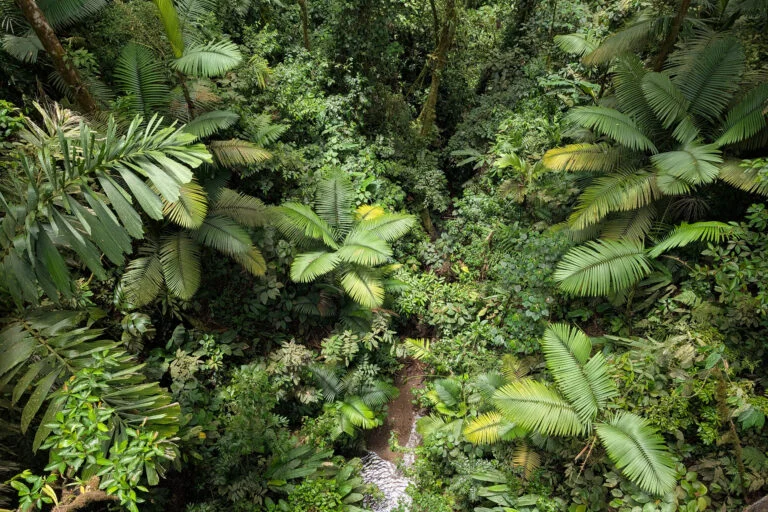
In the dense, humid corridors of Costa Rica’s Nicoya Peninsula, a silent revolution has been occurring for the past four decades—one that can only be fully understood by listening. For years, the success of reforestation efforts has been measured primarily through the silent gaze of orbiting satellites, which track the slow return of green canopies to land once cleared for cattle. However, a groundbreaking study led by researchers at ETH Zürich suggests that the true measure of ecological health lies not in what we see, but in what we hear. By analyzing more than 16,000 hours of audio recordings, a team of scientists has demonstrated that forests allowed to regenerate naturally under Costa Rica’s innovative conservation programs are now vibrating with the same complex, rhythmic life as ancient, protected primary forests.
Giacomo Delgado, a doctoral researcher in the Department of Environmental Systems Science at ETH Zürich, likens the process of bioacoustic monitoring to a medical examination. Just as a physician uses a stethoscope to distinguish the steady rhythm of a healthy heart from the irregularities of a diseased one, ecologists are now using microphones to pulse-check the planet’s ecosystems. Delgado notes that a healthy forest possesses a distinct "acoustic signature"—a specific distribution of frequencies and timings that indicates a complex web of birds, insects, amphibians, and mammals. His team’s research, recently published in Global Change Biology, provides some of the most robust evidence to date that Costa Rica’s decades-long investment in conservation is paying off in the form of functional, thriving biodiversity.
The Evolution of Costa Rican Conservation: From Deforestation to Global Leader
To understand the significance of Delgado’s findings, one must look at the dramatic arc of Costa Rica’s environmental history. In the mid-20th century, the nation was on a path toward ecological collapse. In 1950, approximately 50% of the country was covered in forest. By the mid-1990s, that figure had plummeted to just 25%. This rapid loss was driven by a government-subsidized push for cattle ranching and agricultural expansion during the 1970s and 1980s, which viewed standing forests as unproductive land.
The turning point came in 1996 with the passage of Forest Law 7575, which prohibited the further conversion of established forests to other uses. A year later, Costa Rica launched its Payment for Ecosystem Services (PES) program, known locally as Pagos por Servicios Ambientales (PSA). This was a revolutionary shift in economic policy: rather than taxing landowners for protecting nature, the state began paying them. Managed by the National Forestry Financing Fund (FONAFIFO), the program compensates landowners for four primary "ecosystem services": carbon sequestration, water protection, biodiversity conservation, and the preservation of natural scenic beauty.

Since its inception, the PES program has covered more than 1.3 million hectares (3.2 million acres) and has been instrumental in helping Costa Rica double its forest cover back to nearly 60% of its total land area. However, as the program matured, a critical question emerged: were these new forests merely "green deserts" of trees, or were they functioning ecosystems teeming with the wildlife they were designed to protect?
The Science of Sound: How Bioacoustics Decodes Ecosystem Health
While satellite imagery can confirm that trees have grown back, it cannot distinguish between a vibrant, biodiverse forest and a quiet, species-poor plantation. Traditional biodiversity surveys, which involve sending experts into the field to manually count species, are time-consuming, expensive, and difficult to scale across a whole country. Bioacoustics offers a non-invasive, cost-effective alternative.
Delgado and his team deployed acoustic recorders across 119 sites in the Nicoya Peninsula, a region that has seen significant land-use changes over the last half-century. The recorders were placed in four distinct types of environments: long-term protected areas (the "healthy" baseline), forests recovering naturally under the PES program, monoculture timber plantations, and active cattle pastures.
After a week of recording, the researchers were left with 16,658 hours of audio. Analyzing this mountain of data required looking at "acoustic indices"—mathematical measures of the variety and intensity of sounds across different frequencies. In a healthy tropical forest, there is a phenomenon known as the "acoustic niche hypothesis," where different species evolve to call at different frequencies or times of day to avoid overlapping with one another. This results in a "wall of sound" that is highly structured and diverse.
The results were striking. The naturally regenerated forests—some of which had been recovering for up to 42 years after being abandoned by farmers—exhibited sound profiles that were 1.4 times more similar to old-growth protected forests than they were to the pastures they replaced. These forests displayed the classic "dawn and dusk choruses," where bird and insect activity peaks in a coordinated symphony.

Monocultures vs. Natural Regeneration: The Quality of Recovery
One of the most important takeaways from the ETH Zürich study is the disparity between natural regeneration and active timber plantation. In monoculture plantations, where a single species of tree is planted for future harvest, the "soundscape" was found to be significantly diminished. Delgado described these areas as "eerily quiet," lacking the multi-layered acoustic complexity found in natural forests.
This finding challenges the "one tree is as good as another" mentality that often pervades global reforestation debates. While plantations are effective for carbon sequestration and timber production, they often fail to provide the habitat niches required for a wide array of wildlife. In contrast, "passive restoration"—the process of simply letting the forest grow back on its own—allows for a more complex structural development of the forest, leading to a faster and more complete return of biodiversity.
The study confirms that given enough time—roughly 25 to 40 years—nature can heal itself to a degree where it becomes almost indistinguishable from undisturbed wilderness in terms of acoustic activity. This provides a powerful endorsement for the PES program’s focus on long-term land protection rather than just short-term tree planting.
Expert Reactions and the Economic Framework of Success
The success of Costa Rica’s model is not just a matter of biology; it is a matter of institutional design. Laura Villalobos, an assistant professor of economics and environmental studies at Salisbury University, points out that the program’s longevity and scientific rigor are key to its success. By progressively incorporating scientific evidence to prioritize high-risk areas, the PES program has ensured that every dollar spent on conservation provides the maximum possible ecological return.
However, Villalobos also notes that from an economic perspective, proving causality remains a challenge. While the forests under PES are clearly thriving, researchers are still working to isolate the "additionality" of the program—essentially, determining how much of this recovery would have happened anyway due to shifting economic trends, such as the decline of the local cattle market, and how much was directly caused by the financial incentives of the PES.

"Even so," Villalobos told Mongabay, "the methodology is valuable because it moves beyond forest cover as a proxy and begins to measure ecological quality more directly."
Broader Implications and the Future of Monitoring
The implications of this research extend far beyond the borders of Costa Rica. As the world enters the "UN Decade on Ecosystem Restoration" and nations strive to meet the "30×30" goal (protecting 30% of the Earth’s land and sea by 2030), the need for accurate, scalable monitoring tools has never been greater. Bioacoustics could become the gold standard for verifying the success of restoration projects globally, providing a transparent way to prove to donors and governments that biodiversity is truly returning.
Delgado and his team are already looking toward the next phase of their work. They have expanded their scope to cover the entire country, amassing a massive dataset of 16 years’ worth of audio from 600 different forests. The goal is to move beyond just identifying if the forest has recovered and start identifying why. By correlating sound data with variables such as local climate, soil quality, and socioeconomic factors, they hope to build a predictive model for forest recovery.
"We want to find out which variables… are the biggest drivers of this recovery," Delgado said. This information could help other tropical nations design more effective conservation programs by identifying which lands have the highest potential for rapid biodiversity return.
The story of Costa Rica’s forests is a rare beacon of hope in an era of environmental crisis. It suggests that while the scars of deforestation are deep, they are not permanent. If provided with the right economic incentives and enough time, the "heartbeat" of the forest can return, louder and more vibrant than ever. The researchers have listened, and the message from the forest is clear: restoration works.










Leave a Reply