At the COP17 biodiversity summit in Yerevan, Armenia, conservation leaders, policymakers, and international delegates converged to conduct the first-ever comprehensive global review of progress toward the monumental goals adopted in 2022 under the Kunming-Montreal Global Biodiversity Framework (KMGBF). Central to these discussions is Target 3—widely known as the "30×30" initiative—which commits the global community to effectively and equitably conserve at least 30% of the Earth’s terrestrial, inland water, and coastal areas by the end of the decade.
However, as delegates debate acreage metrics, funding streams, and satellite mapping technologies, a glaring omission threatens to undermine the entire enterprise. Achieving a fundamental shift in land and sea management on this historical scale relies heavily on an often-overlooked demographic in global environmental policy: the frontline workforce of rangers.
For decades, international conservation debates have been consumed by macroeconomic figures, debating how many square kilometers to protect and how many billions of dollars to inject into nature-based solutions. Yet, remarkably little policy attention has been paid to the labor force required to transform those lofty commitments into tangible ecological results. Rangers serve as the indispensable backbone of protected and conserved areas, executing daily duties essential to halting biodiversity loss, mitigating climate change, and preventing land degradation. Despite their pivotal role, a mounting body of research reveals that rangers remain largely invisible within the overarching policies and funding frameworks designed to guide planetary stewardship.
Defining the Workforce: Who Are the Rangers?
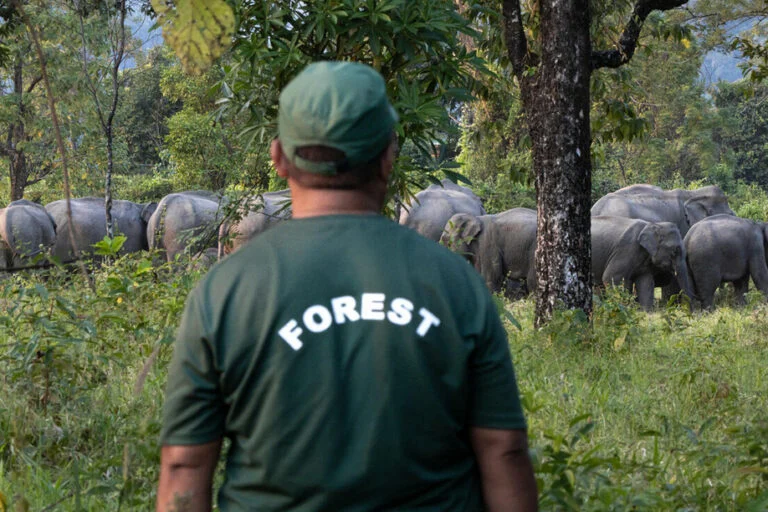
To understand the scope of the problem, one must first recognize the diverse and decentralized nature of the ranger profession. According to the International Ranger Federation (IRF), a ranger is defined as any individual—regardless of their specific title—working in situ to safeguard nature, wildlife, and cultural or historical heritage. This broad umbrella encompasses wildlife wardens, forest guards, game scouts, marine rangers, and park protection officers.

Crucially, rangers operate across a vast spectrum of governance structures. They are not merely employees of centralized national governments. Many are integrated into local authorities, serve as members of Indigenous Peoples and Local Communities (IPLCs), or are deployed by non-governmental conservation organizations. Comprehensive global data indicates that approximately 36% of all rangers are local individuals recruited from communities situated within a 20-kilometer (12-mile) radius of the ecosystems they protect.
From patrolling dense tropical forests and monitoring endangered megafauna to restoring degraded habitats, mediating human-wildlife conflicts, and responding to climate-driven natural disasters, rangers perform an exhaustive suite of duties. In numerous regions, this stewardship is executed in close collaboration with IPLCs, relying on customary governance systems and locally driven conservation practices that have sustained ecosystems for generations.
The Perilous Realities of the Frontline
Despite bearing the heavy burden of planetary health, frontline rangers operate under profoundly hazardous and unsupported conditions. Recent empirical assessments across Asia, Africa, and Latin America highlight that nearly half of all working rangers lack adequate operational equipment, proper professional training, and sufficient staffing levels to cover their assigned territories.
The human toll of this underinvestment is stark. On average, two rangers die in the line of duty each week globally. These fatalities and injuries stem from violent confrontations with sophisticated, highly organized wildlife trafficking syndicates, increasingly aggressive human-wildlife encounters, and climate-induced environmental disasters such as out-of-control wildfires and extreme weather events.
Compounding these occupational hazards is an alarming lack of basic social protections. Globally, only 47% of rangers possess life or health insurance. This systemic vulnerability exposes profound institutional instability at the very foundation of international conservation efforts. Governments and philanthropic donors continue to pour vast financial resources into expanding the footprint of protected areas, while simultaneously failing to invest in the human capital required to manage those very spaces.

The Looming Threat of Paper Parks
The foundational danger of this imbalance is the proliferation of "paper parks"—protected areas that exist legally on government maps and policy documents but lack the human resources, physical infrastructure, and administrative capacity to enforce conservation rules.
Historically, the conservation sector has treated biodiversity loss predominantly as a financing crisis. While adequate funding is unquestionably essential, experts argue that the crisis is equally, if not more so, a workforce challenge. In any enterprise, the three fundamental pillars are capital, space, and labor. By decoupling capital and space from labor, contemporary environmental governance risks establishing millions of hectares of nominally protected land that remain entirely unmonitored and vulnerable to illicit exploitation.
Without a sufficient complement of well-trained, properly equipped, and legally accountable staff, even the most meticulously engineered conservation strategy will inevitably falter. The success of the 30×30 target will be measured not merely by the total number of hectares formally designated as protected, but by the qualitative effectiveness of their management. Management, ultimately, is a human endeavor.
Uncovering the Policy Blind Spot: The Research Gap
The systemic neglect of rangers in high-level policy is not a matter of benign oversight; it is deeply embedded in the architecture of international environmental agreements. A landmark study published in the journal Ambio—supported by organizations such as the Universal Ranger Support Alliance (URSA) and the International Ranger Federation—provides empirical evidence of this systemic exclusion.

Researchers analyzed 45 pivotal global and national conservation policy documents, including 21 National Biodiversity Strategies and Action Plans (NBSAPs). The resulting data revealed a startling disparity: references to geographic area appeared approximately 70 times more frequently in these documents than references to rangers. Meanwhile, references to finance appeared more than 80 times as often. Even within national biodiversity plans, where rangers received marginally more attention, they were eclipsed entirely by discussions of monetary allocation and territorial expansion.
To contextualize this oversight, one can draw a direct comparison to the public health sector. In foundational global directives such as the World Health Organization and UNICEF’s Operational Framework for Primary Health Care, frontline health workers—including doctors, nurses, midwives, and paramedics—are mentioned roughly 48 times as often as rangers are referenced in equivalent biodiversity policy documents.
Public health policymakers understand an intuitive truth: modern hospitals and medical infrastructure do not save lives in isolation. Health outcomes are inextricably dependent on the skilled practitioners delivering services on the ground. Yet, international conservation frameworks have historically failed to apply this same logic. While the global community regularly celebrates the declaration of new protected areas, ambitious numerical targets, and innovative financial mechanisms like carbon and biodiversity credits, it consistently overlooks the workforce tasked with turning those policies into reality.
Financial Disparities and Institutional Inadequacies
The marginalization of rangers is further compounded by chronic underfunding across the global protected area estate. Independent estimates suggest that global spending on conservation hovers around $24 billion annually—representing less than 40% of the estimated $68 billion needed each year to adequately manage the existing global network of protected and conserved areas.
When funding is scarce, operational budgets for staff salaries, field equipment, infrastructure maintenance, and safety gear are frequently the first to be slashed. This financial starvation transforms the ranger profession from a respected, secure career into a precarious, high-risk vocation, leading to high turnover rates, low morale, and diminished enforcement capacity in critical biodiversity hotspots.

Bridging the Gap: Integrating Workforce into Policy
As delegates at the COP17 summit in Yerevan evaluate the trajectory of global biodiversity goals, correcting the "ranger blind spot" has emerged as an urgent priority for the international community. Experts argue that future policies governing protected and conserved areas must formally mandate the inclusion of workforce planning within national and international frameworks.
This integration requires several structural shifts:
- Policy Representation: Rangers and workforce representatives must be granted a voice in core negotiations for future biodiversity conventions, climate agreements, and innovative finance mechanisms, ensuring that market-based instruments like carbon and biodiversity credits explicitly budget for field-level management.
- Standardized Professionalization: The widespread adoption of international standards for ranger training, professional conduct, fair compensation, and safe working conditions is long overdue. These standards must prioritize human rights, provide adequate personal protective equipment, and establish transparent accountability mechanisms.
- Inclusivity and Equity: National policies must address deep-seated gender inequalities within the profession—as demonstrated by pioneering all-women forces like Zimbabwe’s Akashinga—while extending formal recognition, legal protections, and adequate compensation to community and Indigenous rangers.
Conclusion: The Lesson of the Unstaffed Hospital
In the wake of the Yerevan summit and in preparation for upcoming conventions of the parties under the Convention on Biological Diversity, policymakers are urged to reflect on a simple analogy: visualizing a state-of-the-art, fully funded hospital constructed in a community, yet devoid of any doctors or nurses. No matter how advanced the facility or how substantial its financial endowment, a hospital without staff cannot deliver medical care.
The same immutable law applies to global conservation. If rangers are systematically omitted from policy frameworks, they cannot be adequately planned for, trained, or funded. Without them, the ambitious architecture of the Kunming-Montreal Global Biodiversity Framework risks collapsing under the weight of its own unmet promises, leaving the planet’s most critical ecosystems unprotected on the frontline.