In a brightly lit first-grade classroom at Sand Creek Elementary in Highlands Ranch, Colorado, Gabrielle Grace’s students were deep into a writing exercise. The task was foundational: jotting down details about summer plans to serve as the scaffolding for a future paragraph. While many of his peers were still navigating the early hurdles of composition, six-year-old Dean sat back, his worksheet already complete. With a nonchalance that belied the complexity of the task, he pointed to his topic sentence—"I do many things over the summer"—followed by a tidy list including "park, ipad and vacation." For Dean, the process was "too easy," a testament to a shift in instructional philosophy that is beginning to take hold in suburban Denver and beyond.
At the start of the academic year, many of Grace’s students struggled to form a single coherent sentence. Today, they operate with a systematic efficiency that Grace describes as "clockwork." This transformation is not an accident of nature but the result of a deliberate, evidence-based overhaul of how writing is taught. As school districts across the United States grapple with stagnant literacy rates, a growing movement is suggesting that the "science of reading" must be joined by a "science of writing" to fully address the nation’s educational deficits.
The Invisible Crisis in American Education
For decades, the American educational landscape has been dominated by a singular focus on reading and mathematics, spurred by federal mandates and standardized testing requirements. While these efforts have yielded significant discourse and varying degrees of success, writing has often been treated as a secondary skill—a "last bastion of education," according to Randy Barth, CEO of SRSD Online. This neglect has created a vacuum of data and a subsequent decline in proficiency that educators are only now beginning to quantify.

National data on writing is alarmingly sparse. The United States has not released nationwide standardized writing scores for elementary-age students since 2002. In that final assessment, a mere 27 percent of fourth graders were found to be proficient or higher. Since then, the "word on the street," as Vicki McQuitty of Towson University puts it, is that American children simply cannot write. Recent state-level data from 2025 supports this grim assessment. In Texas, more than half of the 360,000 third graders who took the state’s English language arts test received zero credit for an essay prompt requiring them to compare and contrast two texts. In California, only 17 percent of third graders met the standards for well-organized writing. Florida saw similar struggles, with students averaging only 50 percent of the possible points on state writing assessments.
The consequences of this instructional gap follow students into adulthood. Employers and university professors have long complained that graduates lack the ability to construct basic, coherent paragraphs, let alone the complex arguments required in professional and academic environments. The lack of a national focus on writing has effectively left teachers to navigate a high-stakes pedagogical challenge without a standardized map.
The Cognitive Burden of Composition
Teaching a child to write is arguably one of the most difficult tasks in elementary education. Unlike reading, which is a receptive skill, writing is productive and requires the simultaneous coordination of multiple cognitive processes. Educators refer to this as "cognitive load." A student must manage handwriting (fine motor skills), spelling (phonics and memory), vocabulary (linguistic depth), and grammar (syntax), all while attempting to organize their thoughts into a logical sequence (executive function).
Chrissy Everett, a veteran fourth-grade teacher at Prairie Crossing Elementary, notes that writing is uniquely demanding because it requires students to understand "how to piece it all together and what steps to do next." For many children, the sheer volume of these requirements leads to "writing paralysis," where the blank page becomes an insurmountable obstacle.

This challenge is further exacerbated by the digital age. Occupational therapists, such as Christina Bretz of Learning Without Tears, report that an increasing number of children enter kindergarten with underdeveloped fine motor skills. After years of swiping on iPads and smartphones, some students struggle to even hold a pencil. Bretz recounts instances of children attempting to "color" on paper using their fingers, mimicking the haptic feedback of a tablet. This shift away from manipulating physical objects has made the physical act of writing an additional hurdle for early learners.
The Douglas County Shift: From Creativity to Structure
In 2023, administrators in Colorado’s 61,000-student Douglas County School District noticed a troubling trend: writing scores on state exams were significantly lower than reading scores. Upon investigation, Janet Merrill, the district’s literacy coordinator, found that writing instruction was largely decentralized and inconsistent. Teachers were often left to find their own materials on platforms like Teachers Pay Teachers, resulting in a "hodgepodge" of methods that lacked a cohesive developmental arc.
The prevailing philosophy had focused heavily on creative "freewriting"—asking students to describe their shoes, their backpacks, or their favorite birthdays. While intended to foster a love for writing, Merrill observed that it often left students without the structural tools necessary for academic success. "It’s just this random writing," she noted.
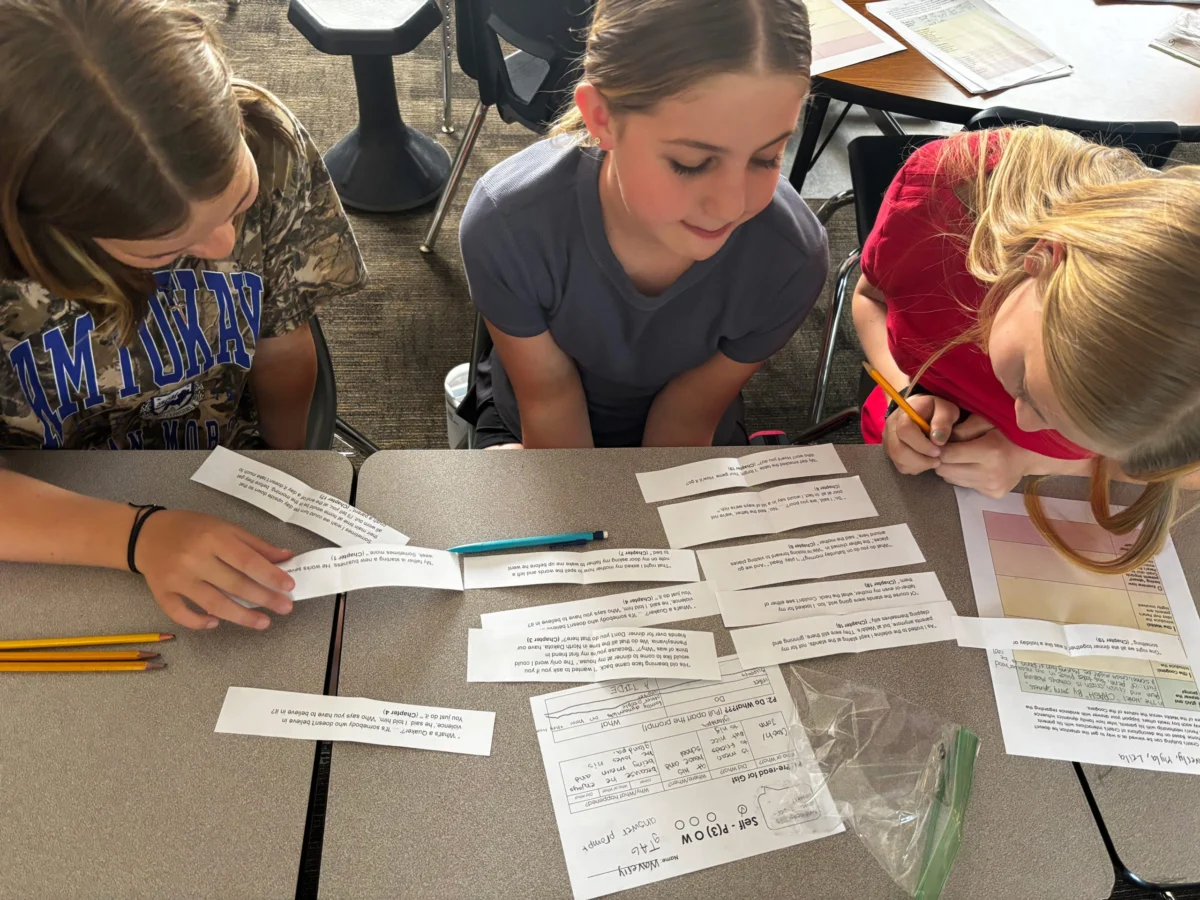
To rectify this, Douglas County turned to Self-Regulated Strategy Development (SRSD). Championed by disability advocates and backed by federal research, SRSD is a prescriptive approach that prioritizes structure, evidence-based responses to texts, and explicit instruction in the mechanics of writing. The district rolled out a common language and set of routines across its 70+ elementary schools. Students were taught acronyms like "TIDE"—Topic, Important details, and Ending—to help them organize their thoughts.

Crucially, the program also addresses the emotional hurdles of writing. Students are encouraged to write self-affirmations at the top of their pages, such as "I can do this" or "I am smart," to combat the frustration that often accompanies the drafting process.
The Science of Writing and Teacher Preparation
While the "science of reading" has a robust body of research behind it, the "science of writing" is an emerging field. However, experts like Adrea Truckenmiller of Michigan State University argue that the core principles are clear: students need explicit instruction in sentence construction, expanding and combining ideas, and the use of graphic organizers to plan essays.
The barrier to implementing these strategies often lies in teacher preparation. Many university programs for aspiring educators lack standalone courses on writing instruction. As Vicki McQuitty points out, even teacher educators often feel uncomfortable teaching the subject, leading to a cycle where writing is perpetually "pushed to the back" of the curriculum. Furthermore, the intense pressure to perform on standardized tests in math and reading often forces teachers to marginalize writing time, viewing it as a luxury rather than a fundamental literacy component.
Broader Impact and the Path Forward
The early results in Douglas County suggest that a structured approach to writing yields benefits that extend far beyond the English language arts classroom. After just one year of implementing the new strategy in a subset of schools, the district saw state writing scores rise by three percentage points. Perhaps more surprisingly, math scores also saw an uptick. Administrators attribute this to improved analytical skills; students who can structure a paragraph are better equipped to deconstruct a complex word problem or analyze a mathematical prompt.

The ripple effects are also being felt in middle schools. Educators have noted that students arriving from SRSD-focused elementary classrooms possess a level of preparedness that was previously rare. This success has prompted Douglas County to begin training middle school teachers in the same strategies, ensuring a continuous instructional thread from kindergarten through eighth grade.
For students like ten-year-old Arya Melancon, the shift from "creative chaos" to "structured building" has replaced fear with confidence. "Last year we were all scared of writing prompts," she said. "This year, we felt like we were ready."
As other states—including Tennessee, Pennsylvania, California, and Rhode Island—begin to explore similar overhauls, the national conversation is shifting. The emerging consensus among education experts is that reading and writing are two sides of the same coin. By treating writing as a formal discipline grounded in cognitive science rather than an innate talent to be "unlocked" through creative prompts, schools may finally bridge the literacy gap that has persisted for over two decades. The success in Highlands Ranch serves as a blueprint: when children are given the right tools, the blank page is no longer a source of anxiety, but a platform for expression.