
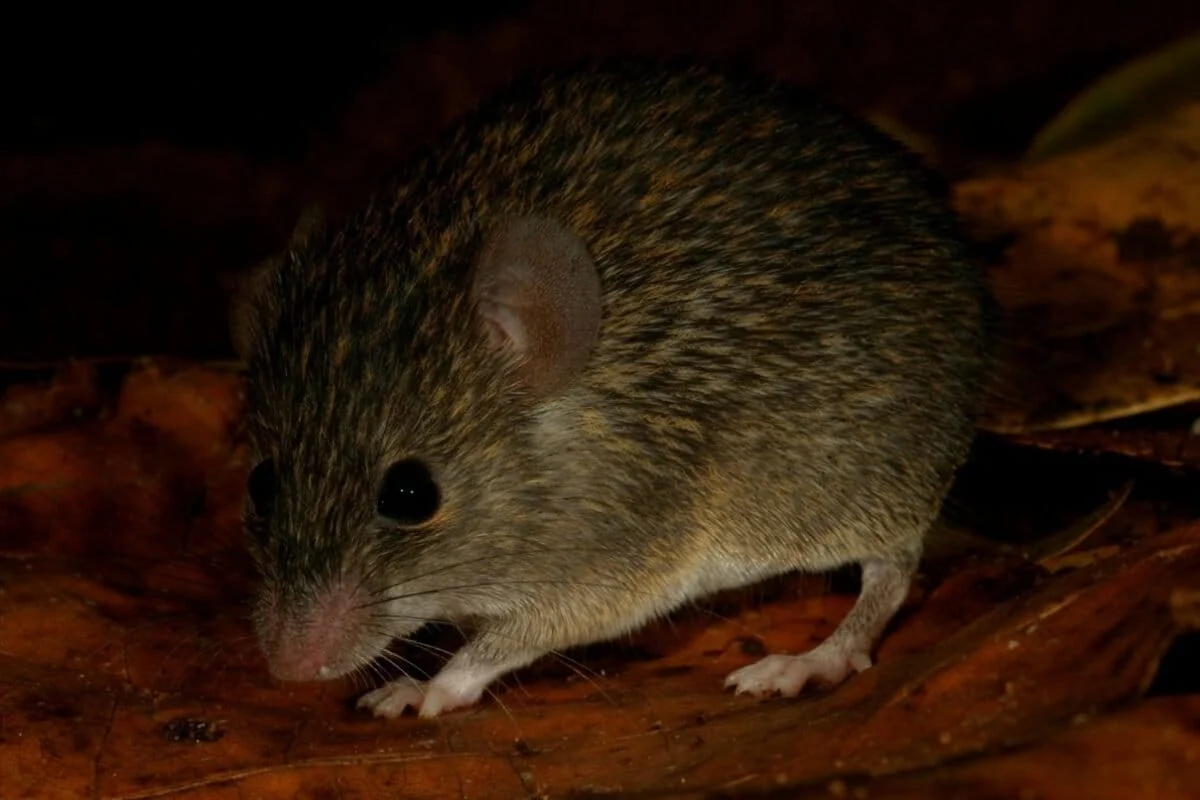
As dusk settled over the misty paddy fields of Puwakpitiya, a sleepy village nestled along the northern boundary of Sri Lanka’s rugged Knuckles Mountain Range, a team of field researchers set to work. It was March 2004, and the scientists—comprising zoologists and evolutionary biologists—were meticulously laying a grid of traps along the fragile, shifting ecotone where emerald agricultural lands abruptly meet dense, ancient montane forest. They were searching for small terrestrial mammals, part of a broader effort to document the island nation’s hidden biodiversity.
Yet, fieldwork rarely unfolds according to standard laboratory manuals. When standard rodent-trapping protocols failed to yield results using conventional international baits like peanut butter, the researchers had to adapt to local realities. Recognizing that standard foreign lures held little appeal for the island’s native mice, they pivoted to an aromatic local alternative: small pieces of burnt coconut. The shift in strategy proved immediately transformative. On March 11, 2004, a pitfall trap secured a tiny, unusual rodent. Six days later, a second specimen walked into a baited Sherman live trap.
Those two small, unassuming female mice would spark a two-decade-long scientific detective story. Today, backed by rigorous morphological assessments and advanced DNA sequencing, those historical specimens have officially been introduced to the world as a brand-new species to science: Mus dumbara, commonly known as the Dumbara spiny mouse. The discovery not only enriches Sri Lanka’s impressive roster of endemic fauna but also highlights the silent, underfunded struggles of small-mammal conservation in global biodiversity hotspots.
An Elusive Silhouette: Anatomy and Genetics of Mus dumbara

At first glance, the specimens collected in the Dumbara valley—locally referred to as the Knuckles Mountain Range—resembled Mayor’s mouse (Mus mayori), a highland-endemic rodent well-known to Sri Lankan mammalogists. However, subtle anatomical discrepancies immediately caught the attention of the research team.
The newly identified mice were diminutive, measuring no larger than a child’s palm. Their fulvous-gray pelage was distinctly broken by prickly spiny guard hairs, and they possessed slender, naked tails that stretched noticeably longer than their combined head and body length. When researchers later examined the skulls, they found structures thinner than a fingernail, featuring a moderately prominent supraorbital ridge—a bony brow above the eye socket that sets it apart from its closest taxonomic relatives, Mus fernandoni and Mus mayori.
The definitive proof, however, lay locked within the animals’ DNA. Genetic analyses revealed a striking 11.7% sequence divergence between Mus dumbara and the other recognized Sri Lankan spiny mouse species, confirming that the specimens represented a distinct evolutionary lineage within the subgenus Pyromys.
For lead author Suyama Boyagoda, current head of the Department of Zoology and chairperson of the board of study in zoological sciences at the Postgraduate Institute of Science (PGIS) at the University of Peradeniya, the animal’s moniker—elusive—is entirely earned. Reflecting on the decades following the initial capture, Boyagoda noted the profound difficulties in relocating the species. During intensive field campaigns in 2014 and 2015, she returned to the exact locality in the Knuckles Range, investing roughly 1,900 trap nights using identical methodologies. Despite the extensive effort, not a single additional specimen of Mus dumbara was found.
A Chronology of Discovery and Delayed Recognition

The path from a twilight trapping session in 2004 to a formal taxonomic description published in the journal ZooKeys in 2026 spans more than twenty years, illustrating the arduous nature of modern taxonomic research.
- March 2004: Researchers Suyama Boyagoda, Madhava Meegaskumbura, and Mohammed Bahir conduct field surveys in the Knuckles Mountain Range. Using unconventional burnt coconut bait, they capture two unusual female spiny mice at the edge of a Puwakpitiya paddy field.
- 2004–2013: Initial morphological comparisons suggest the specimens differ from known island endemics like Mus mayori and Mus fernandoni, but definitive classification requires advanced molecular sequencing and further comparative osteology.
- 2014–2015: Boyagoda returns to Puwakpitiya for targeted follow-up surveys, logging approximately 1,900 trap nights. Despite exhaustive efforts along forest-farm boundaries, no additional specimens are encountered, underlining the extreme rarity or secretive nature of the population.
- Subsequent Years: Collaborative genetic testing and skull morphology analyses are undertaken, confirming a massive 11.7% genetic divergence from related species.
- 2026: The formal description of Mus (Pyromys) dumbara is published in ZooKeys, officially establishing it as the 17th known species of rat and mouse in Sri Lanka, and the seventh endemic rodent on the island.
An Evolutionary Island within an Island
To understand why Sri Lanka harbors such distinct mammalian lineages, evolutionary biologists look deep into geological history. Sri Lanka and India’s Western Ghats together form one of the world’s premier biodiversity hotspots. During Pleistocene glacial periods, intermittent land bridges across the shallow Palk Strait periodically connected the island to the Indian subcontinent, allowing waves of fauna to migrate.
Yet, as global sea levels rose, Sri Lanka became isolated once more. This geographic separation allowed the island’s flora and fauna to evolve along independent trajectories, a phenomenon particularly pronounced in the wet-zone and montane forests.
Madhava Meegaskumbura, an evolutionary biologist at Guangxi University in China and a co-author of the study who helped collect the original specimens alongside Mohammed Bahir, points out a stark imbalance in tropical conservation science. Over recent decades, scientists working in Sri Lanka have cataloged a wealth of new amphibians, reptiles, and freshwater crabs—groups that frequently grab headlines due to their vibrant colors or high local densities. Mammals, conversely, have yielded far fewer new additions.

"Mammals tend to be larger and more readily detected, meaning most obvious species were cataloged long ago," Meegaskumbura explained. "The discovery of Mus dumbara adds a critical puzzle piece to our understanding of the island’s mammalian evolution, but it also warns us about how much we still miss regarding smaller, cryptic fauna."
Ecological Roles and the Shadow of Extinction
Though mice and rats are frequently dismissed as agricultural pests or overlooked entirely by the public, small mammals anchor complex forest food webs. Rodents serve as a vital baseline prey network for myriad predators, ranging from small carnivores to raptors such as the black eagle (Ictinaetus malaiensis). Their foraging and seed-dispersal behaviors also influence forest regeneration dynamics.
Despite these vital ecological contributions, Mus dumbara currently faces a precarious future. As of now, the species is known exclusively from a single valley within the Knuckles Mountain Range. Whether it persists in undiscovered forest fragments, survives at naturally low population densities, or has suffered steep declines since 2004 remains an open and concerning question.
Although the Knuckles Range holds formal designation as a UNESCO World Heritage Site, the margins of these protected forests remain intensely vulnerable. Pressures from local road construction, land clearance for agriculture, human encroachment, and the creeping expansion of commercial plantations frequently degrade the delicate ecotone habitats where these animals thrive. Furthermore, because the species appears restricted to a narrow elevational band, anthropogenic climate change poses an escalating threat, potentially squeezing its habitable range into shrinking highland refuges.

Given these mounting pressures, co-author Meegaskumbura and other conservation scientists urge that Mus dumbara be treated cautiously as a species at potential risk of extinction until comprehensive, island-wide surveys can clarify its true distribution, population size, and habitat requirements.
The Funding and Logistical Crises in Small Mammal Research
The long gap between the discovery of the first specimens and their formal publication underscores broader systemic challenges in tropical mammalogy. Sampath Goonatilake, a small-mammal researcher with IUCN Sri Lanka who was not directly involved in the study, highlights the immense barriers facing researchers in the field.
"Very little research has been carried out on Sri Lanka’s small mammals, leaving major knowledge gaps," Goonatilake stated. "Studying these animals is physically demanding and financially costly. Researchers must often commit weeks or months to remote forest encampments to secure sufficient samples. Furthermore, we lack up-to-date, comprehensive field identification guides for Sri Lanka’s small mammals, making accurate identification challenging for students and field biologists."
Compounding these logistical hurdles is a persistent funding bias. Charismatic megafauna and highly visible taxa like amphibians and reptiles routinely attract institutional grants and public donations, while nocturnal, drab-colored rodents struggle for visibility. Addressing these deficits, Goonatilake notes, will require extensive, island-wide taxonomic revisions combining classical morphology with modern phylogenetic tools. Such an endeavor carries a price tag running into several million rupees, necessitating robust public-private partnerships, academic collaborations between Sri Lankan universities and government agencies, and vital support from international conservation grants.

For now, the story of Mus dumbara stands as both a celebration of biological discovery and a sobering reminder of the uncharted wilderness hidden in plain sight. As researchers continue to probe the misty valleys of the Knuckles Range, the burnt-coconut-lured mouse of Puwakpitiya serves as a testament to the fragile, irreplaceable secrets waiting to be uncovered in the world’s most threatened ecosystems.








Leave a Reply