
The modern climate advocacy landscape faces a profound structural paradox: while public anxiety regarding global warming is at an all-time high, the translation of that concern into sustained political action remains stagnant. According to research conducted by the Yale Program on Climate Change Communication, approximately 80 million Americans classify themselves as "alarmed" by the climate crisis. Within this cohort, roughly 40 million individuals express a desire to engage in political activism. However, actual participation numbers hover at a mere 3 million. This delta—a missing force of 37 million citizens—has become the focal point of a growing debate among activists, strategists, and non-profit leaders regarding the efficacy of progressive communication strategies in the 21st century.
The Anatomy of an Organizing Failure
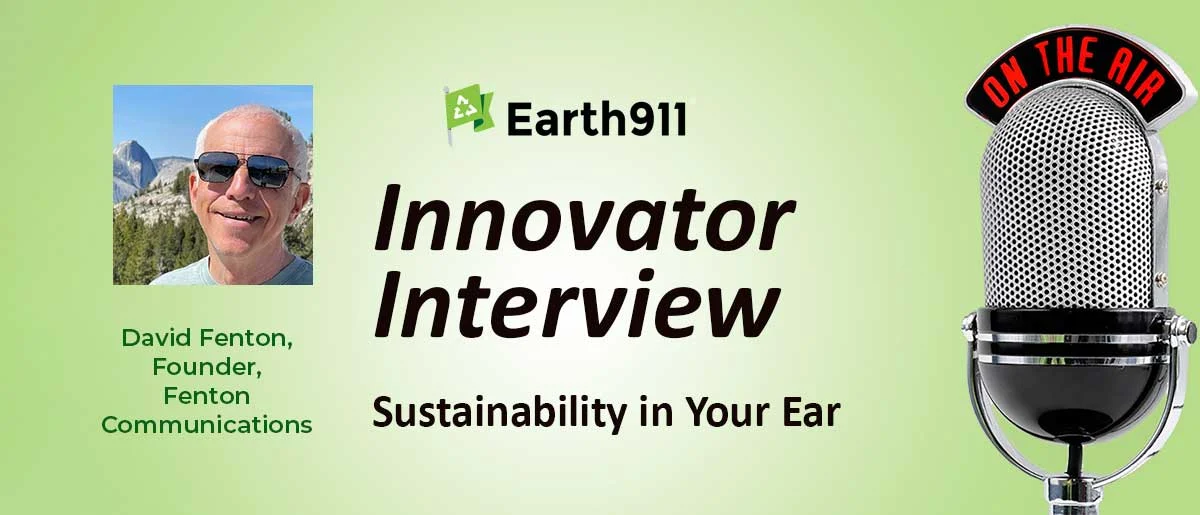
David Fenton, a veteran of progressive advocacy and the founder of Fenton Communications, argues that the climate movement is currently engaged in a form of "unilateral disarmament." Fenton, whose career spans five decades of activism—including the anti-war movement of the 1960s, the fight to end apartheid, and the successful effort to ban fracking in New York—posits that the movement’s failure is rooted in a fundamental misunderstanding of public persuasion.
The data supports this grim assessment. Yale researchers have found that only 12% of Americans report seeing climate-related content on their social media feeds, and two-thirds claim they rarely or never hear about the issue from their social circles or through mainstream media. When the 37 million "willing but inactive" individuals are surveyed about their lack of participation, the most common response is remarkably simple: nobody has asked them to take action. This suggests that the current infrastructure of climate advocacy, heavily reliant on direct-mail fundraising and list-building, has prioritized monetary collection over the mobilization of a mass political movement.
The Enlightenment Fallacy and Linguistic Barriers
A primary obstacle identified by Fenton and cognitive linguist George Lakoff is the "Enlightenment fallacy." This concept describes the pervasive belief among scientists, lawyers, and policy experts that a technically sound, empirically correct idea will naturally gain traction through its own inherent merit. This mindset often leads to the dismissive view that public relations and marketing are "dirty" or beneath the work of serious advocacy.
Consequently, the language utilized by the climate movement has frequently alienated, rather than educated, the broader public. Terms such as "Net Zero" and "carbon" are often viewed as abstract or jargon-heavy by the average consumer. Furthermore, the framing of "climate justice" frequently triggers cognitive associations with law enforcement and courts, rather than the intended message of fairness and shared prosperity.
Fenton advocates for a strategic pivot toward more visceral, universally understood language. For example, replacing complex abstractions with the term "pollution" is highly effective, as pollution is a concept that is rarely defended in public discourse. By framing climate change as a "blanket of pollution" that traps heat, advocates can utilize imagery that is both scientifically accurate and cognitively accessible.
A Chronology of Advocacy and the Shift in Messenger Economics
The history of successful social movements—from the Civil Rights movement to the push for marriage equality—demonstrates that change is rarely the result of spontaneous public awakening. Rather, it is the product of sustained, well-funded infrastructure. The climate movement’s reliance on "policy-first" messaging stands in stark contrast to the fossil fuel industry’s approach, which treats persuasion as a core business function.

Historically, movements relied on the "medium" to be the message. In the current digital landscape, however, the "messenger" has become the message. The decline of trust in traditional institutional media has shifted influence toward parasocial relationships. Individuals trust personalities, influencers, and figures who mirror their values.
The effectiveness of this approach was demonstrated when the heirs to the Standard Oil fortune became the public face of the fossil fuel divestment movement, or when Yoko Ono’s "Imagine There’s No Fracking" billboards were placed strategically along Governor Andrew Cuomo’s commute. These efforts succeeded because they leveraged high-profile messengers to deliver clear, disruptive messages in spaces where decision-makers were forced to encounter them.
Implications for Democracy and Future Policy
The political stakes of this communication gap were clearly illustrated by the trajectory of the Inflation Reduction Act (IRA). The legislation, which represented a significant investment in clean energy, passed by a single vote and was subsequently targeted for repeal by an equally narrow margin. Fenton argues that winning by a single vote is effectively a failure, as it suggests the movement has not built the durable public mandate required to protect policy against shifts in political winds.
The implications for the broader democratic process are significant. As income inequality continues to correlate with political influence, the struggle for climate action is increasingly merging with the struggle for the preservation of democratic institutions. There is an emerging consensus among activists that major concentrations of private power—particularly within the fossil fuel and technology sectors—are actively eroding the checks and balances necessary for a functional government.
The Path Forward: Infrastructure over Fundraising
To bridge the gap between concern and action, the climate movement requires a shift in resource allocation. Currently, billions of dollars are spent annually on legal, scientific, and policy work, while the investment in public persuasion remains negligible. A meaningful change would involve:
- Developing Digital Infrastructure: Creating platforms that allow the 37 million "inactive" concerned citizens to plug into specific, effective, and simple actions.
- Standardizing Messaging: Adopting a unified, simple, and emotionally resonant language that avoids jargon and speaks to values such as health, security, and economic prosperity.
- Professionalizing Persuasion: Investing in the same cognitive and marketing sciences that the business sector uses to sell products, thereby countering the disinformation campaigns of the fossil fuel industry.
- Cultivating Influencers: Providing support, video production, and strategic guidance to existing, effective messengers like climate scientist Dr. Katharine Hayhoe, who currently operate with minimal support.
Analysis: A Call for Strategic Realignment
The current state of climate advocacy is at a critical juncture. While the technological solutions to the climate crisis are more advanced and cost-effective than ever before, they lack the political "survivability" that only a mass, informed public can provide.
The strategy of relying solely on the "goodness" of the message is insufficient in a media environment dominated by algorithmic polarization and well-funded disinformation. If the climate movement is to achieve the decarbonization goals required by the physics of the planet, it must address its "organizing failure." This requires a shift from viewing the public as a source of funds to viewing the public as the central asset in a high-stakes information war.
Until large-scale philanthropic entities commit significant capital to permanent communication infrastructure—similar to the rumored $300 million campaigns being discussed in some circles—the movement will likely continue to struggle for marginal gains. The 37 million Americans who want to be active are not a theoretical group; they are a latent political force waiting for an invitation. Providing that invitation, and the tools to make their voices heard, remains the most pressing task for the climate advocacy community in the coming decade.










Leave a Reply