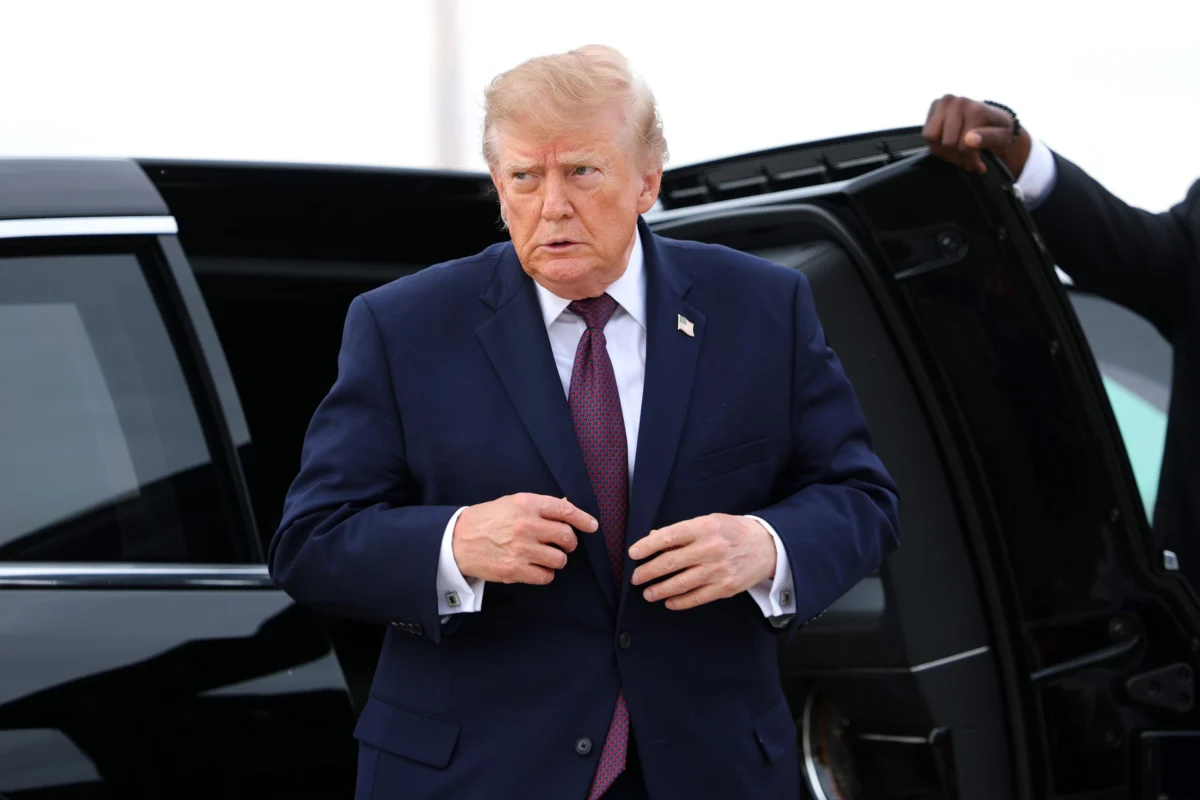
The current political landscape in the United States is increasingly defined by a profound breakdown in the traditional consensus regarding electoral outcomes. As President Donald Trump utilizes executive authority to challenge the integrity of the voting process—most notably through orders aimed at purging voter rolls and investigating local election officials—the nation finds itself at a precarious crossroads. This aggressive posture, characterized by federal attempts to preemptively influence or dispute election results, has raised significant concerns among historians, political scientists, and civil rights advocates who view these tactics not merely as political theater, but as a dangerous departure from democratic norms. The consequences of this recalcitrance extend far beyond the ballot box, threatening the stability of the American education system and the social fabric of the union itself.
A Historical Precedent for Political Violence
To understand the stakes of the upcoming 2026 midterm elections, one must examine the volatility of the post-Civil War era. The year 1873 serves as a chilling case study in what occurs when political factions reject the legitimacy of an election. In Louisiana, the gubernatorial contest between Republican William Pitt Kellogg and Democrat John McEnery resulted in a protracted, violent standoff. McEnery’s refusal to concede defeat empowered paramilitary groups, including the White League, to organize against the state government.
The culmination of this defiance was the Colfax Massacre on Easter Sunday, April 13, 1873. A white militia, seeking to overthrow the Republican administration, surrounded the Grant Parish Courthouse in Colfax, where Black citizens had gathered to protect the results of the election. The ensuing violence resulted in the deaths of more than 100 Black men, many of whom were executed after surrendering. This event remains a stark reminder of the potential for bloodshed when the peaceful transition of power is abandoned in favor of insurrectionist rhetoric.
The instability did not end with the massacre. Governor Kellogg’s tenure was marked by constant obstruction from the state legislature, leading to his eventual impeachment. His successor, Stephen Packard, faced a similar fate, serving only three months before the state legislature successfully removed him. The era of uncertainty only concluded with the Compromise of 1877, a backroom political deal that saw the withdrawal of federal troops from the South in exchange for the presidency of Rutherford B. Hayes. This withdrawal effectively signaled the end of Reconstruction and the beginning of the Jim Crow era, leading to the disenfranchisement of Black voters and the institutionalization of systemic racial inequality.
The Legislative Erosion of Rights
The aftermath of the 1877 compromise allowed Southern states to rapidly codify racial segregation. The most prominent legal manifestation of this era was the Separate Car Act of 1890 in Louisiana, which mandated segregated rail travel. The challenge to this law by Homer Plessy, a civil rights activist, led to the landmark 1896 Supreme Court decision in Plessy v. Ferguson. By establishing the "separate but equal" doctrine, the Court provided the legal cover for states to enforce segregation across all public sectors, including education.
Compulsory school laws, which began to take hold in the early 20th century, were implemented within this segregated framework. In 1912, Louisiana passed its first compulsory attendance mandate, ensuring that the nascent public education system was designed from the ground up to reflect and enforce the racial hierarchy of the time. This historical trajectory illustrates that when political systems lose their commitment to democratic norms and independent judicial oversight, the first casualties are often the most vulnerable institutions, particularly public schools.
Implications for Modern Public Education
The current political climate threatens to replicate the systemic fracturing seen in the late 19th century. The politicization of the education system is already underway, as evidenced by intensifying debates over curriculum, the regulation of private school funding, and the management of student diversity. Should the 2026 midterms result in a significant rejection of election outcomes by either party, the impact on public education could be catastrophic.
Data from recent years suggests a growing trend toward the "privatization" of education, often fueled by political rhetoric that casts public schools as ideological battlegrounds. Research from organizations like the Center for Educational Equity highlights that when state funding is diverted from public institutions toward private alternatives, the result is a fragmented system that exacerbates socioeconomic disparities. Furthermore, the active politicization of classroom materials—ranging from history textbooks to mathematics—threatens to undermine the role of schools as "the great equalizer."
If the federal government continues to leverage executive power to delegitimize the voting process, the resulting distrust will likely permeate local school boards. We are already witnessing an uptick in the regulation of books and teaching methods, often driven by a desire to sanitize historical narratives or suppress discussions of racial and social inequality. This trend mirrors the pre-Civil Rights era, where state systems were actively used to sculpt a society of intentional inequality.
Official Responses and Political Analysis
Political analysts note that the current strategies employed by the executive branch—such as targeting poll workers and initiating pre-emptive investigations into outcomes—function as a form of "political gaslighting." By framing standard democratic processes as inherently fraudulent, officials erode the public’s confidence in the institutions designed to protect their rights.
While proponents of these executive actions argue they are necessary to ensure "election integrity," critics—including a broad coalition of legal scholars and civil rights organizations—contend that these measures are specifically designed to suppress voter turnout in competitive districts. The Department of Justice, traditionally an independent arbiter of federal law, faces mounting pressure as its investigations are increasingly scrutinized for partisan bias.
"The integrity of our democratic process relies on the assumption that the loser accepts the outcome," says Dr. Jonathan E. Collins, an assistant professor of political science and education at Teachers College, Columbia University. "When that tradition is broken, and when the political discourse shifts toward the denial of reality, we are inviting a level of social and civil instability that this country has not seen since the late 19th century."
Looking Toward 2026: The Path Forward
The path to mitigating this division is straightforward in theory, though difficult in practice. It requires a renewed commitment to three core principles:
- Unconditional Acceptance of Results: All political actors must commit to the peaceful transition of power, regardless of the election outcome.
- Protection of Voting Rights: Efforts to limit access to the ballot must be met with legal and legislative resistance to ensure that every eligible citizen can exercise their right to vote.
- Independent Judicial Oversight: Courts must remain shielded from political influence, serving as the final, neutral arbiter of disputes arising from the electoral process.
The stakes of the 2026 midterm elections are historic. The current political climate, characterized by the weaponization of election suspicions and the dismantling of institutional norms, risks creating a permanent state of political apartheid. If the nation fails to heed the warnings of history, the result could be a repeat of the late 1870s—a period defined by the abandonment of civil rights and the systematic erosion of democratic equality.
As the country prepares for the upcoming cycle, the focus must shift back to the preservation of public institutions. Education, in particular, remains the most vital tool for sustaining a functioning democracy. Protecting the integrity of the school system—by keeping it free from partisan interference and ensuring equitable funding—is not just an educational concern; it is a fundamental requirement for the survival of the American union. The lessons of the Colfax Massacre and the subsequent era of Jim Crow serve as a definitive warning: the failure to defend the democratic process today will inevitably result in the inequality of tomorrow.