
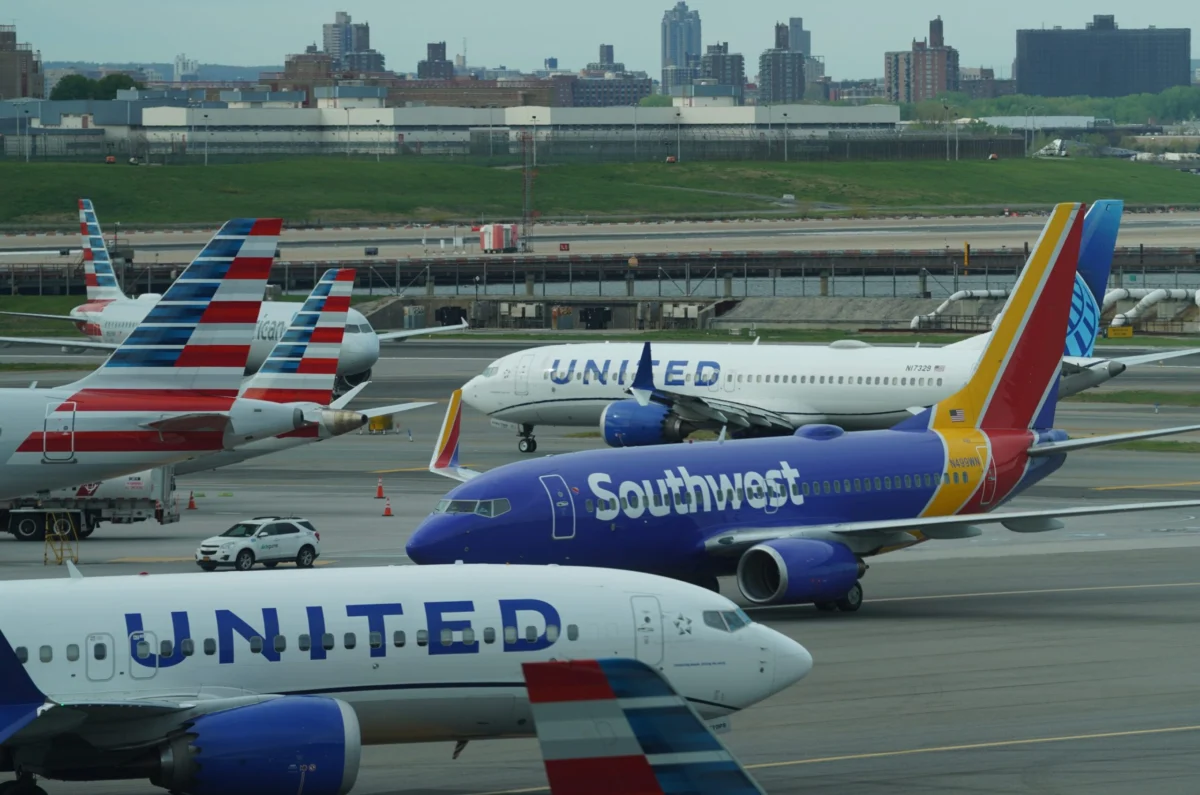
Securing affordable air travel has historically required patience, flexibility, and a keen eye for deals. However, travelers navigating the current aviation landscape face an even steeper challenge. As jet fuel prices skyrocket toward 20-year highs—hovering around $4.71 per gallon and more than doubling over the course of a single year—major U.S. and international carriers are aggressively restructuring their operations. Executives from American Airlines, United Airlines, and Southwest Airlines revealed at a high-profile industry conference that they are actively rethinking their route networks, trimming flight schedules, and curbing capacity growth to mitigate mounting financial pressures.
This dramatic shift in airline strategy underscores the profound vulnerability of global commercial aviation to geopolitical shocks. With conflicts in the Middle East severely constricting the international oil supply, fuel costs have transitioned from a manageable operational line item to a critical threat to profitability. For consumers, the ripple effects are already apparent: fewer flight options, potential losses of convenient nonstop schedules, rising ancillary fees, and an accelerated disappearance of bargain airfares.
The Financial Squeeze: Anatomy of a Fuel Crisis
The catalyst behind the aviation industry’s latest contraction is a severe tightening of the global energy market. Ongoing conflict in Iran has disrupted petroleum output, choking off supplies and driving crude oil and refined product prices upward. Jet fuel, which represents one of the most volatile and substantial expenses for any airline, has absorbed the brunt of this macroeconomic shock.
Financial filings from the second quarter of the year illustrate the immense toll these rising costs have already exacted on carriers. United Airlines reported spending approximately $8.2 billion on fuel during the first six months of the year, representing a staggering 49% increase compared to the same period in the previous year. American Airlines experienced a nearly identical trajectory, shelling out $7.8 billion—also up 49% year-over-year. Meanwhile, Southwest Airlines reported fuel expenditures of nearly $3.6 billion, marking a 39% surge over the prior year.
When jet fuel prices climb to $4.71 per gallon, the traditional economic models governing airline route profitability are upended. Executives speaking at Morgan Stanley’s annual Laguna Conference on September 16 laid bare the immediate consequences of these hyper-inflated operating costs, signaling a definitive pivot from aggressive post-pandemic expansion to defensive cost management.
Executive Perspectives at the Laguna Conference
The atmosphere at the September conference was characterized by a unified sense of urgency among airline leadership. Executives openly discussed the harsh realities of maintaining marginal routes in an environment where every gallon of jet fuel carries an exorbitant price tag.
Devon May, Chief Financial Officer of American Airlines, did not mince words regarding the severity of the financial impact. He noted that the unexpected spike in fuel prices has added roughly $1 billion to the carrier’s projected fourth-quarter expenses alone.
“You’re just going to want to pull a little capacity out when we see a rise in fuel like we’re seeing right now,” May told analysts at the conference. He confirmed that American Airlines has already begun scaling back its flight schedules for December and is intentionally dialing back growth projections for the upcoming year to protect the carrier’s bottom line.
Similarly, Southwest Airlines CFO Tom Doxey detailed how the carrier was forced to abandon its initial growth targets. At the beginning of the fiscal year, Southwest had projected a modest 2% to 3% expansion in overall flight capacity. However, persistent fuel inflation forced leadership to slash that expansion forecast in half.
United Airlines CFO Mike Leskinen offered perhaps the most vivid description of how airlines evaluate route viability during a crisis. Leskinen explained that every carrier operates according to a “bell curve of profitability,” wherein certain routes generate robust margins while others hover near the break-even point or operate at a loss. As fuel prices escalate, flights situated at the lower end of that curve quickly become financially untenable.
“There’s some marginal routes that don’t make sense in a higher fuel environment, so we cut them,” Leskinen told the audience. “We’re flying to maximize profitability and free cash generation, so we’ll make those adjustments.”
While United and American declined to disclose the exact aggregate number of flights eliminated from their winter schedules, industry analysts suggest the cuts are broad enough to alter regional connectivity. In contrast, a spokesperson for Southwest Airlines maintained that its schedule adjustments were “very minimal” and did not entail any “large-scale exits of routes or airports.”
The Transatlantic Reach: European Carriers Feel the Heat
The jet fuel crisis is not confined to North American airspace. European carriers, which historically maintain a higher structural dependency on Middle Eastern oil imports than their U.S. counterparts, have been hit with equal, if not greater, force.
Ryanair, Europe’s largest ultra-low-cost carrier, has felt the immediate sting of the Iran fuel shock. In response to unhedged winter oil exposure and soaring operational expenses, Ryanair announced a downward revision of its full-year passenger traffic forecast, reducing its projection from 216 million travelers down to 214 million for the fiscal year.
Michael O’Leary, Chief Executive Officer of Ryanair, warned investors that the persistent volatility in oil prices threatens the foundational business model of ultra-low-cost European travel. For years, Ryanair and its competitors relied on cheap fuel and high-volume passenger traffic to offer fares priced at mere euros. The current macroeconomic climate, however, forces European low-cost carriers to reconsider their capacity deployment, raising questions about the long-term viability of deeply discounted cross-border leisure travel.
Consumer Implications: Fewer Choices and Higher Costs
For the everyday traveler, the strategic pullback by major airlines translates into tangible, often frustrating inconveniences. The most immediate impact of route trimming is a reduction in network density. When airlines eliminate marginal routes, travelers living in smaller regional markets or looking to fly between secondary cities may find themselves stripped of nonstop flight options. Consequently, trips that previously required a single direct flight may now necessitate inconvenient layovers, extended travel times, and more complex itineraries.
Furthermore, the simultaneous tightening of capacity and escalation of operating costs arrives at a time when consumers are already absorbing significantly higher airfares. Data released by the Bureau of Labor Statistics revealed that airfares in August jumped 23.4% compared to the same month in the previous year. By contrast, the broader Consumer Price Index (CPI) rose by only 3.4% over the same period, highlighting that airline ticket inflation has vastly outpaced general consumer inflation.
With airlines actively pulling back capacity for the upcoming December holiday season and trimming growth targets for the next year, basic economic principles dictate that fewer available seats combined with steady or rising demand will likely keep upward pressure on ticket prices. Bargain hunters who relied on heavily discounted fares to travel domestically and internationally will find such deals increasingly scarce.
Corporate Mitigations and the Pricing Lag
Airlines possess limited immediate tools to counteract sudden fuel price spikes due to the nature of ticket sales and revenue management. Mike Leskinen of United Airlines noted that approximately 35% of the carrier’s fourth-quarter tickets were already booked well in advance of the conference. Because these fares were locked in prior to the most aggressive fuel price hikes, airlines cannot retroactively adjust prices for existing reservations, forcing them to absorb the financial hit in the short term.
Instead, carriers are relying on secondary measures to offset rising operational expenses. Over recent weeks, nearly every major U.S. carrier, including American, United, and Southwest, has implemented increases to checked baggage fees. These ancillary fee adjustments act as a supplementary revenue stream designed to cushion the blow of rising fuel bills while primary ticket prices gradually adjust.
Executives emphasize that passing higher fuel costs on to consumers through base ticket pricing occurs with a distinct operational lag. As advance bookings clear and airlines re-price inventory for future travel windows, passengers can expect higher base fares to become the industry standard rather than a temporary anomaly.
Fact-Based Analysis of Broader Industry Trends
The current predicament highlights a recurring structural vulnerability within the commercial aviation sector. Historically, airlines operate on thin net profit margins, highly sensitive to external macroeconomic variables they cannot control—namely, geopolitical stability, foreign exchange rates, and crude oil prices.
When external shocks occur, such as the disruption of Middle Eastern petroleum supplies, airlines are forced to choose between two undesirable paths: absorbing the costs and watching profitability evaporate, or curtailing capacity and risking market share. The coordinated decisions by American, United, and Southwest to prioritize free cash generation over volume growth demonstrate a more disciplined approach compared to past decades. Rather than engaging in reckless capacity expansion to capture market share at a loss, modern airline executives are demonstrating a willingness to shrink networks to maintain financial solvency.
However, this disciplined capacity management carries long-term strategic risks. By reducing flight frequencies and abandoning marginal routes, major carriers risk opening the door to regional competitors, altering business travel patterns, and alienating consumers accustomed to ubiquitous connectivity. Moreover, as governments and regulatory bodies increasingly scrutinize airline consumer practices and environmental impacts, carriers face mounting pressure to balance profitability with public accessibility.
Conclusion: Navigating a New Normal in Aviation
The convergence of geopolitical conflict, constrained global oil supplies, and soaring jet fuel costs has ushered in a challenging new era for commercial aviation. With jet fuel hovering near 20-year highs at $4.71 per gallon, the era of ubiquitous bargain airfares and unchecked network expansion has hit a definitive roadblock.
As American Airlines, United Airlines, Southwest Airlines, and international counterparts like Ryanair recalibrate their operational footprints for the winter season and beyond, travelers must prepare for a more restrictive flying environment. The combination of trimmed flight schedules, the loss of marginal and nonstop routes, rising ancillary fees, and elevated ticket prices signals that the true cost of aviation’s fuel crisis is ultimately being passed down to the consumer. For the foreseeable future, flexibility, advanced planning, and heightened budgets will be essential prerequisites for anyone stepping onto an airplane.










Leave a Reply