
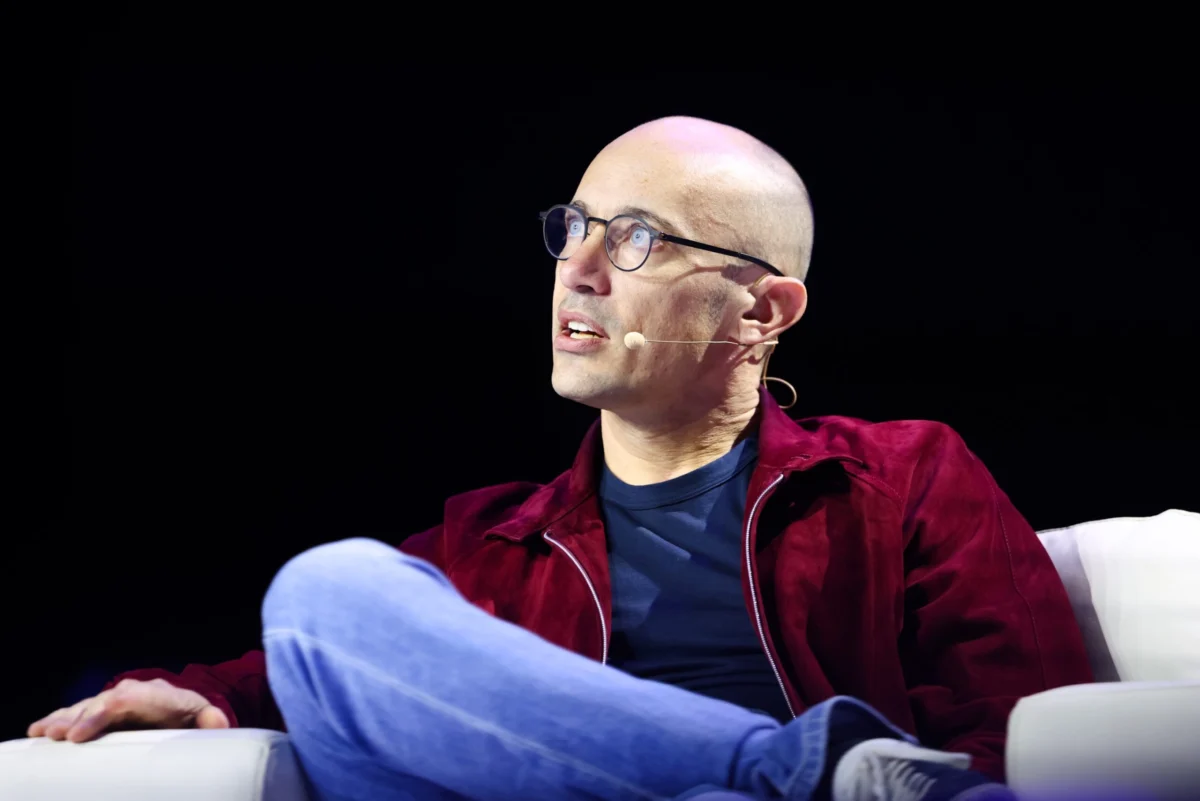
The corporate world’s rush to embrace generative artificial intelligence as an administrative panacea is hitting a formidable wall of reality. Tech executives who once mandated "AI-first" policies and hailed automated tools as the ultimate equalizer for employee productivity are now reversing course. Prominent leaders, including Shopify CEO Tobias Lütke and Duolingo CEO Luis von Ahn, have begun publicly warning against the unchecked generation of unverified AI output. This shift highlights a growing corporate crisis: the proliferation of "workslop"—superficially polished, AI-generated content that drains organizational efficiency, erodes professional trust, and costs companies millions of dollars in lost productivity.
The Evolution of Corporate AI Policy: From Mandate to Moderation
To understand the current backlash against workplace AI, one must examine the trajectory of corporate adoption over the past several years. When generative AI tools like OpenAI’s ChatGPT captured public and commercial attention in late 2022 and 2023, corporate leadership faced immense pressure to integrate the technology into daily workflows. The narrative promoted by Silicon Valley was clear: early adoption was synonymous with competitive survival.
By 2024, this sentiment evolved into stringent internal policies. Companies across the technology, finance, and marketing sectors began treating AI literacy not as an optional skill, but as a core competency. Shopify cofounder and CEO Tobias Lütke epitomized this hardline approach last year, informing employees that utilizing AI was a baseline professional expectation. He instructed staff to exhaust AI solutions before requesting additional human resources or budget approvals.
Similarly, Duolingo CEO Luis von Ahn steered his language-learning platform toward an aggressive "AI-first" model. The strategy involved evaluating personnel based on their active AI integration, replacing human contractors with automated systems, and freezing headcounts across teams capable of automating routine deliverables.
However, the reality of day-to-day operations soon revealed the hidden costs of these mandates. Rather than streamlining workflows, unrestricted AI usage often resulted in an avalanche of unexamined drafts, bloated code, and superficial communications. By mid-2025, both Lütke and von Ahn openly acknowledged the limitations of their initial enthusiasm, citing a stark gap between impressive AI demonstrations and the chaotic reality of scaled implementation.
Anatomy of Workslop: What Happens When AI Goes Unchecked
The phenomenon described by tech executives has been formally defined by researchers as "workslop." Unlike traditional low-quality work produced by fatigued or undertrained human employees, workslop possesses a deceptive veneer of competence. On the surface, an AI-generated report, email, or software script appears well-structured, properly formatted, and articulate. Upon closer inspection, however, these artifacts frequently reveal fundamental flaws, such as broken hyperlinks, fabricated data points, or unnecessarily convoluted programming logic.
During a recent appearance on The Knowledge Project podcast, Tobias Lütke did not mince words regarding the cultural and operational impact of these unchecked outputs. He criticized employees who toss what he termed "slop grenades" across departments—submitting massive, unread missives generated by algorithms without taking personal accountability for the final product.
This sentiment was echoed by Luis von Ahn in an interview with Fast Company. Von Ahn admitted that while generative models excel at producing polished text during controlled demonstrations, they frequently fail to capture the nuanced creativity required at scale. Reflecting on content generation for Duolingo’s curriculum, von Ahn noted that scaling output through automation frequently results in twenty percent of the material being unusable slop, requiring rigorous quality control measures to prevent substandard content from reaching end-users.
Empirical Evidence: The Quantifiable Cost of AI Cleanup
Recent empirical research underscores that workslop is not merely an anecdotal annoyance, but a measurable drag on the global economy. A joint study conducted by BetterUp Labs and Stanford’s Social Media Lab surveyed 962 full-time American desk workers to quantify the prevalence and impact of workplace AI artifacts.
The findings reveal widespread diffusion of the problem: more than half (52.7%) of surveyed employees admitted to sending workslop to their colleagues. Unsurprisingly, this behavior was notably more prevalent within organizations that actively incentivized or mandated aggressive AI usage. Furthermore, over a third of respondents (38%) reported receiving such material, estimating that it cost them an average of 3.4 hours per month simply to review, correct, or rewrite the flawed submissions.
This cleanup burden represents a notable escalation from previous years. Data from a comparable 2024 survey indicated that approximately 40% of workers encountered workslop, spending an average of two hours per month on remediation. Translating this time sink into monetary figures highlights a severe economic penalty. For individual employees, the remediation time equates to roughly $186 per month in lost productivity value. Scaled up to an enterprise level, an organization with 10,000 employees can easily forfeit up to $9 million annually in wasted work hours spent untangling AI errors.
Interpersonal Strain and Workplace Culture
Beyond direct financial losses and time wastage, the proliferation of workslop introduces severe friction into interpersonal workplace dynamics. The BetterUp Labs and Stanford study investigated the social fallout when employees suspect or confirm that a coworker has relied excessively on unedited generative AI.
The data reveals a concerning degradation of professional reputation. Employees who routinely transmit workslop are frequently perceived by their peers as significantly less competent and less collaborative. Among workers who reported receiving flawed AI output, over a third (36%) stated that the experience actively damaged their desire to work with those specific colleagues on future projects.
This erosion of trust highlights a paradox in modern office automation: tools designed to enhance communication and accelerate output can ultimately alienate team members if deployed without human oversight and editorial responsibility. When an employee forwards a lengthy, AI-generated document without reading it, they implicitly signal a disregard for their colleagues’ time and cognitive energy, cultivating an environment of cynicism toward digital transformation initiatives.
Industry Implications and the Push for Responsible AI Governance
As the initial hype surrounding generative AI matures into practical disillusionment, corporate governance models are undergoing a necessary recalibration. Industry analysts suggest that the pendulum is swinging away from uncritical adoption toward a balanced framework emphasizing accountability, critical thinking, and editorial control.
Organizations are increasingly realizing that AI tools are most effective when treated as sophisticated assistants rather than autonomous substitutes for human judgment. Moving forward, successful enterprises are expected to implement explicit guidelines regarding AI usage, establishing clear boundaries between acceptable AI-assisted ideation and unacceptable automated delegation.
Training programs are shifting focus from simply teaching employees how to prompt large language models to instructing them on rigorous verification, fact-checking, and ethical accountability. Leaders like Lütke and von Ahn, having navigated the initial pitfalls of rapid automation, are charting a path toward a more sustainable corporate relationship with artificial intelligence—one where productivity is measured not by the sheer volume of output generated, but by the actual utility and reliability of the final product.









Leave a Reply