

Human decision-making is often framed as a rational process of weighing potential outcomes, yet a growing body of philosophical and psychological research suggests that we are biologically and cognitively ill-equipped to evaluate the most significant transitions of our lives. At the heart of this inquiry is the work of Yale philosopher L.A. Paul, whose seminal book, Transformative Experience, posits that major life decisions—such as parenthood, career changes, or radical lifestyle shifts—create an "epistemic blind spot." This paradox suggests that because we cannot know the subjective nature of a life-altering experience until we have already undergone it, we are fundamentally unable to make an "informed" choice using traditional cost-benefit analysis.
The Vampire Thought Experiment: A Framework for Indecision
To illustrate the limitations of human rationality, Paul introduces a provocative thought experiment: if offered the chance to become a vampire—painlessly, with the promise of extraordinary powers and the assurance that all your friends have already made the transition and are delighted—would you accept?
From a purely logical standpoint, the decision is impossible to resolve. The prospective convert cannot know what it feels like to be a vampire until they are one. Consequently, they cannot compare the subjective experience of their current human life with the future subjective experience of their vampiric life. Relying on the testimonials of existing vampires is insufficient, as their preferences have shifted to align with their new state, rendering them unreliable narrators for the human perspective.
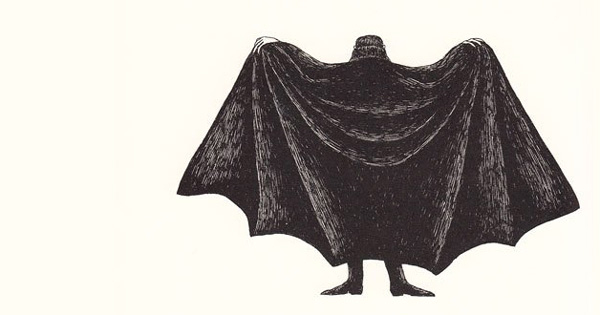
This hypothetical scenario serves as a functional analogue for major life events. Whether it is deciding to become a parent, emigrating to a new country, or undergoing a career change, the individual stands on a precipice where the familiar is known, but the potential gains of the unknown are essentially invisible.
The Anatomy of Transformative Choices
The concept of the "transformative experience" hinges on two primary criteria: epistemic transformation and personal transformation. Epistemic transformation occurs when an experience provides us with knowledge that was previously inaccessible—essentially, you cannot know what it is "like" to have a specific experience without living through it. Personal transformation occurs when that experience fundamentally alters your preferences, character, and psychological makeup.
Historically, philosophers have long wrestled with this resistance to change. Ralph Waldo Emerson famously noted that "people wish to be settled; only as far as they are unsettled is there any hope for them." Similarly, the poet Rainer Maria Rilke argued that true courage lies in the willingness to encounter the "most singular and the most inexplicable."
However, modern research into behavioral economics and psychology, notably the work of Daniel Kahneman and Daniel Gilbert, provides a data-driven foundation for why we struggle with these choices. Kahneman’s work on cognitive biases illustrates that our confidence in our current beliefs often stems from the quality of our existing—and limited—evidence. Gilbert, a Harvard psychologist, has famously observed that "human beings are works in progress that mistakenly think they’re finished," highlighting our tendency to underestimate how much our future selves will differ from our current selves.

Chronology of Psychological Inquiry into Decision-Making
The evolution of understanding how we handle major transitions has progressed through several distinct phases:
- 1950s-1970s: The Rational Actor Model. Traditional economic theory posited that individuals make decisions based on utility maximization. If the potential future utility exceeds current utility, the rational choice is to transition.
- 1980s-1990s: The Rise of Behavioral Economics. Researchers began identifying "bounded rationality," where human decision-making is constrained by cognitive limitations and information availability.
- 2000s-Present: The Epistemic Gap. Philosophers like L.A. Paul and psychologists like Daniel Gilbert began focusing on the "unknown unknowns." This period identified that for many, the very act of choosing is not about predicting the future but about deciding who we want to become.
Supporting Data: The Impact of Life-Altering Decisions
Studies on major life events, such as marriage, parenthood, and job changes, consistently demonstrate the "forecasting error." For instance, longitudinal studies on parental satisfaction often show a discrepancy between expected levels of happiness and reported levels of day-to-day fulfillment.
Data from the American Psychological Association (APA) suggests that "uncertainty intolerance" is a major driver of anxiety during periods of life transition. When faced with a decision that carries high stakes but low predictability, individuals often default to the status quo—not because the status quo is superior, but because the unknown is perceived as a greater risk. This phenomenon is frequently cited as a root cause of the "fear of missing out" (FOMO) and the paralysis associated with "analysis paralysis."
Official Perspectives and Academic Reception
The academic community has largely embraced Paul’s work as a crucial corrective to traditional decision-making models. By shifting the focus from "what I will get" to "who I will become," Paul provides a framework that prioritizes self-discovery over utility.

Critics, however, argue that if we cannot make rational decisions about transformative experiences, then many of our most important life choices are inherently arbitrary. Yet, Paul counters that this is not a failure of logic, but a feature of the human condition. The "incompleteness" of our knowledge, much like Gödel’s incompleteness theorem in mathematics, is an inherent limit of the conscious mind. We cannot "solve" the problem of the future; we can only decide to embrace the experience of becoming.
Broader Implications for Personal Growth
The implications of this paradox extend into almost every facet of contemporary life. In a society that values data-driven decision-making, the acknowledgment that we cannot fully "data-process" our way into a new life phase is both humbling and liberating.
- Career Development: Many individuals delay career pivots because they cannot calculate the precise return on investment. The "vampire problem" suggests that the value lies in the acquisition of new, previously inaccessible perspectives, rather than a linear salary increase.
- Mental Health and Resilience: Understanding that the discomfort of change is an epistemic limitation rather than a sign of a "bad" decision can help reduce the anxiety associated with major life shifts.
- Societal and Cultural Shifts: As demographics change and individuals undergo more frequent life transitions—often referred to as "the gig life" or the "multi-stage life"—the ability to navigate these transformative experiences without total information will become an essential skill.
The Path Forward: Choosing the Unknown
Ultimately, L.A. Paul’s conclusion is that the best response to the inherent uncertainty of life is to choose based on whether we are curious about the version of ourselves that will emerge on the other side of the change. This requires a shift in mindset: moving away from the desire for certainty and toward an acceptance of radical, transformative discovery.
As we continue to live in an era characterized by rapid technological and social shifts, the ability to navigate these "vampiric" decisions—where the outcome is unknowable—is perhaps the most significant challenge of modern life. We are, by definition, perpetual works in progress, and the decision to change is not merely a choice between two paths, but a choice about the architecture of our future selves. By accepting the limits of our current imagination, we gain the freedom to step into the abyss, not with the guarantee of a specific reward, but with the courage to discover the unknown.








Leave a Reply