Across the sprawling river valleys, fertile agricultural plains, and resource-rich highlands of developing Asia, a profound shift in environmental justice is being spearheaded by an unlikely demographic: rural women. While international financial institutions and national governments frequently market mega-infrastructure projects and sweeping land-reform policies as vehicles for modernization and poverty alleviation, the human reality on the ground often tells a starkly different story. For decades, communities have borne the brunt of ecological degradation, forced displacements, and economic disenfranchisement. Among these populations, women have emerged not merely as victims of poorly planned development, but as the foundational architects of long-term resistance, legal accountability, and community survival.
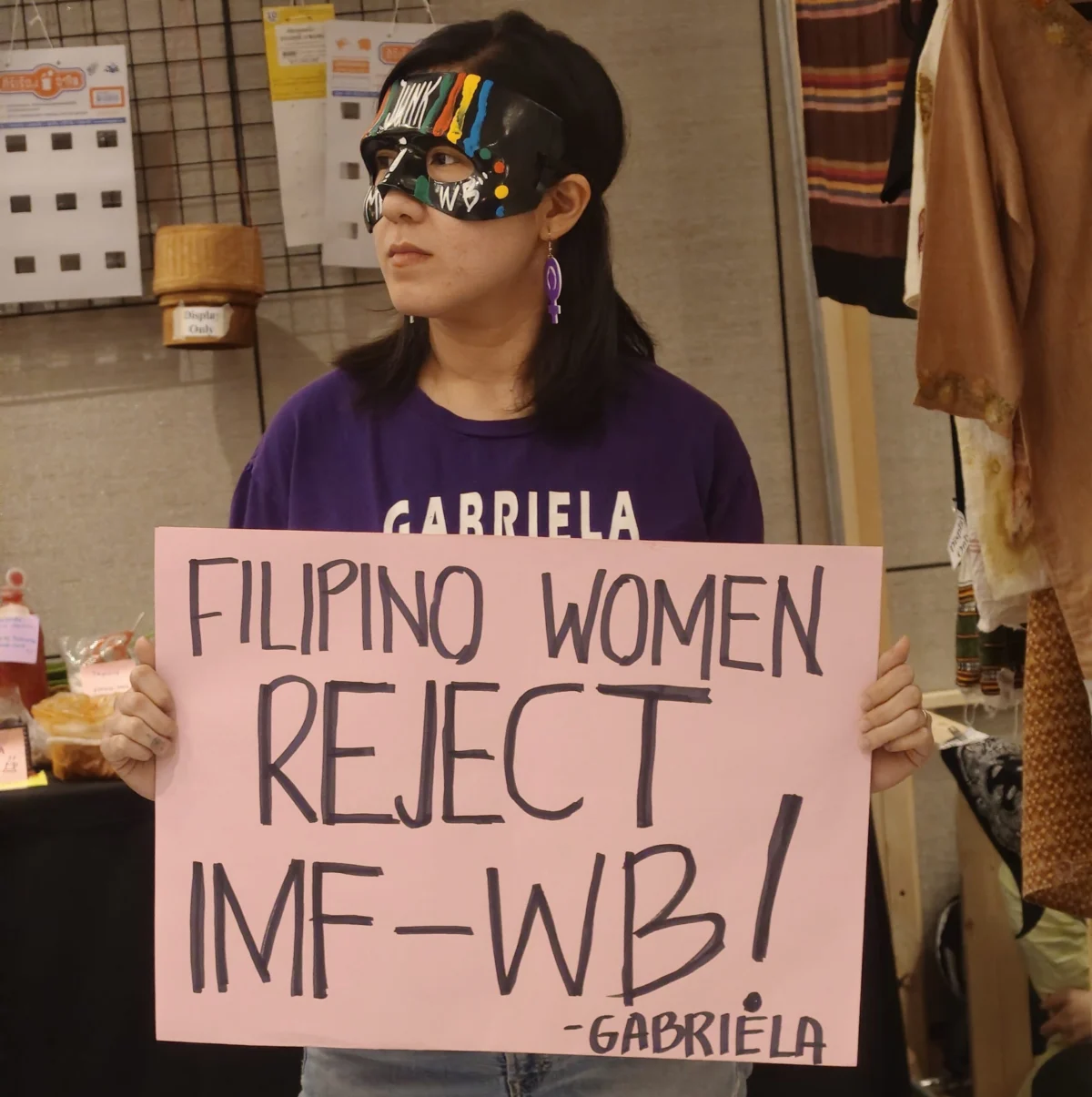
This dynamic was thrust into the global spotlight during a high-profile gathering in Bangkok, Thailand. At the "Our Voices Count! Counter Docket" people’s tribunal, more than 400 women land and environmental rights defenders from over 30 nations convened to bear witness, share testimonies, and demand institutional accountability from the World Bank Group and the International Monetary Fund (IMF). The tribunal served as a collective indictment of international financial architecture, highlighting how top-down development initiatives systematically undermine local livelihoods while disproportionately inflicting intergenerational trauma on women.
Three Decades of Defiance: The Pak Mun Dam Legacy
The enduring spirit of this pan-Asian movement is perhaps best embodied by Sompong Viengchan. Now in her mid-70s, Sompong’s life has been defined by an unyielding crusade against the Pak Mun Dam, a 136-megawatt multipurpose hydroelectric project constructed along the Mun River, a key tributary of the Mekong River in Thailand. Over the course of her decades-long struggle, Sompong has witnessed 16 prime ministers and 26 cabinets come and go, yet her foundational demand for justice remains entirely unfulfilled.
The genesis of this conflict dates back to 1990, when Sompong and her neighbors first realized that the World Bank-cofunded project would decimate their traditional way of life. Living in a downstream village with negligible agricultural land, the community relied almost exclusively on freshwater fishing. However, the construction process—marked by extensive rock blasting—obstructed migratory fish pathways and permanently altered the aquatic ecosystem.

"Living in the village downstream with no agricultural land, we rely primarily on fishing," Sompong recounted to the tribunal delegates in Bangkok. "Blasting rock for dam construction wiped out local fish. We faced financial ruin—investments vanished and were replaced by debt; livelihoods became impossible to sustain. Families were forced to send their children to big cities to work, and when the area flooded, the entire community had to relocate."
The social and ecological devastation wrought by the Pak Mun Dam was officially corroborated a decade after its completion. In 2000, the World Commission on Dams—an independent body established by the World Bank and the International Union for Conservation of Nature (IUCN)—released a landmark evaluation. The commission determined that the dam had displaced approximately 1,700 households, stripping them of their houses, land, or both. Furthermore, fish catches within the reservoir and directly upstream plummeted by an estimated 60% to 80%.
Sompong offers a sobering metaphor for the long-term consequences of such large-scale interventions: "Building a dam is the same as burying a person alive. It doesn’t kill you right away, but it ruins your life. We used to catch and sell fish, but now we are compelled to buy fish to eat."
Despite facing decades of state resistance, the tireless activism of Sompong and her coalition has yielded notable, hard-fought concessions. By the mid-2020s, sustained community pressure and persistent protest encampments compelled Thai authorities to critically re-evaluate whether the dam’s actual energy output justifies its staggering social and ecological toll. According to data from the Electricity Generating Authority of Thailand (EGAT), the Pak Mun Dam’s average annual electricity generation is roughly equivalent to that of a fully optimized 32-megawatt dam—a fraction of its nominal 136-megawatt capacity. Moreover, community persistence has forced authorities to periodically open the dam’s massive gates, allowing migratory fish species to travel upstream and partially revive the river’s depleted biological systems.
A Continental Tapestry of Displacement and Insecurity
The grievances voiced in Bangkok extended far beyond the banks of the Mun River, revealing a systemic pattern of environmental injustice spanning multiple nations and funding bodies.

In Nepal, indigenous communities face existential threats from upcoming mega-infrastructure projects. Manju, a farmer born and raised within the Rai indigenous community along the Dudh Koshi River, now lives directly inside the projected footprint of the Dudh Koshi Storage Hydroelectric Project. Designed as a massive 670-megawatt facility, the project has advanced with preliminary planning support from the World Bank and the Asian Development Bank.
However, since 2023, government-imposed land-use restrictions within the designated project zone have effectively paralyzed daily life. "We cannot buy or sell our lands under the freeze order by the government," Manju explained. "A freeze blocked us from financing our children’s education." Although physical construction has yet to commence, local residents already experience profound psychological and financial distress. The pervasive uncertainty—compounded by a lack of transparent communication regarding the eventual loss of ancestral lands and natural resources—has left villagers in a state of suspended animation.
A similar narrative of prolonged trauma characterizes the legacy of the Kedung Ombo Dam in Central Java, Indonesia. Funded in part by a $156 million loan disbursed by the World Bank in 1985, the dam project led to the displacement of thousands of rural residents. Risma Umar, a social activist with Aksi for Gender, Social and Ecological Justice, spent years documenting the immense suffering that persisted long after the reservoir began filling in 1989.
According to Umar, the struggle for just compensation was severely exacerbated by state intimidation. Residents who resisted relocation were frequently branded as communist sympathizers by military authorities, driving many into terrified hiding. The psychological scars, she noted, run deep. "This isn’t just an issue of poverty or environment, but one of prolonged, intergenerational trauma faced by women," Umar stated, recounting how some displaced women continue to hide under beds or flee into the mountains whenever they spot individuals wearing military uniforms.
The Weaponization of Bureaucracy and the Fight for Land Security
In other contexts, development interventions manifest not as physical dams, but as sweeping bureaucratic and administrative overhauls that jeopardize land tenure security.

In the Philippines, Cathy Estavillo, secretary general of the Amihan National Federation of Peasant Women, has spent years organizing opposition to the World Bank-financed SPLIT (Support to Parcelization of Lands for Individual Titles) project. The initiative aims to convert collectively held agrarian reform lands into individual titles across roughly 1.4 million hectares (3.5 million acres) spanning 77 provinces.
While international lenders frame land titling as a mechanism to empower farmers with formal property rights, Estavillo argues that the reality is deeply regressive. "This individualization has exposed vulnerable households to severe economic risks, with poor farmers forced to pawn or sell their land titles to outside investors," she warned.
The defense of peasant and indigenous lands in the Philippines carries extraordinary personal and professional risks. Global Witness consistently ranks the Philippines as the deadliest country in Asia for land and environmental defenders, having documented 12 killings in 2025 alone, with military involvement strongly suspected in nearly half of those cases. For Estavillo, leadership carries constant peril; in 2021, state authorities froze the bank accounts of the Amihan federation under unproven allegations that the organization was funneling funds to communist insurgents, effectively halting vital support programs for women farmers.
Despite such severe intimidation, Estavillo remains defiant. "Women and farmers will not be cowed in raising awareness, organizing, and mobilizing to advance the fundamental rights of the people," she declared at the tribunal.
Documentation as a Tool of Survival and Resistance
Amidst systemic marginalization, grassroots defenders are increasingly turning to independent documentation as an essential instrument of self-preservation and political accountability.

In West Papua, Indonesia—a region burdened by vast mineral wealth, including the world’s largest gold mine and extensive copper reserves—indigenous activist Yokbeth Felle has utilized digital platforms and community-led media to elevate local voices onto the global stage. Despite hosting mega-extraction projects, West Papua consistently registers among the most disadvantaged regions in Indonesia concerning basic health, educational attainment, and overall living standards.
"Within a system that marginalizes us in our own land, documentation is both a tool of resistance and a means of survival," Felle emphasized during her address in Bangkok. By capturing and broadcasting the realities of corporate extraction and state neglect, Papuan women are actively constructing an unignorable evidentiary record of developmental harm.
Broader Implications and Institutional Reckoning
The collective testimonies presented at the Bangkok tribunal point to fundamental structural flaws in how major international financial institutions evaluate, finance, and monitor development projects. Critics argue that environmental and social impact assessments frequently prioritize bureaucratic compliance over genuine, free, prior, and informed consent (FPIC) from impacted indigenous populations and rural communities.
Furthermore, the disproportionate burden shouldered by women—ranging from the loss of subsistence fisheries and agricultural plots to the psychological toll of militarized displacement and the collapse of community cohesion—underscores an urgent need for gender-responsive accountability mechanisms within institutions like the World Bank and the IMF.
As the gates of the Pak Mun Dam occasionally swing open to let migratory fish pass, they serve as a physical reminder that while damaged ecosystems and fractured communities can rarely be restored to their original states, persistent collective action can force institutional introspection. From the river valleys of Thailand and Nepal to the agrarian plains of the Philippines and the mining frontiers of Indonesia, women leaders are ensuring that the human and ecological costs of unchecked development are neither forgotten nor repeated.