President Donald Trump has announced a significant shift in U.S. aviation policy, declaring that the federal government will move to permit U.S. airlines to operate non-stop flights to Lebanon for the first time in over four decades. The announcement, made via social media, was met with an immediate affirmation from Transportation Secretary Sean Duffy, who signaled the Department of Transportation’s readiness to implement the directive. This move comes as part of a broader diplomatic effort to stabilize the Levant region through economic integration and trade incentives, though it faces significant hurdles ranging from regulatory complexities to acute security concerns in Lebanese airspace.
The declaration represents a potential end to the 1985 suspension of direct air service between the two nations, a ban that has shaped travel patterns for the Lebanese-American diaspora for a generation. While the executive branch has signaled its intent, the path toward a commercial aircraft touching down at Beirut-Rafic Hariri International Airport (BEY) with a U.S. flag on its tail remains fraught with legal and operational obstacles.
The Legal Framework: Presidential Authority and the 1985 Suspension
To understand the current directive, one must look at the statutory authority governing international aviation security. Under 49 U.S.C. § 40106(b), the President of the United States holds the specific authority to suspend the operating authority of both U.S. and foreign carriers to a specific country. This power is typically invoked when the President determines that a foreign nation has failed to comply with the Convention for the Suppression of Unlawful Seizure of Aircraft (the anti-hijacking convention) or when a country is found to be sheltering organizations that use aircraft hijacking as a tool of policy.
The current ban on direct flights to Lebanon dates back to 1985, following the harrowing hijacking of TWA Flight 847. In that incident, which lasted two weeks, Lebanese hijackers murdered U.S. Navy diver Robert Stethem and held dozens of passengers hostage. In the aftermath, the Reagan administration suspended all direct air links, citing the Lebanese government’s inability to secure its primary airport and the presence of militant groups with a history of civil aviation interference.
While Secretary Sean Duffy responded to the President’s directive with enthusiasm, the legal "action item" rests primarily with the White House rather than the Department of Transportation (DOT). For the ban to be lifted, the President must issue a formal presidential determination that amends or revokes the 1985 suspension. Only after this executive action is taken can the DOT and the Federal Aviation Administration (FAA) begin the administrative process of granting route authorities to specific carriers.
A History of Conflict and Air Travel Restrictions
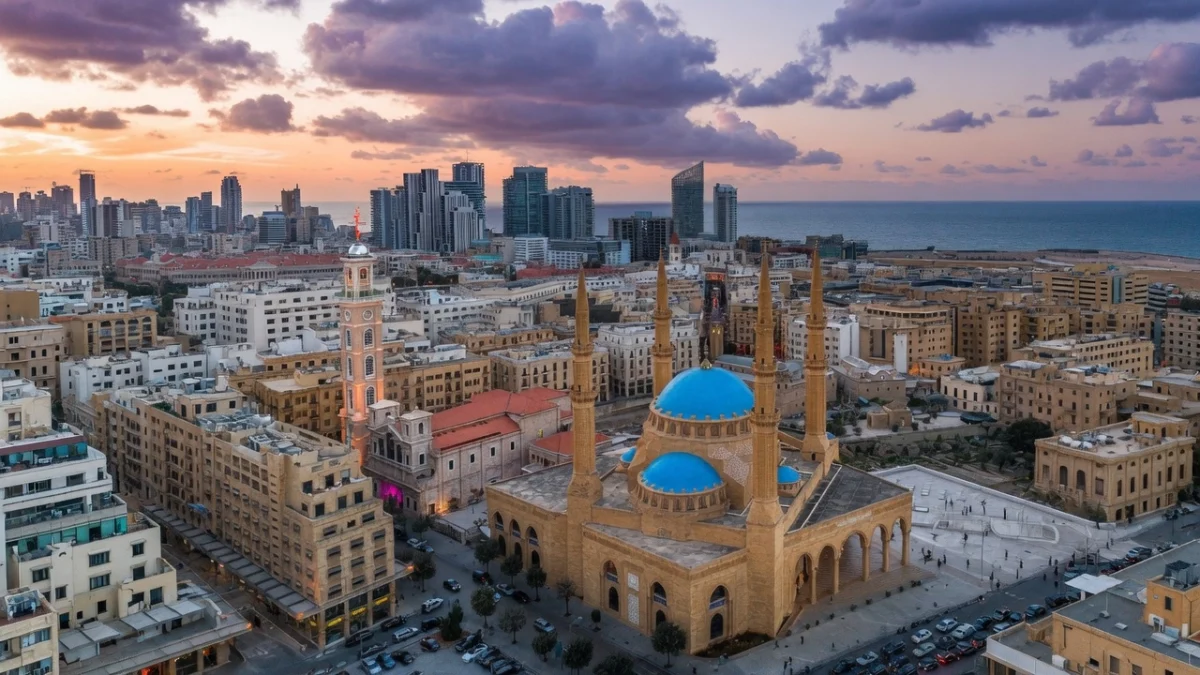
The relationship between U.S. civil aviation and Lebanon has been defined by the country’s volatile history. During the mid-20th century, Beirut was famously known as the "Paris of the Middle East," serving as a cosmopolitan hub for finance, culture, and tourism. Middle East Airlines (MEA), the national carrier, was a symbol of this era, known for its progressive policies—including the recruitment of female pilots as early as the 1990s—and its extensive network.
However, the Lebanese Civil War (1975–1990) and subsequent regional conflicts systematically dismantled this reputation. The 1985 TWA hijacking was the final catalyst for the U.S. total ban. Over the subsequent decades, while European and Middle Eastern carriers resumed service to Beirut, U.S. regulators remained steadfast. Previous administrations have occasionally reviewed the ban during periods of relative calm, but the persistent influence of Hezbollah—a group designated as a terrorist organization by the U.S. State Department—has consistently prevented a full restoration of direct flights.
The current push for direct flights is reportedly tied to a new U.S.-brokered framework aimed at the disarmament of Hezbollah and the strengthening of the Lebanese Armed Forces. By offering direct air travel and a potential trade deal, the Trump administration appears to be using aviation as a "carrot" in a complex geopolitical negotiation.
Safety and Security Concerns in Lebanese Airspace
Despite the political desire to open routes, the safety of the Beirut Flight Information Region (FIR) remains a critical concern for international regulators. The European Union Aviation Safety Agency (EASA) has maintained a cautious stance on Lebanese airspace. In a bulletin issued as recently as July 8, 2026, EASA characterized the risk to civil aircraft in the region as "high."
The primary concern cited by EASA is the lack of "effective proactive airspace deconfliction." This technical term refers to the coordination between civil air traffic control and military actors to ensure that commercial planes are not caught in the crossfire of regional skirmishes or rocket launches. Lebanon’s air traffic control system is formally managed by the government, but the presence of armed groups like Hezbollah, which operates independently of the state, creates an environment where rockets or drones can be launched without notice to civil authorities.
For U.S. airlines, these safety issues are not merely theoretical. Carriers must satisfy their own safety boards, insurance providers, and labor unions. The Air Line Pilots Association (ALPA) and other labor groups are historically hesitant to fly into regions where the local government does not maintain absolute control over the security of the airport perimeter and the surrounding airspace. Without a significant improvement in the ground-level security situation, it is unlikely that a U.S. carrier would risk a multi-million dollar airframe and the lives of its crew, regardless of the President’s permission.
Economic Realities and Market Demand
Even if the security situation were resolved, the economic case for non-stop flights to Beirut is tenuous. Lebanon has been in the throes of a severe economic collapse since 2019. The World Bank has described it as one of the worst financial crises globally since the mid-19th century. The Lebanese banking system is largely insolvent, and the Lebanese pound has lost approximately 98% of its value.
This economic devastation has impacted travel demand. In 2025, Beirut-Rafic Hariri International Airport saw roughly 7 million passengers, but the first half of 2026 showed a sharp decline, with only 2 million passengers recorded. To put this in perspective, the airport may end the year with fewer passengers than regional U.S. airports like Boise, Idaho. Furthermore, transit traffic—passengers using Beirut as a hub to fly elsewhere—is almost non-existent, with only 1,890 transit passengers recorded in the previous year.
The primary market for a U.S.-Lebanon route would be "VFR" (Visiting Friends and Relatives) traffic. According to the latest U.S. Census data, there are approximately 685,672 people of Lebanese descent living in the United States. This population is heavily concentrated in specific geographic areas, most notably in the metropolitan regions of Detroit and Dearborn, Michigan.
From a commercial perspective, VFR traffic is generally considered "low yield." These passengers tend to travel in the economy cabin, book during peak summer or holiday seasons, and carry significant amounts of checked baggage, which increases fuel costs and reduces the space available for high-profit cargo. There is currently almost zero corporate or business travel demand between the U.S. and Lebanon, which is the segment of the market that typically sustains long-haul international routes.
Competitive Analysis and Potential Routes
If a U.S. airline were to succumb to political pressure or see a niche opportunity, the most likely candidates would be United Airlines or Delta Air Lines. United Airlines has historically been the most adventurous U.S. carrier regarding "long-tail" or "oddball" international routes, often experimenting with markets that its competitors avoid.
Given the demographic concentration of the Lebanese diaspora, a three-times-weekly service using a Boeing 787-8 Dreamliner would be the most logical operational choice. Potential departure points would include:
- Newark Liberty International Airport (EWR): As a major East Coast hub for United, Newark offers the best connectivity for Lebanese-Americans living across the Northeast.
- Detroit Metropolitan Airport (DTW): As a Delta hub and the gateway to the largest Lebanese community in the U.S., Detroit would be the most direct point of origin for the primary customer base.
However, U.S. carriers would face stiff competition from "Middle East Three" (ME3) carriers and Turkish Airlines. Currently, travelers flying from the U.S. to Beirut typically connect through Istanbul, Dubai, or Doha. Turkish Airlines, in particular, dominates this market due to its massive network and the geographical proximity of Istanbul to Beirut, which allows for short connection times. U.S. carriers, with their higher labor costs and different service models, would struggle to underprice these established competitors.
Implications and Outlook
The President’s declaration marks a symbolic shift in U.S.-Lebanon relations, but it is unlikely to result in immediate changes to flight schedules. The aviation industry operates on long lead times and requires rigorous safety certifications that go beyond political pronouncements.
If the administration follows through with a formal presidential determination, the next steps would involve the FAA conducting an International Aviation Safety Assessment (IASA) to ensure Lebanon’s civil aviation authority meets ICAO standards. Simultaneously, the Transportation Security Administration (TSA) would need to audit the security protocols at Beirut airport to ensure they meet the stringent requirements for flights entering U.S. airspace.
For now, the announcement serves more as a diplomatic signal than a commercial reality. It indicates a willingness on the part of the U.S. to normalize relations and provide economic lifelines to Lebanon, provided the country can meet international security and political benchmarks. Until the threat of uncoordinated military activity in Lebanese airspace is eliminated and the country’s economy shows signs of stabilization, U.S. airlines are likely to remain on the sidelines, regardless of the lifting of the 1985 ban. The "Paris of the Middle East" remains a dream for the future of aviation, rather than a destination for the present.