
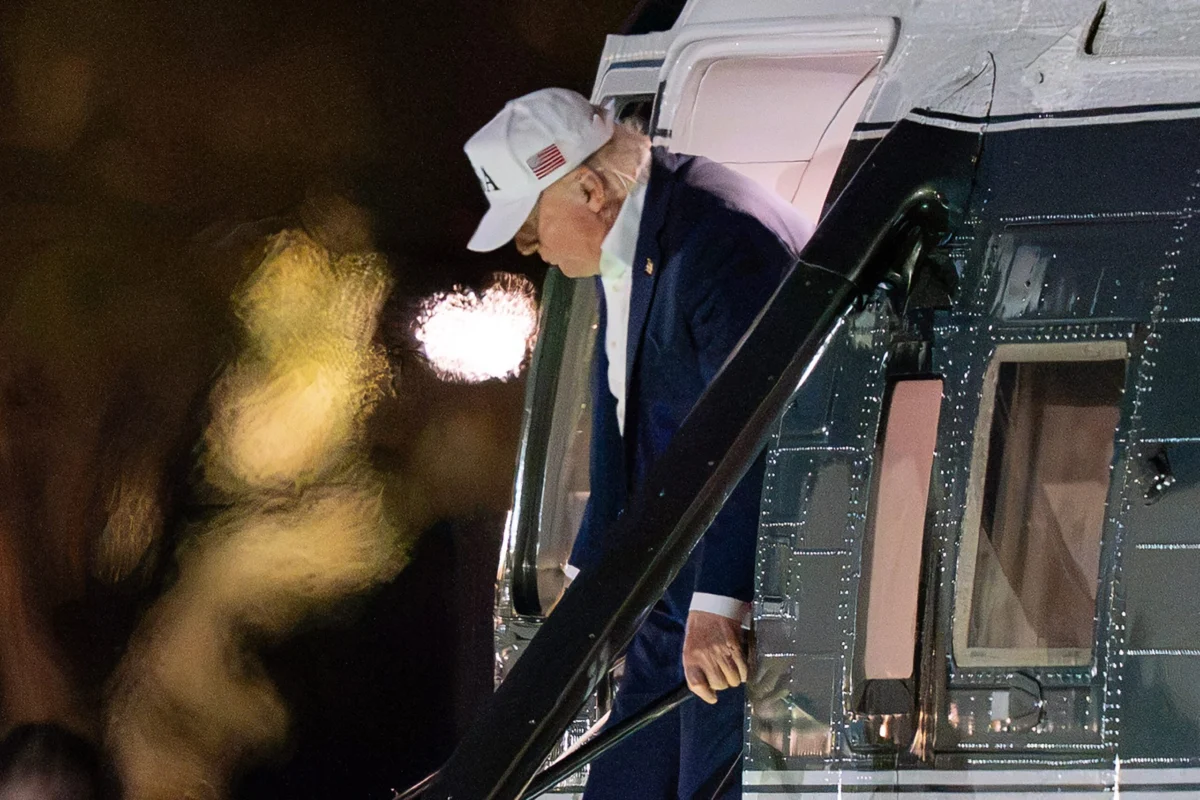
President Donald Trump inaugurated the newly constructed White House helicopter landing pad on Monday, using oversized gold scissors to cut a red, white, and blue ribbon on the South Lawn. The ceremony, intended to project an image of routine executive functioning, was immediately overshadowed by a burgeoning constitutional crisis over press freedom. Major television news networks withheld their standard camera crews from the grounds in solidarity with CNN, which remains barred from White House access under a controversial administrative directive issued late last week.
The unfolding standoff highlights escalating tensions between the executive branch and the American media establishment. While the president sought to draw attention to his latest infrastructure initiative—designed in part to impress visiting foreign dignitaries ahead of a high-stakes diplomatic summit—legal challenges and a collective industry pushback have shifted the national spotlight toward fundamental questions regarding government transparency, administrative authority, and First Amendment protections.
A Ceremony Drowned Out by Rotor Wash and Boycott
Against a backdrop of a light autumn drizzle on the South Lawn, President Trump exchanged handshakes with project officials and construction workers clad in high-visibility green smocks and hardhats. However, any remarks the president intended to deliver to mark the occasion were rendered entirely inaudible by the deafening roar of Marine One idling nearby.
Ordinarily, the White House Television Pool—a rotating consortium of major broadcast networks responsible for capturing official audio and visual records of executive events—would have positioned professional boom microphones to capture the proceedings. On Monday, however, those positions sat vacant. In response to the administration’s decision to ban CNN from taking its assigned turn in the pool rotation, ABC, CBS, NBC, and Fox News took the extraordinary collective step of skipping the ribbon-cutting ceremony.
Declining to answer shouted questions from reporters before boarding the presidential aircraft for a flight to New York ahead of the United Nations General Assembly, Trump utilized his preferred digital platform to address the event. "We are just leaving the White House Lawn on the maiden voyage from the newly built, and very beautiful, Heliport!" he wrote.
The Legal and Constitutional Battleground
The physical absence of network cameras outside the Oval Office is merely the latest manifestation of a deepening legal war over press access. The conflict erupted into the federal courts after the administration announced sweeping restrictions barring specific news organizations from covering White House grounds. In response, media entities including MS Now, Politico, and CNN filed joint lawsuits arguing that the administration’s actions constitute an unlawful viewpoint-based restriction in violation of the First Amendment.
Legal scholars and press freedom advocates have expressed deep concern over the administration’s pattern of utilizing administrative mechanisms to restrict coverage from outlets that publish critical reporting. The administration, conversely, maintains that access to the executive mansion is a matter of executive discretion rather than an absolute constitutional right. The pending litigation is expected to test the limits of presidential authority regarding federal property access and the parameters of the First Amendment as applied to the modern press corps.
Architectural Ambitions and the Quest for Longevity
The unveiling of the helipad represents the culmination of a construction project that began in June, transforming sections of the historic South Lawn into an active industrial workspace. Throughout his second term, President Trump has actively cultivated the persona of "builder-in-chief," dedicating substantial time and political capital to physical renovations across the capital, even as his administration navigates complex foreign policy dilemmas and domestic political headwinds.
According to administration officials, the helipad reconstruction was necessitated by the ongoing modernization of the presidential fleet. Older, Vietnam War-era helicopters historically utilized for presidential transport have been phased out in favor of newer, heavier Sikorsky aircraft procured from defense contracting giant Lockheed Martin. Administration engineers determined that the downwash generated by the more powerful modern rotorcraft would inflict severe, recurring damage on traditional turf lawns.
Trump has frequently emphasized the durability of the materials selected for the project, boasting that the extensive granite installation features a "million-year life." Such grandiose longevity claims have previously drawn skepticism from structural historians and urban planners. Earlier in his tenure, Trump asserted that his revitalization of the Lincoln Memorial’s Reflecting Pool would endure for a century, only for weather degradation to cause surface peeling and fading shortly after completion.
Financing, Costs, and Public-Private Discrepancies
The funding structure of the White House helipad project has been a subject of ongoing inquiry. In July, President Trump stated that the renovation would be entirely privately funded, estimating total costs to be approximately $6 million. He specifically thanked the leadership of Lockheed Martin, suggesting the defense contractor was bearing the financial burden given their manufacturing role in supplying the upgraded helicopters.
However, the true financial expenditure remains difficult to ascertain due to extensive ancillary engineering work, including complex grading and land-leveling operations required to stabilize the South Lawn. The opacity surrounding the project’s ledger echoes previous infrastructure initiatives undertaken during Trump’s tenure. Notably, when initial plans for a $400 million East Wing ballroom were announced, the administration asserted that private donors would shoulder the expense. Months later, however, the White House submitted formal requests to Congress seeking $1 billion in public funds dedicated to security enhancements associated with the structure.
Diplomatic Timing and Midterm Political Calculus
The timing of the helipad’s debut is intimately tied to broader geopolitical and electoral calendars. The White House has rushed construction crews to complete the project ahead of an impending state visit by Chinese President Xi Jinping, scheduled to begin on Wednesday. Trump has repeatedly voiced his desire to use the upgraded facilities to impress foreign leaders, framing the infrastructure as a testament to American industrial capability.
Yet, these diplomatic preparations unfold against a challenging domestic backdrop. With the midterm congressional elections only six weeks away, the administration is contending with sinking public approval ratings driven by voter anxieties over inflation, economic uncertainty, and the protracted military engagement in Iran. Political analysts suggest that the president’s focus on high-profile construction projects and aggressive rhetoric targeting political opponents is intended to energize the Republican base ahead of a tightly contested legislative cycle.
Broader Implications for the Executive Branch and Media Relations
As President Trump departed Washington for New York to address the United Nations General Assembly, the dual narratives of the day—architectural self-aggrandizement and a freezing of press relations—crystallized the central dynamics of his second term.
The media blackout on the South Lawn sets a volatile precedent for the remainder of the presidential term. Should the courts decline to intervene swiftly in the ongoing lawsuits filed by media organizations, the executive branch may find emboldened legal pathways to curate its press corps, effectively dividing the media landscape into approved and proscribed entities.
Ultimately, the ribbon-cutting for the granite helipad was designed to project permanence, power, and prestige. Instead, the event served as a stark reminder of the fragile equilibrium governing the relationship between the executive branch and the constitutional safeguards designed to hold it accountable.






Leave a Reply