
The United States-led naval blockade spanning the Persian Gulf and the strategic Strait of Hormuz is exerting unprecedented pressure on the Iranian economy, fundamentally altering the geopolitical and economic landscape of the Middle East. With Washington’s military forces effectively sealing off Iran’s vital southern maritime corridors, Tehran’s attempts to bypass the blockade through overland trade routes have run into severe logistical, bureaucratic, and financial roadblocks. While bilateral commerce with immediate neighbors has ticked upward, the staggering cost of land transport, coupled with crippling domestic inflation and critical fuel shortages, has brought the nation’s broader trade infrastructure to the brink of collapse.
The enforcement of the blockade represents a critical turning point in the ongoing conflict, highlighting how modern economic warfare can paralyze a nation heavily dependent on maritime access. Before hostilities commenced, more than 80% of Iran’s total trade tonnage moved seamlessly via sea through its southern ports. Today, that maritime lifeline has been systematically severed. According to recent statements from U.S. Central Command (CENTCOM), naval forces have redirected 109 commercial vessels to ensure absolute compliance with the blockade, cementing a total embargo on Iranian maritime exports while simultaneously safeguarding international shipping lanes for neighboring Gulf states.
The Chronology of Conflict and Trade Isolation
The seeds of the current economic crisis were sown months ago when simmering geopolitical tensions boiled over into open conflict. In the immediate aftermath of the outbreak of hostilities, the Strait of Hormuz—through which a massive share of the world’s petroleum passes—became a high-risk zone characterized by regional drone and missile attacks intended to disrupt international commerce.
However, the U.S. military mounted a decisive counter-campaign to clear maritime transit lanes of underwater mines and neutralize hostile threats. Over the past two months, CENTCOM chief Adm. Brad Cooper reported that the U.S. military has successfully supported the transit of 1 billion barrels of oil through the strait, assisting more than 2,000 commercial ships. Over the past fortnight, the volume of crude oil, general cargo, and liquefied natural gas traversing the strait reached its highest level in six months. In stark contrast, Adm. Cooper noted bluntly, "Iran has exported zero barrels thanks to our ironclad blockade."
As the naval chokehold tightened, the Iranian government found itself scrambling to find alternative avenues for international commerce, turning its gaze toward its land borders.
Overland Logistics Collapse and Skyrocketing Costs
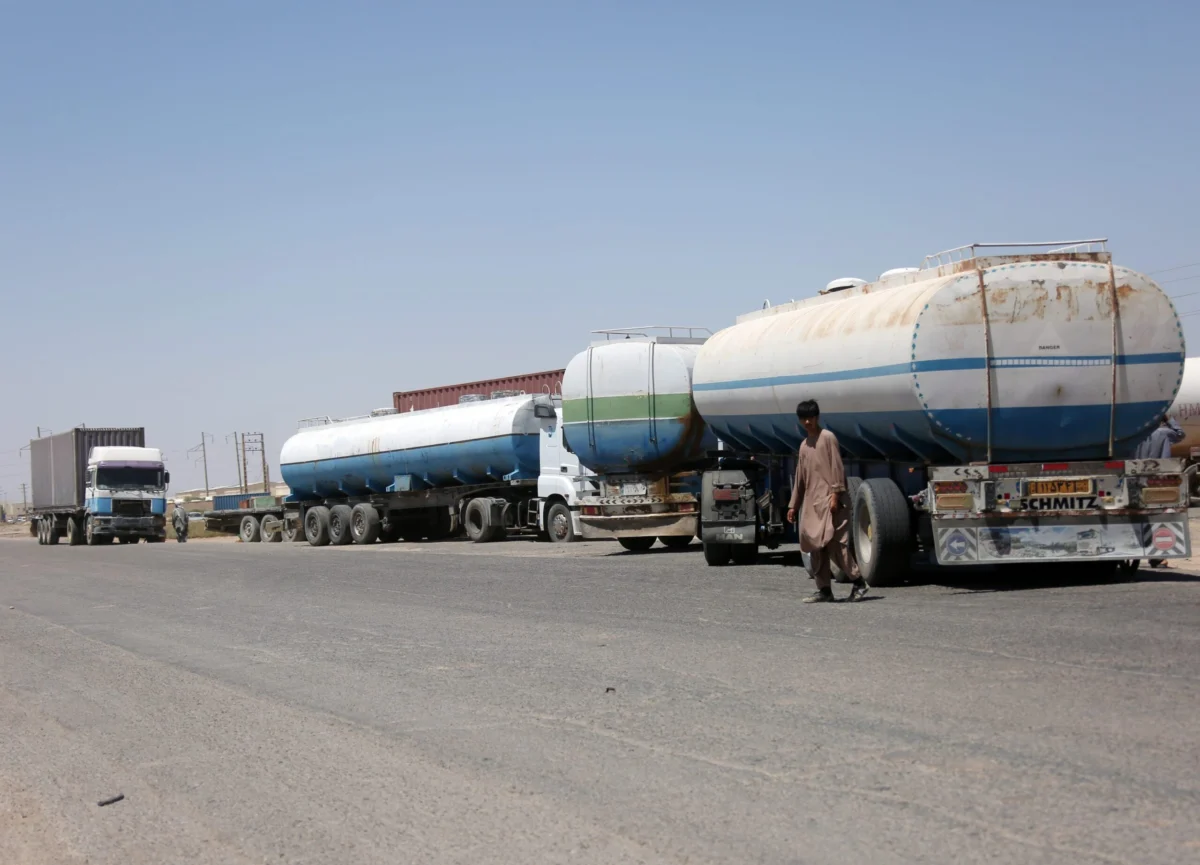
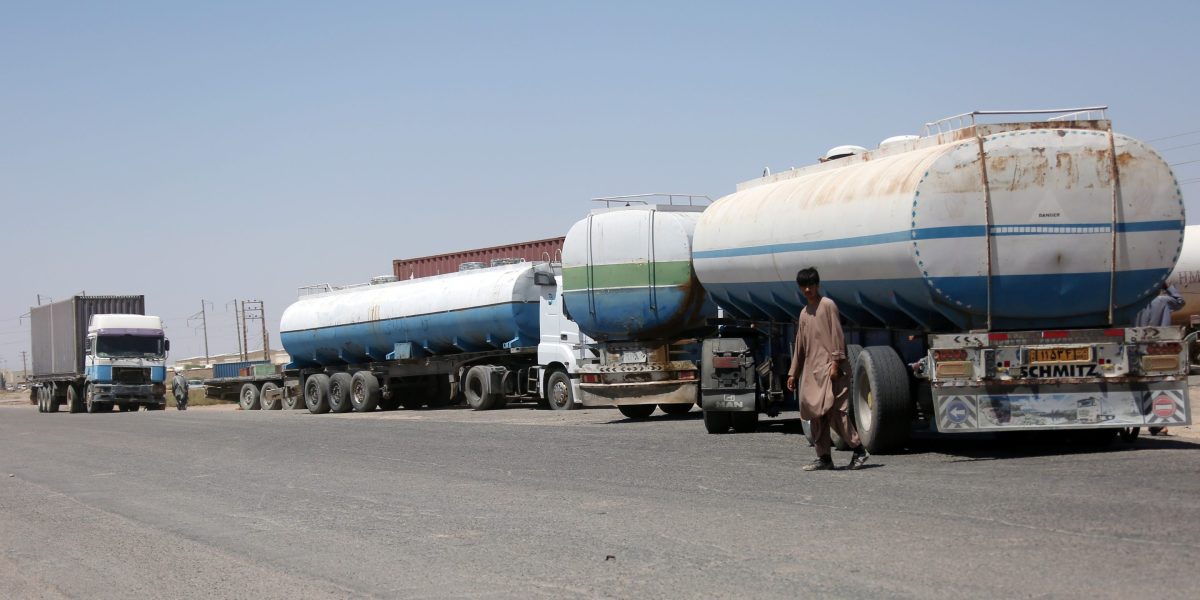
With southern ports effectively inaccessible, convoys of heavy freight trucks have flooded land routes connecting Iran to Turkey, Pakistan, Afghanistan, Iraq, and Turkmenistan. Bilateral trade indicators initially suggested resilience; for instance, trade volume between Iran and Turkey surged by 19% to reach $3.2 billion during the first half of the year.
Yet, this sudden redirection of freight traffic exposed profound structural deficiencies. Iran’s overland infrastructure was never engineered to absorb the astronomical volume of goods previously handled by container ships. The result has been catastrophic gridlock. Bureaucratic bottlenecks, including exhaustive and outdated customs verification procedures, have left thousands of vehicles stranded. At a single border crossing with Turkey, reports indicated that 3,700 trucks were backed up on the Iranian side alone.
For commercial drivers, these systemic failures translate into grueling delays. Truckers hauling goods across the region frequently report waiting more than three weeks—and in some cases up to 24 days—just to clear border checkpoints on round trips. During these prolonged standstills, perishable food items spoil inside uncooled trailers, while administrative delays for industrial essentials compound inflationary pressures inside Iran, where year-over-year inflation has skyrocketed to an alarming 90%.
Similar vulnerabilities plague trade corridors to the north and east. Along the Turkmenistan border, the acute scarcity of modern warehouse facilities and rudimentary cargo registration processes have severely restricted the capacity to expand rail freight transport, according to analyses from the Wall Street Journal.
The financial toll of these logistical nightmares is staggering. Majidreza Hariri, head of the Iran-China Joint Chamber of Commerce, illuminated the massive disparity between maritime and overland shipping expenses last month. Transporting a single standard shipping container between Iran and China via maritime cargo vessels historically cost approximately $3,000. Bypassing the naval blockade by routing that same container over land jacks the price up to $12,000—a fourfold increase. Given that approximately 2 million containers pass through Iran’s southern ports annually under normal conditions, economists estimate that relying entirely on land transport adds an astronomical $18 billion in supplementary transportation costs every year.
Macroeconomic Fallout and Domestic Distress
The aggregate impact of these trade restrictions is clearly reflected in official government data. Figures from Iranian customs authorities indicate that during the five-month period ending August 22, non-oil exports plunged 28% compared to the previous year, settling at $15 billion. Simultaneously, imports contracted by 26% down to $17 billion.
This severe trade contraction has triggered critical domestic vulnerabilities, most notably within the energy sector. Because Iran lacks sufficient domestic refining capacity to process all the crude oil it extracts, the country relies heavily on imported refined fuels. The blockade-induced collapse of import channels has precipitated acute domestic gasoline shortages, compelling Tehran to implement painful price hikes in a desperate bid to artificially curb national demand.
The cascading economic crisis has reverberated through the highest tiers of the Iranian political establishment. Even Supreme Leader Ayatollah Mojtaba Khamenei has publicly expressed deep anxiety regarding the state of the economy and its potential to erode social cohesion. President Donald Trump’s administration has explicitly anchored its strategy on leveraging comprehensive economic warfare to force a resolution to the conflict, betting that financial pressure will ultimately compel Tehran to alter its strategic posture.
However, political analysts and regional experts caution that external economic pressure may not yield the rapid policy shifts Washington anticipates. Iran’s deeply entrenched security apparatus has historically demonstrated a high tolerance for public suffering and economic deprivation. Many observers argue that the ruling regime is fully prepared to endure prolonged economic hardship—outlasting the political appetite of Western publics who may eventually grow weary of high domestic energy prices and inflation.
Industry Concessions and the Path Forward
Despite the regime’s public defiance, internal pressure from the domestic business community is mounting. Industrial leaders and commercial associations have begun openly acknowledging the mathematical and logistical impossibility of sustaining an economy purely through land-based trade.
"Under these circumstances, there is little alternative but to find a way to restore and maintain the southern trade corridors" through the Persian Gulf, a prominent member of Iran’s Chamber of Commerce told the Financial Times.
While overland detours may provide a bare minimum of essential supplies required for short-term national survival, economists warn that the broader financial apparatus cannot endure indefinitely. Majidreza Hariri warned that without a restoration of maritime access, the national economy will eventually "grind to a halt."
As the geopolitical standoff enters its next phase, the central dilemma for Tehran remains starkly unchanged. The ironclad U.S. naval blockade has demonstrated that overland logistics are an inadequate substitute for maritime trade. Unless diplomatic or military developments lead to the reopening of the Strait of Hormuz, Iran’s economic isolation will continue to deepen, placing unprecedented strain on both the civilian population and the structural integrity of the regime itself.







Leave a Reply