
As the fall semester gains momentum, Mitzie Westgate, a 21-year-old senior at the College of Charleston, finds herself in a precarious position. An exercise science major with a clear vision—to earn a doctorate in occupational therapy and establish a nonprofit for children with disabilities—Westgate is currently unable to finalize her graduate school applications. Her career aspirations are currently sidelined by a fundamental question that has stumped thousands of students nationwide: How will she pay for it?
The ambiguity stems from a sweeping legislative shift that has upended the landscape of federal student financial aid. Last year, Congress moved to reclassify dozens of graduate-level programs, effectively removing them from the U.S. Department of Education’s list of “professional” degrees. This administrative pivot has imposed strict, lower caps on the federal loans available to graduate students, creating a ripple effect of anxiety across academia.
A Chronology of the Legislative Shift
The roots of the current crisis lie in a legislative package passed last year, which fundamentally altered the borrowing capacity of graduate students. For years, the Grad PLUS loan program allowed students to borrow up to the full cost of attendance, provided they met credit requirements.
Under the new regulations, which were intended to go into effect on July 1, the landscape changed dramatically. For the majority of graduate programs, federal loan borrowing was capped at $20,500 per year, with a lifetime aggregate limit of $100,000. Only 11 select professional programs were granted a higher tier, allowing for up to $50,000 annually and a $200,000 lifetime cap.
The implementation, however, has been anything but smooth. A legal challenge brought by a coalition of nursing organizations, health care associations, and educational institutions successfully secured a court-ordered stay, suspending the enforcement of the new rules until at least December. While this provides a temporary reprieve for some, it has created a “policy vacuum” for those currently navigating the admissions cycle for the 2027-28 academic year. Students are now forced to apply to schools without knowing if the federal funding they rely on will remain available or if it will be slashed by the time they enroll.
The Financial Pressure on Future Healthcare Professionals
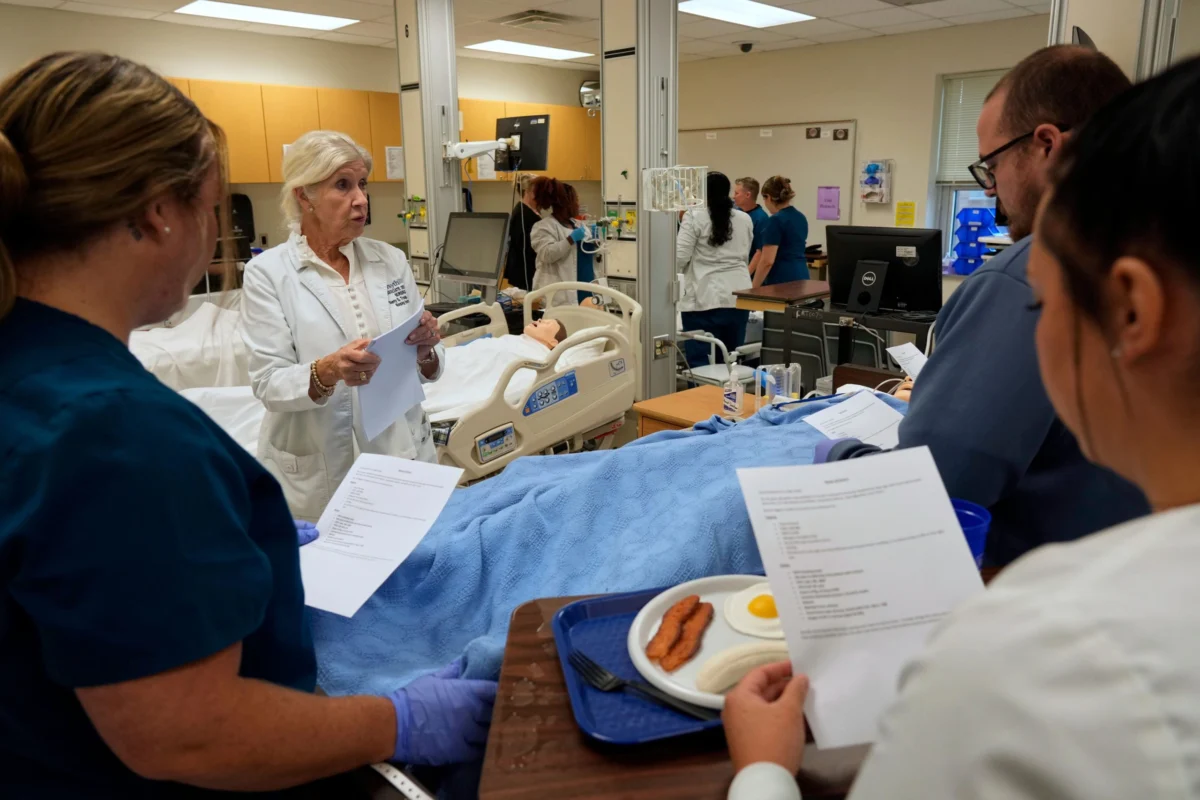
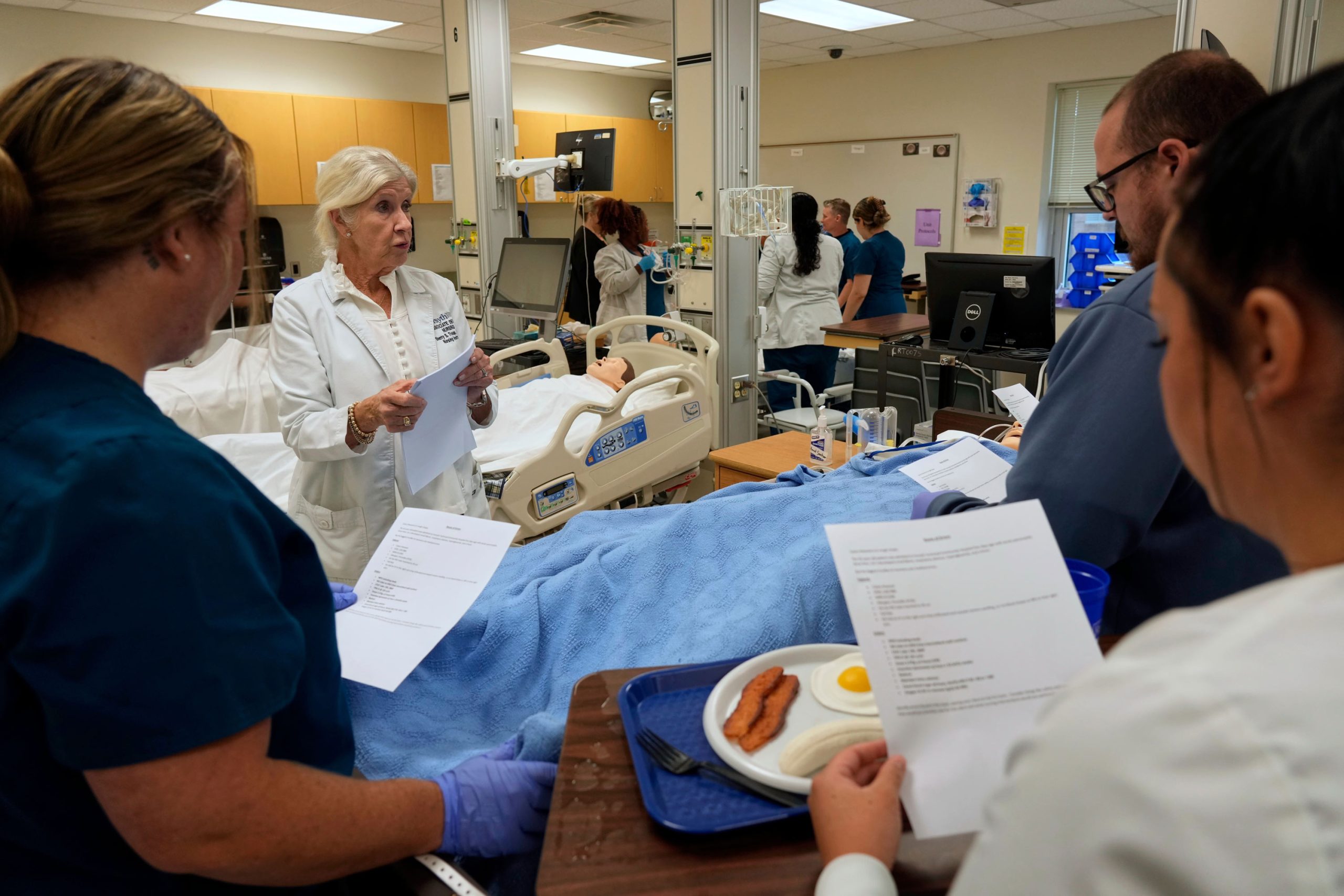
The programs most affected by these changes are overwhelmingly in the healthcare and social services sectors—fields already facing significant labor shortages. Occupational therapy, nursing, psychology, and counseling programs have been identified as primary targets for these reduced limits.
For students like Westgate, the math is sobering. Her top-choice institutions, including Quinnipiac University, the University of New Hampshire, and the Medical University of South Carolina, carry tuition costs that would easily dwarf the new $20,500 annual federal loan limit. Without access to the previous, more flexible loan structures, Westgate faces the prospect of either accumulating high-interest private debt or settling for a smaller, less-resourced institution closer to home.
“It’s kind of up in the air whether I’ll be able to pay for college after this year,” Westgate noted. She is not alone. Kayce Cordray, a 44-year-old doctoral student in nursing practice at Oral Roberts University, warns that these limitations threaten to exacerbate the national nursing shortage. “We are facing a real nursing shortage and a real rural healthcare shortage. We’re not even going to be able to get registered nurses if we don’t have faculty. It’s a domino effect.”
The Private Lending Gap
As federal options tighten, many students may feel compelled to turn to the private lending market. However, industry analysts warn that this is not a viable safety net for all. Private lenders operate under different risk-assessment models than the federal government. They are increasingly scrutinizing the earning potential of specific degrees before approving loans.
A report from the American Enterprise Institute (AEI) highlights the disparity: “Students attending more expensive programs do not, on average, earn substantially more after graduation. In these fields, higher debt often reflects higher tuition prices rather than higher returns.” Consequently, lenders are becoming more selective, potentially blocking access for students in lower-earning, yet socially vital, fields like social work or psychology.
Moreover, the terms of private loans are often far less forgiving than federal ones. Unlike federal loans, which generally allow for income-driven repayment plans and loan forgiveness options, private lenders often require immediate repayment while the student is still enrolled. For students balancing family obligations, such as Gracie Hayworth, who is pursuing a master’s in public health, this requirement creates an insurmountable barrier. “If he has to pay those loans while he’s still in school, that adds another barrier,” Hayworth explained, referring to her husband’s future doctoral plans.
Institutional Responses and Economic Analysis
The reaction from universities has been fragmented. While some institutions have stepped in to offer bridge loans or internal scholarships, many are struggling to provide definitive guidance to prospective students. Megan Walter, a senior policy analyst at the National Association of Student Financial Aid Administrators, described the atmosphere in financial aid offices as one of “whiplash.”
There is an ongoing debate among economists regarding whether these caps will force universities to lower tuition. Some, like the AEI, suggest that the removal of federal subsidies will force schools to compete on price, noting that some institutions are already beginning to adjust costs to remain attractive to students. Conversely, analysts at the left-leaning think tank New America remain skeptical. “Right now I don’t see evidence that we’re going to see large across-the-board tuition and price reductions,” said Sarah Sattelmeyer, director of education, opportunity, and mobility at New America.

The Risk of Predatory Lending
As the federal guardrails that previously protected students are rolled back, consumer advocacy groups are sounding the alarm. Eileen Connor, director of the Project on Predatory Student Lending, warns that desperate students may fall prey to predatory lenders who utilize hidden fees and restrictive arbitration clauses to entrap borrowers. “There’s a lot of different ways these loans can have traps,” Connor noted, adding that students with lower credit scores could face interest rates as high as 16 percent.
Sallie Mae, a major player in the student loan sector, has attempted to distance itself from the perception that loans are a cure-all. A spokesperson for the company, Rick Castellano, noted that while they intend to maintain responsible underwriting, “for some people, a loan is just not the answer.”
Implications for the Future of Graduate Education
The uncertainty surrounding federal loan limits is not merely an administrative headache; it is a structural challenge that threatens to reshape the demographics of higher education. If the current trajectory continues, graduate school could once again become a privilege reserved for those with independent wealth or those choosing high-salary corporate paths, effectively draining the talent pipeline for essential public-sector roles.
For current undergraduates like Westgate, the strategy remains one of cautious observation. She continues to apply to her dream programs, hoping that institutional aid or external scholarships will fill the void left by potential federal shortfalls. However, the inability to plan with certainty has forced a level of pragmatism that may fundamentally alter her professional trajectory.
As the legal battle over the classification of these degrees plays out in the courts, the education sector remains in a state of suspended animation. Until a final decision is reached and the Department of Education clarifies the long-term limits for these programs, the dream of advanced education will remain, for many, a high-stakes gamble with an unknown price tag. The ripple effects of this policy, from the potential closure of small-scale programs to the shift in student enrollment patterns, are likely to be felt for the next decade, signaling a significant shift in how the United States approaches the funding of advanced professional training.










Leave a Reply