

The global commercial aviation landscape is defined by efficiency, direct routes, and seamless alliances. For most travelers, journeying from Miami to Marseille involves a straightforward, one-stop itinerary utilizing major carrier networks. However, seasoned aviation analysts and frequent flyers often bypass conventional paths in pursuit of niche product evaluations. A prominent travel blogger has recently outlined a convoluted, multi-segment routing from Miami to Marseille that spans three separate tickets and at least four flights, all engineered to secure a long-awaited review of Air Algérie’s business class product.
This journey underscores the complexities faced by niche carriers operating outside major global alliances, as well as the lengths to which specialty content creators will go to document evolving airline hardware and service standards.
Main Facts and Proposed Routing
The proposed itinerary departs significantly from standard travel logic. Rather than booking a direct or single-connection business class ticket from Miami International Airport (MIA) to Marseille Provence Airport (MRS)—a routing for which saver-level award space is reportedly available—the alternative plan requires positioning to Montreal-Trudeau International Airport (YUL).
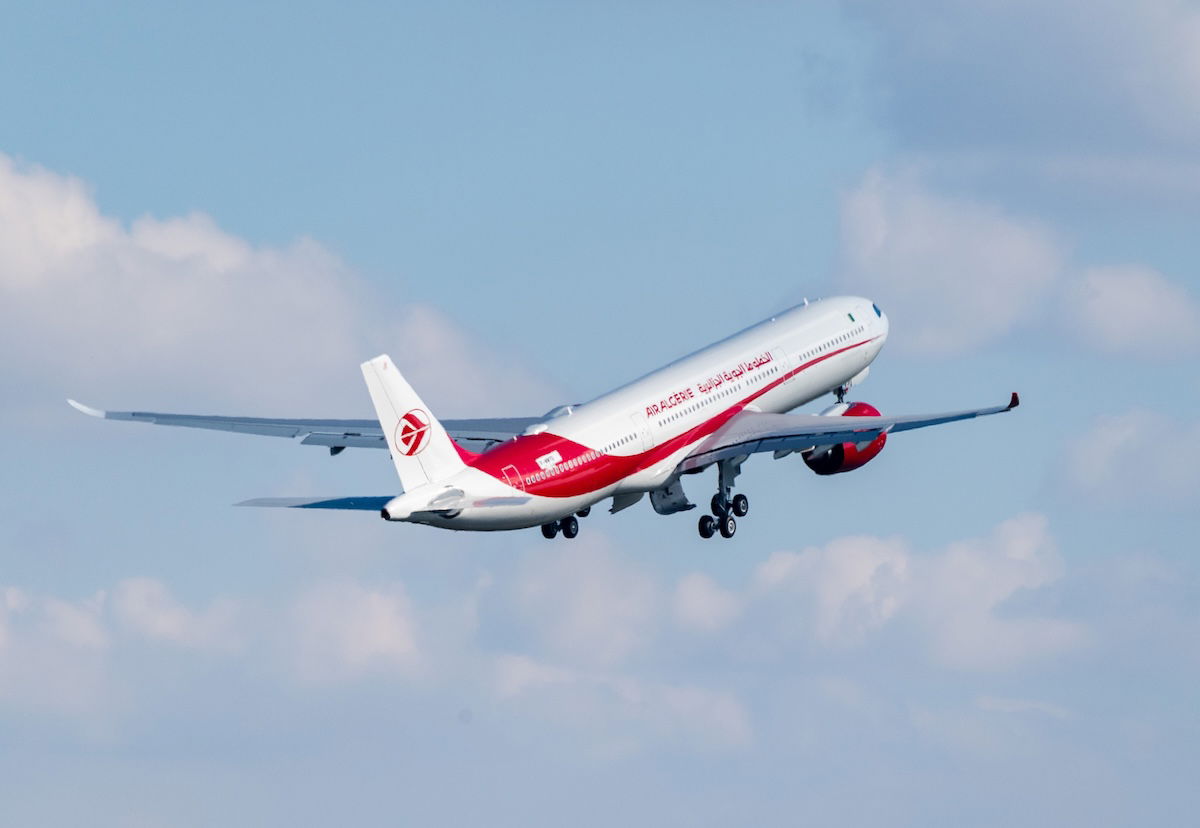
From Montreal, the traveler would board an Air Algérie flight to Tunis-Carthage International Airport (TUN) via a mandatory connection at Houari Boumediene Airport (ALG) in Algiers. The final leg from Tunis to Marseille would then be completed via a separate booking, utilizing either a wet-leased aircraft or a regional carrier like Tunisair.
In total, the journey requires purchasing three separate tickets across four distinct flight segments. This approach introduces significant financial and logistical variables, including self-transfer risks, baggage rechecking requirements, and varying international transit visa regulations.
Chronology and Strategic Decision-Making
Air Algérie has long remained a blind spot for many North American aviation reviewers. Historically, the airline’s route network has focused heavily on serving the Algerian diaspora, connecting major European and African hubs to Algiers, alongside select transatlantic services such as Montreal.
The carrier’s pricing strategy has traditionally featured high fare baselines relative to the hard and soft products offered onboard. Furthermore, entry requirements for Algeria—including the mandatory procurement of tourist or transit visas for many nationalities—have historically deterred casual transit passengers. Consequently, Air Algérie has rarely functioned as a conventional connecting carrier for travelers moving between North America and the Mediterranean.

The timeline of this prospective journey hinges on the availability of competitive cash fares from Montreal to Tunis. While Montreal is not the traveler’s origin, positioning flights between Miami and Montreal are frequent and operationally straightforward.
A notable operational detail within the proposed Algiers-to-Tunis segment involves aircraft deployment. Rather than utilizing its own narrowbody fleet—such as its rare Boeing 737-600 aircraft—Air Algérie’s connecting flight on this itinerary is scheduled to be operated by an Airbus A320 wet-leased from Bulgaria-based charter and ACMI (Aircraft, Crew, Maintenance, and Insurance) provider Fly2Sky. This introduces an unexpected cross-cultural aviation element, substituting regional North African narrowbody operations with European charter equipment.
For the final leg into southern France, the traveler evaluated two distinct pathways: staging a tactical misconnection argument to redirect toward Nice, or simply purchasing a standard commercial ticket on a Tunisair Airbus A320neo, an aircraft type that remains missing from the reviewer’s personal flight log.
Supporting Data and Regional Context
Evaluating Air Algérie’s long-haul product requires examining the carrier’s fleet modernization efforts. In recent years, Air Algérie has taken delivery of modern widebody equipment, including the Airbus A330neo, which features updated long-haul hard products designed to compete more effectively with European and Middle Eastern legacy carriers.

Despite these hardware upgrades, regional connectivity within North Africa remains bottlenecked by bilateral traffic rights, visa restrictions, and point-to-point scheduling models. Transatlantic service to Montreal serves as one of the carrier’s primary gateways to North America, making YUL a logical launching point for aviation enthusiasts targeting the airline.
The choice of intermediate stopovers also opens logistical questions regarding ground accommodations. Tunis, the capital of Tunisia, offers a range of high-end international properties suitable for extended layovers. Options range from resort-style luxury properties like the Four Seasons Hotel Tunis, situated in the coastal suburb of Gammarth, to centrally located urban business hotels such as the Tunis Marriott Hotel, which opened in 2022. Incorporating a multi-day stopover transforms a high-stress, multi-ticket mileage run into a deliberate cultural and leisure excursion, though it increases the overall trip duration and administrative burden.
Industry Implications and Analysis
The contemplation of such an intricate routing highlights broader trends in aviation journalism and enthusiast travel. As major airlines standardize their business class offerings—increasingly leaning toward standardized reverse-herringbone seating and digitized service flows—the appetite for differentiated, eccentric airline reviews has grown.
Carriers like Air Algérie occupy a unique space in global aviation. They operate with high structural independence, maintain distinct regional strongholds, and occasionally deploy interesting or aging aircraft variants that appeal to niche demographics. However, these airlines also present systemic friction points for international travelers, including rigid fare rules, limited customer service infrastructure for irregular operations outside their home hubs, and complex visa regimes.

For an independent traveler, constructing a journey out of multiple self-transfers introduces considerable financial exposure. If a delay on the initial Montreal-to-Algiers segment causes a missed connection in Algiers, the subsequent tickets purchased on separate PNRs (Passenger Name Records) would lack standard reaccommodation protections. The traveler would theoretically absorb the cost of rebooking, offsetting any initial savings or value derived from reviewing the product.
Broader Impact on Niche Tourism
Beyond the mechanics of airline seating, itineraries that loop through Algiers and Tunis shed light on tourism flows in the Maghreb region. While Morocco and Tunisia have long established robust international tourism frameworks, Algeria remains comparatively insulated from mass leisure travel. By spotlighting carriers like Air Algérie, aviation content creators inadvertently draw mainstream attention to regional aviation networks that bridge North America, North Africa, and Southern Europe.
Ultimately, while the decision to bypass a standard, single-ticket business class award from Miami to Marseille in favor of a four-flight, three-ticket expedition defies conventional travel management, it illustrates the ongoing quest for novelty within specialized aviation circles. Whether the logistical hurdles—ranging from wet-leased European narrowbodies to self-transfer risks—will ultimately deter or encourage the journey remains a defining question for observers tracking the itinerary’s realization.








Leave a Reply