Navigating modern air travel often feels like negotiating a maze of escalating fees, where ancillary costs routinely outpace the base price of a ticket. With average domestic airfares climbing steadily—hovering around $428 according to recent federal data—passengers are increasingly protective of their wallets when preparing for takeoff. Checking luggage has transformed from a routine service into a luxury expenditure, with airlines charging between $50 and $100 for a single checked bag, and steeper prices for additional items. Consequently, domestic travelers rely heavily on carry-on luggage to bypass these fees, packing weeks or days of essentials into a single rolling suitcase or duffel.
However, this reliance on cabin baggage has triggered a parallel crackdown by major carriers. Airlines enforce strict dimensional limits to maintain order in the cabin and ensure that storage space is distributed equitably among all ticket holders. For American Airlines, these regulations are explicit: standard carry-on baggage must measure no more than 22 inches by 14 inches by 9 inches, inclusive of wheels and handles. Furthermore, these bags must successfully fit inside the airport baggage sizers and stow away securely in overhead compartments.
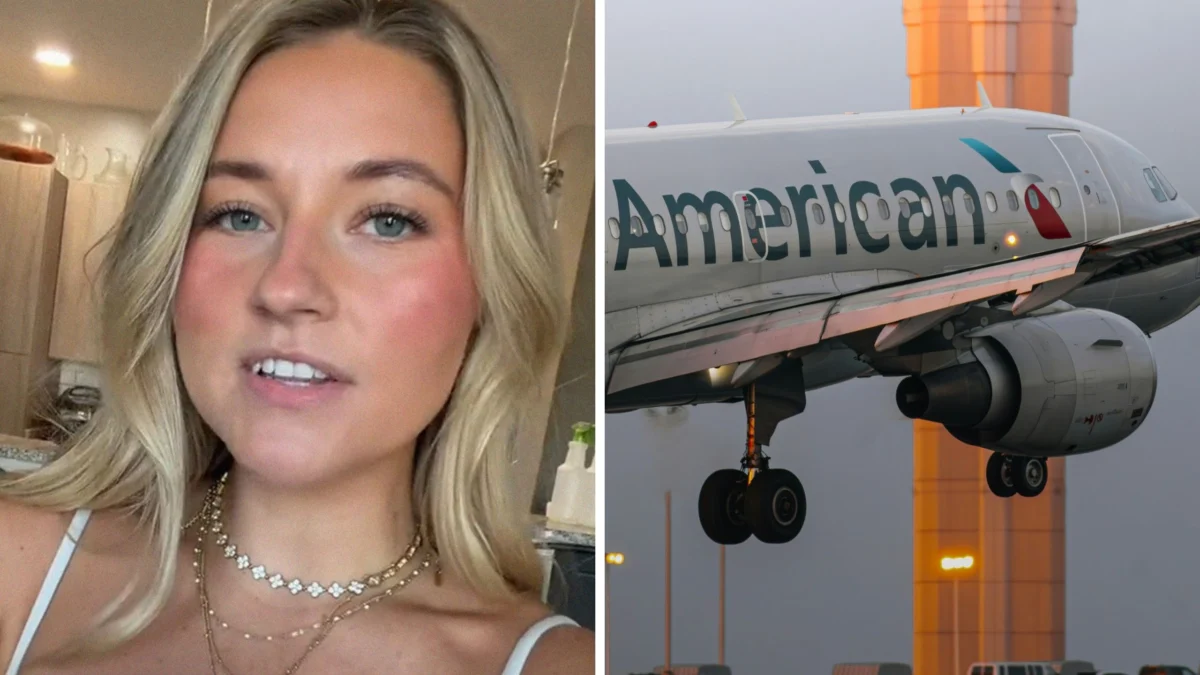
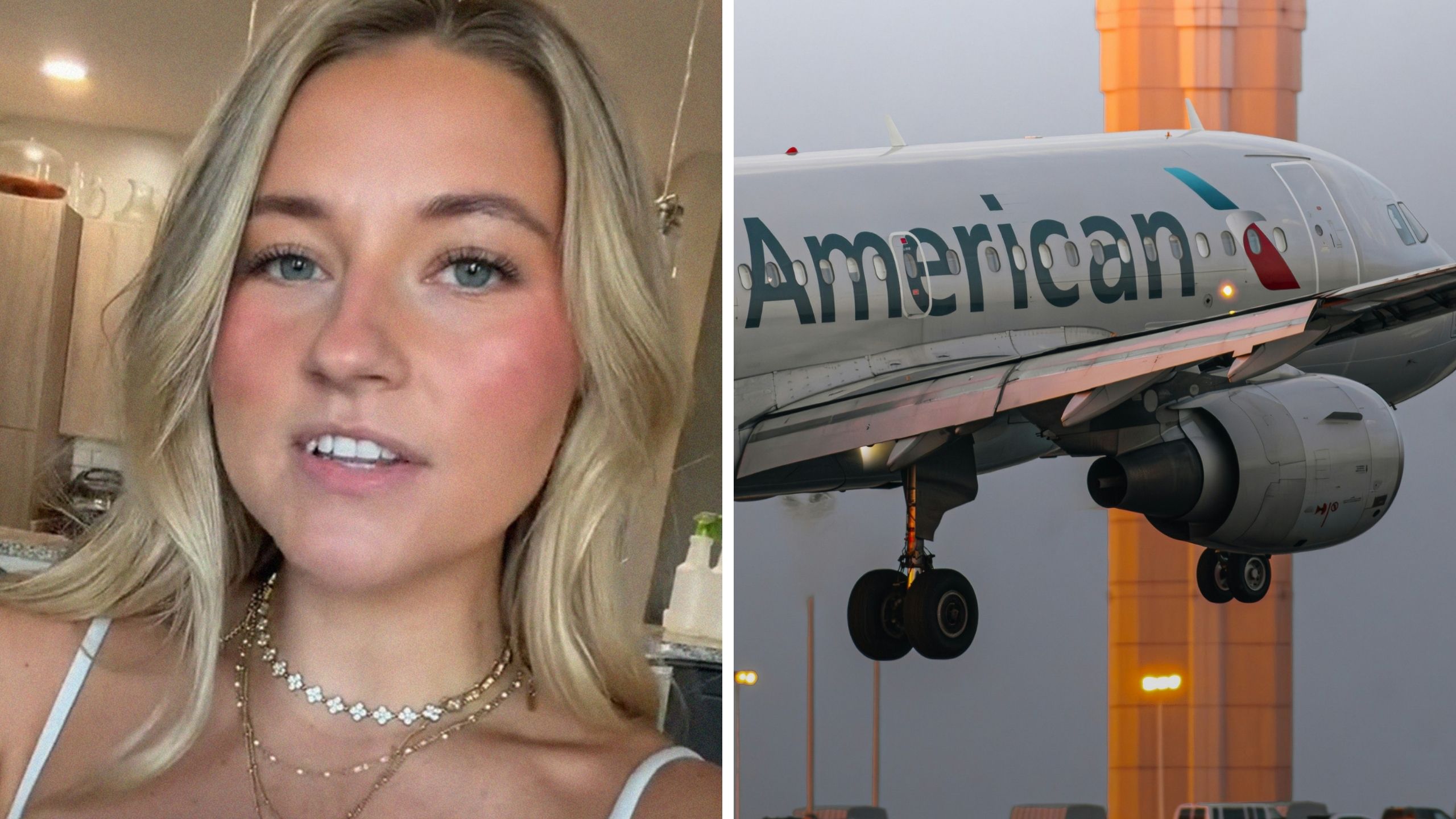
The delicate balance between maximizing packing space and adhering to these dimensions recently thrust one traveler into a viral spotlight. A TikTok video posted by creator Rachelle Heasley captured a common travel dilemma: how a minor feature of modern luggage—the expansion zipper—can abruptly transform an acceptable carry-on into a prohibited, gate-checked item.
The Viral Incident at the Boarding Gate
The incident unfolded at a busy airport terminal as passengers prepared to board an American Airlines flight. Rachelle Heasley, traveling with domestic baggage, found herself confronted by gate personnel regarding the physical dimensions of her rolling suitcase. According to Heasley’s social media post, which rapidly accumulated more than 143,000 views, an airline representative flagged her luggage because the expansion zipper was unzipped, slightly increasing the bag’s overall depth.
The overlay text on Heasley’s video succinctly captured the confrontation: “POV American Airlines says you need to zip up your suitcase extension or you will have to pay for it to be checked.”
Faced with the prospect of surrendering her bag and paying unexpected fees, Heasley quickly scrambled to rectify the situation. Filming the stressful encounter, she documented herself and a companion wrestling with the stubborn zipper, which was strained by the volume of contents packed inside. After considerable effort, the pair managed to compress the bag and secure the zipper, narrowly avoiding the gate-check mandate. In the video’s caption, Heasley expressed her immediate relief and frustration, writing, "I was not about to check it."
Financial Implications of Gate-Checking Luggage
Had Heasley failed to close the expansion zipper, the financial consequences would have been immediate. Under American Airlines’ current domestic main cabin baggage policies, checking a bag at the gate or ticket counter incurs standard checked baggage fees. For a first checked bag, passengers typically pay $50. If the item represents a second checked piece, the fee increases to $60, while a third checked bag can cost a prohibitive $200.
For budget-conscious travelers, these sudden fees disrupt travel budgets designed around the economy of traveling light. While basic economy and main cabin tickets include one complimentary carry-on bag and one personal item—such as a purse or backpack measuring up to 18 inches by 14 inches by 8 inches—the privilege is entirely dependent on strict adherence to size parameters. When a bag exceeds these limits, gate agents possess the operational authority to compel passengers to check the luggage into the cargo hold, rendering the carry-on exemption void.
The Mechanics and Controversy of Expansion Zippers
The controversy surrounding Heasley’s experience highlights a gray area in travel accessories: the ubiquitous expansion zipper. Designed by luggage manufacturers to provide extra packing flexibility for return trips or souvenir purchases, these zippers typically add an extra one to two inches of depth to a suitcase. While American Airlines and other major carriers do not explicitly ban luggage featuring expansion zippers, they strictly regulate the final dimensions of the bag when it enters the aircraft cabin.
If opening the extender pushes the suitcase beyond its authorized 9-inch depth, the bag technically violates the carrier’s contract of carriage. However, enforcement practices vary widely among gate agents, leading to friction and confusion among flyers.
Online travel communities are replete with similar anecdotes. In a prior discussion thread on the popular Reddit forum r/americanairlines, a traveler described an incident where a gate agent demanded a bag check strictly because the expansion zipper was open, despite the traveler demonstrating that the expanded suitcase still fit comfortably inside the physical metal baggage sizer at the gate. Incidents like these fuel passenger frustration, leaving many to wonder whether enforcement reflects a standardized safety policy or individual agent discretion.
Airline Operations and Crew Perspectives
To understand why airlines and flight crews maintain such vigilance over bag dimensions, one must examine the operational realities of modern commercial aircraft. Overhead bin space is a finite and increasingly competitive resource.
Cabin crew members frequently bear the brunt of passenger frustration regarding luggage storage. Offering insight into the operational perspective, a flight attendant responding to Heasley’s viral video explained the rationale behind the strict enforcement of bag profiles. According to the crew member, expanding a suitcase changes its volumetric footprint, consuming space intended for other passengers.
Furthermore, on older aircraft models with smaller overhead bins, oversized or expanded bags can prevent the bin doors from closing entirely. This creates safety hazards, delays boarding schedules, and forces flight crews to rearrange cabin items or gate-check bags at the last minute. Consequently, many aviation professionals direct their criticism toward luggage manufacturers for popularizing expandable designs that encourage passengers to push dimensional boundaries.
Broader Industry Trends and Passenger Reactions
Reactions to Heasley’s viral video reflect a deeply polarized traveling public. On one side, numerous commenters expressed solidarity with the creator, accusing the airline staff of unnecessary strictness. "All that for an extra inch. Someone was on a power trip," one viewer commented, echoing sentiments shared by many passengers who feel nickel-and-dimed by legacy carriers.
Conversely, seasoned travelers and airline loyalists defended the enforcement of baggage rules. Many noted that equity in overhead bin space relies on universal compliance. "I’ve never seen an airline allow the extender to be opened," another user wrote. "Always require it to be zipped."
This incident underscores a broader trend across the aviation industry: as planes fly at higher capacity and overhead bin space becomes scarcer, airlines are tightening enforcement mechanisms. Gate agents are increasingly utilizing visual checks and physical sizers to intercept non-compliant luggage before it reaches the jetbridge.
Conclusion and Best Practices for Travelers
As airlines continue to prioritize boarding efficiency and cabin safety, passengers must adapt to evolving enforcement standards. Incidents like the one experienced by Rachelle Heasley serve as a cautionary tale for travelers relying on expandable luggage.
To ensure a seamless boarding process and avoid unexpected gate fees, aviation experts recommend several proactive steps:
- Measure with Extensions Closed: Always measure your carry-on luggage with the expansion zipper fully zipped and compressed, ensuring it meets or remains safely under the 22" x 14" x 9" threshold.
- Pack Smart: Utilize packing cubes rather than relying on expansion zippers to accommodate extra items, maintaining the bag’s sleek profile.
- Be Prepared for Scrutiny: Anticipate strict enforcement at the gate, particularly on high-capacity flights or regional aircraft with smaller cabin capacities.
As commercial aviation navigates the complexities of high passenger volumes and ancillary fee structures, vigilance regarding luggage dimensions remains an essential skill for the modern traveler. Neither American Airlines nor Rachelle Heasley have issued formal statements addressing the specific viral incident, but the ongoing online discourse ensures that the debate over expandable luggage will persist through upcoming travel seasons.