
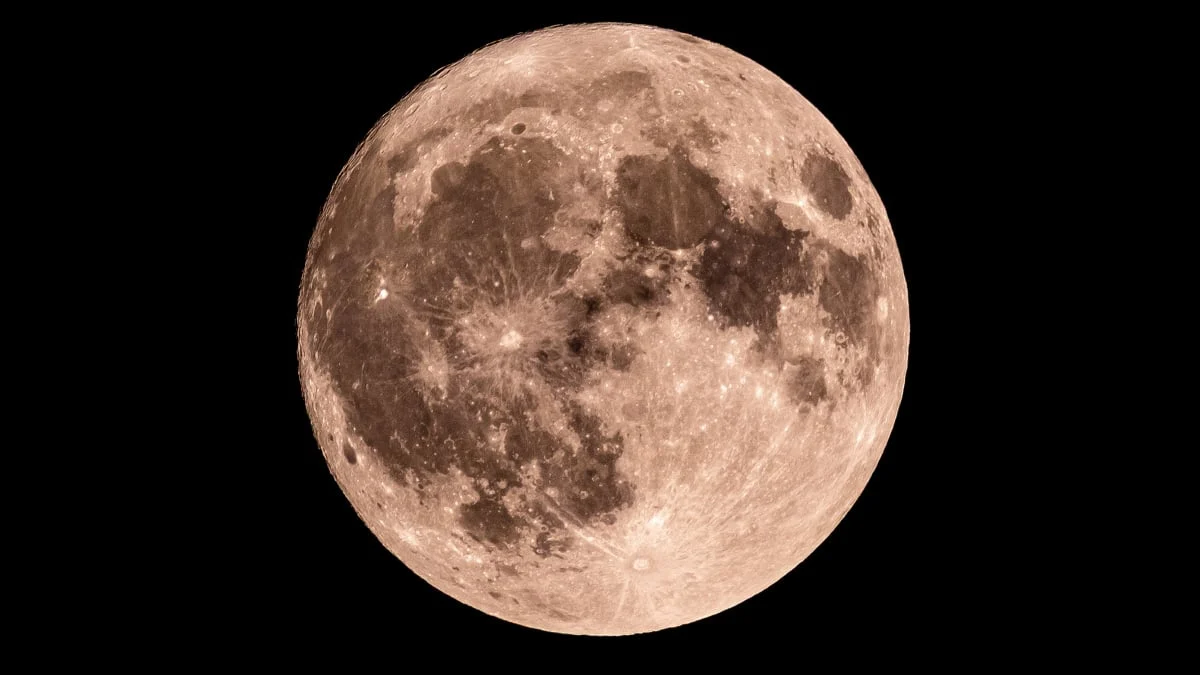
As the celestial ballet unfolds above Earth, the Moon currently presents a striking Waxing Gibbous phase, captivating observers with its near-complete illumination. While not yet reaching its zenith of brilliance, the lunar orb is preparing for a significant milestone, with its full splendor expected in just a couple of days. As of Wednesday, April 29, the Moon’s visible surface is approximately 94% lit, according to detailed astronomical data provided by NASA’s Daily Moon Guide. This substantial illumination offers an exceptional opportunity for both seasoned astronomers and casual stargazers to delve into the Moon’s intricate topography and observe a myriad of features that narrate billions of years of cosmic history. The current phase, characterized by more than half of the lunar disk being illuminated and steadily growing, serves as a prelude to the upcoming Full Moon, an event of both scientific interest and popular fascination, scheduled for May 1st.
The Celestial Calendar: Detailing the Approach to the Full Moon
The progression from the current Waxing Gibbous phase to the Full Moon is a daily spectacle, marking the final stretch of the Moon’s journey toward full opposition with the Sun as viewed from Earth. The slight increase in illumination each night is imperceptible without precise measurements, yet cumulatively, it culminates in the breathtaking sight of a fully lit lunar disk. The Full Moon on May 1st holds particular significance as it marks the first of two potential Full Moons within the calendar month of May. Given the synodic period of the Moon—the time it takes to complete one cycle of phases, approximately 29.5 days—a Full Moon occurring early in a month often sets the stage for a second Full Moon toward the end of the same month. Should this occur, the second Full Moon of May would be colloquially known as a "Blue Moon," a relatively rare astronomical event that adds an extra layer of intrigue to the lunar calendar. This chronological sequence underscores the dynamic nature of our closest celestial neighbor and provides a predictable framework for lunar observation.
Unveiling Lunar Landscapes: What to Observe Tonight and Beyond
The Moon’s surface is a treasure trove of geological features, each telling a story of impacts, volcanic activity, and tectonic forces. The level of detail visible to an observer is directly correlated with the optical aid employed, ranging from the naked eye to powerful telescopes.
-
Naked-Eye Wonders: Even without any optical enhancements, tonight’s bright Waxing Gibbous Moon allows for the clear identification of several prominent lunar maria—vast, dark plains once thought to be oceans, now known to be ancient basaltic lava flows. Among these, observers can readily discern Mare Vaproum, the "Sea of Vapors," a small, irregularly shaped mare located in the central part of the Moon’s near side. Adjacent to it, the expansive Mare Tranquillitatis, or "Sea of Tranquility," stands out, famous as the landing site for Apollo 11, humanity’s first crewed mission to the Moon in July 1969. Its dark, relatively smooth surface is a testament to immense volcanic eruptions. Further north, the immense Mare Imbrium, the "Sea of Rains," is one of the largest basins in the solar system, spanning over 1,100 kilometers. Its dark expanse is punctuated by smaller craters and mountains, remnants of its tumultuous formation. The visibility of these maria provides a basic map for understanding the Moon’s larger geological divisions.
-
Binocular Insights: Elevating observation with a pair of binoculars—even standard 7×50 or 10×50 models—significantly enhances the viewing experience, bringing finer details into focus. With binoculars, the observer can pinpoint Mare Frigoris, the "Sea of Cold," a long, narrow mare stretching across the northern limb of the Moon, indicative of a different geological history compared to the more circular maria. The lunar south is also revealed with greater clarity, including the colossal Clavius Crater, one of the largest and oldest craters on the Moon, measuring over 230 kilometers in diameter. Its floor is pockmarked with numerous smaller craters, creating a fascinating nested pattern. Nearby, the Alphonsus Crater, a prominent impact crater approximately 118 kilometers in diameter, becomes visible. Alphonsus is notable for its central peak and a system of rilles (narrow depressions) on its floor, hinting at past volcanic activity and geological stresses. Binoculars bridge the gap between naked-eye viewing and telescopic scrutiny, offering a detailed yet accessible perspective.
-
Telescopic Revelations: For those equipped with a telescope, the Moon truly comes alive, revealing an astonishing level of detail and allowing for the exploration of specific historical and geological sites. Beyond the features visible with lesser aids, a telescope unveils the precise Apollo 17 landing spot within the Taurus-Littrow valley. This site, where astronauts Eugene Cernan and Harrison Schmitt landed in December 1972, represents the last human journey to the Moon. Identifying this small patch of lunar real estate connects the observer directly to a pivotal moment in human exploration. Telescopes also bring into sharp relief geological marvels such as Rima Ariadaeus, a prominent lunar rille—a trench-like depression, possibly formed by collapsed lava tubes or tectonic faulting. This sinuous feature, stretching for hundreds of kilometers, provides direct evidence of the Moon’s internal geological processes. Furthermore, the Fra Mauro Highlands, a region of rugged, heavily cratered terrain, becomes discernible. This area was the landing site for Apollo 14 in February 1971, where astronauts Alan Shepard and Edgar Mitchell collected samples that provided crucial insights into the Moon’s early geological history and the period of intense bombardment known as the Late Heavy Bombardment. Telescopic observation transforms the Moon from a distant orb into a tangible, explorable world.
-
Optimizing Your Lunar Gaze: To make the most of lunar observation, several factors should be considered. While a Full Moon offers maximum brightness, the best views for topographical detail often occur near the "terminator"—the line separating the illuminated and shadowed parts of the Moon. Along the terminator, the low angle of sunlight casts long shadows, accentuating craters, mountains, and valleys, providing a three-dimensional perspective. For the Waxing Gibbous phase, this means the eastern limb (right side for Northern Hemisphere observers) will offer the most dramatic views of shadows. Light pollution, while less impactful for lunar viewing compared to deep-sky objects, can still diminish the clarity of fainter details. Seeking out darker skies, or at least observing from a location shielded from direct artificial light, can enhance the experience. Patience and allowing one’s eyes to adjust to the darkness are also crucial for maximizing visual acuity.
The Rhythmic Dance of Lunar Phases: A Scientific Explanation
The changing appearance of the Moon in our sky, known as lunar phases, is a fundamental astronomical phenomenon governed by the intricate orbital mechanics of the Earth-Moon-Sun system. Contrary to common misconception, the phases are not caused by Earth’s shadow, but rather by the varying angles at which we view the sunlit portion of the Moon as it orbits our planet.
-
The Moon’s Orbit and Illumination: The Moon takes approximately 29.5 days to complete one full orbit around Earth relative to the Sun (its synodic period). During this journey, the Moon is always half-illuminated by the Sun, just like Earth. However, from our perspective on Earth, we see different amounts of this illuminated half. The key is the Moon’s position relative to both the Earth and the Sun. As the Moon moves in its elliptical path, the angle at which sunlight strikes its surface, and subsequently reflects towards Earth, continuously changes.
-
The Terminator Line: A critical concept in understanding lunar phases and observation is the "terminator"—the line that divides the illuminated half of the Moon from the dark half. This line is not fixed but sweeps across the lunar surface as the Moon orbits Earth. It is along this terminator that shadows are most pronounced, revealing the dramatic relief of lunar craters and mountains, making it a prime target for telescopic viewing, particularly during crescent and gibbous phases.
-
Decoding the Eight Phases: NASA identifies eight primary lunar phases, each representing a distinct stage in the Moon’s monthly cycle:
- New Moon: This phase occurs when the Moon is directly between the Earth and the Sun (conjunction). The side of the Moon facing Earth is entirely unilluminated, rendering it invisible to the naked eye. This is also the time when solar eclipses can occur if the alignment is perfect.
- Waxing Crescent: A few days after the New Moon, a thin sliver of light appears on the right side of the Moon (for observers in the Northern Hemisphere). "Waxing" signifies that the illuminated portion is growing, and "Crescent" describes its sickle-like shape. This phase is often seen shortly after sunset.
- First Quarter: Approximately seven days into the cycle, the Moon appears half-lit, with the right half illuminated. This is often misleadingly called a "half Moon," but it is the first quarter of the lunar cycle. At this point, the Moon is at a 90-degree angle to the Earth and Sun (quadrature).
- Waxing Gibbous: Following the First Quarter, more than half of the Moon’s face becomes illuminated, but it has not yet reached full illumination. The term "Gibbous" refers to its bulging, humped shape. This is the current phase, where the illumination is steadily increasing as it approaches the Full Moon.
- Full Moon: This is the most widely recognized phase, occurring when the Moon is on the opposite side of the Earth from the Sun (opposition). The entire face of the Moon visible from Earth is fully illuminated, creating a bright, circular disk. Lunar eclipses can occur during this phase if the alignment is precise. As mentioned, if two Full Moons occur in a single calendar month, the second is termed a "Blue Moon."
- Waning Gibbous: After the Full Moon, the illuminated portion begins to shrink, or "wane." The light starts receding from the right side (for Northern Hemisphere observers), but more than half of the Moon is still lit. This phase is typically visible late at night and into the morning.
- Third Quarter (or Last Quarter): Roughly 22 days into the cycle, the Moon again appears half-lit, but this time the left half is illuminated. It is the third quarter of the lunar cycle, marking another quadrature position relative to the Earth and Sun.
- Waning Crescent: In the final stage before returning to the New Moon, only a thin sliver of light remains, visible on the left side. This "Waning Crescent" eventually fades completely as the Moon approaches the New Moon phase, completing its approximately 29.5-day synodic period.
Beyond Illumination: Cultural and Scientific Significance of Lunar Cycles
The Moon’s phases have profoundly influenced human civilization throughout history, shaping calendars, inspiring folklore, and driving scientific inquiry.
-
Historical and Cultural Echoes: Ancient civilizations across the globe relied on lunar cycles to track time, predict seasons, and organize agricultural practices. Many cultures developed unique names for each Full Moon of the year, often tied to seasonal changes or natural phenomena. For instance, the "Flower Moon" (May), "Harvest Moon" (September/October), and "Wolf Moon" (January) are traditional names that reflect a deep historical connection between human life and the lunar rhythm. The Moon has been a muse for countless myths, legends, and artistic expressions, symbolizing change, mystery, and the passage of time.
-
The Moon’s Gravitational Embrace: Beyond its visual spectacle, the Moon exerts a powerful gravitational influence on Earth, most notably manifested in the ocean tides. The gravitational pull of the Moon (and to a lesser extent, the Sun) causes the oceans to bulge on both the side of Earth facing the Moon and the side opposite it, creating high tides. During New Moons and Full Moons, when the Sun, Earth, and Moon are roughly aligned, their combined gravitational forces result in exceptionally high "spring tides" and exceptionally low "neap tides" during the quarter phases when the Sun and Moon are at right angles to Earth. This gravitational dance is a continuous reminder of the invisible forces at play in our solar system.
-
Lunar Exploration and Future Endeavors: The Moon has served as humanity’s first extraterrestrial destination, beginning with the robotic probes of the 1950s and culminating in the Apollo missions that landed humans on its surface between 1969 and 1972. The samples collected and data gathered from these missions revolutionized our understanding of lunar geology, formation, and the early solar system. Today, the Moon remains a focal point for space exploration. Programs like NASA’s Artemis mission aim to return humans to the lunar surface, establishing a sustainable presence and using the Moon as a proving ground for future missions to Mars. Commercial ventures, such as the ispace lander referenced in the original context, are also contributing to a new era of lunar exploration, focusing on resource utilization and expanding humanity’s reach. The detailed observation of lunar features, from ancient maria to impact craters, continues to inform these ambitious undertakings.
Fostering Celestial Curiosity: Expert Perspectives and Public Engagement
The accessibility of lunar observation makes it a unique gateway to astronomy for people of all ages. Experts at NASA, alongside various astronomical societies and educational institutions, frequently emphasize the Moon’s role as an accessible entry point for understanding our solar system and fostering scientific curiosity.
Public resources, such as NASA’s Daily Moon Guide, play a crucial role in demystifying celestial events and empowering individuals to engage directly with astronomy. These guides provide precise information on moon phases, illumination percentages, and visible features, encouraging active participation in scientific observation. Local astronomical clubs often host "star parties" or "moon watches" where members of the public can use powerful telescopes under expert guidance, transforming the often-abstract concepts of space into tangible, awe-inspiring experiences.
The enduring allure of the Moon lies not only in its scientific significance but also in its profound connection to human culture and its constant presence in our night sky. As the Waxing Gibbous Moon continues its journey toward full illumination, it invites everyone to look up, reflect on its majesty, and perhaps embark on their own journey of celestial discovery. Whether through the naked eye, a pair of binoculars, or a sophisticated telescope, the Moon offers a continuously evolving canvas for exploration, reminding us of the vast wonders that lie just beyond our terrestrial sphere.










Leave a Reply