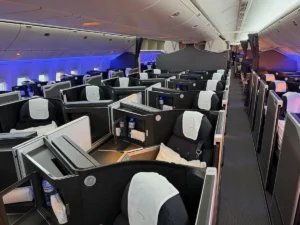
The global commercial aviation sector experienced a dynamic week marked by significant product unveilings, widespread operational disruptions, corporate restructuring, and technological upgrades. Major legacy carriers and emerging boutique airlines alike made headlines as the industry navigates evolving geopolitical, economic, and technological landscapes. From Singapore Airlines setting a new benchmark in ultra-long-haul luxury to European airports grappling with coordinated security threats, the week underscored the delicate balance between innovation and risk management in modern aviation. Concurrently, financial pressures forced foundational restructuring at legacy carriers such as KLM, while leisure-focused carriers sought expansion opportunities in North Africa.
Singapore Airlines Unveils Next-Generation Cabin Interiors
Singapore Airlines (SIA) officially unveiled its highly anticipated all-new cabin products across its widebody fleet, representing a multi-year investment aimed at reinforcing its position as a global leader in premium commercial aviation. The rollout encompasses redesigned suites in First Class, modernized Business Class seating, and enhanced configurations in Premium Economy and Economy.
The development of these cabins spanned over five years, incorporating extensive ergonomics research, passenger feedback, and cutting-edge materials designed to reduce overall aircraft weight and improve fuel efficiency. SIA’s management emphasized that the new cabins are tailored to meet the shifting expectations of post-pandemic luxury travelers, who increasingly demand enhanced privacy, seamless digital integration, and wellness-oriented amenities.
Industry analysts noted that the timing of this announcement aligns with intensifying competition among top-tier Asian and Middle Eastern carriers. As long-haul international travel continues its steady recovery toward pre-pandemic yields, premium cabin real estate remains the primary driver of airline profitability. SIA confirmed that the new interiors will be progressively retrofitted onto its existing fleet of Airbus A350 and Boeing 777X aircraft, with the first commercial routes scheduled to feature the new product entering service in the coming quarters.
Widespread Security Disruptions Impact European Aviation
European civil aviation faced significant operational turbulence following a wave of coordinated bomb threats targeting dozens of flights across the continent. The security incidents, which unfolded over a 72-hour period, prompted emergency diversions, heightened security protocols at multiple major hubs, and widespread flight delays affecting thousands of passengers.
National aviation authorities, working in coordination with the European Union Aviation Safety Agency (EASA) and international intelligence bodies, initiated immediate investigations into the origin of the threats. While preliminary assessments indicated that many of the communications were false alarms or malicious hoaxes, standard operating procedures mandated that every threat be treated with maximum severity. Consequently, several aircraft were escorted by military jets or subjected to rigorous secondary security screening upon landing at remote stands.
The disruptions highlighted ongoing vulnerabilities in European transport infrastructure and the heavy economic toll exacted by security-related delays. Stakeholders in the air traffic management sector reiterated calls for enhanced cross-border intelligence sharing and standardized protocols to minimize unnecessary airspace closures and passenger disruption. Major European airlines affected by the incidents reported minimal structural damage to their schedules, though cost impacts related to unscheduled fuel burns, passenger reaccommodation, and crew scheduling changes are anticipated to register in upcoming quarterly financial reports.
Beond Airlines Announces Expansion Strategy with Egyptian Subsidiary
Beond Airlines, the world’s first all-business-class leisure carrier, announced formal plans to establish a new subsidiary based in Egypt. This strategic expansion is designed to capitalize on the surging demand for premium leisure travel connecting European markets with high-end resort destinations along the Red Sea and historical tourism sites in North Africa.
The newly proposed Egyptian entity will operate independently under local regulatory oversight while leveraging Beond’s existing operational framework, brand identity, and specialized service model. Management stated that the subsidiary will initially deploy a fleet of narrowbody aircraft configured exclusively with lie-flat seating, targeting high-yield tourists traveling from Western Europe and the Middle East.
Economic development officials in Egypt welcomed the announcement, projecting that the arrival of a specialized luxury carrier will boost high-end tourism yields and create skilled local employment opportunities in aviation maintenance, ground operations, and flight services. Beond plans to secure the necessary Air Operator’s Certificate (AOC) from Egyptian civil aviation authorities over the coming months, with commercial operations targeted to commence before the end of the fiscal year.
KLM Royal Dutch Airlines Unveils Significant Cost-Cutting Measures
Faced with persistent inflationary pressures, rising airport charges, and labor cost increases, KLM Royal Dutch Airlines revealed a comprehensive restructuring plan aimed at achieving significant cost reductions across its operations. The carrier, a core component of the Air France-KLM group, outlined measures designed to protect its competitive edge in an increasingly volatile European market.
The cost-cutting blueprint includes deferring non-essential capital expenditures, optimizing flight schedules to improve asset utilization, freezing administrative hiring, and renegotiating vendor contracts. Furthermore, KLM executives highlighted the necessity of improving operational efficiency to offset the financial impact of impending environmental regulations, including higher European carbon pricing mechanisms and mandatory sustainable aviation fuel (SAF) blending mandates.
Labor unions representing ground staff and cabin crew expressed immediate concern regarding potential impacts on working conditions and staffing levels. In response, KLM management reiterated its commitment to maintaining an open dialogue with workforce representatives, emphasizing that structural reforms are essential to secure the long-term financial viability of the airline against fierce competition from low-cost carriers and heavily subsidized international rivals.
Air Tahiti Nui Integrates Starlink High-Speed In-Flight Connectivity
In a significant technological upgrade for the South Pacific aviation market, Air Tahiti Nui formally signed an agreement to equip its long-haul fleet with SpaceX’s Starlink satellite internet service. The partnership aims to provide passengers with ultra-fast, low-latency Wi-Fi capable of supporting high-definition video streaming, online gaming, and seamless remote work capabilities at 35,000 feet.
Air Tahiti Nui operates ultra-long-haul routes connecting French Polynesia with major North American, Asian, and European gateways. Historically, providing reliable connectivity over vast oceanic expanses presented severe technical and financial challenges due to the limitations of legacy geostationary satellite networks. The adoption of Starlink’s low-earth orbit (LEO) satellite constellation is expected to eliminate these bottlenecks, offering performance parity with terrestrial broadband.
Airlines industry observers noted that passenger expectations regarding in-flight connectivity have evolved from a luxury amenity to a baseline requirement. By integrating Starlink across its fleet, Air Tahiti Nui aims to differentiate its product offering on grueling trans-Pacific segments, potentially capturing a larger share of business and tech-savvy leisure travelers. Engineering teams are scheduled to begin aircraft retrofits in the upcoming months, with the service expected to become commercially available to passengers following regulatory approvals.
Broader Industry Implications and Outlook
The convergence of events over the past week illustrates the complex, multi-faceted nature of the modern global aviation industry. On one hand, airlines are aggressively investing in product differentiation—such as Singapore Airlines’ new cabin interiors and Air Tahiti Nui’s adoption of high-speed satellite Wi-Fi—to capture high-yield revenue. On the other hand, traditional carriers like KLM are forced to implement stringent austerity measures to defend their margins against macroeconomic headwinds and escalating regulatory costs.
Concurrently, external shocks, such as the wave of security threats in Europe, serve as a persistent reminder of the operational fragility inherent in global transit networks. The industry’s ability to maintain resilience in the face of security challenges, while simultaneously pursuing digital transformation and sustainable operational models, will remain critical determinants of long-term commercial success as the sector approaches the final quarter of the year.