World Health Organization (WHO) Director-General Dr. Tedros Adhanom Ghebreyesus successfully wrapped up the first day of his high-profile, two-day state visit to the Hashemite Kingdom of Jordan today, centering global attention on the nation’s exemplary resilience, comprehensive humanitarian efforts, and steadfast commitment to universal health coverage (UHC). The visit serves as a vital platform for reaffirming the deep-seated strategic partnership between the WHO and the Jordanian government, particularly amidst compounding regional crises that have placed unprecedented pressure on healthcare infrastructure across the Middle East.
A Royal Audience: Elevating Health on the National and International Agenda
The cornerstone of the Director-General’s itinerary was a high-level official meeting with His Majesty King Abdullah II. The discussions underscored Jordan’s enduring leadership in championing health security not merely as a domestic priority, but as a crucial pillar of regional stability and global development. Talks held at the royal palace dissected intricate strategies for fortifying national health systems, expanding equitable healthcare access to marginalized populations, and sustaining robust emergency response mechanisms across the Levant.
A significant portion of the dialogue focused heavily on the plight of displaced populations and refugees currently residing within Jordanian borders. Jordan, despite facing its own economic constraints, has long maintained an open-door policy, hosting more than three million refugees primarily originating from war-torn Syria and the Gaza Strip. Dr. Tedros expressed profound gratitude to King Abdullah II for this extraordinary display of solidarity, humanitarian generosity, and systemic inclusion.
Central to these humanitarian considerations was the evaluation of the King’s Medical Corridor initiative—an innovative and life-saving operational mechanism designed to bypass infrastructural bottlenecks and deliver urgent, specialized medical care to critically ill and injured children evacuated directly from Gaza. This initiative has emerged as a beacon of hope, illustrating how proactive governmental leadership can preserve human dignity and save lives even under the most volatile geopolitical conditions.
On the Frontlines: Hospital Visits and Specialized Care for Gaza Evacuates
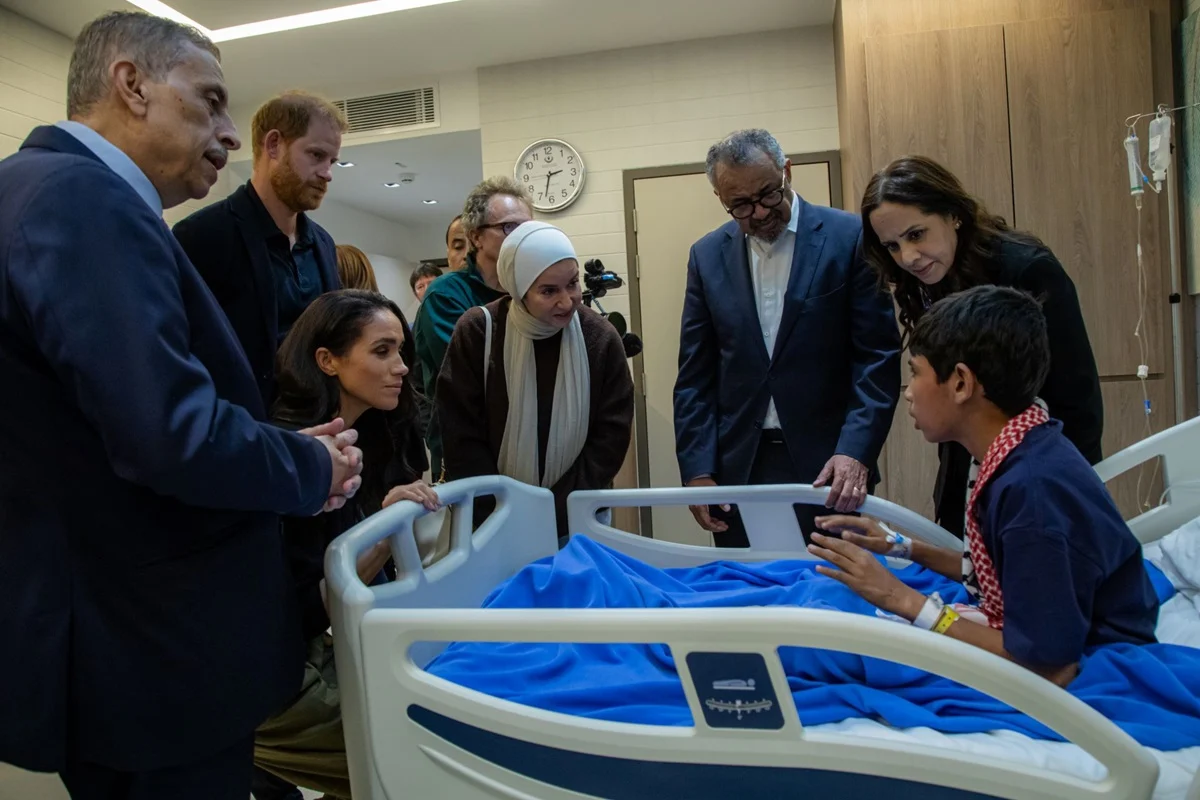
Moving beyond high-level diplomatic deliberations, Dr. Tedros transitioned from the boardroom to the clinical frontlines, undertaking a visit to a specialized, WHO-supported hospital facility in Jordan that is currently treating children evacuated from Gaza. During his tour of the pediatric and intensive care wards, the WHO chief interacted directly with young patients, their families, and the dedicated healthcare professionals working ceaselessly under immense emotional and physical strain.
The hospital visits provided firsthand insight into the complex clinical challenges associated with treating severe trauma, advanced oncological cases, and other critical medical conditions stemming from ongoing hostilities. Dr. Tedros emphasized that these medical evacuation corridors are literal lifelines, stressing that the international community must step forward with robust, sustained financial and logistical support. Without continuous global backing, maintaining the operational capacity of these specialized medical pathways remains exceptionally difficult for host nations like Jordan.
Mobilizing Resources: High-Level Partner and Donor Conclaves
Recognizing that humanitarian goodwill requires sustainable financial architecture, Dr. Tedros convened a strategic high-level roundtable discussion. The gathering brought together key international health partners, major donor state representatives, specialized United Nations agencies, and influential philanthropic foundations.
The primary objective of the conclave was to address critical financing priorities essential for bolstering Jordan’s health system resilience. Discussions centered on mobilizing long-term investments for ongoing humanitarian health operations, scaling up specialized mental health and psychosocial support services, and sharing the fiscal and administrative burdens carried by countries hosting massive refugee demographics.
Participants praised Jordan’s proactive containment and integration strategies, welcoming the opportunity to forge tighter multilateral coalitions. The dialogue yielded renewed commitments from international stakeholders to continue channeling strategic investments into Jordan’s healthcare grid, ensuring that national systems do not buckle under the weight of regional crises.
Advancing Universal Health Coverage and Mental Health Integration
In a separate bilateral engagement, Dr. Tedros sat down with Jordan’s Minister of Health to review domestic health reforms and the progressive realization of Universal Health Coverage. Jordan has steadily distinguished itself as a regional pioneer by embedding a robust primary healthcare philosophy into its national strategy.
A standout achievement in this regard is the systematic integration of mental health services into routine primary healthcare delivery. Rather than treating psychological care as an isolated specialty, Jordan—with the continuous technical backing of the WHO and the Director-General’s Special Initiative for Mental Health—has operationalized mental health support at the community level. This ensures that citizens and refugees alike can access psychological care seamlessly, significantly reducing historical social stigmas associated with psychiatric and emotional distress.
High-Profile Advocacy: The Role of Archewell Philanthropies
Adding significant international visibility to the first day of the state visit, Dr. Tedros was accompanied during several key engagements by Prince Harry, Duke of Sussex, and Meghan, Duchess of Sussex. Participating in their capacities as founders of Archewell Philanthropies, the royal couple joined the WHO delegation as long-standing global advocates for public health equity, mental well-being, and humanitarian resilience.
Archewell Philanthropies has previously collaborated with the WHO on critical initiatives, ranging from advocating for equitable global distribution of COVID-19 vaccines to supporting targeted medical evacuation programs and community mental health interventions. Prince Harry actively participated as a prominent ally of the WHO’s global mental health agenda, using the platform to underscore the urgent need to prioritize psychological resilience across all societal strata, with a particular focus on men, adolescents, and children caught in the crosshairs of conflict.
Expressing appreciation for their steadfast advocacy, Dr. Tedros noted that the involvement of partners like the Duke and Duchess of Sussex brings critical public visibility, vital resources, and renewed hope to populations that might otherwise be forgotten by the international community.
Reflecting on his experiences on the ground in Jordan, Prince Harry shared a poignant statement highlighting the nation’s profound moral clarity: "It is an honour to join the Director-General of the World Health Organization in Jordan, a country that is leading by example in compassion, resilience and innovation. Through our work with Archewell Philanthropies, my wife and I have seen first-hand the impact of WHO’s efforts to support mental health and deliver life-saving care in emergencies. We remain deeply committed to advancing awareness, reducing stigma and expanding access to mental health support for all those affected by conflict and crisis. Mental health is fundamental to recovery, dignity and long-term peace, and we are proud to stand with WHO and partners around the world to make it a global priority."
Chronology and Agenda for Day Two
As the state visit transitions into its second and final day, Dr. Tedros’s schedule remains dense with high-impact engagements designed to explore the multifaceted dimensions of Jordan’s health architecture.
The itinerary for tomorrow includes a comprehensive tour of Jordan’s National Center for Rehabilitation of Addicts. Supported extensively by the WHO, this specialized facility provides integrated medical, psychological, and social rehabilitation services, serving as a model for evidence-based substance use treatment in the Eastern Mediterranean region.
Following this, the Director-General is scheduled to engage with influential community leaders and prominent women’s organizations, including a high-level briefing with representatives from the Jordanian Hashemite Fund for Human Development (JOHUD). These discussions will focus on grassroots empowerment, community-led health promotion, and the pivotal role of women in sustaining social cohesion during times of crisis.
Dr. Tedros will also visit the internationally acclaimed King Hussein Cancer Center. There, he will hold bilateral talks with oncology specialists and institutional leadership to review groundbreaking advances in cancer treatment, research protocols, and cross-border regional medical collaboration.
The state visit will officially draw to a close following a final series of consultations with international humanitarian stakeholders and operational partners. These concluding meetings will further solidify Jordan’s indispensable status as an irreplaceable regional hub for medical evacuations, rapid emergency response coordination, and the long-term resilience of public health systems across the Middle East.
Broader Implications and Analytical Outlook
The visit of the WHO Director-General to Jordan arrives at a critical juncture for global public health and humanitarian diplomacy. Observers note that as protracted conflicts continue to strain traditional aid architectures, the model demonstrated by Jordan offers vital lessons for international policymakers.
By seamlessly blending emergency response capabilities with long-term universal health coverage goals, Jordan has proven that resource constraints can be mitigated through visionary leadership, institutional adaptability, and robust international partnerships. The integration of mental health into primary care, alongside humanitarian corridors for vulnerable populations like those evacuated from Gaza, sets a high benchmark for regional health security.
Ultimately, Dr. Tedros’s mission serves as both a recognition of Jordan’s extraordinary humanitarian sacrifices and an urgent call to action for the broader international community. As global donors recalibrate their priorities, the WHO’s high-level engagement in Amman underscores an undeniable reality: investing in Jordan’s health infrastructure is not merely an act of regional charity, but an essential investment in global stability, human dignity, and sustainable peace.