The 2026 MTV Video Music Awards achieved a milestone achievement on Sunday night, delivering its largest multi-platform television audience in more than a decade. Broadcast simultaneously across CBS and MTV, the annual celebration of music video culture captured the attention of mainstream viewers in numbers not seen since the mid-2010s. The evening combined nostalgic headliners, contemporary chart-toppers, high-profile tributes, and a powerful live-sports lead-in to create a ratings phenomenon that far exceeded industry expectations.
According to initial linear television metrics provided by Nielsen, the ceremony averaged 8.43 million viewers across CBS, the primary MTV simulcast, and a late-night cable replay. This figure represents a remarkable 51 percent surge compared to the 2025 broadcast, which had previously established a multi-year high by attracting 5.6 million viewers. Industry analysts note that when final delayed-viewing and digital streaming data are fully integrated, the total consumption footprint of the event will likely climb even higher.
The last time the VMAs commanded an audience of this magnitude was in 2015, when the multi-network broadcast surpassed 12 million viewers. The Sunday night telecast not only reversed a long-term industry trend of declining linear television viewership for live award shows, but it also registered impressive demographic gains across critical advertising categories.
Demographic Breakthroughs and Key Ratings Milestones
Beyond total household and viewer reach, the 2026 VMAs recorded significant demographic victories that have not been matched in years. Television executives monitor key age cohorts to gauge cultural relevance and advertising viability, and this year’s broadcast delivered across the board.
The ceremony achieved its best performance among adults aged 18 to 49 since 2018, drawing 2.66 million viewers within this critical demographic. For adults aged 25 to 54, the broadcast pulled in 3.11 million viewers, marking the highest mark for this group since 2019. Furthermore, among younger adult viewers aged 18 to 34, the show secured 1.09 million viewers, representing the best performance in that bracket since 2020.
These metrics indicate that while older audiences tuned in via broadcast television—largely retained from the preceding sports broadcast—younger demographics engaged heavily either through traditional viewing or synchronized digital platforms. CBS proved to be the dominant distribution engine for the evening, accounting for 7.61 million viewers, or roughly 90 percent of the combined linear audience. The domestic MTV cable simulcast contributed 686,000 viewers, while an overnight cable encore added another 142,000 viewers to the final tally.
The NFL Factor and Broadcast Chronology
A significant catalyst for the massive opening-minute viewership was the sports programming that preceded the awards ceremony. The VMAs benefited immensely from a high-stakes NFL regular-season matchup between the Baltimore Ravens and the Dallas Cowboys, a franchise historically recognized as one of the most reliable television draws in American sports.
The timing of the sports broadcast aligned perfectly with the start of the music awards. As the Ravens secured a dramatic game-winning field goal over the Cowboys, millions of viewers remained tuned to CBS as the network transitioned directly into the pre-show and the main telecast. This seamless handoff created an extraordinary peak audience of 15 million concurrent viewers at the top of the hour.
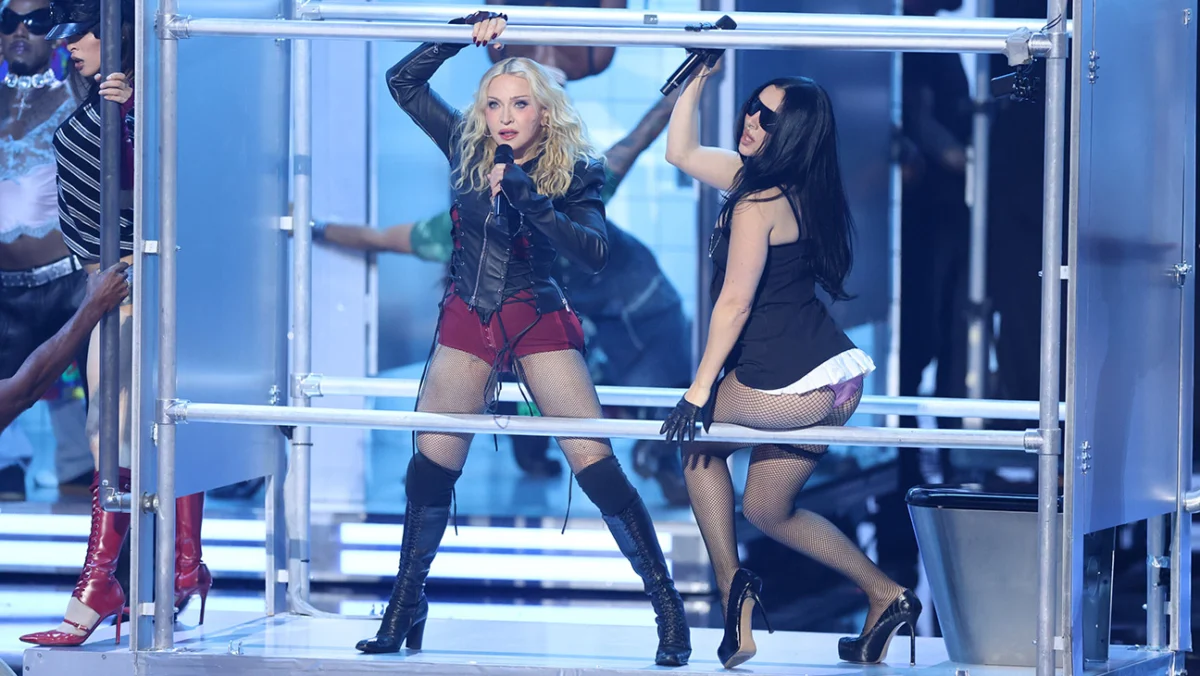
That peak coincided precisely with the explosive opening number of the evening, which featured pop icon Madonna returning to the VMA stage alongside contemporary heavyweights Charli XCX and Sabrina Carpenter. While the 2025 VMAs also benefited from a strong NFL lead-in that drew roughly 23.9 million sports viewers, the specific dynamics of Sunday’s Baltimore-Dallas thriller successfully converted an exceptionally large share of sports fans into music award spectators, propelling the opening minutes to record-breaking heights.
Chronology of the Night: Tributes, Triumphs, and Major Winners
Hosted by veteran rap icon and media personality Snoop Dogg, the 2026 ceremony balanced contemporary music achievements with historical reverence. The night’s event timeline was tightly paced, moving through high-profile performances, career retrospectives, and competitive categories.
Madonna set the tone early with her opening medley alongside Charli XCX and Sabrina Carpenter, setting off a wave of real-time social media engagement. As the evening progressed, the legendary pop artist dominated the competitive categories, walking away as the night’s most-awarded artist with a total of seven VMAs.
Pop phenomenon Taylor Swift also added to her historic award tally, securing the coveted Video of the Year trophy for her visually striking narrative piece, "The Fate of Ophelia." In addition to her category win, Swift was honored with the inaugural Artist Director award—a newly minted accolade established to recognize musical artists who take an active, hands-on role in directing their own music videos.
The production also prioritized legacy acts and cultural touchstones. The ceremony featured dedicated musical and visual tributes to late pop innovator George Michael and country music titan Dolly Parton. Additionally, legendary alternative rock band Nirvana was formally presented with the prestigious Michael Jackson Video Vanguard Award, prompting a reflective moment on the evolution of music video art and MTV’s historical programming roots.
Digital Engagement and Social Media Footprint
While linear television ratings captured traditional media observers, the digital footprint of the 2026 VMAs demonstrated the event’s ongoing cross-platform dominance. In an era where younger audiences consume live events in fragments, clips, and live-tweets, MTV’s digital strategy yielded substantial returns.
Official data released following the broadcast revealed that the awards generated 159 million total video views across various social media platforms, representing an 8 percent increase compared to the previous year. Content surrounding Madonna’s opening performance, Taylor Swift’s milestone wins, and the various musical tributes drove peak trending topics globally throughout Sunday evening and well into Monday morning.
Media analysts point out that this dual success—surging traditional TV ratings paired with robust digital video consumption—proves that major live entertainment events can still command unified public attention when packaged with the right mix of legacy superstars, current chart dominators, and strategic broadcast scheduling.
Broader Industry Implications
The ratings triumph of the 2026 MTV Video Music Awards provides a timely morale boost for the live television and award show industry, which has spent the post-pandemic years grappling with fragmented audiences and steep viewership declines.
By anchoring the broadcast to a major sports ecosystem, leveraging cross-network simulcasting on CBS and MTV, and curating a lineup capable of bridging generational divides, event organizers devised a blueprint for future live broadcasts. The numbers confirm that linear television still possesses massive reach capabilities when paired with marquee live events, even as digital platforms capture the accompanying conversation.
As television networks and streaming services look toward the remainder of the fall television calendar, the success of the 2026 VMAs serves as empirical evidence that appointment television remains viable, provided the cultural offerings are high-profile enough to draw viewers away from on-demand alternatives. Whether subsequent award ceremonies can replicate this formula—particularly regarding sports lead-ins—remains to be seen, but the bar for live entertainment performance has officially been raised.