
A new coalition analysis of public sentiment has revealed a profound and bipartisan opposition to the rapid expansion of data centers across Wisconsin. The findings, released by a group of environmental and community advocacy organizations, indicate that residents are increasingly concerned that the arrival of "Big Tech" facilities will lead to higher utility bills, degraded water resources, and a prolonged reliance on fossil fuel energy. The report, which synthesized thousands of public comments submitted to the Public Service Commission of Wisconsin (PSC), suggests that the perceived economic benefits of these massive infrastructure projects are being overshadowed by fears of "cost-shifting" onto everyday households.
The analysis was conducted by a coalition including Sierra Club Wisconsin, the Wisconsin Ecojustice Base Builders (WEBB), Moms Clean Air Force, and Healthy Climate Wisconsin. The researchers examined two pivotal cases currently before the PSC: WEC Energy Group’s proposed large customer tariff and bespoke resources docket, and Alliant Energy’s specific customer contract for a major data center project in Beaver Dam. In both instances, the public record was flooded with testimonies from citizens across the political spectrum, united by a singular demand: that large technology corporations pay their own way rather than being subsidized by local ratepayers.
The Regulatory Battle: Understanding the PSC Dockets
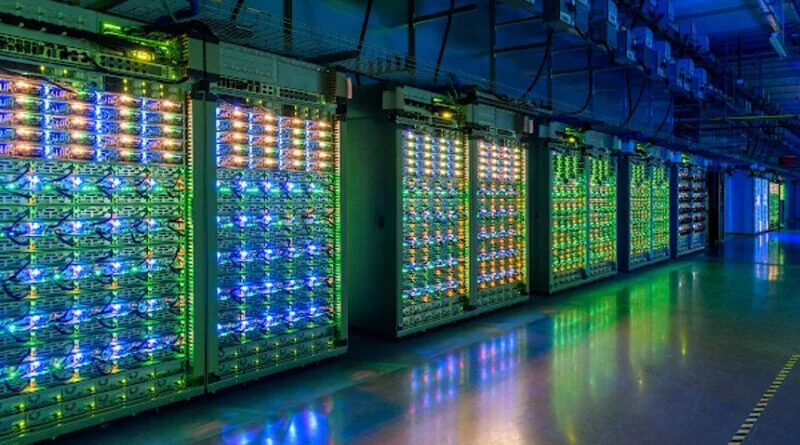
The current controversy centers on how Wisconsin’s utilities—specifically WEC Energy Group (parent company of We Energies and Wisconsin Public Service) and Alliant Energy—plan to accommodate the massive power and water requirements of hyperscale data centers. These facilities, which house thousands of servers for cloud computing and artificial intelligence, require a constant, high-volume supply of electricity and significant amounts of water for cooling.
In the WEC Energy Group case, the utility has proposed a "large customer tariff." This regulatory framework would create a specialized rate class for massive energy users. However, consumer advocates argue that the proposed structure does not go far enough in insulating residential customers from the costs of building new transmission lines, substations, and power plants needed to serve these industrial giants. The "bespoke resources docket" further complicates the issue, as it allows for tailored agreements between the utility and specific large-scale customers, which critics claim lack transparency and could lead to hidden costs for the general public.
The Alliant Energy case involves a direct contract for a data center in Beaver Dam. This project has become a flashpoint for local residents who worry about the strain on the municipal water supply and the potential for increased air pollution if the utility must keep older coal or gas-fired "peaker" plants operational to meet the surge in demand. The coalition’s analysis found that the overwhelming majority of public comments in these cases expressed skepticism or outright hostility toward the current terms of these agreements.
Economic Concerns: The Threat of Cost-Shifting
The primary driver of public dissatisfaction is the fear of "cost-shifting." In the utility industry, when a massive new customer joins the grid, the infrastructure required to serve them can cost hundreds of millions, if not billions, of dollars. If the regulatory framework is not strictly defined, those capital expenditures are often rolled into the "rate base," meaning every customer on the grid sees a marginal increase in their monthly bill to pay for the expansion.
Wisconsinites have expressed frustration that the "largest and richest tech companies in the world"—referring to entities like Microsoft, which is currently developing a $3.3 billion data center campus in Mount Pleasant—are receiving state tax incentives while simultaneously seeking favorable utility rates. Cassie Steiner, Senior Campaign Coordinator for Sierra Club Wisconsin, emphasized that the public sentiment is clear: "Why should Wisconsinites have to subsidize costs for the largest and richest tech companies in the world? If Big Tech wants to come to Wisconsin and use Wisconsin resources, they better figure out a way to pay for it themselves."
This economic anxiety is compounded by the fact that data centers, while capital-intensive, are not major job creators after the initial construction phase. Unlike a manufacturing plant that might employ thousands of workers indefinitely, a completed data center is largely automated, requiring only a skeleton crew of technicians and security personnel. For many residents, the trade-off of higher energy bills for a handful of permanent jobs is an unacceptable bargain.
Environmental and Public Health Implications
Beyond the financial impact, the coalition’s report highlights significant environmental concerns. Data centers are among the most energy-intensive buildings in existence. According to the U.S. Department of Energy, data centers can consume up to 50 times the energy of a typical office building per square foot. In Wisconsin, where the transition to renewable energy is ongoing but not yet complete, this massive new load often necessitates the continued operation of fossil fuel power plants.
Jayne Black, a Wisconsin Field Organizer for Moms Clean Air Force, pointed to the direct link between data center energy demand and air quality. "Moms across Wisconsin want our families protected from the air pollution caused by fossil fuel–powered electricity for data centers," Black stated. "These facilities degrade air quality, threaten our health, drive up electric bills, and worsen climate change."
The cooling requirements of these facilities also pose a threat to Wisconsin’s water security. Hyperscale data centers can require millions of gallons of water per day to prevent servers from overheating. In areas like Beaver Dam, residents are concerned that this industrial consumption could lower the water table or impact the quality of local aquifers. The coalition’s analysis found that water preservation was a top-tier concern for commenters, particularly in rural and semi-rural communities where agriculture remains a primary economic driver.
A Growing National Trend
The backlash in Wisconsin is not an isolated incident but part of a growing national trend as the "AI gold rush" accelerates. For years, Northern Virginia has served as "Data Center Alley," hosting the world’s largest concentration of these facilities. However, that region is now facing a crisis of grid stability and skyrocketing land prices, leading tech companies to scout for new locations in the Midwest.
States like Wisconsin, Iowa, and Ohio are attractive to tech giants because of their relatively low land costs, cooler climates (which reduce cooling expenses), and proximity to major power transmission corridors. However, as these projects move from the drawing board to reality, local populations are beginning to push back. In 2023, Wisconsin lawmakers passed legislation exempting data center equipment from sales and use taxes, a move intended to lure investment. The current public outcry suggests that while state leaders may be eager for the investment, the electorate is wary of the long-term consequences.
The Role of the Public Service Commission
The Public Service Commission of Wisconsin now finds itself at the center of a complex balancing act. Tasked with ensuring "safe, reliable, and affordable" utility service, the three-member commission must decide whether the proposed utility tariffs and contracts are in the public interest.
Yusuf Adama, a Just Transition Organizer with the Wisconsin Ecojustice Base Builders, argued that the PSC must treat public comments as essential evidence rather than a mere formality. "A just process means valuing people’s voices as evidence, treating community concerns as central to decision-making, and ensuring that public policy serves residents before private profit," Adama said.
The coalition’s analysis found that the opposition is not limited to traditional environmental activists. Farmers, small business owners, and local municipal leaders have all voiced concerns about the lack of transparency in the "bespoke" resource negotiations. There is a growing demand for "ring-fencing" policies that would legally prevent utilities from passing any data center-related infrastructure costs onto residential or small-business ratepayers.
Implications for Future Policy
The findings of the coalition report are likely to influence the ongoing debate in the Wisconsin State Legislature and the Governor’s office. As the state seeks to position itself as a hub for the "new economy," it must grapple with the reality that the infrastructure of that economy carries a heavy footprint.
Brittany Keyes, Clean Air Policy Manager for Healthy Climate Wisconsin, noted that recent election results and statewide polling indicate that environmental protection and affordability are top-of-mind for voters. "It is clear that communities across Wisconsin value our water, air, and access to affordable energy," Keyes said. "Big tech should pay their own way, and regulators and lawmakers should make sure this happens."
The outcome of the PSC cases regarding WEC Energy Group and Alliant Energy will set a critical precedent. If the commission approves the current proposals, it could signal to the tech industry that Wisconsin is a "low-friction" environment for expansion. Conversely, if the commission mandates stricter cost-sharing protections and environmental safeguards, it may force tech companies to invest more heavily in their own dedicated renewable energy sources, such as on-site solar arrays or battery storage systems.
As the "full analysis" and accompanying webinar released by the coalition circulate among policymakers, the pressure on the PSC to act as a watchdog for the public interest is mounting. For now, the message from Wisconsinites is clear: they are not willing to pay the price for Big Tech’s digital expansion, whether that price is measured in dollars on a monthly bill or in the quality of the air they breathe and the water they drink.










Leave a Reply