Marking the eleventh annual World Humanitarian Day designated by the United Nations General Assembly, the global community pauses today to pay tribute to the extraordinary courage, self-sacrifice, and unwavering dedication of humanitarian workers worldwide. Observed annually on August 19, this significant day commemorates the tragic anniversary of the 2003 bombing of the Canal Hotel in Baghdad, Iraq, which claimed the lives of 22 people, including the Secretary-General’s Special Representative for Iraq, Sergio Vieira de Mello.
Today, as the world navigates the compounding crises of protracted conflicts, natural disasters, and the devastating global COVID-19 pandemic, humanitarians are being tested to limits previously unseen in modern history. Operating under severe movement restrictions, grappling with acute resource shortages, and often finding themselves in the crosshairs of violence, these real-life heroes continue to deliver life-saving food, shelter, healthcare, protection, and hope to vulnerable populations whose lives have been upended by crisis.
The Evolution and Chronology of World Humanitarian Day
The genesis of World Humanitarian Day traces back to one of the darkest moments in the history of international humanitarian intervention. On August 19, 2003, a devastating truck bomb detonated outside the United Nations headquarters at the Canal Hotel in Baghdad. The blast resulted in widespread destruction and the deaths of 22 humanitarian workers and staff members, while injuring over 150 others. Among the victims was Sergio Vieira de Mello, a visionary Brazilian diplomat whose career was dedicated to protecting the rights of displaced and war-affected populations across the globe.
Recognizing the urgent need to raise public awareness about humanitarian assistance activities worldwide and to honor those who risk their personal safety to deliver it, the United Nations General Assembly adopted a resolution in December 2008—spearheaded by the permanent mission of Sweden—designating August 19 as World Humanitarian Day. The inaugural commemoration took place on August 19, 2009.
Over the subsequent decade, the observance has evolved from a day of solemn remembrance into a global mobilization campaign. It celebrates not only international aid professionals deployed by major multilateral organizations and non-governmental organizations (NGOs), but increasingly, the grassroots first responders—local community members, refugees, civil society actors, and local health workers—who are often the first to arrive and the last to leave when disaster strikes.
Rising Threats and Alarming Statistics on Aid Worker Security
Despite the fundamental principles of international humanitarian law that protect relief workers and civilians in conflict zones, the operational environment for humanitarians has deteriorated precipitously. According to comprehensive data compiled by Humanitarian Outcomes and published through the Aid Worker Security Database, major attacks against humanitarians reached an all-time high, surpassing all previous years on record.
The statistical reality underscores an escalating crisis of impunity and violence against those who provide aid:
- A total of 483 relief workers were targeted in major security incidents.
- 125 humanitarian personnel lost their lives.
- 234 workers sustained serious injuries.
- 124 individuals were abducted while carrying out their duties.
- These figures represent 277 separate security incidents, marking an 18 percent increase in the total number of victims compared to the preceding year, 2018.
Looking at a broader historical timeline, the data paints a sobering picture of long-term deterioration. In the wake of the 2003 Baghdad bombing, nearly 5,000 humanitarians have been killed, wounded, or abducted globally. A comparative analysis reveals a dramatic escalation in violence: the decade spanning from 2010 to 2019 experienced a staggering 117 percent increase in attacks against aid workers compared to the preceding decade of 2000 to 2009.
Geographically, the epicenter of violence against humanitarians remains concentrated in active conflict zones and complex political emergencies. Syria recorded the highest frequency of attacks, followed closely by South Sudan, the Democratic Republic of the Congo (DRC), Afghanistan, and the Central African Republic. Furthermore, nations such as Mali and Yemen witnessed a doubling of major security incidents targeting relief operations compared to the previous reporting period.
In recent weeks leading up to World Humanitarian Day, despicable attacks claimed the lives of aid workers in Niger and Cameroon. Furthermore, the onset of the COVID-19 pandemic brought a troubling surge in assaults directed specifically at health workers and medical infrastructure. Medics faced targeted strikes in Syria, while health workers responding to Ebola outbreaks in the DRC encountered violent shootings and community resistance. The United Nations and international legal bodies have repeatedly condemned these violations, emphasizing that relief workers, medical personnel, and facilities are protected under international humanitarian law and must never be utilized as targets.
The Dual Crisis: Delivering Aid Amidst the COVID-19 Pandemic
The observance of World Humanitarian Day unfolds against the backdrop of the most profound global public health crisis in a century. The COVID-19 pandemic has triggered an exponential surge in humanitarian needs worldwide, exacerbating pre-existing vulnerabilities driven by extreme poverty, climate change, and protracted armed conflicts.
Frontline responders today face a paradoxical reality: many of those delivering critical assistance are individuals who are themselves confronting acute vulnerabilities. Refugees, internally displaced persons, local volunteers, and community-based health workers are stepping up within their own neighborhoods to manage the localized impacts of the pandemic. They do so while grappling with unprecedented logistical hurdles, including strict border closures, national lockdowns, broken supply chains, and critically constrained funding environments where humanitarian appeals are heavily outpaced by soaring needs.
UN Under-Secretary-General for Humanitarian Affairs and Emergency Relief Coordinator Mark Lowcock paid a powerful tribute to these front-line actors, emphasizing the indispensability of their ongoing service.
"To humanitarian workers everywhere doing important, courageous work on the front lines, we say thank you," Mark Lowcock stated. "You are saving lives every day, and as new challenges and crises are piling on to existing ones, your perseverance is an inspiration. Your protection is also paramount to making sure we can deliver to people most in need. The best way to pay tribute to humanitarian workers is by funding their work and ensuring their safety."
The international community’s humanitarian coordination mechanisms, led by the UN Office for the Coordination of Humanitarian Affairs (OCHA) alongside global NGO partners, have sought to shine a spotlight on these individuals through dedicated storytelling initiatives.
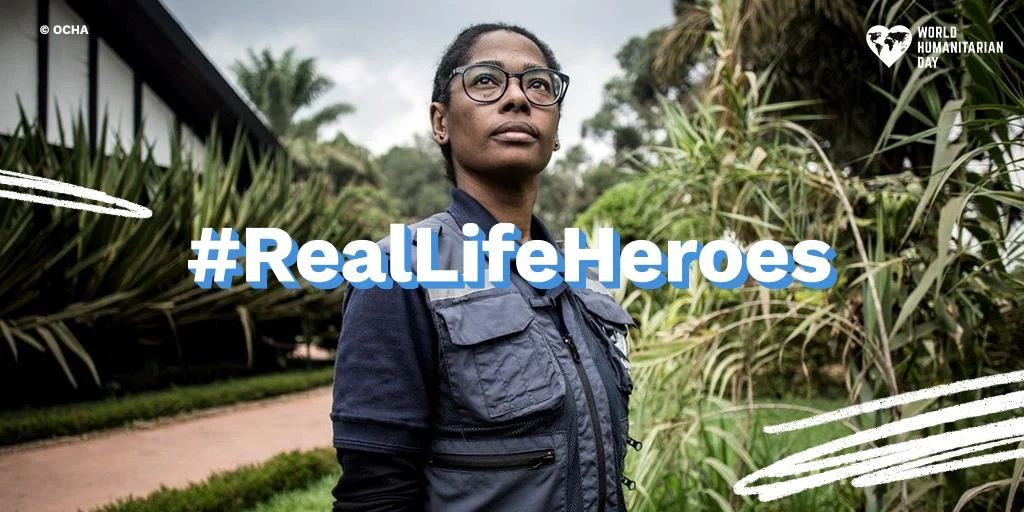
Spotlighting the #RealLifeHeroes of 2020
In recognition of the immense personal sacrifices made during the pandemic, OCHA launched the #RealLifeHeroes campaign to showcase the human faces behind the statistics. Rather than focusing exclusively on macro-level logistics and institutional responses, the campaign highlights the intimate, courageous stories of local workers who form the backbone of community resilience.
Among those profiled are refugees who, despite facing systemic marginalization and legal barriers, have leveraged their training to serve as vital health workers in host-country pandemic response plans. Others include veteran health personnel who successfully combated the West and Central African Ebola epidemics and seamlessly transitioned their expertise to confront COVID-19 in high-risk environments. Alongside them are doctors, nurses, and midwives who, at personal risk of infection, maintain continuous access to essential maternal and child healthcare services in fragile settings.
These narratives underscore a fundamental shift in modern humanitarian action: the localization of aid. As international travel restrictions limited the deployment of expatriate staff during the pandemic, local organizations and indigenous personnel proved to be the most resilient, adaptable, and trusted agents of change within crisis-affected communities.
Broader Implications and Future Outlook for the Humanitarian Sector
The convergence of rising security threats, a global pandemic, and a widening funding gap carries profound implications for the future architecture of international humanitarian assistance.
First, the escalating violence against aid workers threatens to create "humanitarian deserts"—areas of acute need where international and local organizations are forced to suspend operations or withdraw entirely due to unacceptable security risks. The erosion of respect for international humanitarian law sets a dangerous precedent, signaling to non-state armed groups and state actors alike that attacks on relief personnel carry minimal legal or political consequence. Addressing this impunity requires concerted diplomatic pressure, independent international investigations, and robust accountability mechanisms to bring perpetrators of attacks against aid workers to justice.
Second, the structural funding shortfall facing the humanitarian sector demands a critical re-evaluation of international resource mobilization. While global appeals have expanded to address COVID-19 secondary impacts—such as food insecurity, economic collapse, and educational disruption—donor fatigue and domestic economic pressures in donor nations threaten to curtail crucial lifelines. Sustainable, flexible, and multi-year funding models are urgently required to support both emergency response and long-term community resilience.
Finally, the invaluable contributions of local humanitarians during the pandemic have accelerated discussions surrounding the localization agenda. Empowering local actors with direct funding, decision-making authority, and institutional support is no longer viewed merely as an ethical aspiration, but as an operational imperative for an effective, sustainable global humanitarian enterprise.
As the international community reflects on the significance of World Humanitarian Day, the imperative remains clear: honoring the world’s humanitarians requires moving beyond symbolic words of gratitude. It demands concrete financial commitments to fully fund their operations, unwavering political support to guarantee their safety, and uncompromising enforcement of international laws designed to protect those who dedicate their lives to saving others.
Detailed personal accounts, multimedia assets, and inspiring stories of the #RealLifeHeroes driving contemporary humanitarian response can be accessed directly through the official World Humanitarian Day portal at www.worldhumanitarianday.org, while comprehensive media kits, photographs, and video archives are made publicly available via designated organizational repositories.