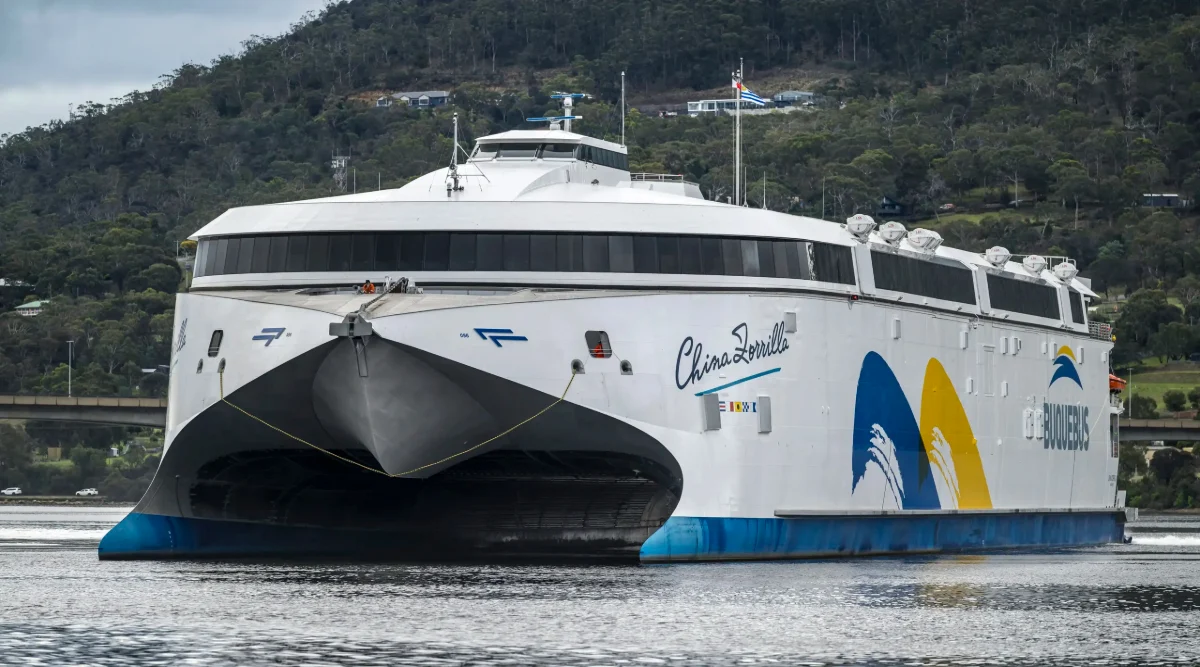
The maritime industry has reached a significant turning point in the decarbonization of international transit with the official entry of the China Zorrilla into commercial service. This 130-meter aluminum catamaran, operated by Buquebus, is currently traversing the Rio de la Plata, linking the bustling port of Buenos Aires, Argentina, with the historic coastal city of Colonia, Uruguay. As the world’s largest fully electric passenger and vehicle ferry, the vessel represents a fundamental shift in how heavy-duty maritime transport can move away from fossil fuel dependence, proving that large-scale, high-capacity commercial shipping can operate reliably on battery power alone.
A Technical Marvel of Naval Engineering
Constructed by the renowned Tasmanian shipbuilder Incat, the China Zorrilla—internally designated as Hull 96—is an engineering achievement that balances massive scale with environmental sustainability. The vessel boasts a gross tonnage of 14,058 tons and is designed to accommodate up to 2,100 passengers and 225 vehicles. Despite its substantial size, the ferry is capable of maintaining a service speed of 25 knots (approximately 29 mph), ensuring that the crossing between Argentina and Uruguay remains both efficient and comfortable.
The propulsion system is the cornerstone of this vessel’s innovation. It utilizes eight 2,400 kW (3,200 HP) electric motors, which drive eight specialized water jets supplied by Wärtsilä. This configuration provides significant advantages in terms of operational performance. By utilizing axial-flow water jet technology, the vessel achieves superior maneuverability and a shallow draft, which is essential for navigating the complex estuary waters of the Rio de la Plata. Furthermore, the absence of traditional internal combustion engines results in a quieter, vibration-free experience for passengers, effectively eliminating the harsh engine noise and exhaust odors typically associated with diesel-powered ferry travel.
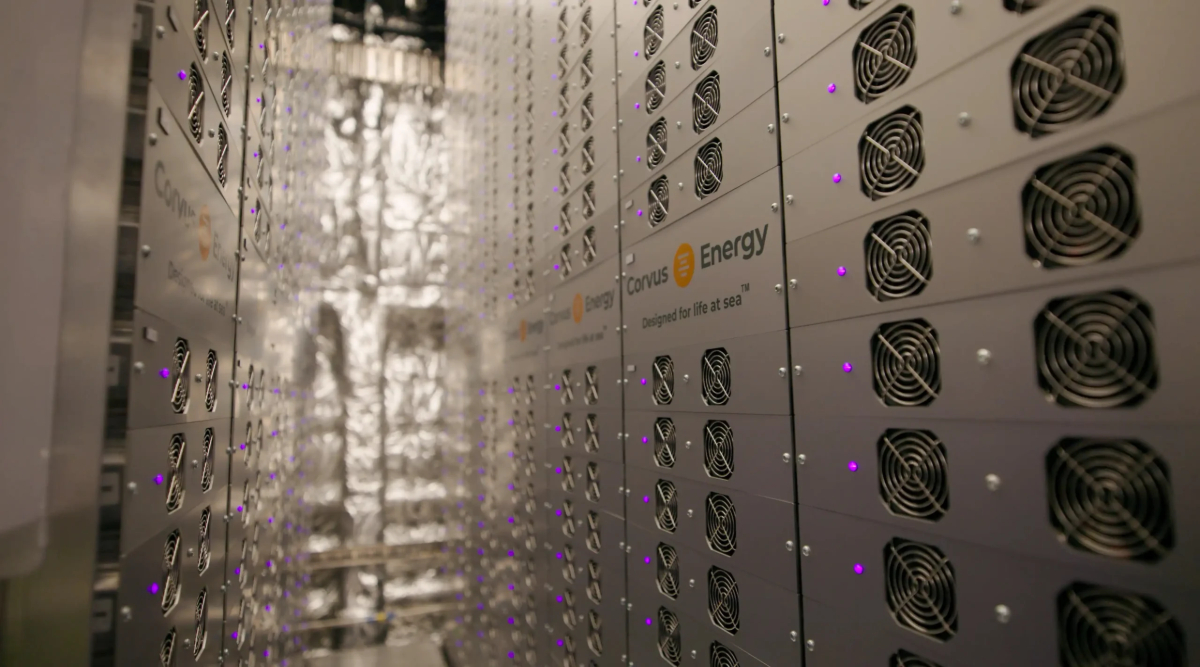
Powering this massive electric drive is an industry-leading 41.2 MWh battery energy storage system (BESS), provided by Corvus Energy. Weighing in at 250 tons, this battery array allows for the high-energy demands of a 25-knot crossing. To ensure rapid turnaround times at the port, the vessel is supported by two 8 MW charging systems, which are designed to recharge the batteries efficiently between the short one-hour excursions.
The Evolution of Hull 96: From LNG to Electric
The journey toward the realization of the China Zorrilla was not linear. When the contract for Hull 96 was initially signed in the summer of 2023, the design specifications called for a liquefied natural gas (LNG) propulsion system. At the time, LNG was widely viewed by the maritime industry as a practical "bridge fuel" to reduce carbon emissions. However, as battery technology matured and the global regulatory landscape shifted toward more aggressive net-zero targets, both Incat and Buquebus made the strategic decision to pivot to a full battery-electric configuration.
This transition required a massive re-engineering of the vessel’s internal layout, weight distribution, and safety protocols. The successful conversion demonstrates the flexibility of Incat’s modular aluminum catamaran design, as well as the increasing commercial viability of large-scale battery storage solutions. The vessel is named after Concepción "China" Zorrilla, a legendary Uruguayan actress and director whose cultural influence spans both sides of the Rio de la Plata, serving as a fitting tribute to the cross-border cooperation the ship facilitates.
Strategic Implications for Global Maritime Electrification
The deployment of the China Zorrilla marks a milestone for the maritime industry, which is currently under intense pressure to reduce its carbon footprint. According to the International Maritime Organization (IMO), shipping accounts for nearly 3% of global greenhouse gas emissions. While short-sea shipping—ferries and regional cargo vessels—has been the primary testing ground for electrification, the scale of this project proves that even high-capacity routes can be serviced without carbon-emitting fuels.
Industry experts note that the success of this vessel will likely serve as a blueprint for other ferry operators worldwide. The primary hurdles for such projects have traditionally been weight-to-energy ratios and port infrastructure. By utilizing advanced battery chemistry and dedicated high-voltage charging, the China Zorrilla project effectively dismantles these arguments.
Robert Clifford, CEO of Incat, emphasized the collective effort required to bring the vessel to life. "This is a truly historic day for Incat, for Tasmania, and for the global maritime industry," Clifford stated. "Over the years, hundreds of talented people at our shipyard in Hobart have worked tirelessly to make this extraordinary vessel a reality. We have overcome immense technical challenges, pushed the boundaries of what was previously thought possible, and created something the world has never seen before."
Future Prospects and Ongoing Expansion
The significance of this achievement is already rippling through the shipbuilding sector. Incat has since secured additional contracts that indicate a long-term shift toward electric fleets. Notably, the Hobart shipyard is currently constructing three 129-meter electric ferries for the Danish operator Molslinjen. These vessels are intended to service the Kattegat route in Denmark, further cementing the role of Australian-made electric catamarans in the global transition.
For the regional economy, the China Zorrilla offers a sustainable, low-cost transport link. With round-trip fares priced at approximately $43.00, the service provides an economically attractive alternative to land-based travel, while simultaneously reducing the ecological burden on the sensitive Rio de la Plata ecosystem.

A Critical Analysis of Environmental Impact
Beyond the immediate removal of direct exhaust emissions, the long-term environmental impact of the China Zorrilla relies on the electricity grid of the region. As Uruguay continues to lead South America in renewable energy integration—often generating over 90% of its electricity from wind, solar, and hydroelectric sources—the ferry will operate on a exceptionally clean energy profile.
However, the maritime sector must still contend with the life-cycle analysis of the batteries themselves. The mining and manufacturing processes for a 41.2 MWh battery pack carry their own environmental costs. The industry is now turning its attention toward circular economy practices, including the secondary use of maritime batteries for land-based grid storage after they are no longer suitable for the high-discharge demands of a vessel.
Conclusion: A New Standard for Transit
The China Zorrilla represents more than just a vessel; it is a proof-of-concept for the future of waterborne mobility. By proving that 130-meter ships can operate daily, high-frequency schedules on pure battery power, the project provides a clear roadmap for decarbonizing the world’s ferry fleets.
As the vessel continues its daily runs between Buenos Aires and Colonia, it stands as a testament to the fact that with the right combination of engineering innovation and strategic investment, the most daunting challenges in the climate transition are surmountable. The shipping industry, often criticized for its slow pace of reform, now has a tangible, high-performance standard to emulate. As more shipyards look to mimic the success of Incat’s Hull 96, the global maritime landscape is poised for a period of rapid, electric-driven transformation that will redefine the future of passenger and vehicle transport for decades to come.