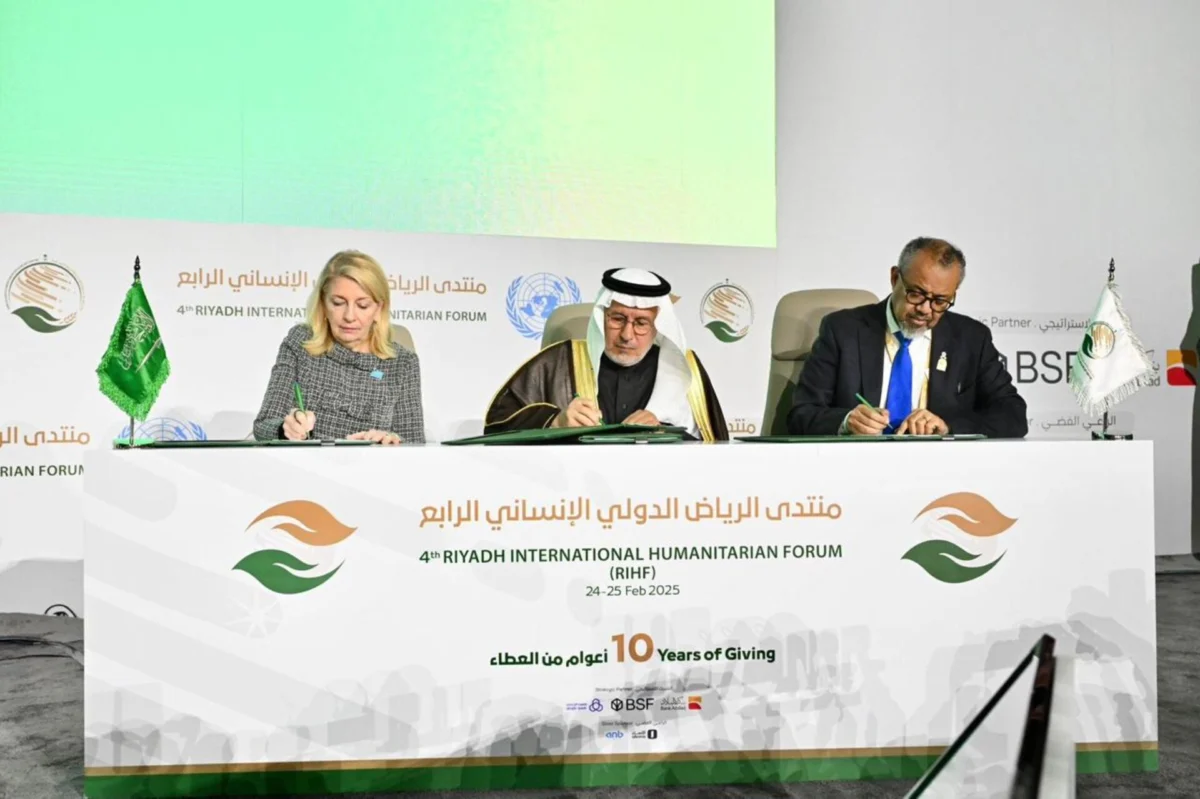
The global humanitarian landscape faced a critical turning point on February 24–25, 2025, as international policymakers, healthcare leaders, and diplomats converged in the Saudi capital for the Riyadh International Humanitarian Forum. Marking the momentous 10th anniversary of the King Salman Humanitarian Aid and Relief Centre (KSRelief), the high-level gathering served as a vital platform for addressing compounding global health emergencies. Against a backdrop of unprecedented geopolitical instability, climate shocks, and protracted conflicts, the two-day summit prioritized critical discussions surrounding health diplomacy, crisis survival, the preservation of human dignity, and—crucially—the safety and security of humanitarian aid workers operating in volatile zones.
The forum culminated in a series of landmark financial commitments and bilateral partnerships. Most notably, the World Health Organization (WHO), UNICEF, and KSRelief cemented agreements totaling hundreds of millions of dollars designed to tackle resurging infectious diseases, manage regional health emergencies, and provide essential medical care to displaced populations across the Middle East and Africa.
Main Facts of the Forum and Strategic Funding Initiatives
At the heart of the Riyadh summit were actionable, targeted financial deployments aimed at mitigating immediate disease outbreaks and fortifying fragile healthcare infrastructures. Among the primary announcements was a comprehensive package agreed upon by the WHO and KSRelief to bolster health security in Yemen. Decades of conflict have left Yemen’s health infrastructure shattered, creating fertile ground for preventable vector-borne and waterborne diseases. To combat this, the new agreements allocate US$ 12 million specifically for intensive malaria control programs, alongside an additional US$ 2.1 million dedicated to expanding cholera treatment facilities and localized containment protocols.
Simultaneously, the spillover effects of the ongoing conflict in Sudan prompted targeted regional interventions. The KSRelief and WHO Egypt Country Office formalized a US$ 3.6 million agreement aimed directly at supporting Sudanese refugees who have fled across the border into Egypt. This funding will secure continuous, life-saving dialysis treatments for displaced individuals suffering from chronic renal failure—a vulnerable demographic whose access to specialized medical care has been severely disrupted by flight and displacement.
However, the centerpiece of the international financial pledges was the formal confirmation of Saudi Arabia’s monumental US$ 500 million contribution to the Global Polio Eradication Initiative (GPEI). Originally announced in principle during an April 2024 pledging moment, the operationalization of this fund was codified at the Riyadh forum through two major sub-agreements: US$ 300 million allocated to the WHO and US$ 200 million directed to UNICEF.
This capital injection represents a massive lifeline for global immunization campaigns. The GPEI funding will directly support initiatives designed to vaccinate approximately 370 million children annually. This endeavor is particularly urgent in regions experiencing a troubling resurgence of the poliovirus, often compounded by active conflict, administrative blockades, and the collapse of routine public health immunization structures. Areas of primary concern include Afghanistan, Pakistan—the last remaining endemic strongholds of the wild poliovirus—and the Gaza Strip, where infrastructural destruction has drastically elevated the risk of vaccine-preventable disease outbreaks.
Chronology and Background Context of the Event

To understand the weight of the agreements signed in Riyadh, it is necessary to examine the evolutionary trajectory of KSRelief and the compounding crises that defined the geopolitical landscape leading into 2025. Established in May 2015 by King Salman bin Abdulaziz Al Saud, KSRelief was envisioned as a centralized humanitarian arm capable of delivering aid independently of political affiliations, responding swiftly to international emergencies. Over its first decade, the organization expanded its operations to dozens of countries, evolving from a regional responder into a prominent global donor.
The 10th-anniversary milestone of KSRelief in early 2025 arrived during one of the most perilous eras for the international humanitarian system since the post-World War II period. The preceding years had witnessed a dramatic escalation in multi-front conflicts. The war in Sudan, which erupted in April 2023, triggered one of the world’s most severe displacement crises, forcing millions to seek refuge in neighboring nations like Egypt, Chad, and South Sudan, thereby straining host-country medical systems. Meanwhile, protracted conflicts in Yemen and the Middle East continued to generate chronic humanitarian deficits.
Concurrently, the global public health architecture faced persistent threats from infectious diseases. Climate change, mass displacement, and the breakdown of sanitation systems fueled a global resurgence of cholera, while stagnant vaccination coverage rates—exacerbated by the disruptions of the COVID-19 pandemic years—allowed polio to claw its way back into populations that had long been declared free of the virus.
Against this backdrop, the Riyadh International Humanitarian Forum was conceived not merely as a retrospective celebration of KSRelief’s decade of service, but as an urgent operational convening. Months of behind-the-scenes diplomatic alignment between the Kingdom of Saudi Arabia, the WHO, UNICEF, and other multilateral bodies culminated in the finalization of the multi-million-dollar funding frameworks unveiled on February 24-25.
Supporting Data and Regional Health Implications
The data underpinning the Riyadh agreements highlights the stark realities facing modern public health practitioners. According to public health assessments presented around the forum, vector-borne and waterborne illnesses remain leading causes of morbidity and mortality in conflict-torn zones. In Yemen, millions remain at risk of acute watery diarrhea and cholera due to compromised municipal water treatment facilities and restricted access to safe drinking water. The targeted injection of US$ 2.1 million for cholera expansion directly addresses treatment gaps by supplying intravenous fluids, oral rehydration salts, and supporting localized treatment centers.
Similarly, the allocation of US$ 12 million for malaria control targets regions where climate anomalies and deteriorating vector-control programs have driven up infection rates. Malaria, entirely preventable and treatable under stable conditions, quickly becomes lethal when health systems lack the capacity for vector mitigation, rapid diagnostic testing, and distribution of artemisinin-based combination therapies.
Regarding the GPEI funding, the statistical scope of the US$ 500 million commitment is staggering. Reaching 370 million children annually requires a meticulously coordinated supply chain, cold-chain storage capabilities in extreme climates, and thousands of frontline community health workers willing to enter high-risk security zones. The resurgence of polio in conflict settings—most notably documented in Gaza following the severe disruption of its sanitation and health networks—demonstrated to global epidemiologists that the virus remains an imminent global threat. Public health experts have long maintained that polio anywhere is a threat everywhere; thus, the Saudi contribution serves as a crucial defensive barrier against the re-establishment of endemic transmission chains globally.
Official Responses and Statements from Related Parties
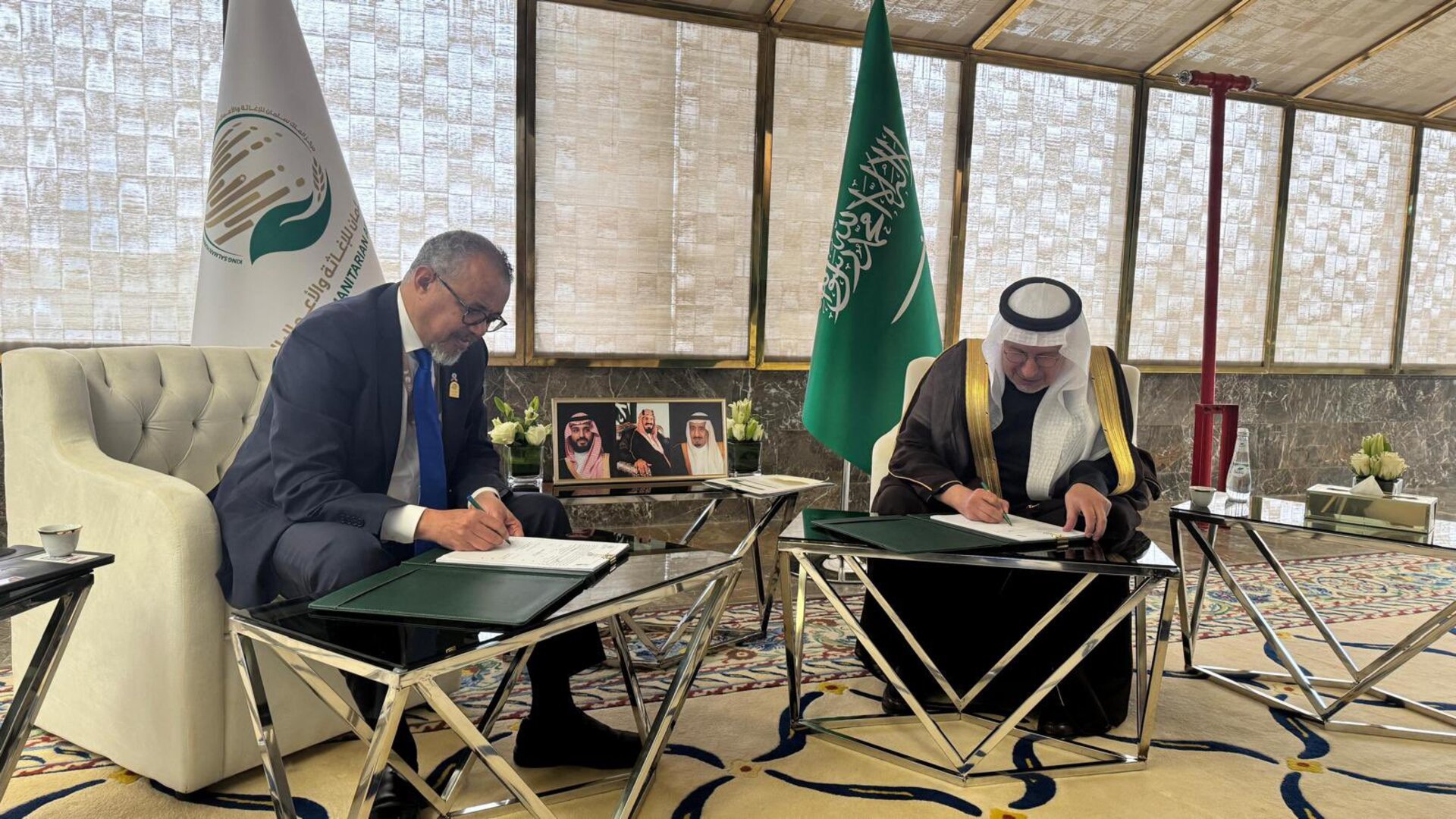
The gravity of the partnerships forged in Riyadh was underscored by statements from key leaders representing the participating institutions. Dr. Tedros Adhanom Ghebreyesus, Director-General of the World Health Organization, emphasized the indispensable nature of flexible, timely donor support in navigating complex humanitarian emergencies. Highlighting the agreements on malaria, cholera, and Sudanese refugee health needs, Dr. Tedros noted that health diplomacy and strategic financing are the bedrock of saving lives in environments where political solutions remain elusive. Through his active engagement at the forum and via public statements, the WHO chief underscored that partnerships like the one shared with KSRelief bridge the gap between policy discussions and tangible bedside care.
UNICEF Executive Director Catherine Russell, speaking alongside KSRelief Supervisor-General Dr. Abdullah Al Rabeeah and Dr. Tedros during the signing of the GPEI agreement, focused on the profound vulnerability of children caught in the crosshairs of conflict and disease. Russell noted that the US$ 200 million allocation to UNICEF within the broader polio package is vital for sustaining immunization drives in the world’s most challenging operational environments. Protecting children from lifelong paralysis requires unyielding resolve and robust financial backing, elements that the renewed Saudi commitment explicitly provides.
Dr. Abdullah Al Rabeeah, Supervisor-General of KSRelief, reiterated Saudi Arabia’s steadfast dedication to mitigating human suffering irrespective of geography, race, or religion. Reflecting on KSRelief’s ten-year journey, Dr. Al Rabeeah stressed that the institution’s mandate extends beyond emergency relief delivery to encompass structural capacity-building, disease eradication, and the fostering of enduring multilateral partnerships with specialized United Nations agencies.
Broader Impact and Implications for Global Health
The agreements finalized at the Riyadh International Humanitarian Forum 2025 carry significant implications for the future of global humanitarian governance. As traditional donor nations face domestic fiscal pressures and competing budgetary demands, the emergence of proactive, highly capitalized regional donors like Saudi Arabia is reshaping the architecture of international aid.
By tying substantial financial resources to specialized multilateral implementers such as the WHO and UNICEF, the Riyadh forum demonstrated a model of effective burden-sharing. This approach leverages the specialized technical expertise and global reach of UN agencies while harnessing the financial agility and strategic commitment of regional humanitarian hubs.
Furthermore, the emphasis placed on the safety of aid workers during the forum reflects a growing consensus that the operational environment for humanitarian actors has become dangerously untenable. Discussions in Riyadh laid foundational groundwork for enhanced advocacy regarding international humanitarian law and the protection of medical personnel—a prerequisite if programs like the newly funded cholera, malaria, and polio campaigns are to be successfully executed on the ground.
Ultimately, the Riyadh International Humanitarian Forum 2025 transcended commemorative diplomacy. By translating high-level dialogue into nearly half a billion dollars in targeted, operational funding, the summit set a benchmark for international cooperation. The impacts of these agreements—measured in averted polio cases, treated cholera patients, managed malaria outbreaks, and dialysis sessions provided to displaced populations—will reverberate across the Middle East, Africa, and beyond for years to come, affirming that sustained collective action remains humanity’s most potent defense against crisis and disease.