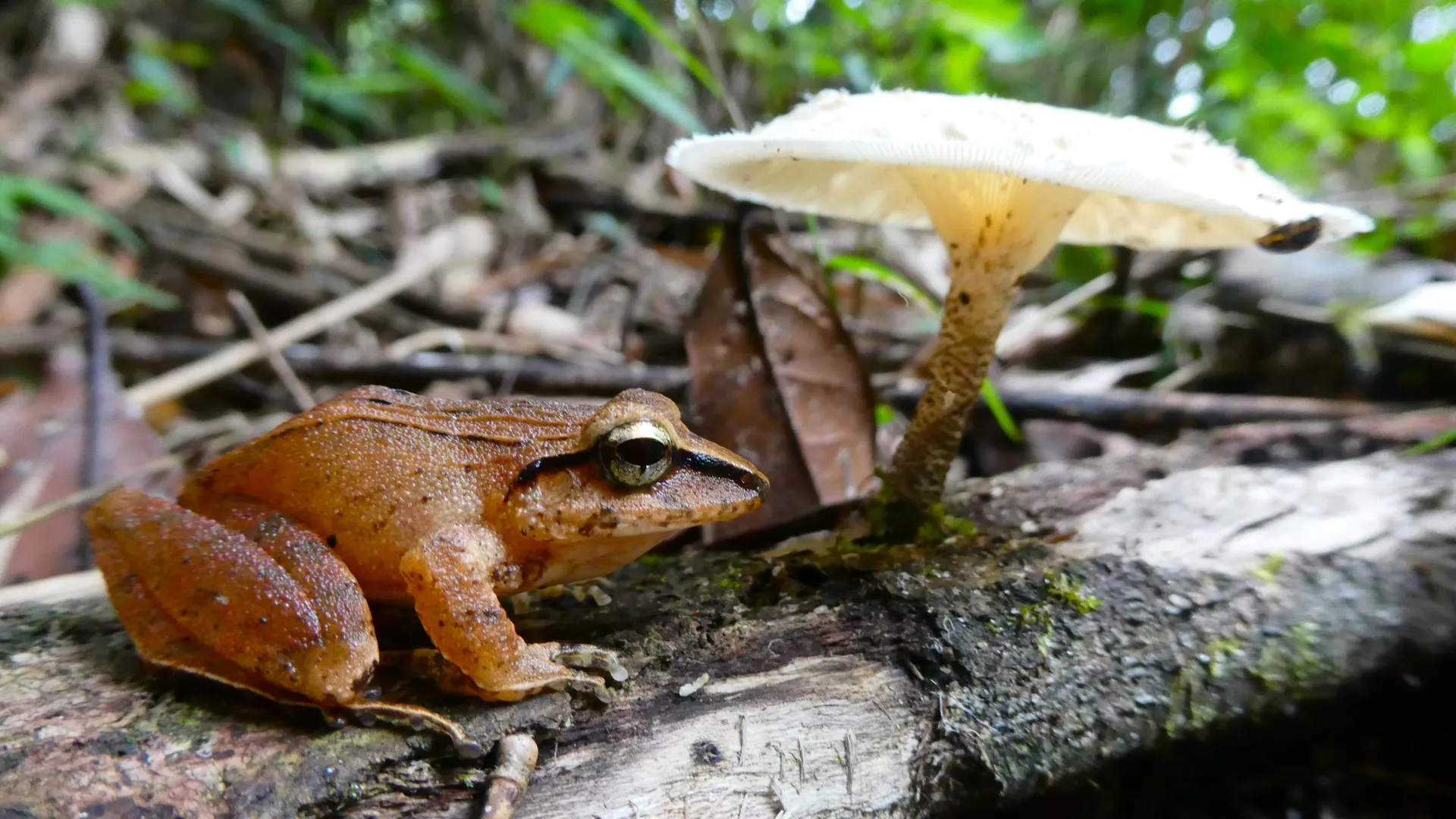
For nearly half a century, the mysterious disappearance of frog populations within Brazil’s Atlantic Forest has remained one of the most persistent and vexing enigmas in the field of wildlife epidemiology. Since the 1970s, researchers have documented catastrophic declines in amphibian diversity within one of the world’s most biodiverse ecosystems, yet the precise catalyst for these losses stayed hidden behind a veil of scientific uncertainty. A groundbreaking study published in the journal Molecular Ecology now provides the most compelling evidence to date, linking these historic population crashes to the global emergence of a lethal fungal pathogen. The research, a collaborative effort between the Center for Conservation Genomics at the Smithsonian’s National Zoo and Conservation Biology Institute (NZCBI) and Pennsylvania State University (PSU), bridges the gap between historical ecological data and modern genomic analysis to finally identify the culprit.
The Pathogen: A Silent Global Killer
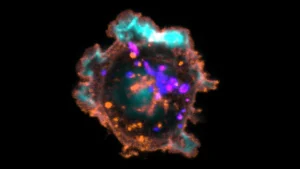
At the heart of this investigation is chytridiomycosis, a devastating infectious disease caused by the microscopic aquatic fungus Batrachochytrium dendrobatidis, commonly referred to as "chytrid." While the fungus was not formally described or identified by the scientific community until 1999, retrospective research suggests that it originated in Asia before embarking on a silent, global expansion during the 1970s and 1980s.
The lack of early identification created a significant challenge for conservationists. By the time scientists recognized the fungus as a threat to global biodiversity, hundreds of amphibian species had already been pushed to the brink of extinction or lost entirely. Because many of these populations vanished before the pathogen was even on the radar of the scientific community, the causal link between the fungus and specific regional die-offs remained largely speculative—until now.
A Chronology of Decline: The Boracéia Biological Station
The focus of the research team was the Boracéia Biological Station, a critical research site within the Brazilian Atlantic Forest. Between 1979 and 1982, the site experienced a sudden and dramatic collapse in its amphibian populations. For decades, experts debated the potential drivers of this collapse, with some theories pointing toward anthropogenically induced climate change, habitat degradation, or localized extreme weather events.
The new study, led by Jack Boyette, an NZCBI graduate fellow and doctoral candidate at PSU, utilized a sophisticated "time-travel" approach to evaluate these competing hypotheses. By accessing the vast biological archives at the Smithsonian’s National Museum of Natural History, the team analyzed specimens collected by former curator William Ronald Heyer. Heyer’s rigorous field expeditions at Boracéia—conducted both before the decline in the 1970s and after the die-offs in the 1980s—provided a rare, longitudinal snapshot of the ecosystem’s health.
Methodology: Mining the Museum Archives
The research team systematically examined over 370 preserved amphibians, representing 17 distinct species. This meticulous forensic analysis involved testing the skin swabs of museum specimens for the presence of B. dendrobatidis DNA. The findings were unambiguous: none of the specimens collected prior to the 1979 collapse tested positive for the fungus. Conversely, more than 50% of the specimens collected throughout the 1980s carried the pathogen.
This sharp, temporal shift confirms that the invasion of the fungus into the Boracéia ecosystem occurred in direct lockstep with the observed population collapses. "After almost 50 years, we still aren’t confident what caused many historical amphibian die-offs," Boyette noted. "While environmental factors were previously suspected, our findings most directly implicate the chytrid fungus, revealing that the regional invasion of the pathogen coincided perfectly with these unexplained disappearances."
The Paradox of Infection and Mortality
A particularly intriguing aspect of the study is the counterintuitive relationship between infection and population survival. The researchers discovered that the species that suffered the most severe, near-total declines showed almost no detectable signs of the fungus in preserved specimens. Meanwhile, species that maintained stable populations often tested positive for the pathogen.
The team posits a logical explanation for this "missing evidence" paradox: the most susceptible species likely experienced such rapid, fulminant mortality that infected individuals were rarely, if ever, collected by researchers in the field. In contrast, species that survived the initial outbreak likely possessed an innate, physiological tolerance to the fungus. This suggests that the initial arrival of the pathogen was a "naive" introduction, where local populations lacked any historical exposure or immunological defense against the novel fungus, leading to a catastrophic "first wave" of mortality.
Implications for Global Biodiversity and Conservation
The broader implications of this study extend well beyond the borders of the Brazilian Atlantic Forest. Michael Campana, a genomicist at NZCBI, highlighted the essential role of natural history collections in addressing modern environmental crises. "Museum collectors could not have anticipated how important their collections would be to our modern conservation challenges," Campana stated. "Without them, we would never be able to detect pathogens that went unnoticed for decades and reconstruct disease outbreaks that would otherwise remain a mystery."
This realization is particularly urgent given the emergence of new threats, such as B. salamandrivorans (Bsal). A close relative to the chytrid fungus, Bsal is currently devastating salamander populations in Europe and represents an existential threat to North American biodiversity. By reconstructing the emergence of the original chytrid crisis, researchers hope to develop predictive models that allow for the early detection and mitigation of future fungal outbreaks.
Signs of Resilience and Recovery
The study concludes on a cautiously optimistic note regarding the current status of the Boracéia ecosystem. Between 2022 and 2024, researchers from the University of São Paulo joined the team to conduct modern biological surveys. Of the 17 species originally documented by Heyer, 12 were successfully relocated. While five species remain missing—raising valid concerns about their potential local extinction—the majority of the community has shown a remarkable capacity for recovery.
Data from these modern surveys indicate that while the fungus is still present in the environment, the surviving species have likely evolved to tolerate the pathogen. This evolution of host-pathogen dynamics suggests that the ecosystem has moved from a state of acute, epidemic-driven loss to a state of chronic, manageable infection.
Future Research Directions
The investigation into the Atlantic Forest is far from over. The research team is now moving into the next phase of the project: utilizing genomic sequencing to pinpoint the specific genetic adaptations that allowed some species to survive the fungal invasion while others succumbed. By comparing the DNA of survivors and victims, scientists hope to unlock the mechanisms of immunological resistance.
Furthermore, the integration of ancient environmental DNA (eDNA) from soil and water samples collected at the site is expected to fill the remaining gaps in the historical record. This cutting-edge technique allows researchers to identify the presence of organisms and pathogens even when physical specimens are absent, potentially identifying the presence of the fungus long before it reached its peak virulence.
In summary, this research serves as a masterclass in the application of retrospective science. By revisiting the archives of the past, the scientific community has not only solved a 50-year-old cold case but has also gained vital insights into the dynamics of disease transmission. As global trade and climate shifts continue to facilitate the spread of novel pathogens, the lessons learned from the frogs of Boracéia will be instrumental in safeguarding the future of global amphibian diversity. The study reinforces the vital importance of funding and maintaining natural history collections, which serve as the only reliable "black box" recording the biological history of our changing planet.