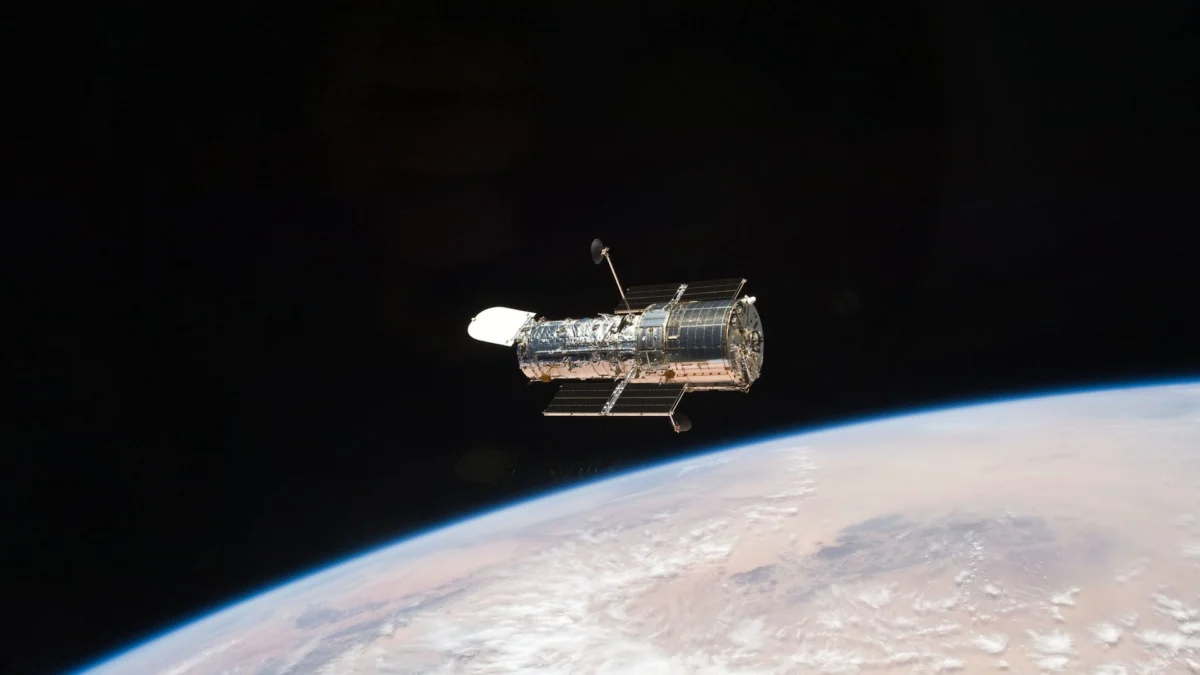
The National Aeronautics and Space Administration (NASA) has officially initiated a formal inquiry into the feasibility of a high-stakes mission to salvage the Hubble Space Telescope, a move that could potentially secure the future of the world’s most iconic observatory. On October 29, the agency issued a request for information (RFI) seeking proposals for in-space servicing capabilities. The objective is twofold: to address the natural orbital decay of the telescope—caused by persistent atmospheric drag—and to explore the possibility of technological upgrades that could enhance its scientific output before its projected reentry into Earth’s atmosphere roughly six years from now.
A Legacy of Discovery and the Clockwork of Decay
Launched in April 1990 aboard the Space Shuttle Discovery, the Hubble Space Telescope has served as a cornerstone of modern astrophysics for over three decades. Developed in a landmark partnership between NASA and the European Space Agency (ESA), the observatory has transcended its initial engineering challenges—most notably the spherical aberration discovered shortly after deployment—to become the most productive instrument in the history of astronomy.
Hubble’s contributions to our understanding of the cosmos are unparalleled. It provided the definitive data that confirmed the universe is not only expanding but that this expansion is accelerating, a groundbreaking discovery that earned the 2011 Nobel Prize in Physics. Furthermore, its deep-field imaging has allowed humanity to peer back in time to the earliest stages of galaxy formation, while its spectroscopic capabilities have enabled scientists to study the atmospheres of exoplanets in unprecedented detail.
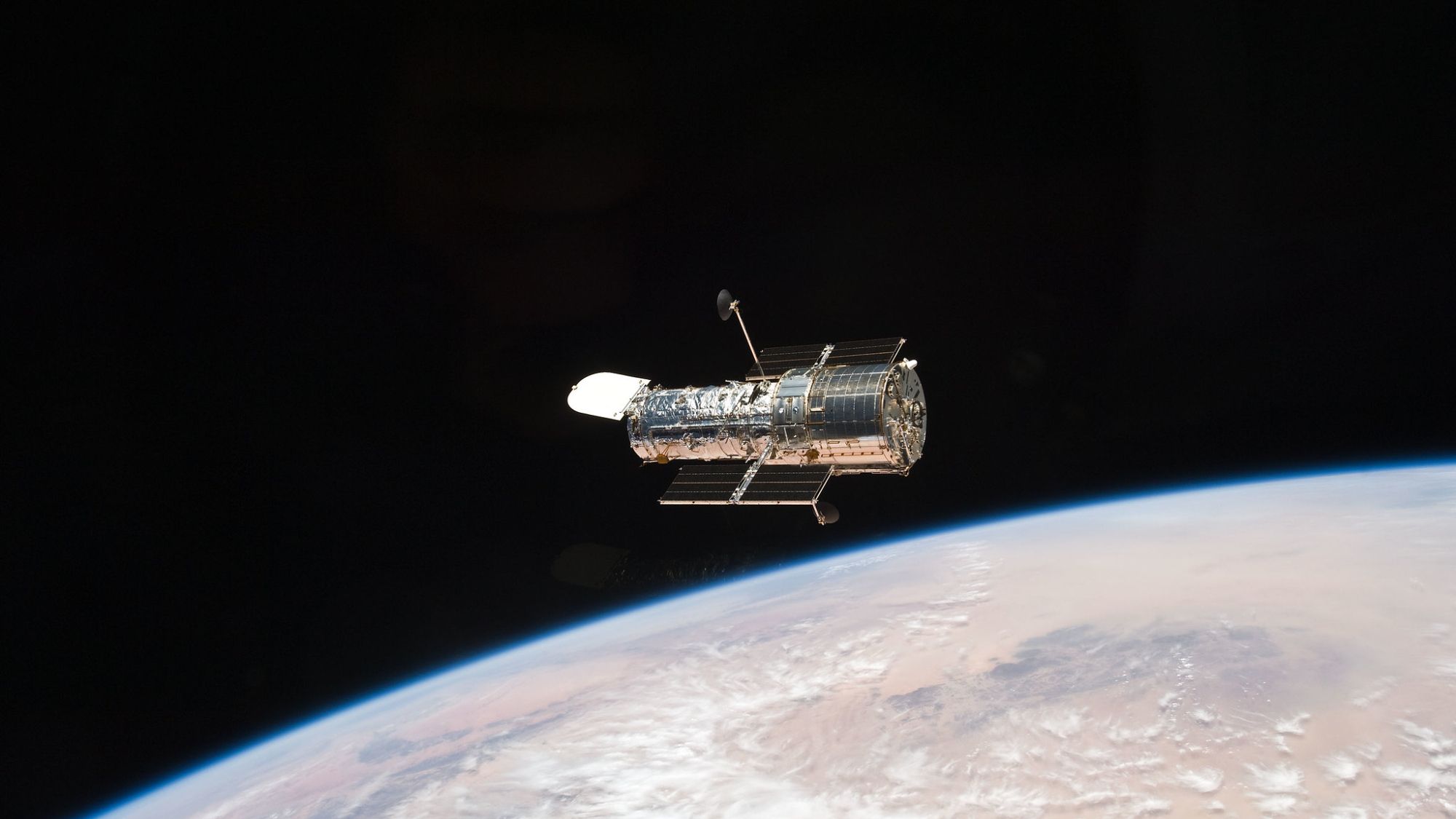
However, Hubble’s success is inextricably linked to its low-Earth orbit. Unlike the James Webb Space Telescope, which operates at the second Lagrange point (L2) about 1.5 million kilometers away, Hubble circles the Earth at an altitude of approximately 540 kilometers. At this height, the telescope experiences subtle but constant resistance from the thin upper reaches of the atmosphere. Without intervention, this drag slows the spacecraft, causing it to lose altitude. NASA projections indicate that without a reboost, the observatory will succumb to gravity and enter the atmosphere for a destructive descent between 2033 and 2034.
The History of Human Servicing Missions
The survival of Hubble to date is a testament to the ingenuity of the Space Shuttle program. Between 1993 and 2009, astronauts conducted five servicing missions to the telescope. These missions were not merely repairs; they were transformative upgrades. Astronauts replaced aging batteries, installed advanced gyroscopes for precise pointing, and swapped out legacy instruments for cutting-edge cameras and spectrographs.
The final servicing mission, STS-125, occurred in 2009. Since the retirement of the Space Shuttle fleet in 2011, Hubble has operated without any human intervention. Despite this, the telescope remains a scientific powerhouse. According to data provided by NASA, Hubble is currently the subject of intense demand, with researchers requesting nearly seven times more observing time than the telescope’s schedule can accommodate. Its archive contains the raw material for more than 23,000 peer-reviewed scientific papers, a figure that grows by the hundreds every year.
The Pivot to Commercial and Robotic Solutions
The current conversation regarding a rescue mission represents a shift in how NASA approaches the maintenance of aging orbital assets. In 2022, a proposal was brought forward by Jared Isaacman—the billionaire entrepreneur and commander of the Polaris Dawn mission—to utilize SpaceX’s Crew Dragon capsule to reach and boost the telescope. At the time, NASA expressed caution, citing concerns that a docking attempt could pose risks to the delicate structure of the 34-year-old telescope.
However, the landscape has shifted significantly. In late 2025, with Jared Isaacman serving as NASA Administrator, the agency’s stance has moved toward a more proactive evaluation of commercial partnerships. In a statement released on October 30, Isaacman emphasized that the immense scientific return on investment justifies a comprehensive look at any viable rescue scenario.
"We must look at every reasonable opportunity to keep it delivering for as long as possible," Isaacman stated. "If we can provide an extension to its operational life that is cost-effective compared to the launch of a new mission, it is an avenue we are obligated to explore."
The current RFI is designed to be inclusive, inviting private aerospace entities to propose solutions ranging from autonomous rendezvous and docking to remote robotic maneuvers. The agency has specified that any successful servicing mission would likely need to take place by 2032 to ensure enough operational runway remains to justify the cost and complexity of the operation.
Learning from Recent Setbacks
The ambition to rescue Hubble comes on the heels of a sobering lesson in the difficulties of robotic servicing. Earlier this year, NASA partnered with Katalyst Space Technologies in a $30 million effort to save the Neil Gehrels Swift Observatory. Swift, a high-energy astrophysics mission, had been suffering from orbital decay exacerbated by increased solar activity, which causes the Earth’s atmosphere to expand and increases drag on low-orbit satellites.
The mission, which involved the LINK spacecraft, was a "race against time" endeavor. Despite a successful launch, the mission encountered unforeseen control issues during the rendezvous phase, preventing the spacecraft from connecting with the observatory. Swift is expected to reenter the atmosphere on November 4, marking the end of a 22-year mission that far exceeded its original two-year design life. This outcome highlights the technical hurdles inherent in docking with non-cooperative, aging spacecraft that were never designed for automated rendezvous.
Broader Implications for Space Infrastructure
The potential rescue of Hubble is not just about extending the life of a single telescope; it is a pilot program for the future of orbital maintenance. As the number of assets in Earth’s orbit continues to grow, the ability to service, refuel, and reposition satellites is becoming an essential capability.
If NASA successfully demonstrates that a robotic or crewed mission can safely boost Hubble’s orbit, it would validate a new industry of "in-space servicing, assembly, and manufacturing" (ISAM). This capability could transform how the agency manages its fleet, potentially turning a "disposable" model of satellite operations into a sustainable, long-term maintenance model.
Furthermore, the public sentiment surrounding Hubble remains a significant factor. Its imagery—from the "Pillars of Creation" to the deepest views of the early universe—has fostered a unique public connection to space exploration. Unlike many other scientific instruments, Hubble is a cultural icon, and the prospect of its loss is viewed by many as a significant blow to the public’s engagement with science.
Looking Ahead
As the industry reviews the requirements set forth in the RFI, several key technical questions remain. These include the impact of docking on the telescope’s sensitive optics, the ability to handle the older power systems, and the financial viability of such a mission in an era of constrained federal budgets.
The RFI also explicitly acknowledges the alternative: a controlled reentry. Should a rescue mission prove technically unfeasible or financially prohibitive, NASA must still ensure the safety of the population below. A controlled reentry would allow the agency to guide the telescope toward a specific, uninhabited location in the ocean, ensuring that any debris that survives the atmospheric transit does not pose a risk to terrestrial life.
For now, the focus remains on the possibility of a "second life" for the observatory. The timeline is tight; with a 2032 target for any potential intervention, the planning, engineering, and testing phases must move with efficiency and precision. As the scientific community looks to the future, the prospect of an enhanced, reboosted Hubble continues to stand as a symbol of humanity’s persistent desire to understand the cosmos—and our growing technical capacity to protect the tools that allow us to do so.