
The philosophical landscape of the late 20th century was profoundly altered by the publication of The Sovereignty of Good in 1970. In this seminal work, Iris Murdoch, an Anglo-Irish novelist and philosopher, introduced the concept of "unselfing"—a transformative process through which an individual transcends the narrow confines of the ego to engage with the objective reality of the world. Murdoch’s thesis posits that the pursuit of moral goodness is not a matter of willpower or adherence to rigid rules, but rather a reorientation of attention away from the self and toward the "other," facilitated primarily through the contemplation of nature and the experience of great art.
The Philosophical Framework of Unselfing
At the core of Murdoch’s moral philosophy is the rejection of the "fat relentless ego." She argues that human consciousness is naturally inclined to wrap itself in a "veil of selfish consciousness," interpreting the world through the lens of personal needs, resentments, and vanities. To counter this, Murdoch proposes "unselfing" as a method of moral purification. This is not a state of self-abnegation in the ascetic sense, but rather a "self-forgetful pleasure" that allows the individual to perceive the "independent existence of animals, birds, stones, and trees."
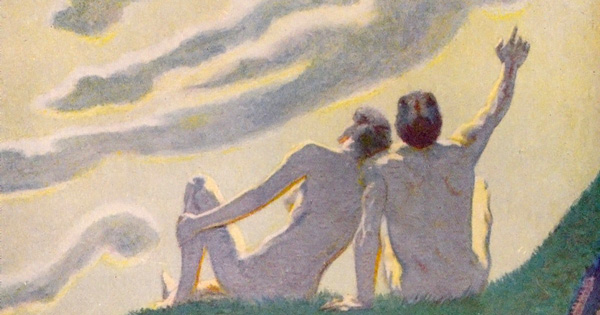
Murdoch’s work serves as a bridge between classical Platonism and modern ethics. While many of her contemporaries in the mid-20th century, such as Jean-Paul Sartre, focused on the radical freedom of the individual will, Murdoch looked backward to Plato’s "Idea of the Good." She utilized the allegory of the sun to explain how the "moral pilgrim" emerges from the cave of self-delusion to see the world in the light of objective truth. For Murdoch, goodness is a "transcendent reality," and virtue is the persistent attempt to see the world as it truly is, devoid of the distorting influence of personal desire.
The Role of Nature in Moral Deconditioning
Murdoch famously illustrated the mechanism of unselfing through the observation of nature. She described a scenario in which an individual, consumed by "anxious and resentful" thoughts regarding their own prestige or social standing, suddenly notices a hovering kestrel. In that moment of observation, the "brooding self with its hurt vanity" vanishes. The observer is no longer the center of their own universe; there is only the kestrel.
This shift in consciousness is described by Murdoch as a "change of consciousness" that alters the importance of previous selfish concerns. Modern psychological research supports Murdoch’s philosophical intuition. A 2015 study published in the Journal of Personality and Social Psychology by Dr. Paul Piff and colleagues examined the effects of "awe"—an emotion often triggered by nature—on prosocial behavior. The research found that experiences of awe lead to a "diminished self," which in turn promotes generosity and ethical decision-making. By making the individual feel like a small part of a vast, complex system, nature effectively "unselfs" the observer, mirroring Murdoch’s 1970 assertions with empirical data.

Chronology of Influence: From 1970 to the Present
The evolution of Murdoch’s ideas can be traced through several key intellectual milestones:
- 1950s-1960s: Murdoch establishes herself as a formidable voice in both fiction and philosophy, critiquing the "dryness" of contemporary moral philosophy which she felt ignored the inner life.
- 1970: The Sovereignty of Good is published, consolidating three of her most influential essays: "The Idea of Perfection," "On ‘God’ and ‘Good’," and "The Sovereignty of Good Over Other Concepts."
- 1980s-1990s: Her ideas influence a new generation of virtue ethicists. Martha Nussbaum, a leading contemporary philosopher, builds upon Murdoch’s work to explore the "intelligence of emotions" and the necessity of acknowledging human vulnerability.
- Post-1999: Following Murdoch’s death, her philosophical works see a resurgence in popularity as scholars seek alternatives to utilitarian and Kantian ethics, finding in her work a more "human" approach to morality.
- 2010s-Present: The concept of unselfing is increasingly cited in discussions regarding the "attention economy" and the mental health impacts of social media, where the "fat relentless ego" is arguably more stimulated than ever before.
Art as a Tool for Moral Resistance
While nature provides a spontaneous occasion for unselfing, Murdoch argues that art requires a more deliberate engagement. However, she makes a sharp distinction between "good art" and "fantasy art." Fantasy art, in her view, is "self-consoling," designed to flatter the ego and reinforce the consumer’s existing prejudices and desires. In contrast, "good art" possesses a "perfection of form" that resists being absorbed into the "selfish dream life of the consciousness."
Murdoch’s views on art echo those of Leo Tolstoy, who argued in What is Art? (1897) that true art destroys the separation between the receiver and the artist, creating a shared human experience. Murdoch takes this further, suggesting that great art—whether a Shakespearean tragedy or a Velázquez painting—forces the viewer to acknowledge a reality that is "alien, pointless, independent," and yet profoundly excellent. This "unpossessive contemplation" is, for Murdoch, the highest exercise of the human soul.

Supporting Data: The Impact of Aesthetic Contemplation
The "unselfing" power of art is not merely a philosophical abstraction; it has measurable cognitive effects. Research in the field of neuroaesthetics suggests that when individuals engage with art they find beautiful, there is a decrease in activity in the "Default Mode Network" (DMN) of the brain. The DMN is the neural system associated with self-referential thought, rumination, and the construction of the "ego."
A study conducted at the University of Westminster found that even brief visits to art galleries significantly reduced levels of cortisol, the body’s primary stress hormone, and reported levels of "self-focused" anxiety. This data aligns with Murdoch’s claim that art "invigorates our best faculties" and provides a "pure delight in the independent existence of what is excellent," effectively silencing the clamor of the ego.
The Acceptance of Imperfection and the Concept of the Good
A significant portion of The Sovereignty of Good is dedicated to the idea that true goodness requires an embrace of human limitation. Murdoch argues that human selfishness often creates "false doubles" of the Good—such as concepts of power, reward, or historical destiny—to make the pursuit of virtue seem more attractive or achievable.

She posits that "true morality is a sort of unesoteric mysticism," rooted in an "austere and unconsoled love of the Good." This Good is "absolute for-nothingness," meaning it is not pursued for the sake of a reward in the afterlife or for social prestige, but for its own sake. Crucially, Murdoch notes that while the "aspiration to complete goodness" is necessary, it must be tempered by a "realistic sense of achievement within our limitations." This nuance prevents the moral life from becoming another exercise in ego-driven perfectionism.
Broader Implications and Official Scholarly Responses
The implications of Murdoch’s "unselfing" extend into modern environmental ethics and social justice. By arguing that morality begins with the accurate perception of others, Murdoch provides a philosophical foundation for empathy and ecological stewardship.
Professor Justin Broackes, a noted Murdoch scholar, has remarked that her work "returned the ‘inner life’ to the center of moral philosophy." Similarly, the late neurologist and author Oliver Sacks, who frequently cited Murdoch, noted that her focus on nature as a "detachment from the timescale, the urgencies, of daily life" was essential for psychological healing. Sacks argued that the "unselfing" experienced in gardens or wild spaces was a biological necessity for a species increasingly alienated from its environment.

In a contemporary context, Murdoch’s warnings about the "selfish dream life" are particularly relevant to the digital age. The algorithmic curation of social media often creates a "hall of mirrors" that reinforces the ego rather than challenging it. Murdoch’s call to "pierce the veil of selfish consciousness and join the world as it really is" serves as a critique of the "echo chambers" that define modern discourse.
Conclusion
Iris Murdoch’s The Sovereignty of Good remains a vital text for understanding the intersection of aesthetics and ethics. By defining beauty as an "occasion for unselfing," she provides a practical roadmap for moral improvement that does not rely on religious dogma or abstract logic. Instead, she points toward the kestrel in the sky and the masterpiece on the gallery wall as the primary teachers of virtue. In an era marked by increasing self-centeredness and social fragmentation, Murdoch’s insistence on the "self-forgetful pleasure" of acknowledging the real world offers a profound and necessary corrective. Her legacy persists in the understanding that to be "good" is, first and foremost, to be capable of looking away from oneself.










Leave a Reply