
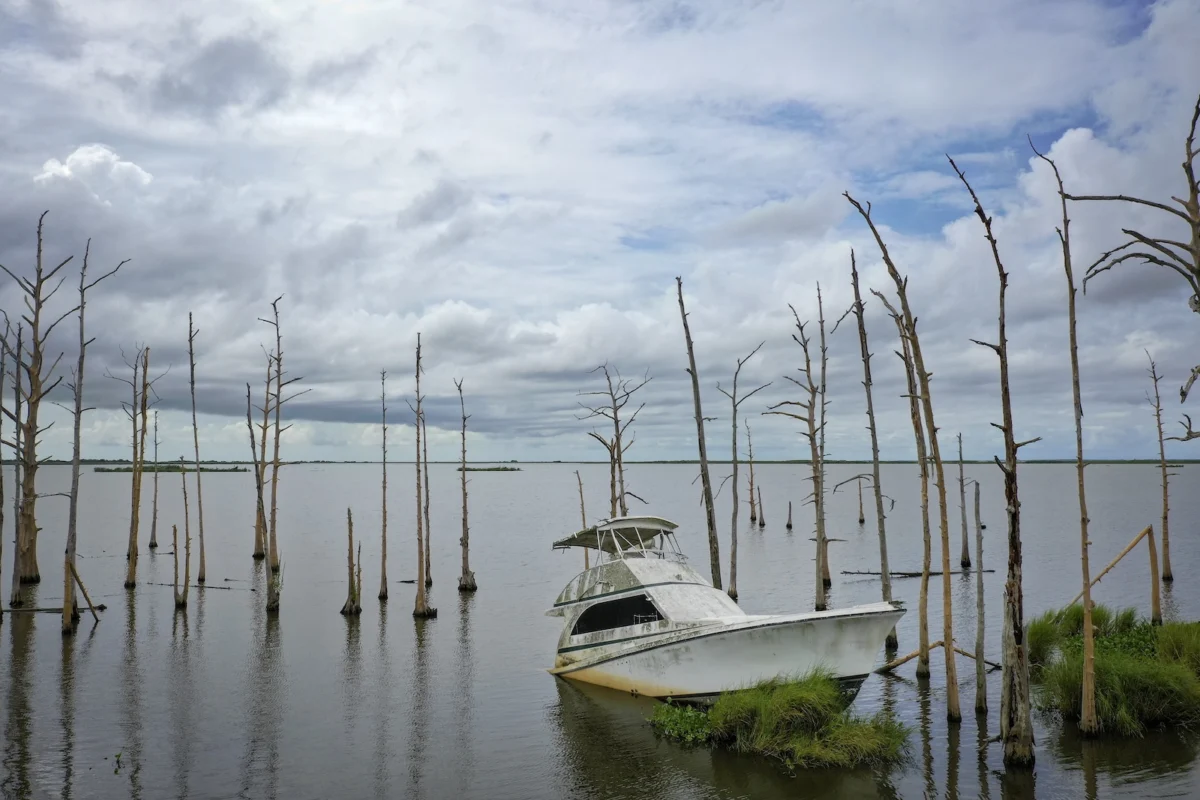
A recent scientific study published in the journal Nature Sustainability has sparked intense debate across the Gulf South by asserting that New Orleans, Louisiana’s most populous and culturally significant city, faces the existential threat of being entirely surrounded by open water by the turn of the next century. The paper, authored by a team of researchers including prominent geologists, argues that human-induced global warming and the resulting rise in sea levels have pushed coastal Louisiana past a critical "point of no return." While the scientific projections of land loss are staggering, the most contentious aspect of the research is not the data itself, but the recommendation that the region begin planning for "managed retreat"—the systematic relocation of populations to higher ground.
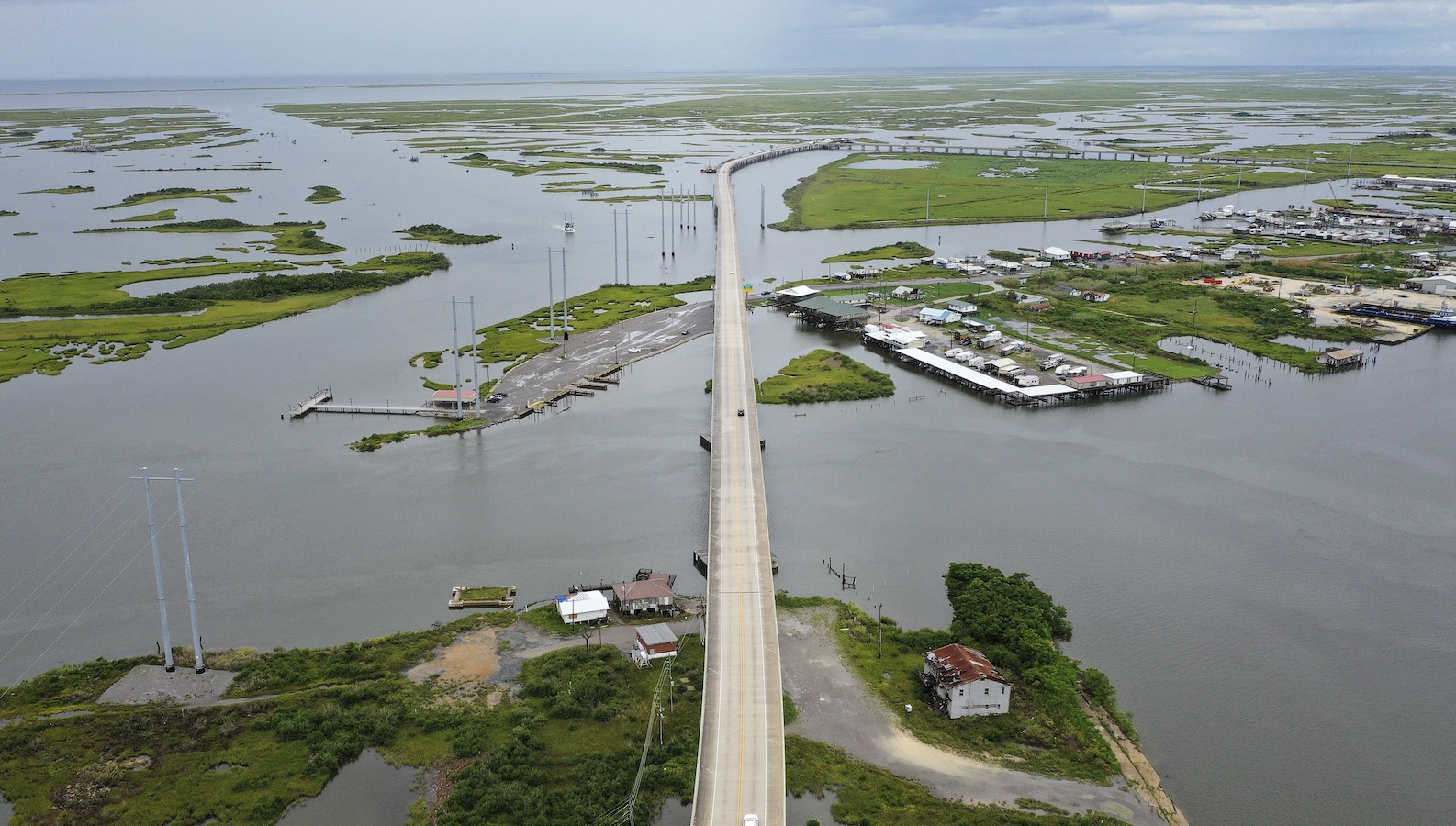
The study suggests that under current warming trajectories, the remaining coastal wetlands of southern Louisiana will likely vanish, leaving more than one million residents vulnerable to the encroaching Gulf of Mexico. The authors project a potential sea level rise of 3 to 7 meters (approximately 10 to 23 feet) by 2100. Such an increase would effectively shift the state’s shoreline inward by 100 kilometers (62 miles), placing the coast within striking distance of Baton Rouge and leaving New Orleans as an island, or a "Venice of the South," isolated from the mainland by vast stretches of open water.
The Science of Subsidence and Sea Level Rise
To understand the gravity of the Nature Sustainability paper, one must look at the unique geological precariousness of the Mississippi River Delta. Unlike many other coastal regions, Louisiana faces a "double whammy" of rising oceans and sinking land, a process known as subsidence. For millennia, the Mississippi River deposited sediment across the delta, building up the land. However, the construction of levee systems in the 20th century—intended to protect communities from river flooding—severed the connection between the river and its wetlands. Without new sediment to replenish the soil, the delta began to compact and sink.
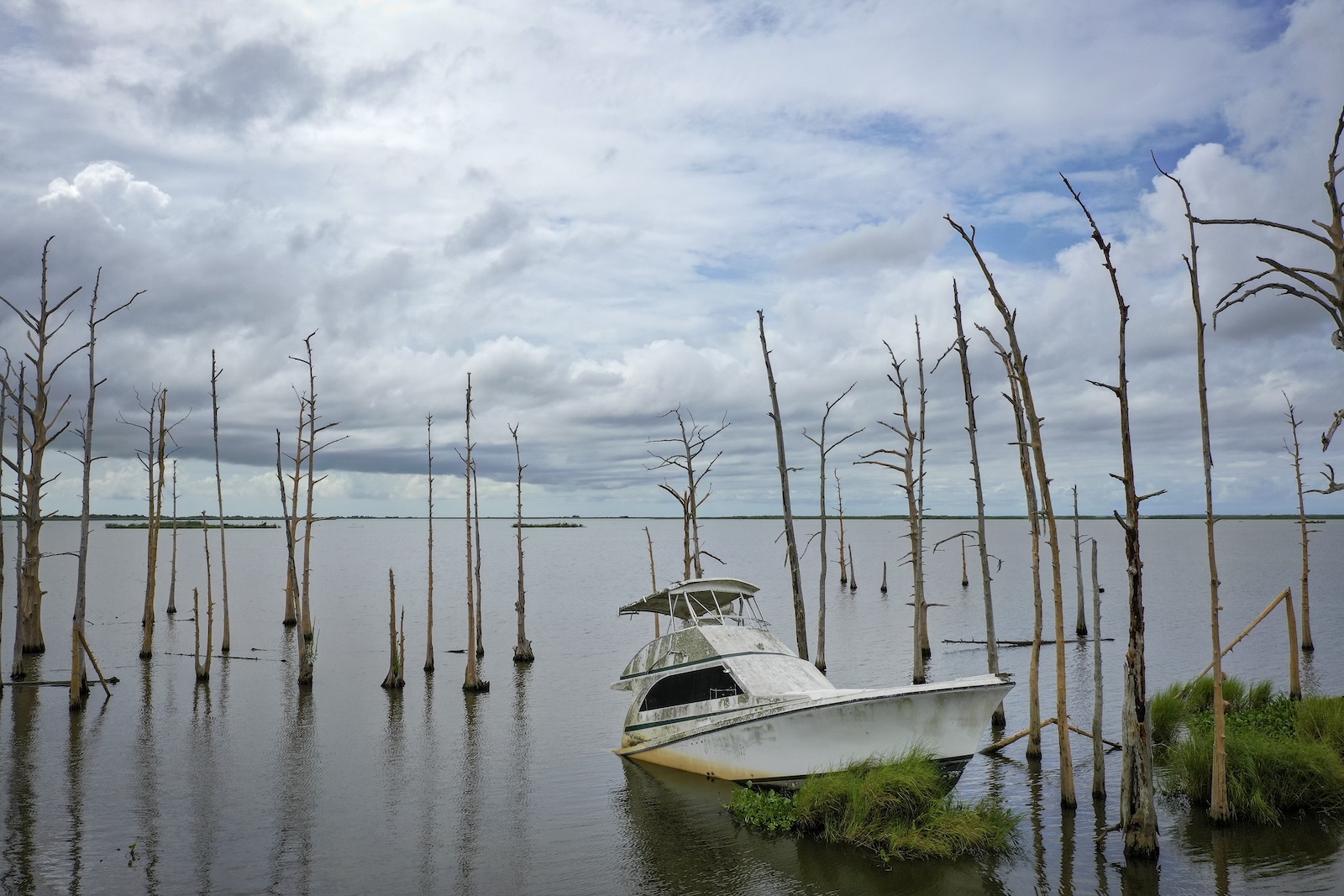
When combined with the accelerating rate of global sea level rise caused by melting polar ice and the thermal expansion of seawater, the results are catastrophic. Current estimates indicate that Louisiana loses a portion of land roughly the size of a football field every 100 minutes. The new research posits that the protective buffer of the wetlands is now so degraded that it can no longer be saved through traditional restoration projects, such as sediment diversions or marsh creation.
Torbjörn Törnqvist, a co-author of the study and a professor at Tulane University, emphasizes that while New Orleans will likely remain habitable through the end of the 21st century, its transformation is inevitable. The "point of no return" refers to the geological reality that the wetlands, which act as a natural speed bump for hurricane storm surges, are essentially doomed. Without them, the city’s multi-billion dollar levee and pump systems will be forced to defend against the raw power of the Gulf of Mexico.
The Cultural Pushback: Abandonment vs. Relocation
The recommendation of "managed retreat" has met with significant resistance from residents and local leaders. In New Orleans, a city defined by its resilience and deep-rooted heritage, the suggestion of moving is often viewed as an affront to the community’s identity. Christopher Ard, an 11th-generation New Orleanian, voiced the frustrations of many in a column for The Lens, arguing that the terminology used by researchers is part of the problem.
Ard contended that "relocate" sounds clinical and dismissive of the deep ties people have to the land. He suggested that if researchers want to describe the reality of people leaving, they should use more honest terms like "abandon" or "give up on," noting that "relocate just sounds silly" to those whose families have inhabited the city for three centuries. This sentiment highlights a major hurdle for climate policy: the gap between scientific necessity and cultural survival. For many in southern Louisiana, the land is not merely a place of residence but a repository of history, music, cuisine, and family lineage that cannot be replicated elsewhere.
Economic Implications for the Seafood Industry
Beyond the cultural impact, the physical retreat from the coast poses a dire threat to Louisiana’s economy, specifically its seafood industry. Louisiana is the second-largest producer of seafood in the United States, trailing only Alaska. The state provides roughly 25 percent of all seafood consumed in the continental U.S., including a vast majority of the nation’s domestic shrimp, oysters, and crawfish.
New Orleans serves as the logistical and commercial hub for this industry. Jeffrey Plumlee, an assistant professor at Louisiana State University’s School of Renewable Natural Resources, points out that the loss of New Orleans as an infrastructure center would be devastating for fishermen. The city provides the ice houses, fuel docks, processing plants, and transportation networks required to move product from the Gulf to global markets.
Furthermore, the industry is already suffering from what experts call the "graying of the fleet." As hurricanes become more frequent and intense, the cost of maintaining vessels and repairing storm-damaged infrastructure has skyrocketed. Young people, witnessing the increasing precarity of the profession and the rising cost of living in vulnerable areas, are increasingly seeking employment in more stable industries. This demographic shift is creating a labor vacuum that threatens the long-term viability of the state’s working coast.
A History of Displacement: Lessons from the Isle de Jean Charles
The concept of managed retreat is not a theoretical exercise in Louisiana; it has already been put into practice with mixed results. The Jean Charles Choctaw Nation, a state-recognized tribe located on a narrow ridge in Terrebonne Parish, became the site of the first federally funded climate relocation in U.S. history.
Since 1955, the island has lost 98 percent of its landmass due to a combination of subsidence, sea level rise, and the environmental impacts of oil and gas canal dredging. In 2016, the tribe received a $48 million grant from the Department of Housing and Urban Development (HUD) to move the entire community to a new site called "The New Isle" in Schriever, Louisiana, located 40 miles inland.
However, the relocation process has been fraught with challenges. While the new homes are safer from storm surges, many tribal members have expressed a profound sense of loss. The move necessitated a shift in lifestyle; members who once survived by shrimping and trapping now find themselves in a suburban environment far from the water. Chief Albert Naquin noted that the transition has been difficult, and some residents have described the relocation as a "bust," emphasizing that moving a house is not the same as moving a home or a culture.
The Insurance Crisis and the Mechanics of Migration
While the debate over managed retreat continues, a form of "unmanaged retreat" is already underway, driven by economic pressures. The insurance industry is currently serving as the vanguard of climate migration in Louisiana. In recent years, several major insurers have stopped writing new policies in the state or have exited the market entirely, citing the unsustainable risk of catastrophic losses from hurricanes like Laura, Delta, Zeta, and Ida.
For the companies that remain, premiums have surged, often becoming more expensive than mortgage payments. This "insurance crisis" is forcing residents to leave not because they want to, but because they can no longer afford to stay. Lawrence Huang, a policy analyst at the Migration Policy Institute, argues that this is precisely why formal planning is necessary.
"Starting early and planning now matters because it takes such a long time to help people find new skills and new occupations," Huang noted. He emphasized that if a major urban center like New Orleans eventually becomes unlivable, the federal and state governments will need to facilitate a massive "re-skilling" of the workforce to ensure that displaced residents can find employment in their new locations.
Conclusion: A Multi-Causal Exodus
Sociologist Beth Fussell of Brown University, who peer-reviewed the Nature Sustainability paper, notes that the current out-migration from southern Louisiana is "multi-causal." Census data shows that the population in the New Orleans area has fallen four times in the last five years. While environmental risk plays a role, people are also leaving in search of better job opportunities, lower crime rates, and more affordable housing.
The challenge for policymakers is to reconcile the slow-moving geological reality of land loss with the immediate needs of the population. The authors of the paper insist that the region has decades, not centuries, to finalize a strategy for the inevitable migration away from the coast. Whether the future of New Orleans involves a massive engineering feat to keep the city dry or a gradual migration toward the "Baton Rouge shoreline," the conversation regarding managed retreat has moved from the fringes of academia to the center of Louisiana’s political and social discourse.
The reality remains that the Mississippi River Delta is changing at a rate that outpaces current human intervention. As the buffer between the city and the sea continues to dissolve, the residents of New Orleans find themselves at the forefront of a global crisis, forced to decide how much of their past they can carry into an increasingly watery future.








Leave a Reply