

The political landscape of Georgia is currently undergoing a significant transformation as the state prepares for a pivotal shift in its energy oversight. As one of only ten states in the U.S. that allows citizens to elect the members of its utility commission, Georgia holds a unique position in determining its energy future. The Georgia Public Service Commission (PSC) is a five-member body tasked with the monumental responsibility of regulating the state’s telecommunications, natural gas, and electric utilities. Most notably, the PSC has the final authority over the rates paid by nearly three million customers of Georgia Power, the state’s largest utility provider. Beyond the financial implications for households, the commission’s decisions regarding power generation sources—ranging from coal and natural gas to solar and nuclear—directly dictate the state’s contribution to global greenhouse gas emissions.
For nearly two decades, the PSC was characterized by a stable, Republican-led consensus. From 2006 until 2023, every seat on the commission was held by the GOP, a period during which critics often argued the board acted as a "rubber stamp" for Georgia Power’s expansion requests and rate hikes. However, the political tide began to turn last year when Democrats Peter Hubbard and Alicia Johnson secured upset victories. Their presence on the board has introduced a new level of friction and scrutiny, challenging the long-standing status quo. This internal shift has turned the 2024 election cycle into a high-stakes battleground for the soul of Georgia’s energy policy.
The 2024 Primary Results and the Path to November
On Tuesday, Georgia voters headed to the polls for party primaries that will determine the challengers for two critical seats on the PSC. The results of these primaries set the stage for a November general election that could result in a Democratic majority on the commission for the first time in modern history. Such a shift would likely lead to increased support for renewable energy initiatives and a more aggressive interrogation of Georgia Power’s multi-billion dollar expansion plans.
In the race for District 5, Democrat Shelia Edwards emerged victorious, defeating her primary opponents Craig Cupid and Angelia Pressley. Edwards has positioned herself as a reformist candidate, explicitly stating her intention to be the "third vote" necessary to change the trajectory of the commission. In interviews leading up to the primary, Edwards emphasized the need for "balance" on a board she described as having been "completely imbalanced for years." Her platform focuses on ratepayer protection and a more rapid transition toward sustainable energy sources.
On the Republican side of the District 5 race, the outcome remains unsettled. Candidates Bobby Mehan and Josh Tolbert are headed for a runoff election scheduled for June 16, as neither secured a clear majority. While both candidates have expressed a general support for clean energy, they have been careful to distance themselves from any mandatory renewable energy targets. Tolbert, an engineer with experience in various power plant environments, has campaigned on his technical expertise, arguing that the commission should not be a "legislative body" for advocates but a technical oversight board focused on reliability and affordability. Mehan, conversely, leans on his business background, advocating for an "all-the-above" energy strategy that includes nuclear power and natural gas alongside renewables. Libertarian Thomas Blooming will also appear on the ballot in November.
The Battle for District 3 and the Incumbency Challenge
The struggle for control of the PSC is not limited to the District 5 seat; it also hinges on whether Peter Hubbard can retain his position in District 3. Hubbard’s victory last year was for a truncated one-year term, meaning he must now run for a full six-year term to maintain his influence on the board. While Hubbard ran unopposed in the Democratic primary, the Republican field for District 3 is currently mired in a razor-thin contest.
Incumbent-appointee Fitz Johnson is currently leading his Republican challenger, Brandon Martin, by a margin of fewer than 3,000 votes. Given the narrowness of the lead, the results fall within the legal margin for a recount should Martin choose to request one. Fitz Johnson has taken a notably different stance than his Democratic colleagues regarding the state’s burgeoning data center industry. He has defended the commission’s current approach, suggesting that enough has been done to protect residential ratepayers from the costs associated with the massive energy demands of these facilities. This issue has become a flashpoint in Georgia politics as the state aggressively courts tech giants, leading to a surge in energy demand that Georgia Power seeks to meet through massive infrastructure investment.
Chronology of the Energy Expansion Controversy
To understand the weight of the upcoming elections, one must look at the recent timeline of PSC decisions regarding Georgia Power’s resource planning. In December 2023, just before the newly elected Democratic commissioners were set to take their seats, the then-all-Republican board voted unanimously to approve a massive expansion proposal. This plan authorized Georgia Power to add approximately 10 gigawatts of energy capacity to the grid.
The controversy stems from the composition of this new energy. The vast majority of the 10-gigawatt expansion is slated to be fueled by natural gas, a fossil fuel that releases significant amounts of carbon dioxide and methane. Environmental advocates and the new Democratic commissioners have argued that this plan ignores the plummeting costs of battery storage and solar energy.
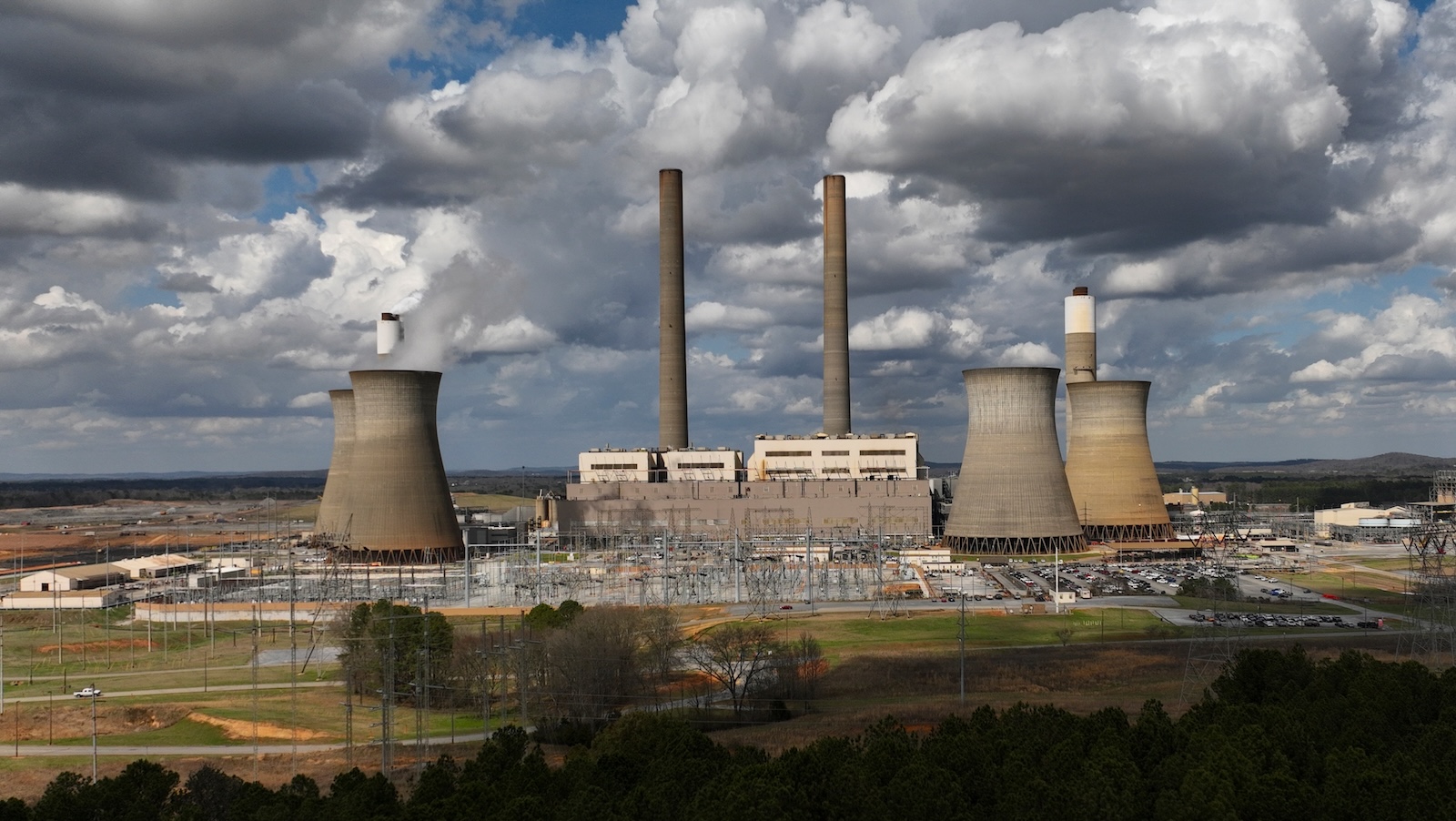
In early 2024, clean energy advocates petitioned the commission to reconsider the expansion. They argued that Georgia Power’s forecasts for energy demand were inflated and that the commission had overstepped its legal authority by approving such a massive fossil fuel-heavy plan without sufficient competitive bidding or exploration of alternatives. When the issue was brought to a vote to reopen the case, the two Democratic commissioners voted in favor of reconsideration. However, they were outvoted 3-2 by the Republican majority, highlighting how a single seat change in November could fundamentally alter the outcome of such high-impact votes.
Supporting Data: The Cost of Power and the Data Center Surge
The financial stakes for Georgians are underscored by the rising costs of utility bills. Over the past two years, the PSC has approved several rate increases for Georgia Power customers. These hikes are intended to cover the costs of fuel (which spiked following international conflicts), the multi-billion dollar cost overruns of the Plant Vogtle nuclear expansion, and the ongoing transition of the grid.
A significant driver of current energy policy is the "data center gold rush." Georgia has become one of the premier destinations for data centers in the Southeast due to its relatively low land costs and historical grid reliability. However, data centers are incredibly energy-intensive. According to industry data, a single large data center can consume as much electricity as tens of thousands of homes.
The core of the political debate is who should pay for the infrastructure—new transmission lines, substations, and power plants—required to serve these corporate giants. Democrats and some consumer advocates argue that Georgia Power’s current structure risks shifting these costs onto residential customers. In contrast, the Republican majority and utility executives argue that the economic development benefits and tax revenue generated by data centers justify the expansion and that the new capacity is necessary to prevent brownouts.
National Context: Georgia as a Bellwether
The shifting dynamics in Georgia are reflective of a broader national trend where utility commissions are moving from the shadows of bureaucracy into the spotlight of partisan politics. In Arizona, the race for the Arizona Corporation Commission has drawn millions of dollars in spending from national activist groups, with Democrats pushing for solar mandates and Republicans focusing on traditional "baseload" power.
Similarly, in Alabama, state lawmakers recently moved to overhaul their commission’s structure. Critics argue this move was a preemptive strike to shield the commission from the type of "blue wave" seen in Georgia’s PSC races, ensuring that Republican control remains entrenched even if voting patterns shift. These national parallels suggest that the era of the "quiet" utility commission is over, as energy policy becomes inextricably linked to climate change and the cost-of-living crisis.
Broader Impact and Climate Implications
The results of the November election in Georgia will have repercussions that last for decades. Utility infrastructure, once built, typically remains in operation for 30 to 50 years. If the PSC continues to approve natural gas plants, Georgia will be "locked in" to carbon emissions well into the mid-21st century, making it difficult for the state or the country to meet net-zero targets.
Furthermore, the PSC’s decisions influence the "Green Carriage" of the state. Georgia has recently become a hub for electric vehicle (EV) manufacturing and battery production, with companies like Hyundai and Rivian investing billions in the state. Advocates argue that it is hypocritical—and economically short-sighted—to build EVs in Georgia using a grid that is becoming more reliant on fossil fuels rather than cleaner alternatives.
As the June runoff approaches and the November general election looms, the three million customers of Georgia Power find themselves at a crossroads. The choice between a commission that prioritizes traditional utility expansion and one that demands a pivot toward renewables will determine not only the monthly cost of cooling a home in the Georgia heat but also the state’s legacy in the global effort to mitigate climate change. The upcoming elections represent a rare moment where voters have a direct hand in steering the massive, often opaque machinery of the energy industry toward a new horizon.










Leave a Reply