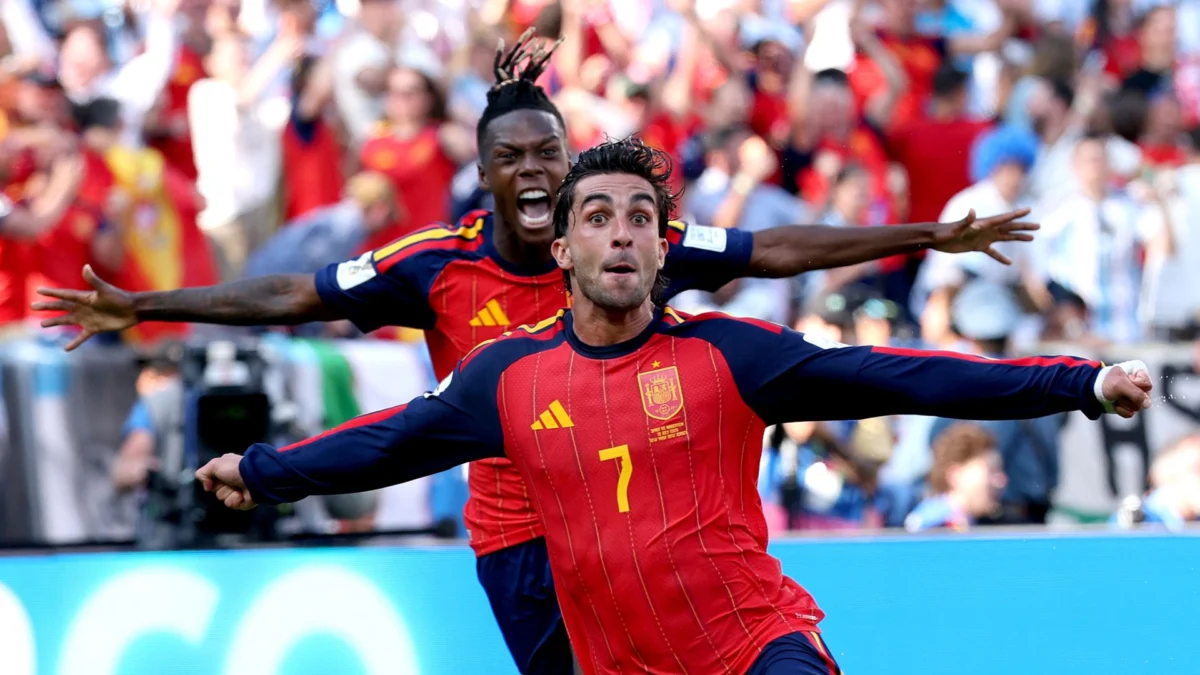
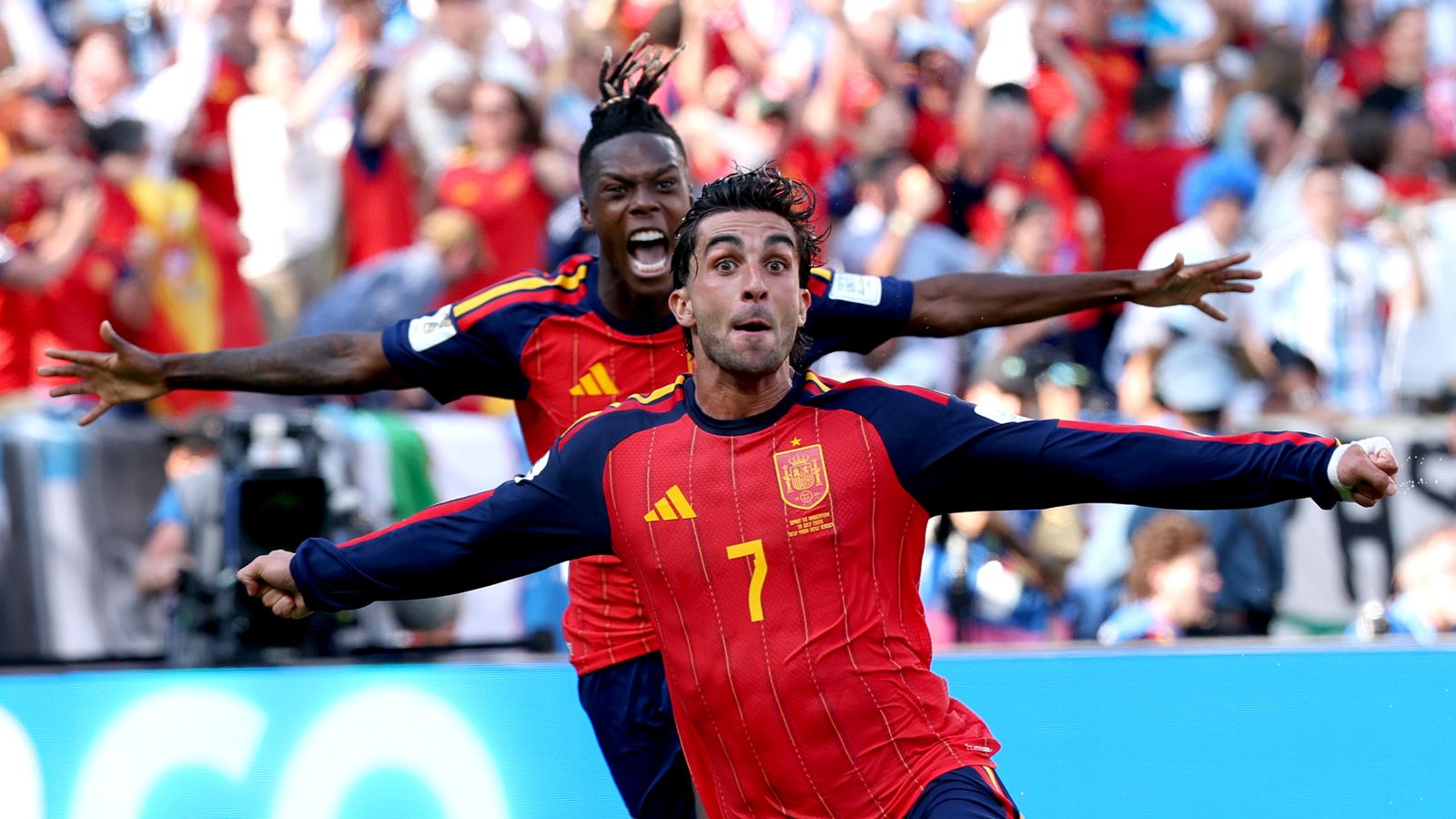
Spain have been crowned champions of the world for the second time in their history, clinching the 2026 FIFA World Cup title with a hard-fought 1-0 victory over defending champions Argentina in a captivating final. The decisive moment arrived in the 106th minute when substitute Ferran Torres unleashed a thunderous strike, etching his name into Spanish football folklore. This triumph echoes the nation’s maiden World Cup conquest in 2010, where another second-half extra-time goal, this time by Andrés Iniesta, secured glory against the Netherlands. Today, it was Torres, another product of Barcelona’s famed La Masia academy, who delivered the knockout blow.
The pivotal goal was masterfully set up by fellow substitute Nico Williams, whose astute pass allowed the former Manchester City forward to surge into the box and emphatically finish past Aston Villa goalkeeper Emiliano Martínez. This moment of brilliance came agonizingly close after Williams had found the back of the net himself, only for the goal to be disallowed due to a foul by Mikel Merino on Nicolas Otamendi in the build-up. The controversy surrounding the disallowed goal only amplified the tension in a final that was a testament to defensive resilience and tactical discipline.
Spain’s victory was, by all accounts, thoroughly deserved. They dominated proceedings for the vast majority of the match, demonstrating a clear superiority in possession and attacking intent. The statistical disparity in shots on goal painted a stark picture of Spain’s dominance, with La Roja registering an overwhelming 20 attempts compared to Argentina’s mere two. Even those late efforts from the Albiceleste, including a speculative, high-arching shot from Giuliano Simeone that sailed over the crossbar in the dying moments of extra time, failed to truly trouble the Spanish defense and were unlikely to have forced a penalty shootout.
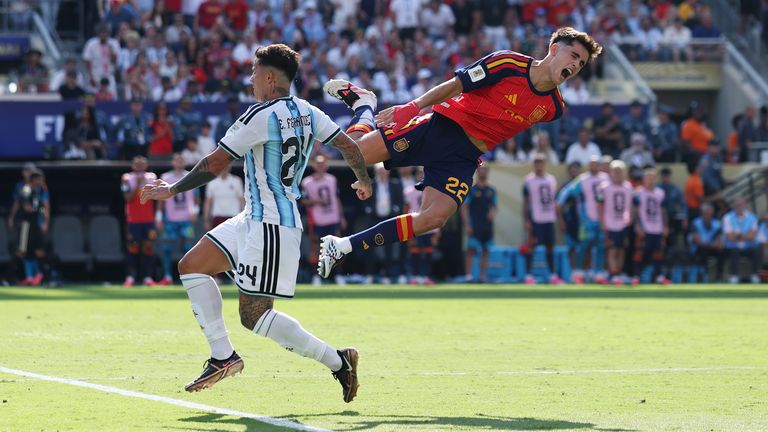
Argentina, despite being outplayed for large spells, maintained a disciplined defensive shape throughout the encounter. Their resilience was further tested in the closing stages of normal time when Chelsea midfielder Enzo Fernández received a straight red card for a reckless challenge on Pau Cubarsi, leaving the defending champions to battle with ten men. Throughout the match, Martínez was a formidable presence in goal, producing a string of crucial saves to keep Argentina’s hopes alive against the relentless Spanish onslaught.
The final also marked a poignant moment for Lionel Messi, widely expected to be participating in his last World Cup. However, the iconic Argentine captain, who had carried his nation through the tournament, found himself largely on the periphery for much of the match as his team struggled to retain possession. His dream of lifting the World Cup for a second time was ultimately dashed. Furthermore, Messi was pipped to the World Cup Golden Boot by France’s Kylian Mbappé, who finished the tournament two goals ahead of the Argentine talisman.
For Spain, this triumph represents the crowning achievement of manager Luis de la Fuente’s tenure. Under his guidance, La Roja have remained undefeated in competitive matches, adding this coveted World Cup trophy to their UEFA European Championship title secured in 2024. The tournament journey for Spain was a remarkable narrative, beginning with a surprising goalless draw against Cape Verde in their opening fixture, only to evolve into a dominant force that dispatched powerhouses like France and the reigning champions Argentina with impressive authority.
The echoes of Spain’s golden generation were palpable in this victory. As many of the victorious squad members from 16 years ago watched from the stands, the parallels with their 2010 triumph were undeniable. That era saw Spain conquer Europe in 2008 before achieving global supremacy in South Africa. The current generation, having already conquered the continent, has now replicated that historic feat on the world stage, cementing their place in football history.
Unpleasant Scenes Mar Full-Time Celebrations
The elation of Spain’s victory was unfortunately marred by unsavoury incidents that unfolded immediately after the final whistle. Argentine players Leandro Paredes and Nahuel Molina were involved in confrontations with celebrating Spanish players. Molina was seen extending an elbow that caught Spanish midfielder Rodri, while Paredes appeared to lash out at Eric García, initially kicking him to the ground and then forcefully pushing him by the neck as the Spaniard rose to his feet. A Spanish substitute was then restrained by another Argentine player before Paredes intervened, ripping off his bib and throwing two punches, one of which connected with the substitute’s face. Paredes, who had been introduced at halftime, had already received a yellow card minutes after coming on and had narrowly avoided further disciplinary action throughout the match.
Key Moments from the Showdown in New Jersey
The 2026 World Cup final, held in the vibrant setting of East Rutherford, New Jersey, was a match characterized by tactical battles and dramatic swings of fortune.
- 5th Minute: Lamine Yamal registered the first shot on target, signaling Spain’s early intent.
- 39th Minute: Mikel Oyarzabal’s strike was straight at Emiliano Martínez, a missed opportunity for La Roja.
- 77th Minute: Pedro and Pau Cubarsi both tested the Argentine goalkeeper, as Spain continued their relentless pursuit of a breakthrough.
- 90+3 Minute: The match took a dramatic turn as Enzo Fernández was shown a red card for a second bookable offense following a rash challenge on Pau Cubarsi, reducing Argentina to ten men for the remainder of the contest.
- 90+9 Minute: Lamine Yamal’s powerful effort forced a superb save from Martínez, keeping Argentina level.
- 96th Minute: Nico Williams thought he had opened the scoring, but the goal was disallowed by VAR due to an accidental foul by Mikel Merino on Nicolas Otamendi in the build-up, a decision that would prove crucial.
- 106th Minute: The deadlock was finally broken. Ferran Torres, expertly set up by Nico Williams, fired the ball into the net, sending Spain into raptures.
- 114th Minute: Torres had the ball in the net again, but the celebrations were cut short by an offside flag.
- 120+2 Minute: In the final moments of the match, Giuliano Simeone had a golden opportunity to equalize and force a penalty shootout, but his ambitious effort sailed over the crossbar, confirming Spain’s World Cup triumph.
Analysis: Spain’s Dominance Rewarded
Sky Sports’ Adam Bate, providing expert analysis, lauded Spain’s performance: "Spain began this World Cup with a goalless draw against Cape Verde but they end it as worthy winners. They beat the favourites in the semi-final and the reigning champions tonight. One goal conceded in eight games, never behind in the tournament, they played all the football here. Passed Argentina off the park. The European champions are World Cup winners too. Thoroughly deserved."
Sky Sports’ Gary Neville, speaking on ITV, offered his perspective on Spain’s tactical superiority: "Spain are not the best individual players, what they are is the best team, the best collective. And also the best system of play. I spent a very short time in Spain and what I found was that they were a different technical and tactical level to Premier League teams, their understanding of the game. That comes out most in international football when you are playing every four days in 35 degree heat. Technically and tactically, they are outstanding."
Broader Context and Implications
The 2026 World Cup, hosted across North America, has been a tournament of narratives. Spain’s journey from an unconvincing start to ultimate glory exemplifies the resilience and tactical acumen that can define championship teams. Their ability to adapt and perform under pressure, particularly after the red card incident, underscores the depth of their squad and the quality of their coaching.
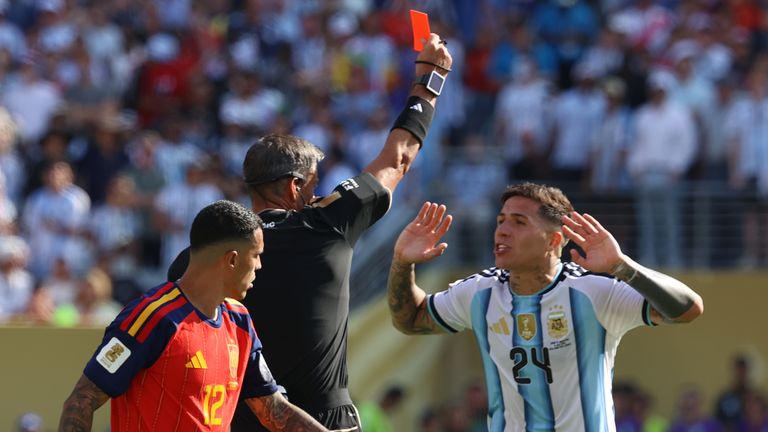
For Argentina, the defeat marks a somber end to what was anticipated to be Lionel Messi’s final World Cup campaign. While the team displayed flashes of their championship mettle, their inability to consistently control possession against a dominant Spanish side ultimately proved to be their undoing. The red card to Enzo Fernández, a pivotal midfielder, further compounded their challenges in the crucial latter stages of the match.
The performance of Spain also raises questions about the evolving landscape of international football. Their emphasis on technical proficiency, intricate passing patterns, and collective tactical understanding, as highlighted by Gary Neville, suggests a potential shift in what constitutes a winning formula in modern football. This victory, coupled with their recent European Championship success, positions Spain as a dominant force in international football for the foreseeable future.
The final also serves as a stark reminder of the emotional highs and lows inherent in elite sporting competition. While Spain basks in the glory of their second World Cup title, Argentina faces the immediate task of regrouping and reflecting on their campaign. The post-match altercations, though regrettable, highlight the intense emotions that boil over at the pinnacle of the sport.
The tournament itself, with its expanded format and global reach, has undoubtedly provided a spectacle for football fans worldwide. The final match, though decided by a single goal, was a compelling display of skill, determination, and tactical maneuvering, ultimately crowning a deserving champion in Spain. The legacy of this tournament will undoubtedly be shaped by Spain’s triumphant performance and the enduring brilliance of players like Lionel Messi, even in defeat.