American Airlines has officially unveiled a suite of significant upgrades to its premium ground experience at Dallas/Fort Worth International Airport (DFW), signaling a major investment in its primary global hub. The announcement, which details the opening of a new Flagship Check-in facility and the expansion of lounge services across several terminals, comes at a pivotal moment for the carrier as it seeks to harmonize its luxury offerings with the operational realities of high-volume domestic travel. While the airline focuses on high-end infrastructure to attract lucrative premium travelers, recent social media reports highlighting cleanliness issues and seating discomfort underscore the persistent challenges of maintaining service consistency across a massive fleet and diverse route network.
Strategic Infrastructure Investments at DFW
As the largest tenant at Dallas/Fort Worth International Airport, American Airlines operates approximately 800 daily flights, accounting for nearly 85% of the airport’s total passenger traffic. To support this volume, the airline has embarked on a multi-year project to modernize its facilities. The latest phase of this expansion centers on Terminal D, the airport’s international gateway, and Terminal C, which remains one of the busiest domestic hubs in the United States.
A cornerstone of this announcement is the opening of a new Flagship Check-in area located at Terminal D, Gate D30. Flagship Check-in is an exclusive, invitation-only or qualification-based service designed for American’s most elite customers, including those flying in Flagship First or Flagship Business on qualifying international and transcontinental flights, as well as members of the invitation-only ConciergeKey program. The new facility offers a private entrance, personalized assistance with baggage and boarding passes, and an expedited path through security. Renderings of the D30 location suggest a design language consistent with American’s "reimagined" aesthetic—featuring warm wood tones, soft ambient lighting, and high-end finishes intended to provide a serene transition from the terminal curb to the gate.
In addition to the check-in facility, American is moving forward with a new Admirals Club lounge in Terminal C. This terminal has long been criticized by frequent flyers for its aging infrastructure and overcrowding. The new lounge is expected to follow the design philosophy established by the award-winning Admirals Club at Washington Reagan National Airport (DCA), which emphasizes local art, sustainable materials, and a residential feel. Furthermore, the airline confirmed that provisions are being made for Terminal F, the highly anticipated sixth terminal at DFW, which is currently in the development phase following a $1.6 billion agreement between the airline and the airport authority.
The Chronology of American’s DFW Modernization
The current developments are part of a long-term strategic timeline aimed at securing American’s dominance in the North Texas region:
- May 2023: American Airlines and DFW Airport signed a new 10-year Use and Lease Agreement, which included nearly $5 billion in capital investments, including the expansion of Terminal C and the construction of Terminal F.
- Late 2023: The airline began rolling out its "new look" Admirals Clubs, moving away from the clinical, corporate aesthetic of the 2010s toward a more "boutique hotel" atmosphere.
- July 2024: The official announcement of the D30 Flagship Check-in and the specific lounge upgrades for Terminals C and F.
- 2026-2027 (Projected): The expected completion of the first phase of Terminal F, which will include a new 15-gate concourse and additional premium lounge space.
Analyzing the Premium Travel Market
The investment in ground services is not merely a matter of comfort; it is a calculated response to the shifting economics of the airline industry. Data from recent quarterly earnings reports indicate that while base economy fares remain highly competitive and price-sensitive, the "premium" segment—comprising First Class, Business Class, and Premium Economy—has become a primary driver of profitability.
By enhancing the ground experience, American Airlines aims to compete more effectively with Delta Air Lines and United Airlines, both of which have made massive investments in their own hub infrastructure (such as Delta’s new Sky Way at LAX and United’s Polaris Lounges). For American, DFW serves as the "fortress hub" that connects the interior United States to Latin America, Europe, and Asia. Ensuring that the ground experience matches the quality of the long-haul inflight product is essential for retaining corporate contracts and high-net-worth individual travelers.
Operational Friction: Cleanliness and Cabin Maintenance
Despite the high-altitude ambitions of the premium ground experience, the airline continues to face scrutiny regarding its day-to-day domestic operations. On July 19, 2026, a passenger identified as Joe Tarulli documented a distressing scene aboard Flight 3280, an American Eagle flight operated by a regional partner between Chicago O’Hare (ORD) and Charlotte (CLT). The social media post included images of significant debris and unsanitary conditions within the cabin, describing the environment as "gross."
This incident highlights the ongoing struggle for major carriers to maintain cleanliness during tight "turn times"—the window between a plane landing and its next departure. While American Airlines has stated that it employs rigorous cleaning protocols, including deep cleans during overnight stays, the reality of regional flying often involves short windows where ground crews may struggle to perform more than a cursory seat-back pocket check.
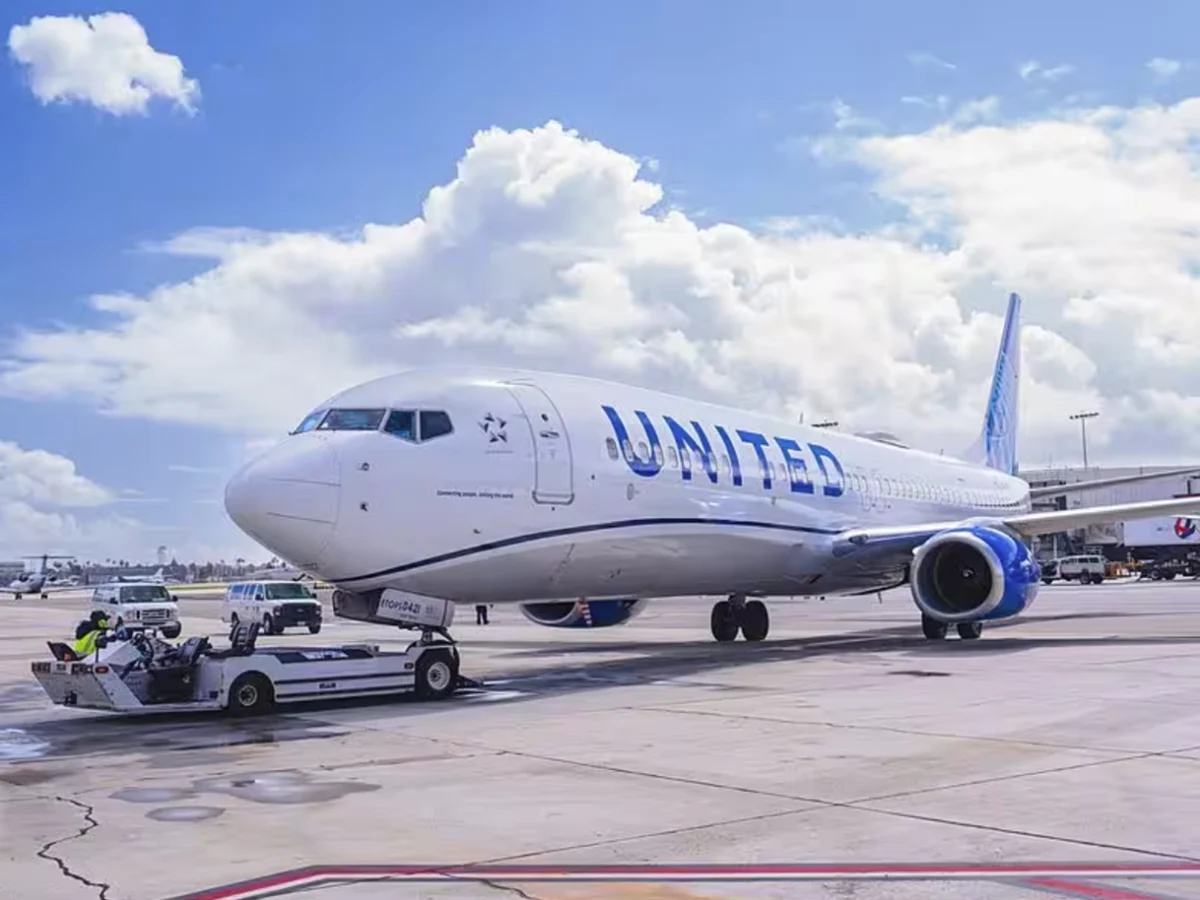
![United Flight Lands At Air Force Base With Fuel Emergency [Roundup]](https://viewfromthewing.com/wp-content/uploads/2024/01/united-airlines-boeing-737-max-9.png)
Industry analysts point out that cabin maintenance is a key metric for customer satisfaction. A 2023 study on airline quality found that "cleanliness of cabin" was among the top three factors influencing a passenger’s likelihood to recommend an airline. When premium brand marketing (like the DFW Flagship Check-in) is contrasted with poor cabin conditions on domestic legs, it can create a "brand disconnect" that undermines customer loyalty.
The Seating Crisis and Passenger Encroachment
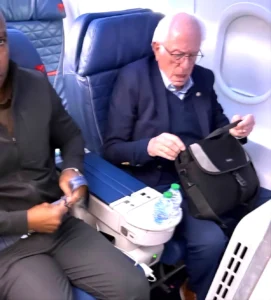
Further complicating the passenger experience is the ongoing debate over seat width and personal space. On July 20, 2026, another passenger, Cathy H., voiced a common frustration regarding seat encroachment. She posted an image from a three-hour flight where she claimed to have lost "1/3 of her seat" due to the physical size of a neighboring passenger.
This issue touches on a complex intersection of airline policy, federal regulation, and social etiquette. Currently, the Federal Aviation Administration (FAA) does not regulate seat width for comfort, only for safety and evacuation capability. Most domestic Boeing 737 and Airbus A321 aircraft—the workhorses of American’s fleet—feature seats that are approximately 17 to 18 inches wide.
American Airlines’ official policy regarding "Passengers of Size" encourages customers who require more than one seat to book an extra seat at the time of purchase. If the flight is full and a passenger cannot fit into a single seat with the armrests down, they may be required to purchase an upgrade to a larger seat or wait for a later flight with more availability. However, enforcement of these policies is notoriously inconsistent, often placing gate agents and flight attendants in difficult positions. For passengers like Cathy H., the result is a perceived loss of the product they paid for, leading to calls for more stringent regulations regarding minimum seat dimensions.
Official Responses and Public Sentiment
While American Airlines has not issued a specific statement regarding the individual social media complaints from July 19 and 20, the carrier generally maintains that it is committed to providing a "safe and comfortable environment for all customers." In response to similar incidents in the past, the airline has often provided travel vouchers or frequent flyer miles as a gesture of goodwill, though critics argue this does not address the underlying systemic issues of cabin density and maintenance.
Regarding the DFW expansion, American’s leadership has been vocal about the importance of the project. In previous statements, CEO Robert Isom emphasized that DFW is "foundational" to the airline’s future. The airport’s CEO, Sean Donohue, has also praised the partnership, noting that the infrastructure improvements will support the region’s economic growth for decades.
Broader Implications for the Aviation Industry
The dichotomy between the luxury of the D30 Flagship Check-in and the grit of a domestic regional flight reflects a broader trend in the global aviation industry: the "barbell" service model. Airlines are increasingly bifurcating their service levels. On one end, they are creating ultra-premium, frictionless experiences for high-value customers. On the other end, the "main cabin" experience is being optimized for efficiency and volume, which can sometimes lead to the issues seen in recent social media reports.
As American Airlines continues its $5 billion overhaul of DFW, the industry will be watching to see if these investments translate into higher Net Promoter Scores (NPS) and increased market share. For the average traveler, the success of the airline will likely be judged not just by the marble counters of a new Flagship lounge, but by the cleanliness of the tray table and the reliability of the seat next to them.
The modernization of Terminal C and the introduction of Terminal F represent a long-overdue upgrade for one of the world’s most vital transit points. However, the airline’s ability to manage the "micro-moments" of the passenger journey—from the check-in desk to the final descent—will remain the ultimate test of its brand promise. As 2026 progresses, the integration of these new premium services will serve as a bellwether for American’s ability to balance its grand infrastructure ambitions with the fundamental requirements of passenger service.