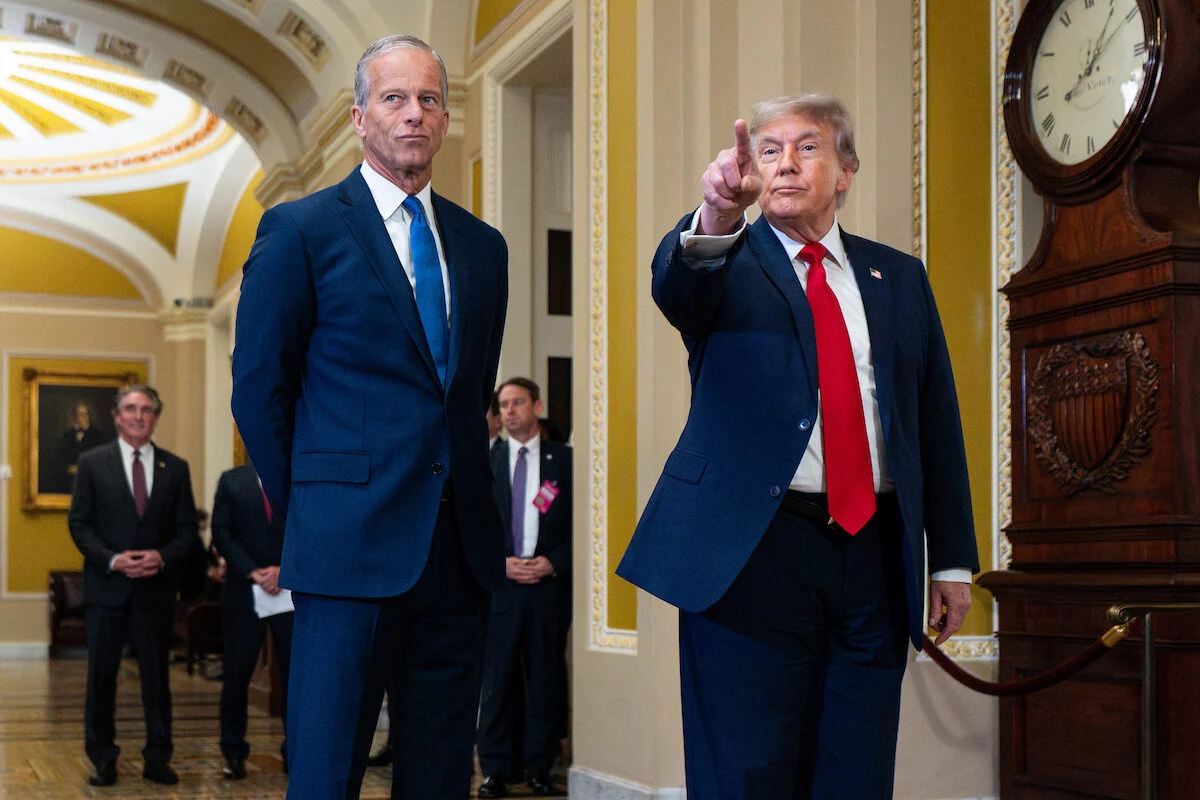
AN ANALYSIS – The political landscape for Republicans presents a paradoxical challenge: while President Donald Trump’s job approval rating has seemingly stabilized, averting further decline, the very issues that initially eroded his public support are resurfacing with increasing intensity. With the critical midterm elections drawing closer by the day, this resurgence of past controversies threatens to undermine any modest gains and complicate the GOP’s strategic path forward. The next few months will prove decisive, as the party grapples with the persistent shadow of presidential unpopularity against a backdrop of complex domestic and international developments.
President Trump commenced his second term with a respectable 52 percent job approval rating, a figure that, according to the national average compiled by renowned pollster Nate Silver, suggested a degree of public confidence. However, this initial momentum proved fleeting. The subsequent months saw a steady and concerning downward trajectory, culminating in a low point of 38 percent approval near the end of May. This sharp decline reflected a period marked by significant policy debates and public scrutiny. Since reaching that nadir, the president has observed a marginal improvement, with his approval rating inching up to 40 percent as of Monday, a stabilization that offers a glimmer of hope, albeit a fragile one, to Republican strategists.
Parallel to the presidential approval numbers, the generic congressional ballot – a key indicator asking respondents whether they intend to vote for a Republican or Democratic candidate for Congress – has also drawn considerable attention. GOP strategists have seized upon recent data, particularly the latest Washington Post-Ipsos poll, which showed Democrats holding a 3-point advantage. This specific data point has been a source of encouragement, suggesting a potential narrowing of the gap. However, this optimism is tempered by broader trends. Nate Silver’s comprehensive average has consistently reported a more substantial 6-point edge for Democrats over the past five months, indicating that the Post-Ipsos poll might represent an outlier or a temporary fluctuation rather than a definitive shift in the national mood. The discrepancy underscores the volatility of public opinion and the challenges inherent in projecting electoral outcomes.
Republicans currently hold narrow majorities on Capitol Hill, making every percentage point in the generic ballot crucial. The party faces traditional midterm headwinds, a historical pattern where the president’s party typically loses seats in Congress during the first midterm election of a new administration. Compounding this challenge is President Trump’s current political standing, which appears to be in a more precarious state than it was heading into his first midterm. In mid-2017, during his first term, Trump’s job approval rating hit a low where he was "upside down" by 20 points (meaning his disapproval exceeded approval by 20 points). Yet, he managed a significant bounce, narrowing that gap to 13 points underwater by the time of the 2018 midterms. Despite this partial rebound, Republicans ultimately suffered a net loss of 40 House seats, though they did net two Senate seats, demonstrating the potent impact of presidential approval on down-ballot races.
This time around, the situation appears more dire. According to G. Elliott Morris’s polling average, President Trump is currently underwater by 22 points, a more significant deficit than his lowest point in his first term. Furthermore, his current position places him almost six months behind the timeline of his 2018 rebound, suggesting a more entrenched level of disapproval. While the president has seemingly halted his downward slide, political analysts largely view another downturn as more probable than a sustained rebound. The current political climate, characterized by a series of contentious policy decisions and recurring controversies, suggests that any positive momentum is easily overshadowed.
The Resurgence of Divisive Issues: A Chronology of Challenges
President Trump’s administration had seemingly benefited from significant national events recently, including the hosting of the World Cup and the "America 250" celebration, both of which presented opportunities to garner public goodwill and foster a sense of national unity. These events could have served as a platform for a sustained positive narrative. However, a series of policy decisions and a return to familiar contentious issues threaten to squander this goodwill and reignite the political decline observed earlier in his term.
Escalation in the Middle East: The Iran Conflict
Despite multiple public claims of ceasefires and diplomatic agreements, the conflict with Iran has unfortunately reignited, demonstrating the fragility of regional stability. The past week alone has seen the tragic deaths of three more U.S. servicemembers. Two of these casualties resulted from a missile attack on a critical air base in Jordan, an incident that immediately raised concerns about the efficacy of existing defense systems and the intelligence surrounding potential threats. A third servicemember was killed during an Iranian drone detonation at a northern Iraq air base, underscoring the persistent and evolving threat posed by advanced drone technology. These latest fatalities bring the total number of service members killed since the conflict began in February to 17 as of Tuesday afternoon, a grim statistic that highlights the human cost of the renewed hostilities.
The re-escalation has had immediate and tangible economic repercussions. Uncertainty surrounding the Strait of Hormuz, a vital chokepoint for global oil shipments, has once again driven up energy prices. The national average price of gas has surged back to $4 per gallon, according to AAA data as of Tuesday, directly impacting American consumers and businesses. This price hike is a stark reminder of the interconnectedness of international security and domestic economic stability. Defense officials, while not explicitly quoted in the original text, would logically be expected to express grave concern over the loss of life and the escalating tensions, reiterating commitments to troop safety and regional stability. White House spokespersons would likely issue statements condemning Iranian actions and affirming the administration’s resolve to protect U.S. interests, while also perhaps seeking to assure the public that diplomatic channels remain open, even amidst heightened conflict. The historical context of U.S.-Iran relations, marked by decades of mistrust, sanctions, and proxy conflicts, provides a backdrop against which these recent events are particularly alarming, raising fears of a broader regional conflagration.
Controversial Immigration Enforcement: The ICE Policy Reversal
The contentious issue of immigration enforcement has also returned to the forefront, marked by tragic events and a swift, polarizing policy reversal. Two individuals were fatally shot by Immigration and Customs Enforcement (ICE) agents in separate incidents in Texas and Maine. These fatalities immediately sparked widespread public outrage and renewed scrutiny of ICE’s operational tactics and use of force. In response to the escalating criticism and the severity of the incidents, the agency initially moved to largely suspend vehicle stops, a measure likely intended to de-escalate tensions and review protocols.
However, this policy reversal was short-lived. President Trump promptly and publicly overturned the decision, utilizing his Truth Social platform to articulate his stance. He posted, "[We] must be strong, tough, and smart, and we CANNOT give up one of I.C.E.’s most important and effective Crime Fighting tools, THE TRAFFIC STOP!" This statement underscored his unwavering commitment to aggressive immigration enforcement and signaled a disregard for the agency’s attempt at de-escalation. The historical context of Trump’s presidency includes a consistent emphasis on stringent border control and robust enforcement, often leading to clashes with civil liberties advocates and immigrant rights organizations. The implications of this reversal are significant: it suggests that more violence related to immigration enforcement appears likely, given the agency’s track record and the president’s directive. Critics argue that such policies foster an environment of fear and mistrust, potentially leading to further tragic confrontations.
Relitigating the Past: The 2020 Election Claims
Adding to the list of resurfacing challenges, the president chose to dedicate a prime-time address last week to relitigate his 2020 election loss. His focus centered specifically on vote-counting irregularities in Georgia, a state that has been a particular point of contention for him since the election. This persistent fixation on past electoral grievances has been a source of considerable frustration for many Republicans, not only in the present but also dating back to the immediate aftermath of the 2020 election. His singular focus on Georgia’s results is widely believed to have directly contributed to the GOP losing both of Georgia’s Senate seats in the crucial January 2021 runoffs, shifting control of the Senate to Democrats.
Republican strategists, though unlikely to criticize the president publicly, are privately concerned that this continued focus on the 2020 election distracts from current issues and alienates moderate voters who are weary of the debate. They would prefer the party to focus on forward-looking policies and the challenges facing the nation. The broader context of election denialism, a pervasive theme since 2020, continues to undermine public trust in democratic institutions and creates internal divisions within the Republican Party, complicating efforts to unite ahead of the midterms.
Economic Tensions: New Tariffs on Canada
Further illustrating a return to earlier policy positions, President Trump on Monday signed proclamations imposing 50 percent tariffs on certain goods imported from Canada, a longtime ally. The targeted goods include specific categories of autos, alcohol, and cheese. The stated rationale for these punitive tariffs was unusual: President Trump cited "wildfire smoke drifting from across the northern border" as a justification, framing it as a grievance against Canada.
This move harks back to Trump’s "America First" trade policies of his first term, which saw the imposition of tariffs on goods from various countries, including close allies, often leading to retaliatory measures and strained diplomatic relations. The implications of these new tariffs are multifaceted: they risk straining the bilateral relationship with a crucial economic and strategic partner, potentially harming U.S. industries and consumers through increased costs, and inviting retaliatory tariffs from Canada. Experts and industry leaders would likely express concern about the economic consequences and the impact on supply chains. The decision also raises questions about the use of trade policy as a tool for non-economic grievances, potentially setting a problematic precedent.
The "Greatest Hits" of Unpopularity: An Analysis
Cumulatively, these recent developments read almost like a "greatest hits" compilation of President Trump’s most unpopular political positions and controversial policies from his first term. The re-escalation of the Iran conflict, the aggressive stance on immigration enforcement, the relentless relitigation of the 2020 election, and the imposition of tariffs on allies all represent a return to the very issues and rhetorical patterns that previously contributed to his political decline and eroded his public approval. This pattern risks squandering any residual goodwill or enthusiasm that might have been generated by national events like the World Cup and the "America 250" celebration, redirecting public attention back to divisive and often unpopular policies.
Republican Midterm Strategy: A Shift in Focus
The uncertainty surrounding President Trump’s standing arrives at a particularly critical juncture. The midterm elections are now just over three months away, marking a period of intense activity for both major parties. Polling is being conducted in earnest across dozens of competitive races, with strategists meticulously calibrating their fall campaign strategies. The possibility that the current cautious optimism among Republicans, based on fleeting data points, could turn out to be a mirage is a significant concern. If the president’s job approval rating takes another turn for the worse, seats currently considered solid for the GOP could quickly become vulnerable in a month or two.
Recognizing this inherent volatility and the persistent challenge of presidential unpopularity, Republicans are not passively waiting for President Trump to achieve a dramatic surge in popularity. Instead, their strategic approach is shifting. Rather than allowing the November election to be framed as a direct referendum on the president’s performance, the GOP is intent on presenting it as a clear choice between the two major parties. This strategy seeks to nationalize the election while simultaneously highlighting perceived weaknesses and ideological extremes within the Democratic Party.
Speaker Mike Johnson articulated this strategy at a recent campaign event for Omaha City Council Member Brinker Harding, who is vying to succeed Republican Don Bacon in Nebraska’s battleground 2nd District. Johnson described the upcoming election as a "contrast between common sense and crazy." This framing is designed to appeal to moderate and independent voters by portraying Republican candidates as pragmatic and centrist, while painting Democrats as ideologically extreme or out of touch.
This strategy is particularly appealing to Republicans given that the national Democratic Party is also facing its own challenges regarding public perception. Polling data suggests that while Trump’s approval is low, the Democratic Party as a whole doesn’t enjoy overwhelming popularity either. Republicans believe Democrats are making strategic errors in key primaries across the country, particularly by nominating candidates who may be perceived as too far left. Some of the minority party’s highest-profile primary winners have been affiliated with the Democratic Socialists of America (DSA). Even if the seats won by these candidates are not among the most competitive nationally, Republicans plan to elevate their profiles and portray them as the de facto leaders and ideological standard-bearers of the broader Democratic Party. The goal is to create a stark ideological contrast that favors the GOP in the minds of swing voters.
A Bellwether District: Nebraska’s 2nd Congressional District
Nebraska’s 2nd Congressional District (NE-02) serves as an illustrative case study for the Republican strategy and the broader challenges facing the party. In 2018, a Democratic wave year, Republicans managed to hold onto NE-02, with Don Bacon, a retired Air Force brigadier general, defeating his more progressive Democratic challenger 51 percent to 49 percent. Bacon, as an established incumbent, benefited from name recognition and a track record.
The current situation is significantly different. This cycle, Brinker Harding is attempting to win an open seat, lacking the advantages of incumbency. Furthermore, the district itself has undergone a notable demographic and political shift over the past decade. While President Trump would have edged out Hillary Clinton by 2 points in the 2016 election under the district’s current lines, Kamala Harris finished ahead of Trump by 5 points in 2024. This 7-point swing toward Democrats highlights the district’s increasing blue lean and makes it a highly competitive battleground. The outcome in NE-02 will be a crucial test of the Republican "common sense vs. crazy" strategy and their ability to nationalize the election narrative against a backdrop of local demographic shifts and a potentially unpopular president.
Broader Implications and Outlook
Ultimately, the outcome of the midterm elections will likely revert to fundamental political dynamics: the president’s standing and the prevailing sentiment among voters regarding the direction of the country. Just a few weeks ago, there was a tentative sense among Republicans that President Trump and the party were poised for a modest bump in public support, perhaps driven by the national events and a temporary lull in major controversies. However, the recent re-emergence of highly contentious issues—the Iran conflict, aggressive immigration enforcement, the persistent focus on past election claims, and new trade disputes—suggests that the president, who has often been perceived as unable to get out of his own way, could be headed for another downward turn in his approval ratings. This potential decline could undermine the carefully crafted Republican strategy, making it harder to pivot away from a referendum on Trump and to successfully frame the election as a choice between parties. The coming months will reveal whether the GOP can withstand these headwinds or if the president’s enduring controversies will once again dictate the fate of his party in Congress.