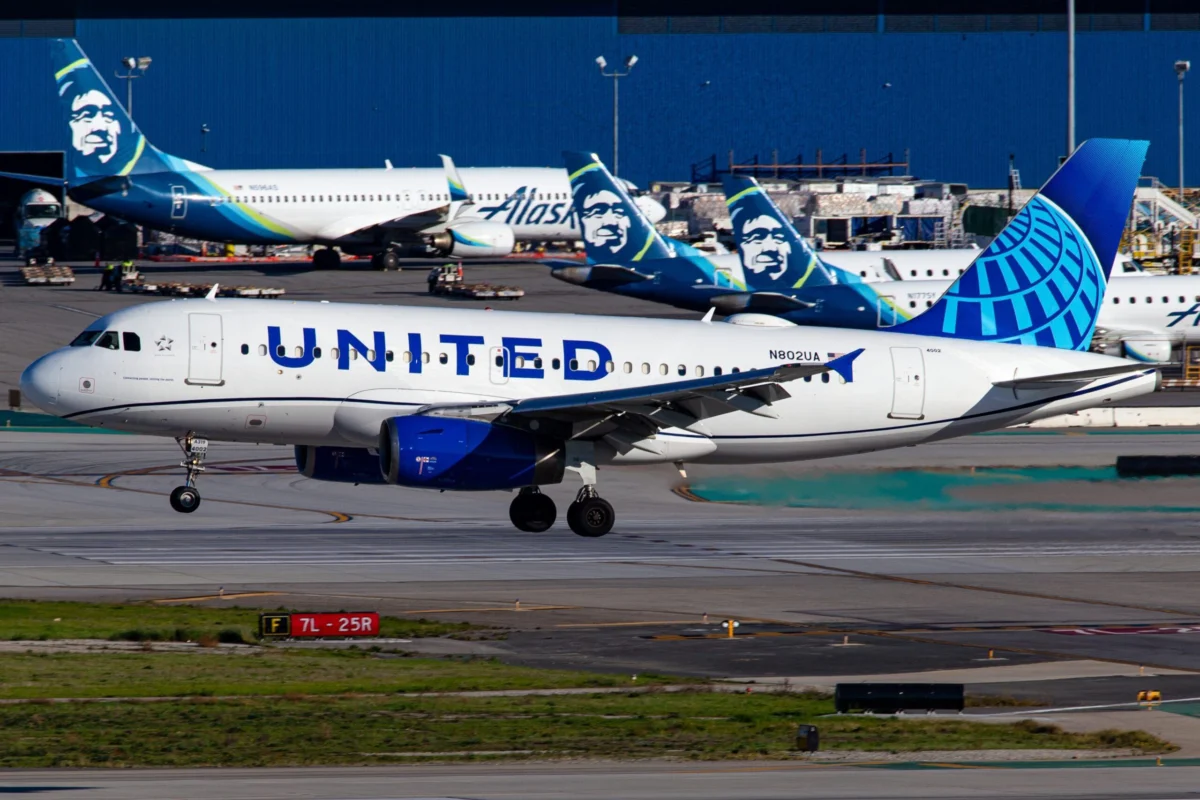
United Airlines has initiated legal proceedings against Homesite Insurance, one of its cyber insurance providers, following the insurer’s refusal to indemnify the carrier for losses sustained during the massive CrowdStrike IT outage in July 2024. The lawsuit, filed in a federal district court in Illinois, highlights a significant breakdown in the airline’s complex "insurance tower" after seven other major insurance companies agreed to pay their respective shares of the claim. United is seeking the $5 million it alleges is owed under its policy, alongside damages for what it characterizes as a bad-faith denial of coverage.
The legal dispute centers on the catastrophic technical failure that occurred on July 19, 2024, when a faulty software update released by the cybersecurity firm CrowdStrike caused millions of computers running Microsoft Windows to crash. The incident, which resulted in the "Blue Screen of Death" (BSOD) for critical systems worldwide, paralyzed global logistics, healthcare, and finance. For the aviation industry, the timing was particularly devastating, occurring during the peak summer travel season and grounding thousands of flights across the globe.
The Scope of the CrowdStrike Disruption at United Airlines
In the immediate wake of the CrowdStrike update, United Airlines faced an operational crisis of unprecedented proportions. As the airline’s internal IT infrastructure buckled under the weight of the software glitch, the carrier was forced to cancel approximately 1,600 flights. Thousands of additional flights were delayed as technicians worked manually to restore individual servers and workstations.
The operational fallout affected an estimated 200,000 passengers, many of whom were left stranded at major hubs such as Chicago O’Hare, Denver, and Newark. United’s efforts to normalize operations took several days, involving a massive mobilization of IT staff and customer service representatives. According to the legal complaint, the total financial impact of the outage on United Airlines amounted to approximately $114 million. These costs included lost revenue, increased labor expenses, and significant outlays for passenger re-accommodation and compensation.
Structure of the United Airlines Cyber Insurance Tower
To mitigate the risks associated with large-scale digital disruptions, United Airlines maintains a sophisticated "insurance tower." This structure involves multiple layers of coverage provided by various insurers, designed to activate sequentially as losses exceed specific thresholds.
Under this arrangement, United maintains a self-insured retention (SIR) of $50 million. This means the airline is responsible for the first $50 million of any loss before its insurance policies begin to pay out. Above this $50 million threshold, United had secured a total of $200 million in coverage distributed across nine different insurance companies.
The payout structure for the first several layers of the tower functioned as follows:
- First Layer: Covered by AIG, which provided $15 million in coverage. AIG paid this amount in full.
- Second Layer: Shared by Starr and Evanston, with a combined limit of $10 million. Both companies paid $5 million each.
- Third Layer: Covered by Scottsdale Insurance, which paid its $10 million limit in full.
- Fourth Layer: Shared by Starr and Liberty, with a $10 million limit. Both insurers paid $5 million each.
- Fifth Layer: Shared by Indian Harbor and Homesite, with a combined limit of $10 million.
While Indian Harbor fulfilled its contractual obligation by paying its $5 million share of the fifth layer, Homesite refused to contribute its $5 million portion. This refusal left United with a shortfall in its expected recovery, prompting the current litigation.
The Legal Dispute: Mandatory Compensation vs. Policy Constraints
The crux of the disagreement between United Airlines and Homesite involves approximately $20 million in compensation paid by the airline to affected passengers. United argues that these payments were not discretionary but were mandated by federal regulations and Department of Transportation (DOT) guidelines regarding "controllable" flight disruptions.
Under current U.S. aviation policy, airlines are expected to provide meals, hotel accommodations, and, in some cases, direct compensation or vouchers when a flight is canceled or significantly delayed due to issues within the airline’s control. While the CrowdStrike outage originated with a third-party vendor, the DOT has increasingly held carriers responsible for the reliability of their technological ecosystems, categorizing such failures as controllable events from the perspective of passenger rights.
Homesite has reportedly justified its refusal to pay by claiming that United Airlines failed to obtain written permission before issuing these compensation payments. The insurer contends that by settling these "claims" with passengers without prior consent, the airline violated the terms of the insurance contract.
United’s legal team has hit back hard against this interpretation. In the court filing, lawyers for the airline stated that Homesite’s position is an "outlier" that stands in direct opposition to the judgment of the seven other insurers in the tower who recognized the validity of the claim. The complaint argues that United should not be forced to choose between complying with federal mandates and maintaining its insurance coverage.
"This case is about an insurer that took United’s premium, watched every other insurer… pay a valid claim in full, and then—standing alone against the unanimous judgment of seven other insurers—refused to honor its own policy," the complaint reads. The airline further alleges that Homesite’s refusal is not a "good-faith coverage dispute" but rather an attempt to avoid contractual obligations.
Chronology of the Dispute
- July 19, 2024: CrowdStrike releases a defective sensor update for Windows, triggering a global IT outage. United Airlines grounds flights immediately.
- July 20–24, 2024: United works to restore systems and manages the backlog of 200,000 stranded passengers, incurring over $100 million in losses.
- August 2024: United begins the process of filing claims through its insurance tower.
- September–October 2024: Seven insurers (AIG, Starr, Evanston, Scottsdale, Liberty, and Indian Harbor) review the documentation and issue payouts totaling $50 million above the $50 million retention.
- Late 2024: Homesite issues a formal denial for its $5 million share of the fifth layer.
- November 2024: United Airlines files a lawsuit in the U.S. District Court for the Northern District of Illinois, seeking the $5 million payout, interest, and damages for bad faith.
Broader Implications for the Cyber Insurance Market
The litigation between United and Homesite is being closely watched by risk management experts and the broader insurance industry. It highlights a growing tension in the cyber insurance market: the definition of "systemic risk" and the responsibility of insurers during "black swan" digital events.
For years, the cyber insurance industry has grappled with how to price and cover events that affect millions of entities simultaneously. The CrowdStrike outage was a prime example of a "correlated risk" event. While United’s claim is relatively small compared to the total global losses (estimated by some analysts at over $5 billion for Fortune 500 companies alone), the legal precedent set by this case could influence how "consent to settle" clauses are interpreted in the context of regulatory compliance.
If the court rules in favor of United, it would reinforce the idea that federal mandates take precedence over specific procedural requirements in insurance policies during emergency scenarios. Conversely, a ruling for Homesite could embolden insurers to strictly enforce "prior consent" clauses, potentially slowing down an airline’s ability to compensate passengers during future crises.
Analysis of the "Bad Faith" Claim
In Illinois law, a "bad faith" claim against an insurer (often brought under Section 155 of the Illinois Insurance Code) allows a policyholder to recover attorney fees and additional penalties if the insurer’s behavior is found to be "vexatious and unreasonable."
United’s argument for bad faith rests heavily on the fact that Homesite is the only holdout in a multi-layered tower. The airline asserts that because Indian Harbor—the company sharing the exact same layer of coverage as Homesite—found the claim valid and paid it, Homesite’s denial cannot be based on a reasonable interpretation of the policy. This "diametrically opposed" stance within the same layer of the insurance tower is a central pillar of United’s strategy to prove that the denial was arbitrary.
Current Status and Seeking a Jury Trial
United Airlines has requested a jury trial for the case. In addition to the $5 million principal amount, the carrier is seeking pre-judgment and post-judgment interest, which could add hundreds of thousands of dollars to the final bill if the litigation is prolonged.
As of the filing, Homesite has not released a public statement regarding the specifics of the litigation, typically citing a policy of not commenting on ongoing legal matters. However, the outcome of this case will likely serve as a benchmark for other companies currently navigating the aftermath of the CrowdStrike outage and their respective insurance recoveries.
For United, the lawsuit is not just about the $5 million—a relatively small sum for a company with billions in annual revenue—but about the integrity of its risk management strategy and the principle that insurance must remain a reliable backstop during catastrophic, state-mandated operational responses.