The Accra High Court has delivered a landmark verdict that is expected to reverberate through Ghana’s political and environmental landscapes, sentencing Bernard Antwi Boasiako, a prominent regional chairman of the New Patriotic Party (NPP), to 20 years in prison. The ruling follows a protracted legal battle concerning Boasiako’s role in facilitating unlicensed mining operations within the Samreboi concession, located in the Western Region. The court found that Boasiako, popularly known in political circles, leveraged his influence to oversee operations that bypassed environmental regulations and legal mining frameworks, leading to catastrophic ecological damage in one of the country’s most sensitive forest zones.
The Samreboi concession is situated within the Upper Guinean Forest Belt, a globally recognized biodiversity hotspot that stretches across West Africa from Togo to Guinea. This region is home to some of the last remaining tracts of tropical rainforest in Ghana, including the Tano Nimiri and Aboi forest reserves. In recent years, however, the integrity of this ecosystem has been systematically undermined by illegal small-scale mining, known locally as "galamsey." The conviction of a high-ranking political figure marks a significant shift in the state’s approach to tackling environmental crimes, which have historically been shielded by political patronage.
The Legal Proceedings and Sentencing
The trial of Bernard Antwi Boasiako centered on the activities of his firm, Akonta Mining, and its interactions with unlicensed operators in the Samreboi area. Prosecutors argued that Boasiako did not merely turn a blind eye to illegal activities but actively instructed and facilitated mining in areas where the company held no valid permits to operate. Evidence presented in court detailed how heavy machinery was moved into protected zones, bypassing the protocols established by the Minerals Commission and the Environmental Protection Agency (EPA).
In handing down the 20-year sentence on July 20, the presiding judge emphasized that the severity of the punishment was intended to reflect the "irreversible" nature of the damage caused to the environment and the blatant disregard for the rule of law. The court noted that as a leader within the ruling party, Boasiako held a higher duty of care to uphold the nation’s laws, yet he chose to prioritize personal gain over the public interest. The sentencing has been hailed by environmental advocates as a "watershed moment" for Ghanaian jurisprudence, signaling that political affiliation will no longer serve as an entry to impunity.

Environmental Degradation: The Scars of Samreboi
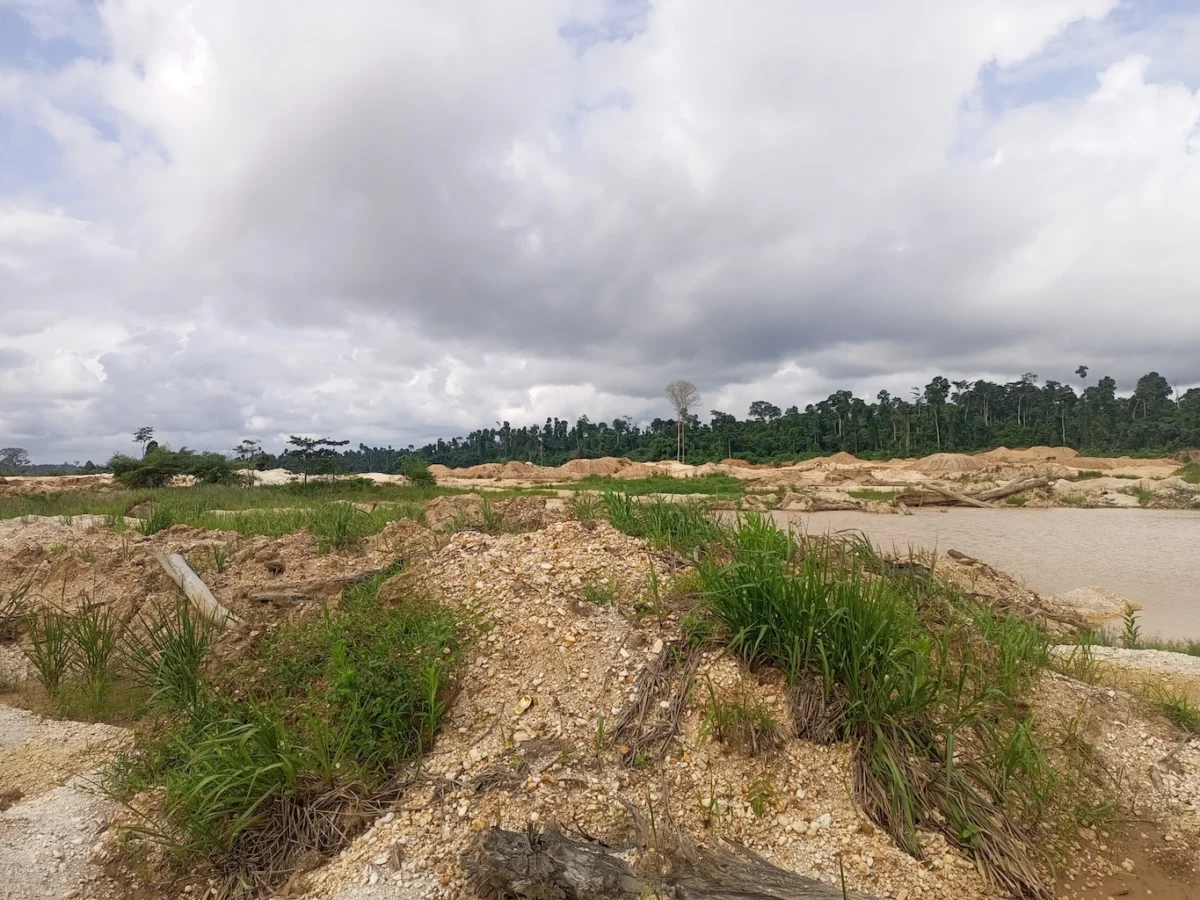
The Samreboi landscape, once a lush canopy of the Upper Guinean Forest, has been transformed into a mosaic of devastation. While parts of the region had previously been transitioned into cocoa plantations and timber concessions, the recent surge in galamsey has introduced a level of destruction that far exceeds traditional agricultural or logging impacts. Illegal miners have utilized "changfans"—floating diesel-powered dredges—alongside excavators to strip the earth and probe the beds of local rivers for gold.
This process has left the landscape scarred with thousands of abandoned, uncovered pits that pose a lethal risk to both wildlife and local residents. More critically, the alteration of natural drainage patterns contributed to a humanitarian crisis in June 2026. During a period of heavy rainfall, the Tano River, choked with silt and mining debris, burst its banks with unprecedented force. The resulting floods submerged more than 200 houses in Samreboi and surrounding villages. Some buildings, weakened by the shifting soil and rising waters, collapsed entirely, leaving hundreds of families displaced. Local authorities and the Western Regional Minister have directly attributed the severity of these floods to the hydrological disruptions caused by the illegal mining activities facilitated by Boasiako’s operations.
Public Health and the Toxic Legacy of Galamsey
Beyond the physical destruction of the forest, the court highlighted the toxic legacy left behind by unlicensed mining. Kenneth Ashigbey, the chief executive of the Ghana Chamber of Mines, provided a sobering assessment of the situation. While the Chamber represents large-scale, regulated mining firms, it has been a vocal critic of the unregulated sector that ignores safety and environmental standards.
Ashigbey pointed out that the use of mercury, cyanide, arsenic, and other heavy metals in the gold extraction process has contaminated the "belly of the river bodies." These toxins do not stay localized; they enter the food chain through fish and the water supply used for irrigation and domestic consumption. "We are seeing the impact on the most vulnerable," Ashigbey noted. "It is resulting in women with stillbirths, deformed babies, and chronic health issues that will plague these communities for generations."
The judicial record included testimonies regarding the "stability of water," a term used to describe the natural chemical and physical balance of river systems. In Samreboi, this stability has been destroyed, turning once-clear rivers into thick, coffee-colored streams of sludge. The loss of clean water has forced impoverished communities to buy bottled or sachet water, further straining their limited financial resources.

Economic Disparity and the "Resource Curse"
One of the most poignant aspects of the case is the stark economic disparity it highlighted. Despite the millions of dollars worth of gold extracted from the Samreboi concession, the local population has seen almost no benefit. Ashigbey told investigators and the media that the royalties and wealth generated by the gold have remained in the hands of a "few greedy folks" who have amassed immense fortunes.
For the masses in Samreboi, the presence of gold has been a curse rather than a blessing. The local economy, which previously relied on sustainable timber harvesting and cocoa farming, has been decimated. Timber workers have lost their livelihoods as forests are cleared for illegal pits, and cocoa farmers have seen their lands forcibly taken or poisoned by mining runoff. The vacuum left by the collapse of traditional industries has been filled by "social vices," including a rise in drug abuse and prostitution, which often follow the transient and lawless nature of galamsey camps.
Legislative Background and Political Context
The conviction of Boasiako comes against a backdrop of shifting mining legislation in Ghana. For decades, Ghana has struggled to balance its status as Africa’s largest gold producer with the need to protect its remaining forests. In 2022, a controversial piece of legislation was passed that allowed mining concessions to be granted even inside forest reserves, a move that environmentalists argued opened the floodgates for legal and illegal exploitation of protected areas.
This legislation was eventually repealed in 2025 following a massive public outcry and a successful campaign by civil society organizations. The repeal was seen as a victory for conservation, but the damage in places like Samreboi had already been done. The Boasiako case serves as a test of the government’s resolve to enforce the post-2025 legal framework.
Awula Serwah, the convener of the NGO Eco Conscious Citizens, emphasized that the 20-year sentence must serve as a deterrent. She pointed out that the "political colors" attached to the fight against galamsey have long been the greatest obstacle to progress. "When people hide behind politics, thinking that there are no consequences for their actions on the environment, the fight cannot be won," she stated. Serwah argued that the application of the law must remain blind to political status, urging the government to extend this level of scrutiny to other regions like Ashanti and Eastern, where illegal mining continues to flourish.

Chronology of the Samreboi Mining Crisis
- 2018-2021: Rapid expansion of Akonta Mining operations in the Western Region; local reports of environmental violations begin to surface.
- 2022: Legislation is passed allowing mining in forest reserves, leading to an influx of both legal and illegal activity in the Upper Guinean Forest Belt.
- 2024: Investigative journalists and environmental NGOs document massive siltation of the Tano River and the destruction of the Tano Nimiri Forest Reserve.
- 2025: Following intense public pressure, the legislation allowing mining in reserves is repealed. Legal proceedings against Akonta Mining and Bernard Antwi Boasiako are initiated.
- June 2026: Catastrophic flooding in Samreboi occurs; over 200 homes are destroyed. The Western Regional Minister confirms galamsey as the primary cause.
- July 20, 2026: The Accra High Court delivers its verdict, sentencing Boasiako to 20 years in prison for his role in the Samreboi operations.
Analysis of Implications
The sentencing of a regional chairman of the ruling party is an unprecedented move in Ghana’s Fourth Republic. It suggests a hardening of the state’s stance against "big men" who facilitate the destruction of natural resources. However, analysts remain cautious. While the 20-year sentence is a powerful signal, the challenge lies in sustained enforcement across the country.
There is also the question of land reclamation. The court’s ruling addressed the criminal culpability of the individuals involved, but the physical landscape of Samreboi remains a disaster zone. The cost of reclaiming the land, filling the pits, and decontaminating the water bodies is estimated to be in the hundreds of millions of cedis—costs that usually fall on the taxpayer rather than the perpetrators.
Furthermore, the case has sparked a debate within the NPP and the opposition National Democratic Congress (NDC) regarding the "monetization of politics." The reliance on wealthy individuals who fund party operations—often through profits from extractive industries—creates a conflict of interest that complicates environmental regulation. The Boasiako conviction may force a reckoning within political parties about the sources of their funding and the long-term ecological cost of political patronage.
As Bernard Antwi Boasiako begins his sentence, the eyes of the nation remain on Samreboi. The success of this ruling will not be measured solely by the years served in prison, but by whether the Tano River eventually runs clear again and whether the forests of the Upper Guinean Belt are finally granted the protection they are legally owed. For now, the 20-year sentence stands as a grim reminder that the price of gold should not be the future of the nation’s environment.