
Deep within the verdant expanse of the Peruvian Amazon, the region of Madre de Dios stands as a paradoxical epicenter of extraordinary biodiversity and intense environmental degradation. Here, thousands of individuals rely on artisanal and small-scale gold mining (ASGM) for their daily survival. However, the unchecked proliferation of heavy machinery, rampant deforestation, and the pervasive use of toxic mercury are fundamentally altering what is widely considered one of the most ecologically rich tropical forests on the planet. Amid this chaotic and often lawless frontier lies La Pampa, one of the region’s primary gold extraction hubs. It is a territory defined by violent clashes, sprawling informal economies, and a glaring absence of state infrastructure. Yet, within this crucible of survival and exploitation, a nascent movement of formalized artisanal miners is attempting to challenge the status quo, striving to prove that ethical, mercury-free gold production is not only a theoretical ideal but a practical reality.
The Ground Realities of Extraction and Conflict
The socioeconomic fabric of Madre de Dios has long been bound to the allure of gold. For generations, local families have passed down the trade of artisanal mining, viewing the extraction of precious metals as their primary and often sole viable economic lifeline. However, the methods traditionally employed in hubs like La Pampa carry a devastating ecological toll.
In a typical informal operation, gravel is dredged from the earth and fed into mechanized pumps, which crush the aggregate and channel it across rudimentary carpet-lined sluice boxes designed to trap heavy particles. The true environmental hazard, however, occurs during the amalgamation phase. Miners routinely add liquid mercury—locally known as quicksilver—to the concentrated sediment. The mercury binds with the microscopic gold particles, forming an amalgam that is subsequently separated through manual squeezing and open-air burning. This process vaporizes the toxic metal into the atmosphere and leaches significant quantities directly into local waterways and soils, threatening both human health and delicate aquatic ecosystems.
Beyond the severe environmental consequences, the region is plagued by intense social friction. The local populace often finds itself caught in the crossfire between law enforcement agencies and informal operators. Tensions frequently boil over into open confrontation. Incidents such as the burning of police vehicles and the temporary blockades of vital transportation arteries—including the Interoceanic Highway at kilometers 109 and 110—underscore the volatile nature of the region. Miners frequently express deep frustration with mainstream media depictions, arguing that broad-brush narratives unfairly stigmatize all extraction workers as criminals, human traffickers, and polluters, while completely ignoring the struggles of those attempting to operate within legal frameworks.
A Technological Shift: Paving the Way for Ecological Gold
In response to the mounting ecological crisis and social stigma, a fraction of the mining community in La Pampa is actively pursuing legitimacy. These formalized operators are pioneering alternative extraction techniques that eliminate the use of mercury entirely. By adopting modern, gravity-based separation technologies, such as specialized gravimetric tables powered by renewable energy sources like solar panels, these miners can isolate gold concentrate without introducing toxic chemicals into the environment.
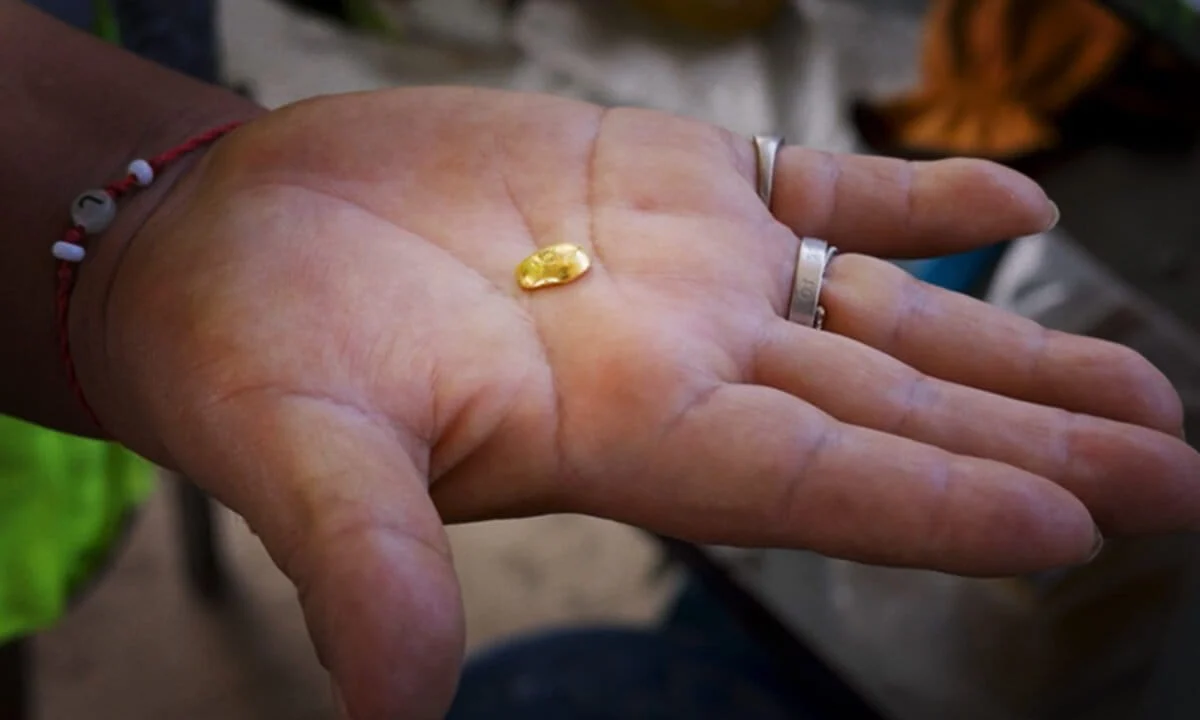
The mechanics of this alternative process represent a stark departure from traditional methods. Instead of relying on chemical amalgamation, the gold-bearing concentrate passes systematically across a vibrating gravimetric table. Through precise mechanical separation and a subsequent process known as sintering—which solidifies gold powder into tangible masses—miners can successfully extract pure gold for commercial sale. Proponents of this technology refer to the resulting yield as "ecological gold," arguing that it bridges the gap between economic necessity and environmental preservation.

Despite the availability of these clean technologies, the transition remains severely constrained by systemic hurdles. Formalized miners report facing steep financial barriers, including the prohibitive cost of regulatory compliance. For instance, purchasing necessary spare parts and machinery with official invoices incurs significantly higher costs than buying them through informal channels without proper documentation. Consequently, many small-scale operators find themselves trapped in a bureaucratic gray area, eager to comply with the law yet financially penalized for doing so.
Background Context and Chronological Pressures
The current state of affairs in Madre de Dios is the culmination of decades of unmitigated migration, global economic fluctuations, and shifting government policies. The region experienced a massive influx of prospectors following the completion of the Interoceanic Highway in the late 2000s, which connected the coast of Peru to the Brazilian border and opened previously inaccessible tracts of the Amazon rainforest.
Historically, Peruvian governments have struggled to exert administrative and security control over Madre de Dios. Efforts to curb illegal mining through large-scale military and police interventions—such as Operation Mercury (Operación Mercurio), launched in early 2019—succeeded in dismantling massive illegal encampments in La Pampa. However, these enforcement-heavy campaigns often failed to provide sustainable alternative livelihoods, causing displaced miners to merely relocate deeper into the forest or return once security forces departed.
The formalization process itself, established by the Peruvian government to bring informal miners into the legal economy, has been widely criticized by stakeholders on both sides. Miners frequently cite bureaucratic gridlock, excessive paperwork, and a lack of institutional support as major deterrents to completing the formalization pathway. Without adequate technical assistance and financial incentives from the state, many operators are left to navigate the complex legal landscape entirely on their own.
Broader Implications and Economic Realities
The ongoing struggle in La Pampa carries profound implications for the future of the Amazon basin, Peru’s national economy, and global supply chains. As international markets increasingly demand responsibly sourced minerals, the ability of artisanal miners to produce traceable, mercury-free gold could dictate their economic viability on the global stage. Conversely, the continued reliance on informal, toxic extraction methods threatens irreversible damage to one of the world’s most critical carbon sinks and biodiversity hotspots.
Observers and industry analysts emphasize that technological innovation alone is insufficient to resolve the crisis. True reform requires a multifaceted approach involving sustained government presence, accessible credit lines for green technology adoption, and streamlined bureaucratic procedures that encourage rather than punish legal compliance. Without comprehensive state intervention that addresses the root causes of poverty and informality, the cycle of environmental destruction and social conflict in Madre de Dios is likely to persist.
For the miners on the ground, however, the daily routine remains a mixture of resilience and cautious optimism. Despite facing violence, economic marginalization, and systemic neglect, many retain a steadfast belief that their persistence will eventually be recognized. As they continue to fight for legitimacy and refine their clean-mining practices, they hold onto the hope that the Peruvian state and the wider international community will eventually integrate them into a sustainable vision for the Amazonian economy.









Leave a Reply