
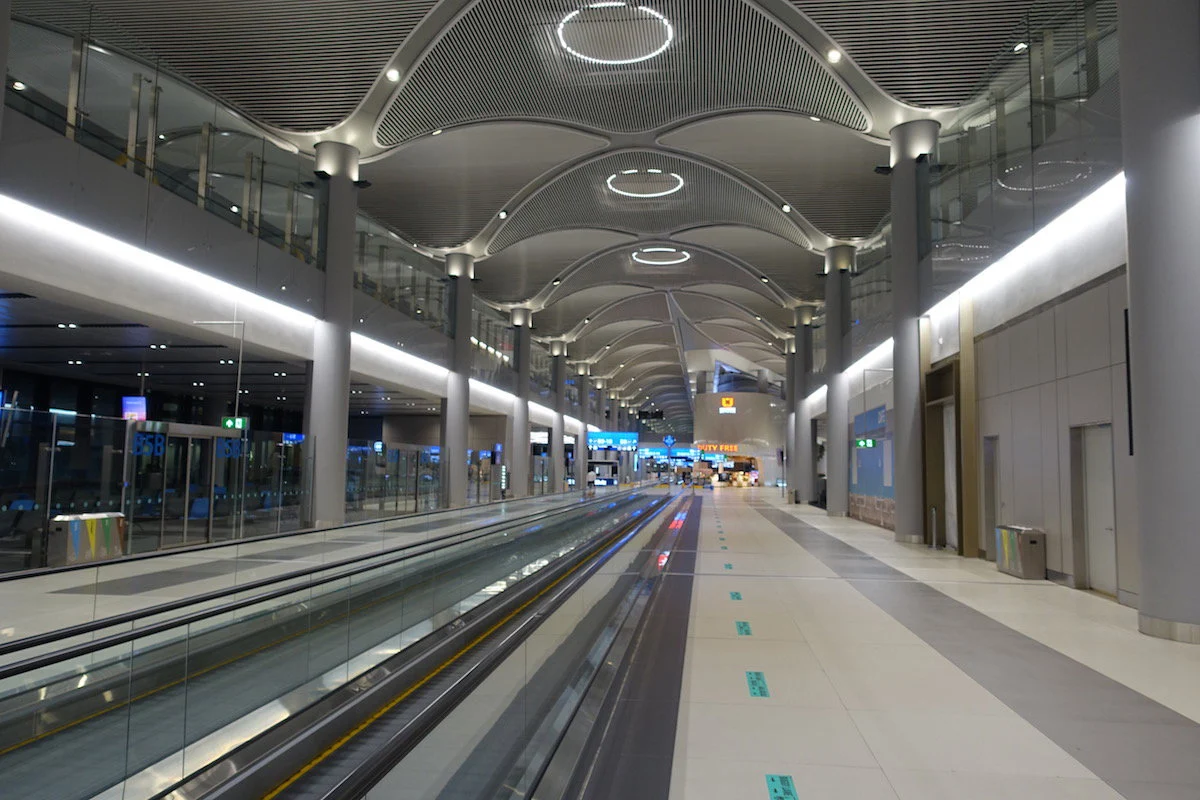
The modern global aviation network prides itself on inclusivity, with regulatory frameworks across the European Union, the United States, and international bodies mandating seamless access for passengers with reduced mobility (PRM). However, the practical execution of these services often falls short of statutory ideals, exposing vulnerable travelers to logistical mazes and physical strain. A recent firsthand account shared by a passenger traveling through Istanbul Airport (IST) with a companion dependent on wheelchair assistance has illuminated deep-seated operational bottlenecks within one of the world’s most prominent aviation mega-hubs. The narrative, detailing a multi-leg journey with Turkish Airlines in early August, serves as a cautionary tale for travelers with disabilities and highlights the broader infrastructural friction points facing high-capacity transit hubs.
The Architecture of Transit: Understanding Istanbul Airport’s Special Assistance Framework
To contextualize the traveler’s experience, one must examine the sheer scale of Istanbul Airport. Opened to full commercial operations in April 2019, IST replaced the aging Atatürk International Airport with the explicit goal of becoming a preeminent global mega-hub, capable of handling upwards of 200 million passengers annually upon final completion. Spanning an enormous footprint, the airport features a single massive terminal building designed to consolidate international and domestic operations under one roof.
While this centralized architecture minimizes terminal-switching complexity for able-bodied travelers, it imposes immense walking distances for passengers facing mobility challenges. Recognizing this, Istanbul Airport and its primary home carrier, Turkish Airlines, deploy dedicated PRM teams, electric wheelchairs, carts, and specialized vehicles. Yet, the sheer volume of connecting traffic—particularly during peak summer travel periods—frequently strains these human and mechanical resources. Industry analysts note that mega-hubs often struggle with the "last-mile" problem in special assistance, where the transfer of passengers between arrival gates, security checkpoints, holding areas, and departure gates relies heavily on fragmented, sequential handoffs rather than an end-to-end dedicated escort service.
Chronology of an Outbound Journey: Disjointed Connections and Fragmented Handoffs
The journey in question began with an outbound itinerary featuring a standard 1 hour and 45 minute layover at IST—a window that is officially within minimum connection time (MCT) parameters but leaves remarkably little room for operational delays, especially for passengers requiring specialized handling.
Upon touchdown, the process commenced with a familiar protocol: airport staff utilized an electric wheelchair to transport the PRM passenger through the jet bridge. However, instead of a continuous escort, the travelers were deposited at a designated holding bench near the jet bridge door—a fixture common to nearly every arrival gate at the facility. According to the account, no clear briefing was provided regarding the nature or timeline of the wait. Vague assurances from personnel managing multiple concurrent cases indicated only that the "next staff" member would eventually arrive.
Thirty minutes elapsed before an 8-to-9-passenger electric buggy arrived to collect the waiting travelers. Because the vehicle had already accumulated passengers from multiple arrival gates, it reached full capacity almost immediately, leaving no seating available for traveling companions. The driver directed the companion to navigate the terminal corridor independently and meet the buggy at the far end near the transfer security checkpoint.
At the transfer security checkpoint, all PRM passengers were required to disembark, ascend a ramp unaided, and clear security screening. While staff members exhibited notable helpfulness—assisting a passenger up the ramp and handling luggage—the post-security handoff broke down completely. Upon emerging into the departure hall, no assistance team was waiting. Instead, travelers were expected to independently spot and navigate toward a distant staging counter approximately 50 meters away, colloquially termed by travelers as the "wheelchair passengers transfer area."
Due to varying physical capacities among the passengers transported by the buggy, the group became fragmented; the slowest traveler arrived at the transfer desk nearly ten minutes after the initial arrivals. Here, boarding passes were surrendered for a secondary holding period. When a subsequent buggy finally arrived, capacity constraints repeated themselves: the vehicle filled up with PRM passengers, forcing companions to complete the trek to the boarding gate on foot.
Upon reaching the gate, boarding had just commenced. The PRM passenger was once again required to navigate the jet bridge on foot, completing a sequence characterized by repeated segmentation, indeterminate waiting periods, and a lack of continuous supervision.
The Return Leg and Departure Day: Terminal Realities and Remote Stands
The return itinerary offered a brief four-day stopover in Istanbul, providing a reprieve from immediate transit pressures, but the return transfer experience mirrored the outbound leg with minor variations. Upon landing, the familiar pattern of jet-bridge bench-waiting resumed, though a buggy arrived after a twenty-minute delay, this time accommodating both the PRM passenger and the companion.
The subsequent transit involved a protracted tour of the arrivals level, featuring sequential drop-offs for international transfer passengers, domestic transfer passengers routed through passport control, and finally, a general stop at the wheelchair passenger transfer area. A moment of confusion ensued when an elderly passenger, disoriented by the multiple staging points, resisted disembarking, believing the vehicle was meant to take her directly to immigration. Eventually, dedicated personnel arrived with a wheelchair to guide the travelers through passport control to the external taxi rank.
The departure day from IST began with a high standard of service. Checking in at the dedicated business class area yielded prompt results; within ten minutes, a staff member escorted the travelers through security and passport control directly into the business class lounge.
However, operational friction returned during the boarding phase. Escorted out of the lounge to an adjacent staging area outside, the travelers waited before being directed down to the departure level via elevator, boarding a buggy for a lengthy transit across the terminal. They were eventually deposited at yet another wheelchair passenger transfer area for a secondary waiting period.
Complicating matters further, the aircraft was parked at a remote hardstand rather than a jet-bridge gate. Airport personnel pushed the PRM passenger to the designated remote-stand boarding gate and departed, leaving the travelers to wait without updates until boarding commenced. Upon inquiry, gate agents confirmed that a specialized PRM bus would arrive. However, after two standard passenger buses departed, the disabled and incapacitated passenger boarding vehicle finally materialized. Unlike the stairs utilized by the general public, the specialized vehicle transferred the PRM passenger into the aircraft through an opposing cabin door.
Industry Implications and Special Assistance Standards at Global Mega-Hubs
The challenges documented at Istanbul Airport are not entirely isolated to a single facility; rather, they reflect systemic pressures facing major international transit hubs. As global passenger volumes rebound and exceed pre-pandemic levels, airports handling high concentrations of connecting traffic frequently encounter resource scarcity in specialized ground-handling departments.
Under international aviation standards—such as the U.S. Department of Transportation (DOT) Part 382 regulations and European Civil Aviation Conference (ECAC) guidelines—airports and airlines share joint responsibility for ensuring that PRM services are prompt, reliable, and respectful of passenger dignity. However, enforcement mechanisms vary significantly by jurisdiction. While carriers operating flights originating or terminating in the EU or US face strict regulatory penalties for wheelchair mishandling or service failures, transit passengers utilizing international hubs outside these jurisdictions often find themselves navigating local service level agreements that lack robust enforcement.
Aviation consultants emphasize that mega-hubs handling massive transfer volumes often rely on a "hub-and-spoke" model for special assistance, utilizing centralized pooling areas to maximize equipment utilization. While efficient from a macro-logistical standpoint, this batched-transport model can create severe bottlenecks, communication vacuums, and physical exhaustion for passengers with limited mobility and their companions, who are frequently separated or left without clear instructions during handoffs.
Strategic Recommendations for Travelers with Reduced Mobility
In light of these operational realities, travel advocacy organizations and accessibility experts recommend specific strategies for passengers navigating complex international connections:
- Extended Minimum Connection Times (MCT): When booking itineraries through massive international hubs like Istanbul, passengers with mobility impairments are advised to select itineraries with connection times significantly longer than the official minimums to absorb delays caused by batched PRM transfers.
- Direct Communication with Carriers: Passengers should reconfirm special assistance requests (SSR codes such as WCHR, WCHS, or WCHC) directly with the operating carrier at least 48 hours prior to departure, ensuring specific mobility limitations are clearly documented in the passenger name record (PNR).
- Companion Advocacy: Because airport special assistance staffing models frequently prioritize the PRM passenger while leaving companions to navigate independently, traveling companions must be prepared to track luggage, monitor gate changes, and actively coordinate with ground personnel at each transfer node.
- Advance Terminal Familiarization: Reviewing airport terminal maps and special assistance infrastructure layouts prior to travel can mitigate confusion during multi-stage transfers.
Ultimately, the firsthand account from Istanbul Airport underscores the ongoing imperative for airports and airlines to transition from fragmented, batch-processed special assistance models toward continuous, individualized escort services. As global aviation continues to expand, bridging the gap between statutory accessibility mandates and the daily passenger experience remains a critical challenge for the industry at large.










Leave a Reply