
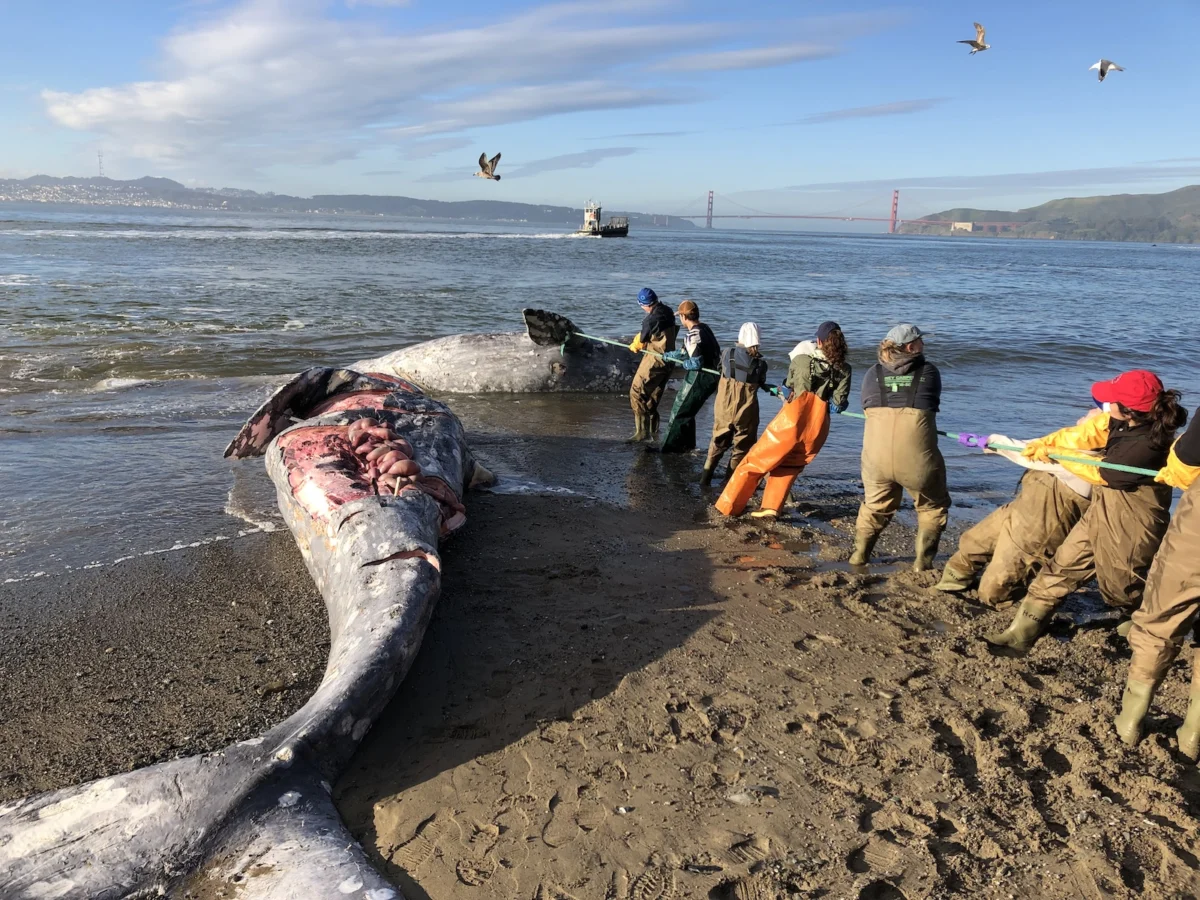
The gray whale population along the western coast of North America is facing an unprecedented ecological crisis, sparking intense concern among marine biologists, environmentalists, and policymakers. Over the past decade, the eastern gray whale population has been cut in half, dropping from a peak of roughly 25,000 to 30,000 individuals down to current estimates ranging between 11,700 and 17,000. This drastic reduction has catalyzed an atmosphere of urgency, highlighted by a recent two-day emergency conference in Newport, Oregon. The gathering brought together hundreds of scientists, government officials, and conservationists from across the continent to evaluate the escalating mortality rates, the sharp drop in birth numbers, and the broader implications of environmental degradation in the Arctic.
Despite mounting scientific consensus regarding the severity of the situation, the policy response from the federal government has stalled. The Trump administration has faced heavy criticism from environmental groups for allegedly ignoring the crisis, failing to meet legal deadlines for endangered species protections, and implementing sweeping staff and funding cuts at key federal research agencies. As conservationists prepare for impending legal battles, the scientific community finds itself walking a delicate tightrope between rigorous academic reporting and political survival under a federal framework that has increasingly targeted climate and environmental science.
A Historical Perspective: From Over-Whaling to Recovery and Back
To understand the current plight of the eastern gray whale, one must look back at centuries of human interaction with the species. Commercial whaling in the 19th and early 20th centuries decimated global populations, driving the Atlantic gray whale to complete extinction—marking a rare and tragic instance of a whale species wiped out entirely by human activity. The Pacific populations also suffered catastrophic losses before international moratoriums and domestic legislation offered a lifeline.
In the United States, the implementation of the Endangered Species Act in the 1970s provided robust legal protections that allowed the eastern gray whale population to mount a remarkable comeback. By the early 1990s, numbers had rebounded to the point where federal regulators deemed the population healthy enough to be removed from the endangered species list. This delisting, which occurred in 1994, was widely celebrated as a major conservation success story, proving that targeted regulatory intervention and hunting bans could rescue marine mammals from the brink of extinction.
However, the modern era has introduced a more insidious threat: anthropogenic climate change. Unlike the direct exploitation of commercial whaling, contemporary stressors are systemic, slow-moving, and deeply embedded in global industrial practices. The eastern gray whales undertake one of the longest migrations of any mammal on Earth, journeying thousands of miles from their summer feeding grounds in the cold, nutrient-rich Arctic waters near Alaska down to the warm lagoons of Mexico, where females give birth in the winter. As global temperatures rise, this ancient migratory rhythm is being disrupted at its very foundation.
The Arctic Warming Crisis and Nutritional Stress
The primary driver behind the modern gray whale die-off is intimately linked to the rapid transformation of the Arctic ecosystem. Scientific data confirms that the Arctic is warming nearly four times faster than the rest of the planet. This accelerated warming has led to a dramatic reduction in Arctic sea ice, which in turn triggers a cascade of ecological disruptions.
Gray whales rely heavily on benthic amphipods—small, shrimp-like crustaceans found on the ocean floor in the Arctic—to build up the massive fat reserves necessary to sustain them through their grueling annual migration and reproductive cycle. As sea ice melts earlier and sea temperatures rise, the productivity of these benthic food webs has plummeted. Consequently, whales are arriving in the Arctic to find dwindling food supplies, forcing them to begin their southward migrations with critically low energy reserves.
This severe nutritional stress manifests visibly in the population statistics. While a healthy population of eastern gray whales would typically produce approximately 1,000 calves annually, recent monitoring has revealed catastrophic reproductive failures. Last year, scientists recorded a record low of just 85 births across the entire population. Malnourished mothers are simply unable to carry pregnancies to term or produce sufficient milk for their young.
Furthermore, malnutrition creates secondary vulnerabilities. Emaciated whales are significantly less equipped to survive the natural and man-made hazards they encounter along their migration routes. Weakened animals are more susceptible to disease, less capable of navigating turbulent waters, and far more likely to succumb to vessel strikes and commercial fishing gear entanglements.
The Human-Wildlife Conflict in Coastal Waters
As their traditional foraging grounds fail, hungry gray whales have increasingly ventured into atypical and hazardous nearshore environments in search of food. This behavioral shift has brought them into direct, often fatal, contact with human maritime traffic, particularly along the heavily industrialized coastline of California.
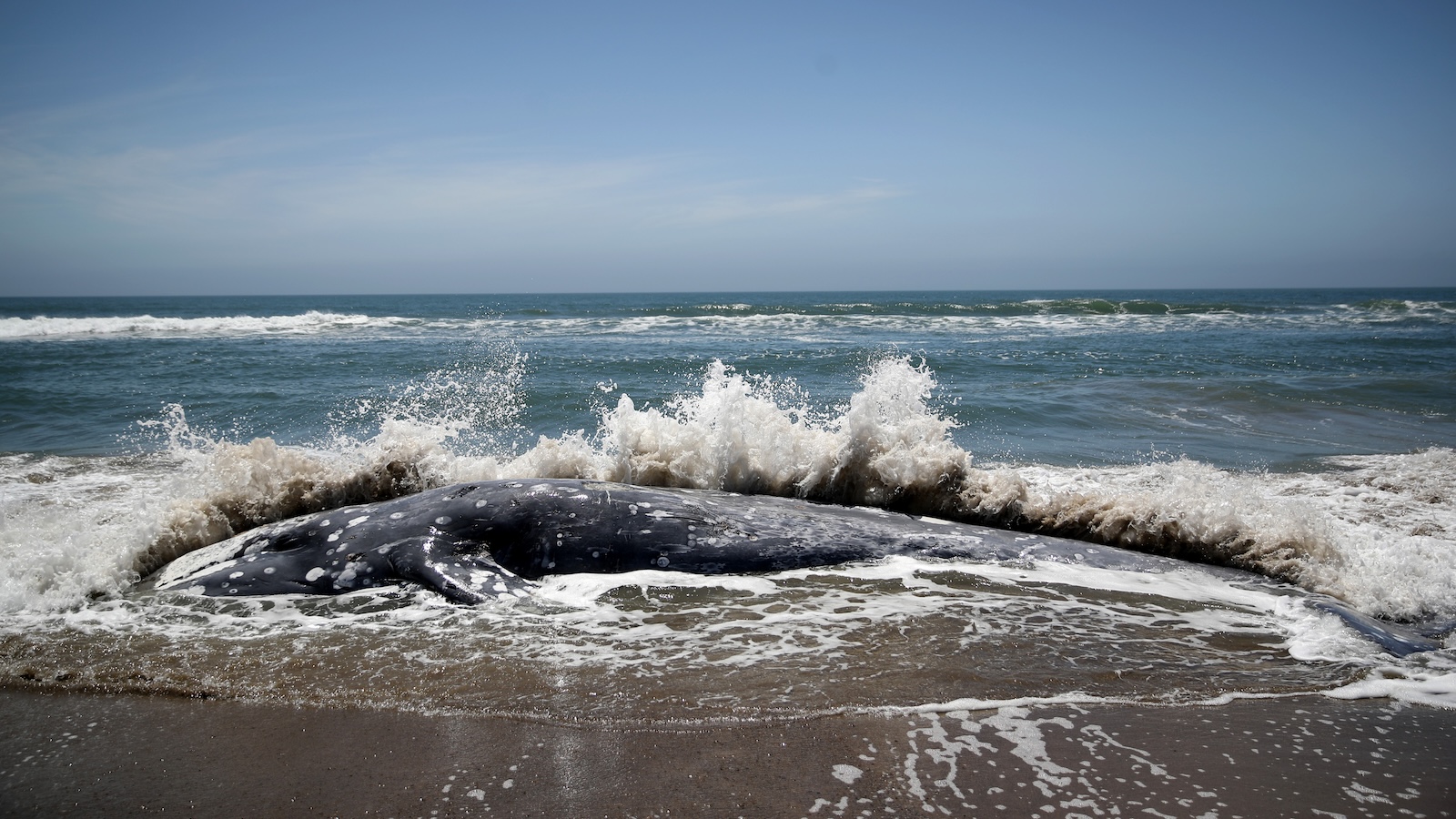
The San Francisco Bay Area has emerged as a tragic hotspot for whale strandings and mortality. Recent tracking data indicates that between 20 percent and 50 percent of all gray whales entering the San Francisco Bay ultimately die from ship strikes. During a recent summer season alone, 13 dead whales were discovered in the region. Marine biologists emphasize that this figure likely represents an undercount, as many mortalities go unnoticed when weakened animals sink to the ocean floor before washing ashore.
In addition to ship strikes, whales navigating crowded shipping lanes face the constant danger of becoming entangled in commercial fishing gear, such as vertical lines associated with crab and lobster traps. These entanglements can cause slow, agonizing deaths, impairing the animal’s ability to feed, dive, and swim.
The Newport Conference and the Tense Political Climate
Against this grim backdrop, the two-day conference in Newport, Oregon, served as a crucial forum for researchers to pool data and evaluate the trajectory of the population. While presentations offered vital scientific insights into foraging behavior, acoustic tracking, and nutritional health, the underlying atmosphere was described by attendees as intensely tense.
The primary source of anxiety was the conspicuous absence of a proactive federal response to the crisis. Under the current administration, which took office in 2025, the National Oceanic and Atmospheric Administration (NOAA) has experienced sweeping budget reductions and staffing cuts designed to align with broader political agendas. Concurrently, proposals have surfaced to eliminate the Marine Mammal Commission, an independent federal agency tasked with advising the government on marine mammal protection. Furthermore, the administration has rolled back key habitat protections associated with the Endangered Species Act, contributing to a massive backlog of approximately 400 species awaiting federal listing decisions.
NOAA’s handling of the gray whale crisis has drawn sharp criticism from independent scientists and advocacy organizations. The agency missed the statutory legal deadline to respond to a petition submitted by marine conservationists seeking to relist gray whales under the Endangered Species Act. Additionally, NOAA has delayed the release of its official annual count of gray whale births, leading to widespread frustration among researchers who rely on transparent government data to track population health.
Adding to the controversy, NOAA recently published estimates suggesting that the gray whale population rebounded by roughly 5,000 individuals over a single year. Independent experts, including Mark Palmer of the Earth Island Institute, have dismissed these figures as mathematically and biologically implausible. Given the documented low birth rates and high mortality numbers, critics argue that the biological capacity of the species simply does not support such a rapid recovery, raising concerns that federal data may be politically manipulated to avoid regulatory triggers. NOAA declined requests for comment regarding these discrepancies.
The Legal Battle: Impending Lawsuits and the Demand for Relisting
Frustrated by federal inaction, environmental organizations are turning to the judicial system to compel government intervention. At the end of August, three prominent conservation groups filed a formal notice of intent to sue the federal government, initiating a mandatory two-month window for the administration to respond to the pending petition to relist gray whales as endangered or threatened.
Miyoko Sakashita, an attorney at the Center for Biological Diversity who is leading the impending legal action, emphasized that returning gray whales to the endangered species list is a critical administrative step. Under the Endangered Species Act, a formal listing legally obligates federal agencies to draft and implement a comprehensive recovery plan. It also unlocks vital federal funding for scientific monitoring, habitat restoration, and targeted protective measures.
"The law says they have to use the best available science when deciding which species are endangered," Sakashita stated. "When we look at this terrible population decline, it seems like there cannot be any other answer than to proceed forward with a threatened or endangered listing."
If the Trump administration fails to act within the statutory timeframe, the coalition of environmental groups is prepared to file a formal lawsuit in federal court. Legal experts suggest that the administration will face a high burden of proof to justify ignoring the mounting body of peer-reviewed data demonstrating a population collapse.
Mitigation Strategies: Slowing Down Ships and Protecting Migratory Corridors
While legal and policy battles play out at the federal level, researchers and regional organizations are actively deploying grassroots and technological solutions to mitigate immediate threats to surviving whales. Because an endangered species listing and comprehensive climate legislation will take years to alter global temperature trajectories, conservationists are focusing on localized interventions that can yield immediate results.
One of the most promising initiatives involves working directly with the maritime shipping industry to reduce vessel speeds in known whale habitats. Rachel Rhodes, a scientist with the Benioff Ocean Science Laboratory at the University of California, Santa Barbara, leads "Whale Safe," an advanced technological project that maps real-time whale locations within shipping lanes using acoustic hydrophones, thermal cameras, and satellite telemetry.
According to Rhodes, avoiding whales entirely in congested coastal waterways is often logistically impossible. Consequently, the most effective mitigation strategy is requesting that commercial vessels voluntarily restrict their speeds to 10 knots or less when traveling through high-risk zones. Slower speeds significantly reduce the momentum of a vessel, drastically increasing the survival probability of a whale in the event of a physical collision.
While mandatory speed limits for large commercial vessels have been successfully implemented along the U.S. East Coast to protect critically endangered North Atlantic right whales, West Coast regulations remain largely voluntary. Programs like "Blue Whales Blue Skies" have achieved notable success by offering financial incentives and public recognition to shipping companies that voluntarily comply with speed restrictions. However, compliance remains inconsistent across sectors, with certain high-speed vessels—such as large cruise liners—frequently bypassing voluntary slowdown guidelines.
The Path Forward
The convergence of climate-driven starvation, industrial shipping hazards, and bureaucratic paralysis has placed the eastern gray whale at a historic crossroads. As Richard Steiner, a marine conservation biologist who originally petitioned for the relisting of the species, pointed out, the scientific data is unequivocal.
"As goes Arctic sea ice, so goes the gray whale population," Steiner warned. Without a concerted global effort to curb greenhouse gas emissions and stabilize Arctic ecosystems, the long-term prognosis for the species remains deeply precarious. In the interim, marine biologists and environmental advocates argue that policymakers have a legal and moral obligation to utilize existing regulatory tools—such as the Endangered Species Act and mandatory vessel speed limits—to buy the species precious time.
The coming months will prove decisive. As the federal government faces imminent legal action over its delay in granting protections, the scientific community will continue to monitor the fragile remnants of a population that has weathered centuries of human interference, only to confront the defining ecological crisis of the modern era.








Leave a Reply