
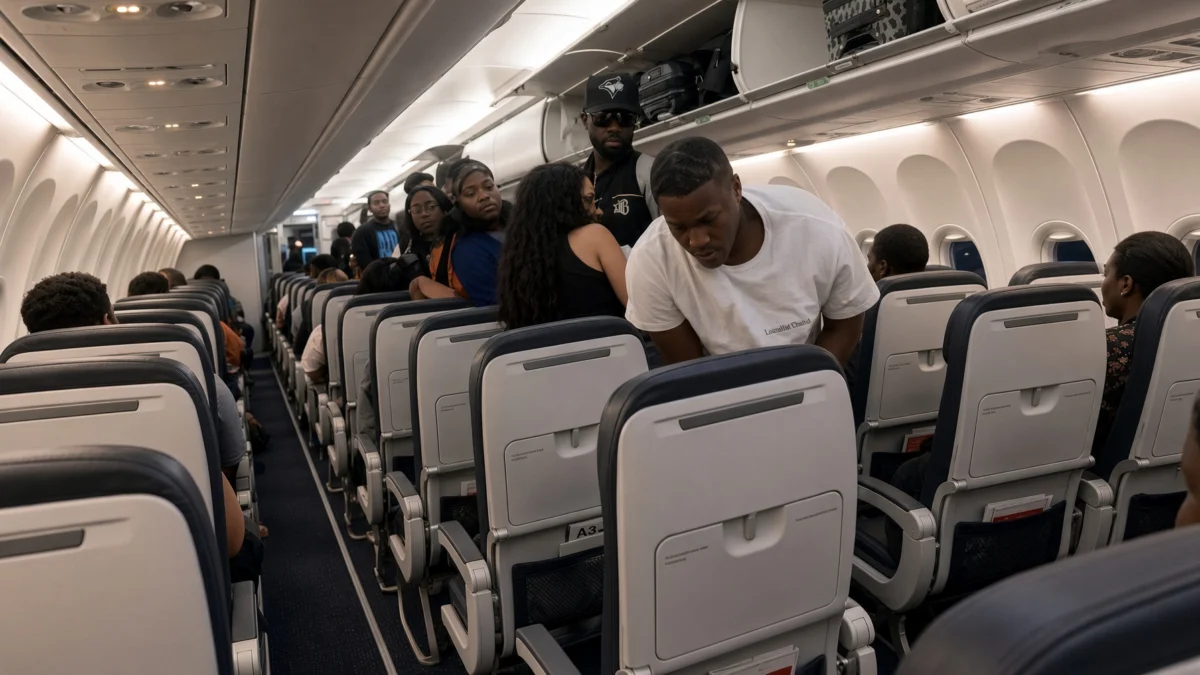
The recent viral video circulating on social media platform Instagram, captured by user @bigplayray__, documents a violent physical altercation between two passengers aboard a Frontier Airlines flight shortly after the aircraft had arrived at its gate. The footage, which has drawn significant attention due to the aggressive nature of the encounter, shows one individual removing his hooded sweatshirt in the midst of a physical struggle before continuing to trade punches over the seatbacks. This incident represents the latest in a troubling series of disruptive events on commercial aircraft, raising questions regarding passenger behavior, cabin security protocols, and the efficacy of current deplaning procedures.
Chronology of the Altercation
According to the witness account provided by the uploader, the conflict originated during the standard deplaning process. As the aircraft reached its final stop and passengers began standing to retrieve their belongings from the overhead bins, a physical confrontation ensued. The uploader noted that the dispute was initiated by a shove, leading to a rapid escalation between the two parties.
In the video, one passenger is seen grappling with another, who remains largely obscured by the aircraft seating. As the brawl intensified, the assailant removed his outer layer—a hoodie—to facilitate greater mobility, continuing his assault while other travelers in the vicinity intervened to separate the combatants. The incident occurred in a confined space, complicating the efforts of fellow passengers and cabin crew to restore order. The footage, while flagged by social media platforms as potentially sensitive content, highlights the volatility of modern air travel environments, particularly during the high-stress period of arrival and disembarkation.
Broader Patterns of Unruly Passenger Behavior
This incident is not an isolated event for Frontier Airlines or the broader aviation industry. Historically, the carrier has been the site of several high-profile confrontations. In July 2021, a flight operating on the Philadelphia-to-Miami route was delayed and disrupted when a passenger reportedly attacked a fellow traveler who was perceived to be taking an excessive amount of time to collect luggage. That incident resulted in a tense standoff that required intervention from both passengers and crew. Following the altercation, the victim reportedly declined to press formal charges, yet the event underscored the increasing impatience and reduced tolerance threshold among air travelers.

Further complications have been observed across the industry, including a notable incident involving a Spirit Airlines flight where a passenger attempted to bypass the traditional queue by climbing over a traveler in an aisle seat. Such behavior, while distinct from physical combat, reflects a systemic issue regarding passenger anxiety and the "rush to exit" mentality that often pervades the final minutes of a commercial flight.
In another instance in Minneapolis, a routine arrival devolved into a multi-party altercation that spilled from the aircraft into the airport terminal. Reports indicated significant property damage, including broken furniture and displaced stanchions. Law enforcement responses in these cases often prioritize the immediate cessation of violence and the removal of disruptive parties from the airport premises, though arrests are not always immediate or forthcoming, depending on the willingness of victims to pursue legal action.
The Impact of Aviation Industry Consolidation
Industry analysts have noted that the behavioral climate on low-cost carriers (LCCs) like Frontier Airlines may be influenced by a convergence of factors. With the recent integration of Spirit Airlines into the broader Frontier portfolio, the carrier has absorbed a large volume of passengers accustomed to a specific operational model. Critics and industry observers have suggested that the high-density seating, strict baggage policies, and the "unbundled" nature of air travel—where every service incurs an additional fee—can contribute to a heightened state of frustration among passengers.
When combined with the stress of travel, potential delays, and the physical constraints of the modern aircraft cabin, these factors create a pressure-cooker environment. The transition from a cramped, often uncomfortable environment to the rush of disembarking provides a catalyst for suppressed frustrations to manifest into overt conflict.
Statistical Context and FAA Enforcement
The Federal Aviation Administration (FAA) has maintained a "zero-tolerance" policy regarding unruly passenger behavior since early 2021. Data from the FAA reveals that while the record-breaking levels of unruly passenger incidents seen in 2021 and 2022 have stabilized, the numbers remain significantly higher than pre-pandemic averages.

In 2021, the FAA investigated 1,099 reports of unruly passengers, a sharp increase from the 183 reports recorded in 2020. While these numbers have trended downward as travel patterns normalized, the prevalence of incidents involving physical assault remains a critical focus for safety regulators. The agency has the authority to impose significant civil penalties, which can reach up to $37,000 per violation, in addition to potential criminal prosecution handled by the Department of Justice. However, the legal threshold for prosecution is high, often requiring evidence of physical harm or a clear threat to the safe operation of the aircraft.
Cabin Security and Crew Preparedness
For cabin crews, managing these incidents requires a delicate balance between de-escalation and safety enforcement. Flight attendants are trained to identify potential conflicts early, but the rapid escalation seen in the recent Frontier incident demonstrates the difficulty of intervention once a physical struggle has begun.
The industry is currently exploring several mitigation strategies:
- Enhanced Communication: Improving pre-arrival announcements to manage passenger expectations regarding the speed of disembarkation.
- Passenger Bans: Carriers are increasingly utilizing internal "no-fly" lists to permanently ban individuals involved in violent or disruptive behavior, creating a significant deterrent for repeat offenders.
- Law Enforcement Integration: Airlines are fostering closer relationships with airport police to ensure that when a flight lands, law enforcement is prepared to meet the aircraft if a report of mid-flight or arrival-gate disruption has been made.
Analysis of the "Travel Point" Mentality
Social media commentary surrounding the latest incident has been mixed. While some users focus on the spectacle of the fight, others have highlighted the absurdity of engaging in violent behavior that could jeopardize one’s ability to travel in the future. One viral comment—"Meet me around the corner of the airport once we land. Not on here! I need my travel points"—encapsulates the irony of the situation. It points to a growing recognition among frequent travelers that the consequences of in-flight misconduct—namely, being banned from a carrier’s network—far outweigh the temporary satisfaction of winning an argument or a fight.
Implications for Future Travel
The long-term implications for airlines like Frontier involve a potential shift in branding and passenger management. As the carrier continues to scale its operations, maintaining a secure and professional environment is paramount. The recurring nature of these incidents may prompt the airline to implement more rigorous onboard monitoring or invest in advanced deplaning management systems to reduce the "bottleneck" effect that frequently triggers these disputes.
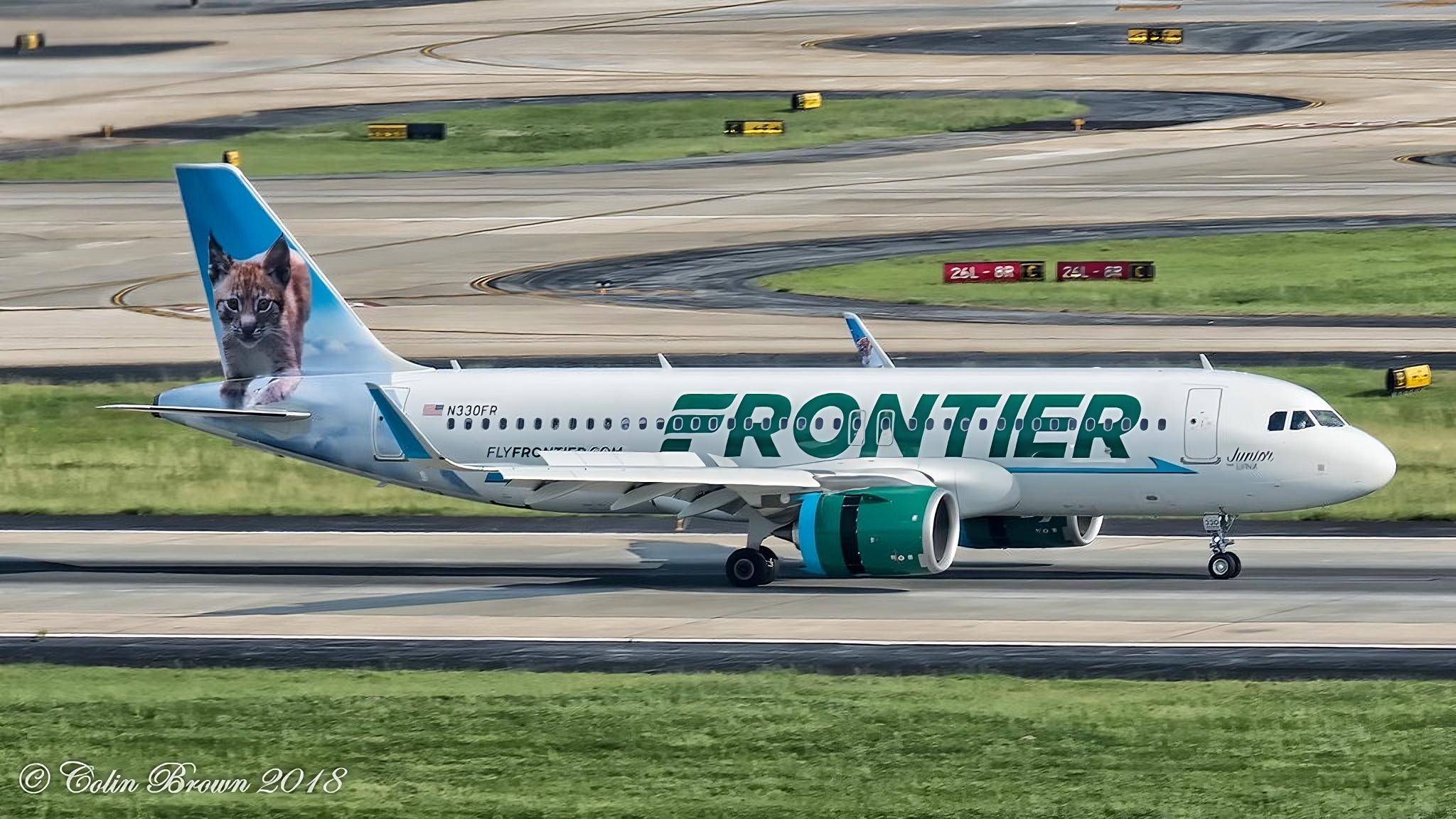
Furthermore, the prevalence of smartphones and social media means that every incident is now recorded and scrutinized. This public documentation exerts pressure on airlines to take a more aggressive stance on disciplinary actions. The reputation of the carrier is at stake, as potential customers weigh the cost-benefit of low fares against the possibility of being caught in a volatile, unpredictable cabin environment.
Conclusion
The altercation on the recent Frontier Airlines flight serves as a stark reminder of the complexities inherent in modern commercial aviation. While the incident may appear as a localized scuffle between two individuals, it is emblematic of a broader, more systemic challenge facing the industry. As air travel demand continues to rise, the need for clear communication, consistent enforcement of safety regulations, and a renewed commitment to passenger civility remains essential. The safety of the cabin environment is not solely the responsibility of the crew; it is a shared obligation that requires a fundamental change in the way passengers perceive and engage with one another during the transit process. Until such cultural and procedural shifts take hold, incidents of this nature are likely to persist, challenging the resilience of the aviation sector in the post-pandemic era.










Leave a Reply