
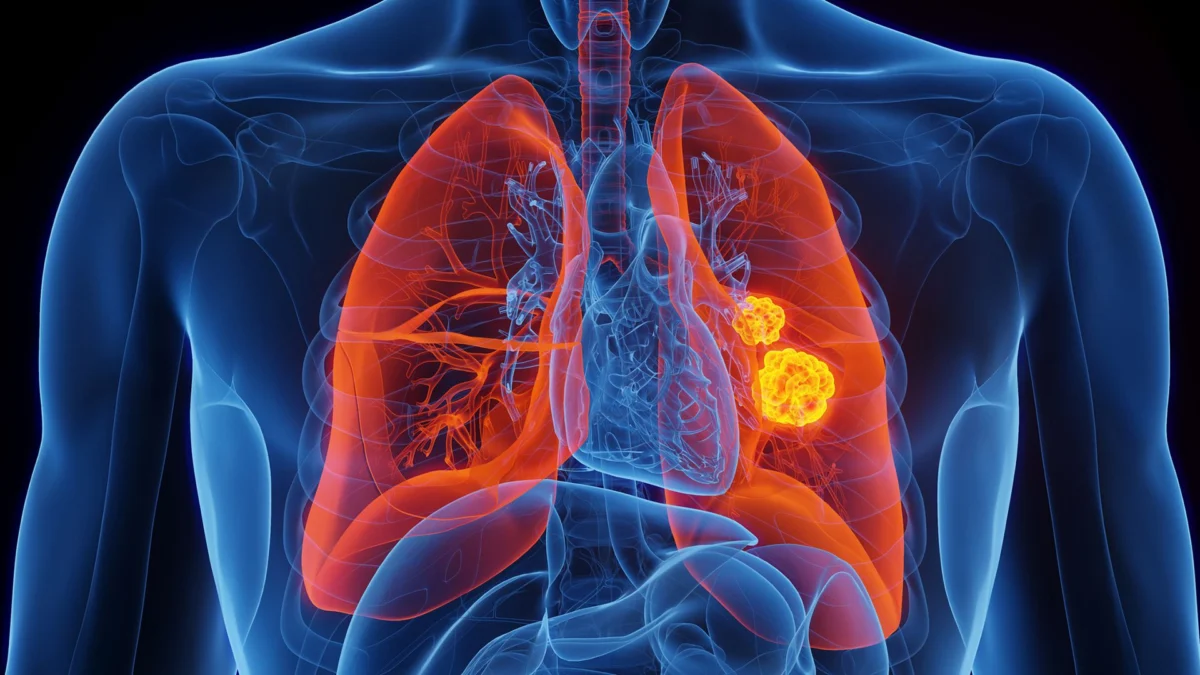
For decades, the public health narrative surrounding lung cancer has been inextricably linked to tobacco use. Cigarette smoking remains the primary driver of the disease, responsible for the vast majority of diagnoses worldwide. However, this established paradigm often obscures a troubling reality: thousands of individuals who have never touched a cigarette are diagnosed with lung cancer every year. Understanding the etiology of the disease in this demographic has long eluded researchers, leaving clinicians with critical gaps in early detection and prevention.
Now, a groundbreaking study published in the journal Science sheds light on this medical mystery, identifying an inherited genetic mutation that exponentially increases the risk of lung cancer among lifelong non-smokers. The research centers on a specific alteration within the epidermal growth factor receptor (EGFR) gene, offering unprecedented insight into hereditary pathways of oncogenesis and reshaping how the medical community views non-smoking-associated malignancies.
The Core Discovery: A Sixty-Two-Fold Risk Increase
At the heart of the new research is the EGFR T790M mutation. The EGFR gene is responsible for encoding a protein that sits on the surface of cells, regulating fundamental cellular processes such as growth, division, and survival. Under normal conditions, these receptors help maintain tissue health and orchestrate cellular repair. However, when mutations occur, the signaling pathways can become hyperactive, driving uncontrolled cellular proliferation and tumor formation.
According to the study, published on September 17, non-smokers who inherited the EGFR T790M mutation face a staggering 62-fold increase in the likelihood of developing lung cancer compared to non-smokers who do not carry the genetic alteration. This immense relative risk highlights the profound impact that a single germline mutation can exert on an individual’s lifetime cancer susceptibility, independent of environmental carcinogens like tobacco smoke, radon, or occupational pollutants.
The findings challenge the traditional boundaries of cancer genetics. While somatic mutations—those acquired spontaneously in specific tissues over a lifetime—are frequently observed in lung tumors, inherited germline mutations that confer such high penetrance for non-small cell lung cancer (NSCLC) are significantly rarer and less understood.
Unraveling the Chronology of EGFR and Targeted Oncology
To contextualize the significance of the September 17 finding in Science, it is necessary to examine the broader timeline of EGFR research in oncology. The journey toward understanding the gene’s role in cancer began decades ago, evolving from basic molecular biology to the development of precision medicine.
In the late 1980s and 1990s, scientists increasingly recognized that the dysregulation of growth factor receptors played a critical role in various solid tumors. By the early 2000s, researchers made a watershed discovery: activating somatic mutations in the kinase domain of the EGFR gene were heavily implicated in a subset of lung cancers, particularly adenocarcinomas found in non-smokers, women, and individuals of East Asian descent.
This discovery catalyzed a revolution in targeted therapy. Pharmaceutical developers quickly engineered tyrosine kinase inhibitors (TKIs), such as gefitinib and erlotinib, designed to block the aberrant signaling of mutated EGFR proteins. For many patients, these drugs produced dramatic, albeit temporary, tumor regression.
However, tumor evolution inevitably posed a new hurdle. Over time, patients treated with first- and second-generation TKIs almost universally developed resistance. In many cases, this resistance was traced to a secondary mutation within the same gene: the T790M substitution. Often referred to as the "gatekeeper" mutation, T790M alters the structure of the receptor, preventing TKIs from binding effectively while maintaining the kinase’s activity. This clinical challenge ultimately led to the development of third-generation inhibitors, such as osimertinib, which are specifically engineered to target the T790M resistance mutation.
While T790M was extensively studied as an acquired resistance mechanism during treatment, its presence as an inherited, germline mutation—present in every cell of the body from birth—has remained less charted territory. The new Science study bridges this historical gap, shifting the focus from treatment resistance to hereditary predisposition.
Data, Methodology, and the Scope of the Investigation
The research team behind the study utilized large-scale genomic sequencing datasets and familial registries to trace the inheritance patterns and clinical outcomes associated with the EGFR T790M allele. By analyzing the genetic profiles of thousands of individuals, researchers were able to calculate the precise risk multiplier associated with the germline variant.
Data from the investigation underscore that while the T790M mutation is exceptionally rare in the general population, its predictive value for lung cancer among carriers is remarkably high. Unlike common genetic variants identified in genome-wide association studies—which typically confer small, incremental increases in risk—EGFR T790M acts as a high-penetrance cancer predisposition gene. This places it in a similar category to well-known hereditary cancer syndromes, such as BRCA1 and BRCA2 mutations in breast and ovarian cancer, or Lynch syndrome in colorectal cancer.
Furthermore, the data reveal distinct clinical characteristics among lung cancers arising in individuals with inherited T790M mutations. These tumors frequently manifest as adenocarcinomas, and patients often present at younger ages than the typical sporadic lung cancer demographic. The hereditary nature of the mutation also means that cancer risk runs across family lineages, presenting both an epidemiological challenge and an opportunity for cascade genetic testing among relatives.
Official Responses and Clinical Implications
The medical and scientific communities have greeted the publication with a mixture of validation and urgency. Oncologists and genetic counselors emphasize that while the findings do not immediately change day-to-day population screening guidelines, they establish a critical foundation for specialized risk management.
Dr. Elena Rostova, a leading thoracic oncologist not directly involved in the study, noted the paradigm-shifting nature of the paper. "For years, when a non-smoker developed lung cancer, we searched for answers in environmental exposures or dismissed it as bad luck," Rostova said. "This study confirms that, for a subset of families, the vulnerability is written into their genetic code. It elevates our understanding of hereditary lung cancer from anecdotal family clusters to a quantified, clinically actionable reality."
From a clinical perspective, identifying high-risk germline mutations opens the door to proactive surveillance strategies. Individuals who test positive for inherited EGFR mutations could potentially benefit from specialized monitoring programs, such as annual low-dose computed tomography (LDCT) scans, aimed at detecting pulmonary nodules at their earliest, most treatable stages.
Moreover, the presence of an inherited EGFR mutation raises intriguing therapeutic questions. Because targeted therapies like osimertinib have proven exceptionally effective against T790M-positive tumors in the metastatic setting, researchers are actively investigating whether these same agents—or preventive interventions—could be utilized in a prophylactic or early-intervention context for high-risk germline carriers, though clinical trials would be required to establish safety and efficacy.
Broader Impacts on Public Health and Precision Medicine
The identification of inherited EGFR T790M as a major risk factor for lung cancer in non-smokers carries broad implications for the future of oncology, public health policy, and genetic counseling.
First, it reinforces the necessity of comprehensive genomic profiling for lung cancer patients, regardless of their smoking history. Historically, non-smokers were occasionally overlooked for biomarker testing because clinicians assumed oncogenic drivers were primarily a consequence of tobacco exposure. As precision oncology matures, the recognition that non-smokers can harbor profound genetic susceptibilities mandates universal biomarker testing at the time of diagnosis, ensuring that patients receive therapies tailored to the specific molecular profile of their disease.
Second, the findings highlight the growing importance of hereditary cancer panels. As the cost of DNA sequencing continues to decline, multi-gene panels that screen for inherited cancer syndromes are becoming more widely available. Incorporating EGFR and other lung-cancer-associated genes into these panels could transform familial risk assessment, allowing clinicians to identify at-risk relatives before symptoms manifest.
Finally, this research serves to dismantle the persistent stigma surrounding lung cancer. Because of its historical association with smoking, lung cancer patients have frequently faced cultural and social prejudice, regardless of their personal history with tobacco. By explicitly demonstrating that a purely genetic, inherited biological mechanism can drive the disease in non-smokers, studies like this underscore that lung cancer is a complex disease driven by molecular biology, requiring compassion, advanced research, and targeted medical innovation rather than judgment.
As researchers continue to decode the intricate relationship between human genetics and pulmonary malignancies, the study published in Science marks a pivotal milestone. By illuminating the shadow cast by inherited EGFR mutations, the scientific community moves one step closer to a future where lung cancer in non-smokers is not an unexplained tragedy, but a predictable, manageable, and ultimately preventable condition.










Leave a Reply