
The consumer energy landscape is undergoing a fundamental transformation, shifting from passive consumption to active, decentralized management. At the recent IFA Berlin exhibition—Europe’s premier showcase for consumer electronics and home technology—Jackery unveiled a dual-pronged strategy for residential energy autonomy. By introducing the massive 100 kWh EnergyGuard Max system alongside the highly modular SolarVault 3, the company is attempting to bridge the gap between high-capacity, professional-grade infrastructure and accessible, entry-level balcony solar solutions.
The Context of IFA Berlin 2026
IFA Berlin serves as a critical barometer for the European energy market, a region where high electricity costs and aggressive decarbonization targets have driven unprecedented interest in domestic solar and storage solutions. The 2026 event highlighted a clear divide: while homeowners are seeking industrial-scale independence to manage electric vehicle (EV) charging and home heating, apartment dwellers and renters are looking for "plug-and-play" systems that bypass the need for complex electrical retrofitting. Jackery’s presence at the event underscored this dichotomy, presenting products designed to scale alongside the evolving electrification of the modern home.
SolarVault 3: Democratizing Renewable Access
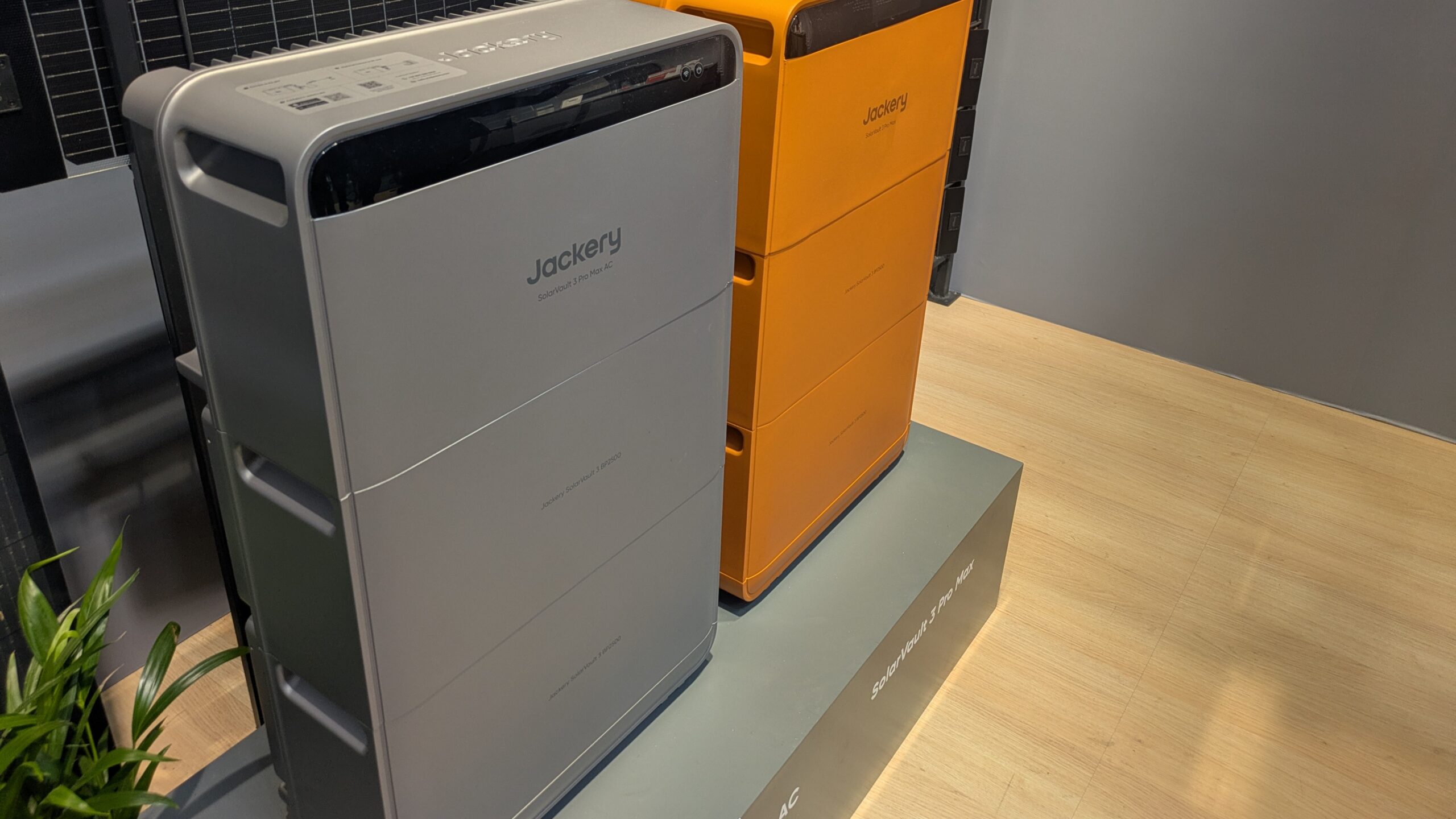
The SolarVault 3 represents a significant departure from traditional, rigid solar installations. Designed for flexibility, the system allows consumers to begin with a baseline configuration—typically a 2.52 kWh main module and a set of solar panels—and expand as their financial or energy needs grow.
Key to the system’s appeal is its "DIY-friendly" installation. Weighing in at 21 kg per expansion module, the system eliminates the immediate need for professional installers, a significant cost barrier for many households. The technical specifications are equally robust, with the Pro Max model supporting up to 2,500 W of charging from a standard wall outlet. Furthermore, the unit can integrate up to 4,000 kW of photovoltaic (PV) input, providing a versatile solution for varying balcony orientations and sunlight conditions.
In the German market, where plug-in solar systems are capped at 800 W of grid-injected power, the SolarVault 3 operates within regulatory guidelines while offering a substantial off-grid safety net. When disconnected from the utility, the system provides up to 3,680 W of power, sufficient to run essential appliances during localized grid instability.
Vertical Solar and the Sunbooster Partnership
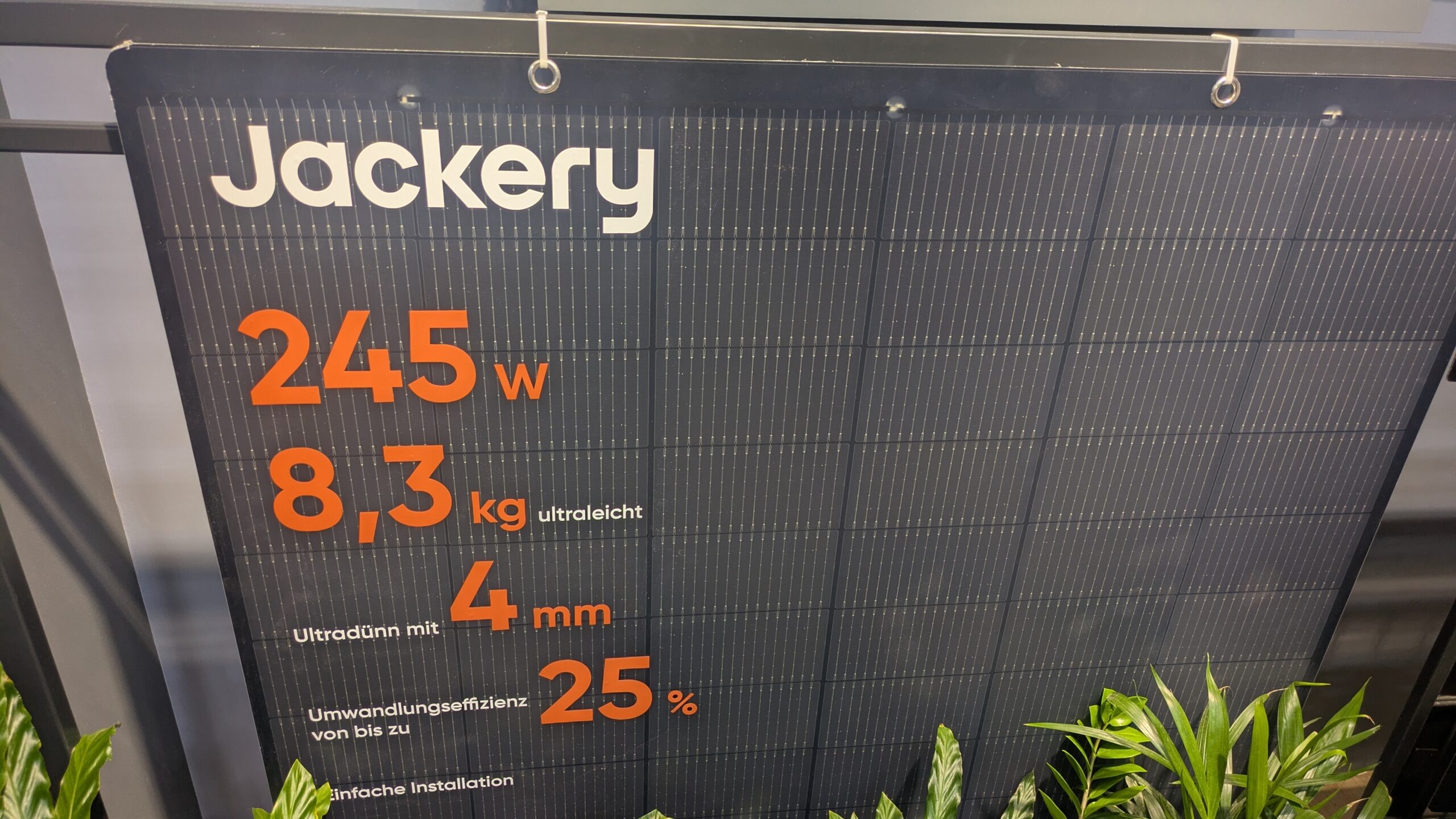
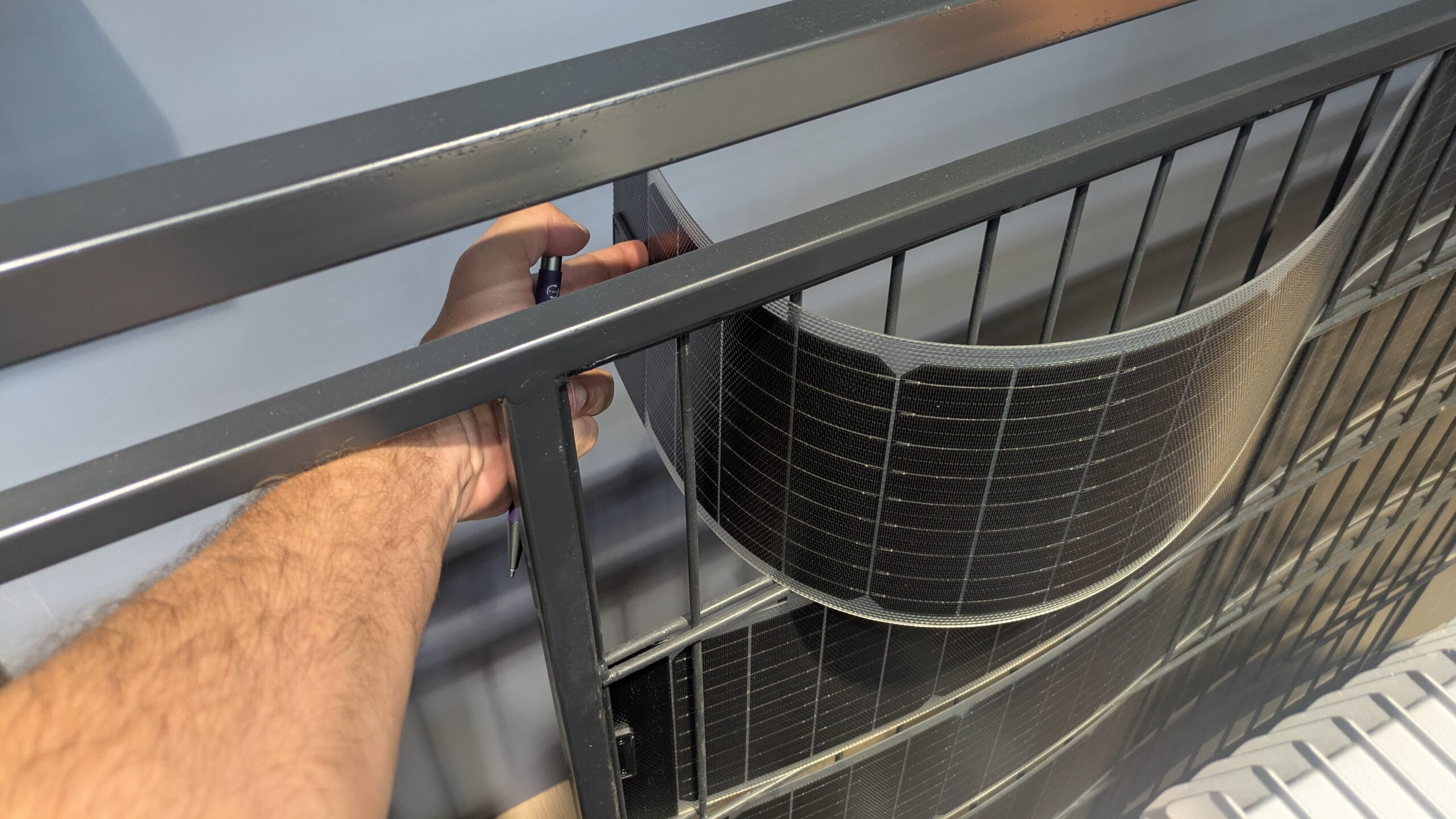
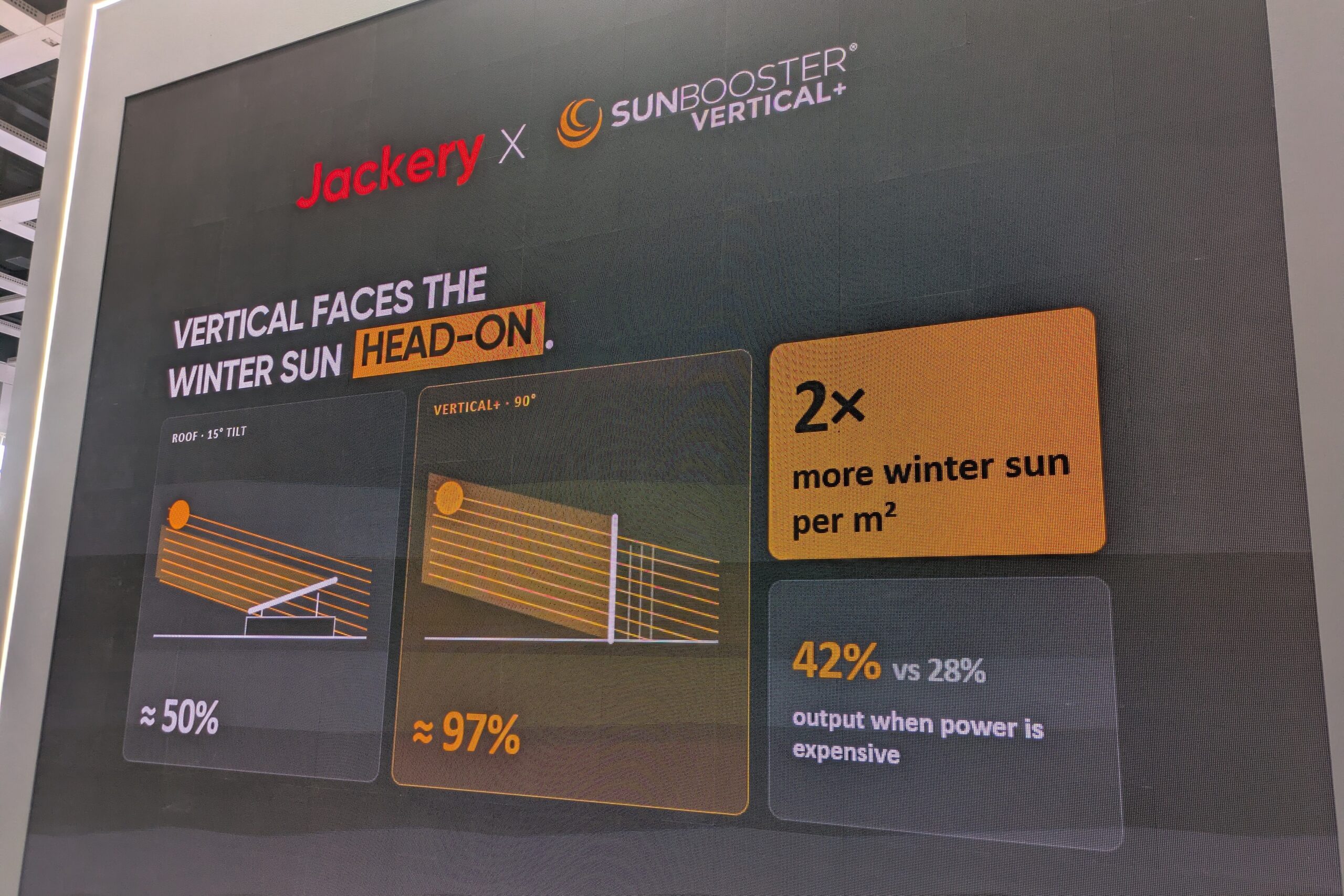
A notable highlight of the SolarVault 3 display was the integration of vertical solar technology. Recognizing that many European urban environments lack expansive, south-facing rooftops, Jackery has optimized its hardware for vertical mounting. The inclusion of 245W lightweight, flexible, and rugged solar panels allows users to utilize balcony railings as energy-generating assets.
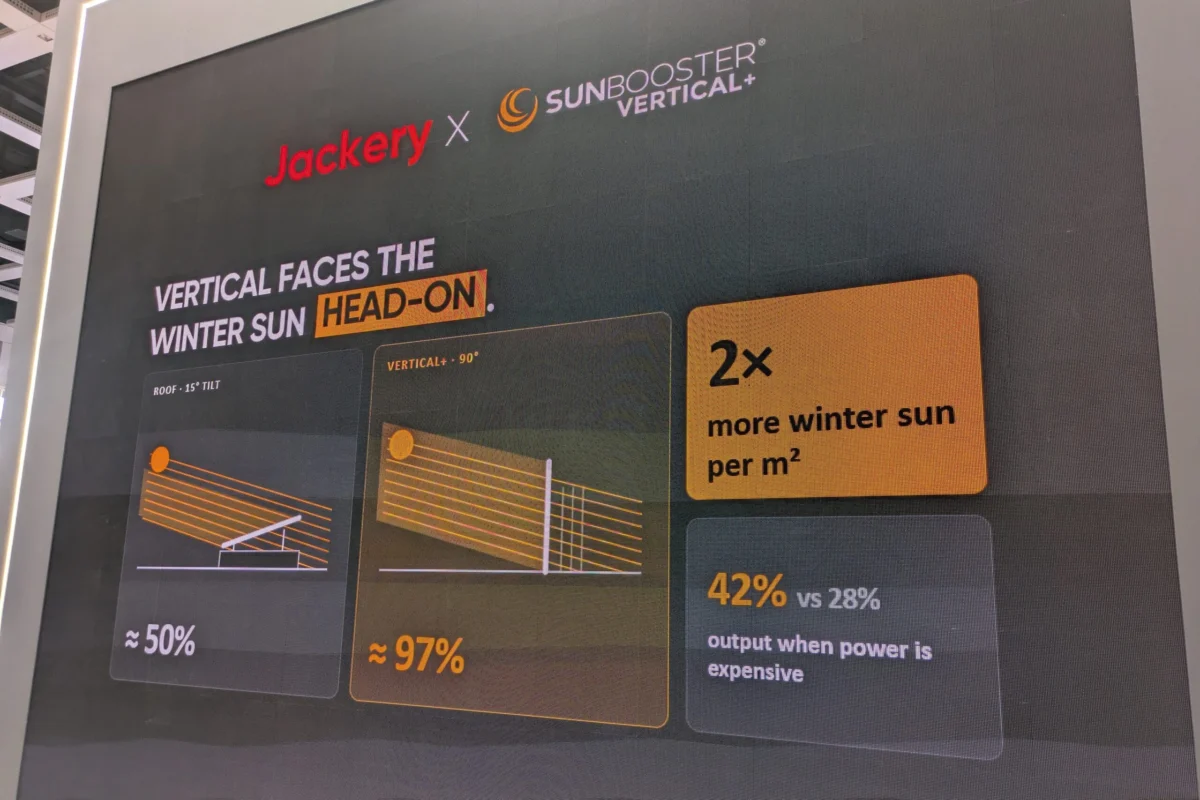
To further this goal, Jackery has entered a strategic partnership with Sunbooster. The collaboration introduces bifacial panel strips that can be woven directly into standard wire fencing. This is particularly relevant for northern latitudes where the sun’s angle is often low; vertical, bifacial panels effectively capture reflected light from the ground and surrounding surfaces, maintaining high efficiency throughout winter months and overcast days when traditional roof-mounted panels might underperform.
Scaling Up: The Multisystem Architecture
For users requiring more than a basic balcony setup, Jackery demonstrated the SolarVault Multisystem. By combining three individual balcony systems through a centralized Power Hub, the capability of the installation increases exponentially.
This configuration supports up to 12 kW of solar input and 7.5 kW of on-grid power delivery. In a standalone, off-grid scenario, the combined output climbs to 11 kW, with total storage capacity reaching 45.36 kWh. This modularity is governed by an AI-powered Energy Management System (EMS), which automates the balance between storage, consumption, and grid-feeding. This level of sophistication positions the Multisystem as a viable alternative for detached homes that want the benefits of a large-scale system without the permanence of a fixed, non-expandable installation.

EnergyGuard Max: The 100 kWh Industrial-Grade Alternative
While the SolarVault 3 targets the entry-level and modular markets, the EnergyGuard Max 100 kWh battery occupies the premium tier of residential energy. Unlike the DIY-oriented SolarVault, the EnergyGuard Max is designed for professional installation, serving homes with comprehensive electrification—including multiple EVs and advanced heat pump systems.
The implications of a 100 kWh system are substantial. Beyond basic self-consumption, such capacity allows homeowners to participate in Virtual Power Plants (VPPs). In regions with high price volatility, the system can autonomously charge when spot electricity prices are low and discharge or sell back to the grid during peak demand. This capability effectively transforms the home battery from a cost-saving device into a revenue-generating asset, potentially shortening the return on investment (ROI) significantly compared to smaller systems.

Safety and Regulatory Frameworks
Both the SolarVault 3 and the EnergyGuard Max incorporate Jackery’s "FortiShield" safety framework. This 7-layer security protocol addresses the growing concern regarding lithium-ion battery safety in residential settings. By utilizing advanced thermal management and cell-level monitoring, these systems meet stringent safety standards, which is a prerequisite for widespread adoption in densely populated urban housing.
Comparative Analysis: Choosing a Path Forward
The choice between a modular, scalable system and a high-capacity, permanent installation depends on the user’s specific housing situation and long-term energy strategy.

- The Modular Path (SolarVault 3): Ideal for renters, apartment dwellers, or households with limited initial capital. The ability to move the system when changing residences offers a level of portability that traditional home batteries lack. The 10-year warranty and 15-year service life indicate a focus on durability, likely fostering a robust secondary market for used modules as users upgrade their capacity.
- The High-Capacity Path (EnergyGuard Max): Suited for homeowners with dedicated space, stable long-term housing, and high electricity demand. While the barrier to entry is higher—requiring professional installation and a larger upfront investment—the price per kWh is theoretically lower due to scale. Furthermore, the capacity to operate fully off-grid or participate in VPP markets provides a level of energy sovereignty that smaller systems cannot match.
Market Implications
The energy storage sector is currently navigating a period of rapid consolidation. As inflation and supply chain fluctuations persist, manufacturers are moving toward standardized, modular architectures to manage costs. Jackery’s dual approach at IFA Berlin signals a transition in the industry: energy storage is no longer just a luxury for the wealthy or a niche product for off-grid enthusiasts.
Instead, it is becoming a modular utility. By offering a "starter kit" approach alongside an enterprise-level, 100 kWh solution, Jackery is attempting to capture every segment of the residential market. The long-term success of this strategy will depend on the continued integration of AI-driven software, which will ultimately dictate how effectively these batteries can communicate with the grid and optimize household energy efficiency.

As energy prices in Europe remain high and the transition to renewable energy sources continues to accelerate, the flexibility offered by modular systems like the SolarVault 3, combined with the sheer power of the EnergyGuard Max, provides a comprehensive toolkit for the modern consumer. Whether one chooses to start with a small, fence-mounted solar strip or a basement-filling 100 kWh battery, the goal remains the same: reclaiming control over energy production and consumption in an increasingly electrified world.










Leave a Reply