
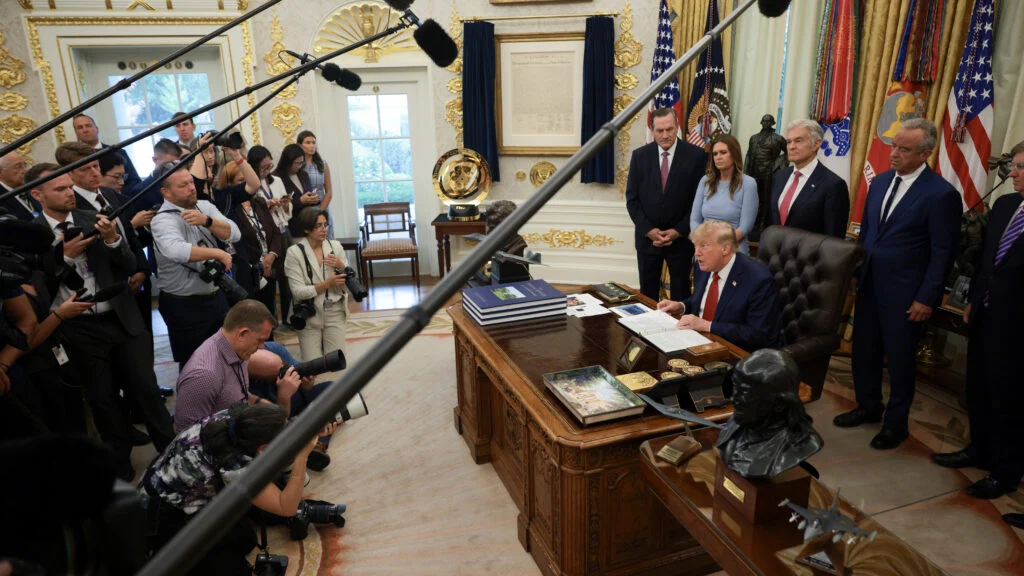
President Trump announced a significant new initiative on Friday intended to reduce prescription drug costs within state Medicaid programs, a move framed by the White House as a critical component of its broader healthcare pricing agenda. The initiative, officially designated as the GENEROUS model, aims to streamline procurement and leverage collective bargaining power to lower the financial burden of pharmaceuticals on state budgets. However, the rollout has been met with immediate questions regarding the specifics of its implementation, the actual scope of participation, and the potential impact on patient access to specialized medications.
The Scope of the GENEROUS Initiative
The GENEROUS model—a acronym-heavy designation for a federal-state partnership—seeks to fundamentally alter how Medicaid programs across the country negotiate and purchase pharmaceutical products. By centralizing certain aspects of drug payment and incentivizing states to align their purchasing strategies, the administration argues that it can curb the rising costs of specialty drugs that have increasingly strained state budgets.
According to the administration’s initial announcement, all 50 states, the District of Columbia, and Puerto Rico were slated to participate. Yet, the narrative provided by the White House on Friday morning contrasted slightly with later clarifications issued by the Centers for Medicare and Medicaid Services (CMS). CMS confirmed that while the program is intended for nationwide adoption, the current reality involves a tiered status of participation. Specifically, 40 states and Puerto Rico have formally signed agreements to participate, while the remaining jurisdictions have submitted applications. The administration has set a deadline for the end of the month for all remaining states to finalize their agreements, creating a narrow window for administrative compliance.
Background and Chronology of Federal Drug Pricing Efforts
The GENEROUS model is the latest in a series of administrative actions spanning several years aimed at addressing the affordability of prescription drugs. The chronology of these efforts reflects a consistent priority for the administration, though the efficacy of these measures remains a subject of intense debate among economists and public health policy experts.
In 2018, the administration released its "American Patients First" blueprint, which laid the groundwork for several regulatory changes, including mandates for pharmaceutical companies to include pricing information in television advertisements and attempts to allow Medicare to negotiate drug prices more aggressively. The GENEROUS model serves as an extension of this philosophy into the Medicaid space.
Historically, Medicaid programs have benefited from the "Best Price" rule, which requires drug manufacturers to offer Medicaid programs the lowest price they provide to other purchasers. However, as the complexity of drug pricing—including rebates, discounts, and pharmacy benefit manager (PBM) structures—has grown, states have struggled to navigate the system effectively. The GENEROUS model intends to offer a standardized framework to bypass some of these complexities, though critics argue it may inadvertently limit the ability of states to tailor their formularies to the specific needs of their unique patient populations.
Data Trends in Medicaid Pharmaceutical Expenditures
To understand the stakes of the GENEROUS model, one must examine the broader trends in Medicaid spending. According to data from the Kaiser Family Foundation and the Medicaid and CHIP Payment and Access Commission (MACPAC), pharmaceutical spending accounts for a significant portion of the total Medicaid budget. While federal matching funds cover a large percentage of these costs, state taxpayers remain responsible for a substantial share.
Between 2010 and 2020, Medicaid spending on outpatient prescription drugs grew by an average of nearly 7% annually. This growth is largely attributed to the introduction of high-cost specialty medications, including curative treatments for Hepatitis C and advanced gene therapies for rare diseases. These drugs, while medically transformative, often carry price tags reaching hundreds of thousands of dollars per treatment course.

The GENEROUS model aims to address this by potentially creating a national or regional purchasing pool. By aggregating the patient base across states, the federal government hopes to increase the leverage that states have when negotiating rebates with pharmaceutical manufacturers. Proponents suggest that this could result in significant savings, but independent policy analysts point out that if the model leads to the exclusion of certain drugs from state formularies, the long-term impact on patient outcomes could be negative, potentially leading to higher costs in other areas of the healthcare system, such as hospitalizations and emergency room visits.
Official Responses and Industry Reactions
The reception of the GENEROUS model has been cautious. Industry groups, including representatives from the pharmaceutical sector, have expressed concern that aggressive cost-containment measures could stifle innovation. In a statement released shortly after the announcement, trade associations suggested that the focus on price caps and centralized purchasing could deter investment in research and development for rare diseases, where the market is already niche and the risks are high.
State officials, meanwhile, have offered a mixed response. Those who have already signed agreements suggest that any relief from the crushing pressure of drug costs is a welcome development. However, administrators in states that have yet to sign on have raised questions about the administrative burden of transitioning to a new federal model. There is also a concern regarding "cost shifting," where manufacturers might raise prices in the private insurance market to compensate for the deeper discounts mandated in the Medicaid program.
Healthcare advocacy groups have focused their commentary on the potential impact on patient access. While they generally support the goal of lowering drug prices, they have cautioned the administration to ensure that the GENEROUS model does not become a vehicle for restricting access to necessary medications. "Lowering the price of a drug is meaningless if the patient cannot actually obtain it," one advocate noted. "The administration must ensure that clinical necessity remains the primary driver of formulary decisions, not just budgetary considerations."
Analysis: Implications for the Future of Medicaid
The implementation of the GENEROUS model represents a significant shift in the federal-state relationship regarding healthcare procurement. If successful, it could provide a template for future federal interventions in healthcare markets. However, the path forward is fraught with potential pitfalls.
One primary implication is the potential for legal challenges. Pharmaceutical companies have historically challenged state-level efforts to control drug prices, citing federal preemption and contractual rights. A nationwide model managed by CMS could face similar litigation, particularly if it is perceived as an overreach of federal authority into areas traditionally reserved for state management.
Furthermore, the impact of the GENEROUS model on the pharmacy benefit manager (PBM) industry cannot be ignored. PBMs currently play a central role in managing drug benefits for many states. A shift toward a centralized model might threaten the business models of these intermediaries, potentially leading to political lobbying efforts that could complicate the rollout.
Finally, the success of the model will likely be measured by the transparency of its data. As the program progresses, it will be essential for the administration to provide clear, audited reports on the actual savings realized by states. Without such transparency, the GENEROUS model risks being viewed as a political exercise rather than a substantive policy reform.
As the end-of-month deadline approaches for the remaining states to sign their agreements, the healthcare industry will be watching closely. Whether the GENEROUS model will deliver on its promise of lower costs while maintaining high-quality patient care remains to be seen. The coming months will likely be characterized by administrative negotiations, potential legal maneuvering, and a close examination of how the model interacts with the existing, complex web of pharmaceutical regulations. The administration’s ability to navigate these challenges will determine the long-term viability of this initiative and its place in the history of U.S. healthcare policy.










Leave a Reply