
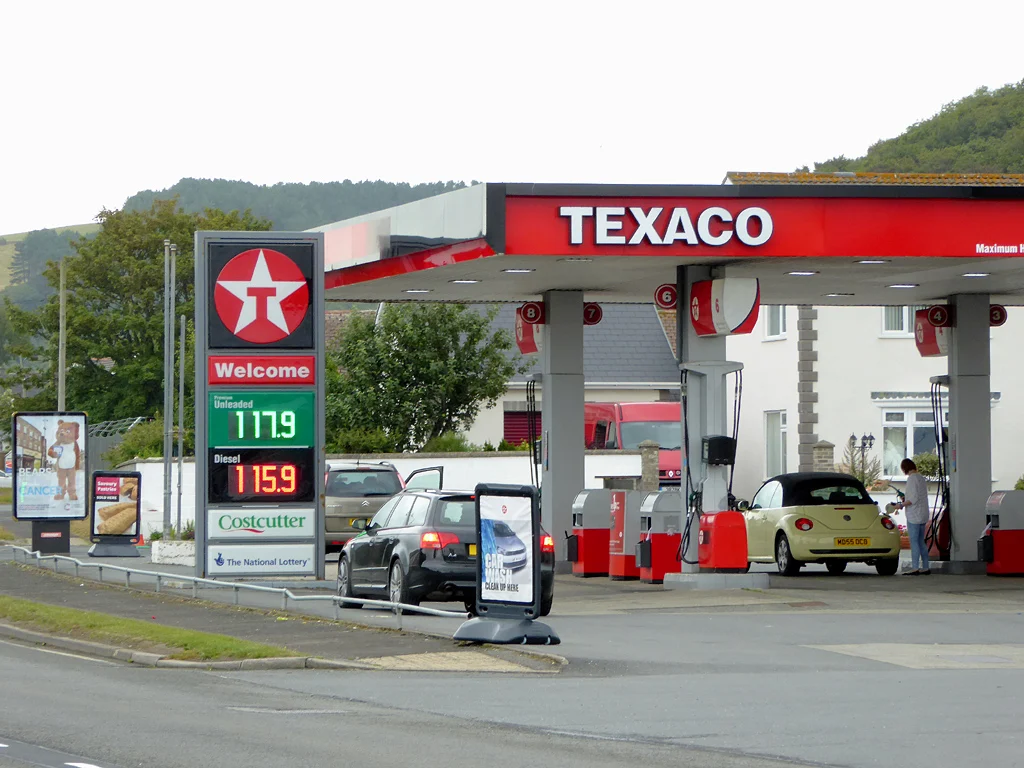
The global transition toward sustainable energy continues to face formidable hurdles, chief among them the widespread government practice of artificially depressing consumer fossil fuel prices during periods of geopolitical and economic volatility. In a compelling and sharply critical editorial published in the journal Science, prominent U.S.-based energy policy scholars Paasha Mahdavi and Michael Ross have sounded a fresh alarm, labeling consumer fossil fuel subsidies "the worst energy policy in the world."
As nations grapple with ongoing market fluctuations—exacerbated significantly by regional conflicts such as the U.S.-Israeli war on Iran—governments frequently resort to emergency market interventions. These interventions typically involve shielding everyday consumers from skyrocketing fuel costs by capping prices, cutting fuel taxes, or fixing pump rates. However, according to Mahdavi, an associate professor at the University of California, Santa Barbara, and Ross, a professor at the University of California, Los Angeles, these well-intentioned financial cushions create a devastating cascade of long-term economic, environmental, and geopolitical consequences.
The Anatomy of a Policy Trap
When international crude oil and natural gas prices surge, citizens immediately feel the pinch at the gasoline pump and home heating units. Driven by domestic political survival and the fear of social unrest, governments often step in to absorb the shock. To finance the growing gap between market realities and consumer prices, public authorities frequently rely on aggressive borrowing, increased taxation, or the redirection of funds away from critical public sectors like education, healthcare, and infrastructure.
Mahdavi and Ross argue that blanket fuel subsidies are fundamentally counterproductive. They systematically drain state treasuries, exacerbate dangerous air pollution by keeping internal combustion engines on the road, and severely undermine long-term financial incentives for businesses and individuals to invest in renewable energy technologies.
Furthermore, once implemented, these subsidies display an extraordinary degree of institutional stickiness. They are notoriously difficult to dismantle because consumer backlash is swift and politically perilous. Gasoline prices, in particular, occupy a uniquely sensitive psychological space for voters.
"Unlike an electric bill or the price of bread, gas prices confront drivers every day of the week, typically posted in public locations," the authors write, explaining why political leaders hesitate to touch them once established.
A History of Failed Reforms
The sheer resilience of fossil fuel subsidies is heavily documented by empirical data compiled by energy economists and political scientists. According to the Science editorial, out of roughly 130 attempted subsidy reforms across the 21 largest subsidizing nations between 2016 and 2023, a staggering 70% collapsed within a single year. Even more telling, more than 90% of these attempted reforms were completely reversed within three years.
In an interview with environmental news outlet Mongabay, co-author Michael Ross noted the extreme rarity of successful, enduring reform models. "They’re few and far between," Ross remarked via email. "Mexico got rid of its subsidies around 2017 after a long and convoluted process, but it ultimately worked."
The Mexican experience stands as a rare exception to a global rule characterized by policy U-turns. In the mid-2010s, Mexico initiated the megalanolin reforms, gradually liberalizing fuel prices despite fierce public protests, highway blockades, and intense political friction. While the transition caused short-term inflationary pain, it eventually freed billions of pesos for public spending and sent clear market signals for energy conservation. Most other countries, however, retreat at the first sign of public dissent, reinstating price caps and locking themselves deeper into fiscal vulnerability.

Disproportionate Benefits and Perverse Incentives
Echoing the concerns raised in the Science editorial, other energy researchers point out that blanket subsidies fail to achieve their stated goal of protecting the vulnerable. Jonas Kuehl, an energy researcher at the International Institute for Sustainable Development (IISD) who was not involved in the editorial, emphasized that open-ended price interventions are fundamentally flawed instruments of public spending.
"Blanket fuel subsidies — such as price caps, fuel tax cuts, and fixed pump prices — are among the least effective ways for governments to spend public money," Kuehl stated in an interview. He noted that these measures disproportionately benefit commercial enterprises, wealthy corporations, and affluent citizens who consume the highest volumes of fuel, while offering minimal relief to impoverished households who may not even own personal vehicles. Furthermore, such policies actively weaken any motivation to conserve energy or pivot toward cleaner alternatives like electric mobility.
While Kuehl acknowledges that protecting vulnerable populations from sudden, destabilizing price shocks is an essential duty of governance, he argues that subsidies must be tightly targeted and strictly time-limited. Open-ended support mechanisms, he warns, simply bleed public budgets dry while delaying the inevitable green transition.
Emerging Alternatives to Fossil Fuel Subsidies
As the global community faces mounting pressure to meet ambitious climate targets under the Paris Agreement, progressive policymakers are beginning to explore innovative alternatives to direct fossil fuel price supports. Rather than subsidizing the consumption of oil and gas, forward-thinking administrations are focusing on structural demand-reduction strategies.
Michael Ross pointed to nations like Ethiopia, Norway, and Uruguay as exemplary models of aggressive, proactive decarbonization. Norway, for instance, has achieved remarkable market penetration for electric vehicles (EVs) through strategic tax incentives, robust charging infrastructure development, and heavy taxation of fossil-fueled automobiles, successfully decoupling mobility from petroleum consumption.
Meanwhile, other governments are experimenting with behavioral and logistical policy shifts. Kuehl highlighted innovative initiatives currently being tested globally:
- Indonesia: In an effort to curb urban traffic congestion and reduce fuel consumption, civil servants in certain jurisdictions have been granted work-from-home Fridays, directly lowering commuter reliance on gasoline.
- The Netherlands: Public transit authorities have introduced discounted monthly off-peak rail passes, encouraging citizens to shift away from private car usage in favor of electrified public mass transit systems.
These demand-side interventions offer a blueprint for policymakers seeking to alleviate cost-of-living pressures without locking their economies into high-carbon pathways. By incentivizing behavioral changes, expanding public transit accessibility, and accelerating the deployment of wind, solar, and battery storage technologies, governments can protect citizens from market shocks without propping up the dying fossil fuel industry.
The Broader Economic and Geopolitical Implications
The debate over consumer fossil fuel subsidies arrives at a critical juncture for international energy markets. Persistent geopolitical tensions in the Middle East and Eastern Europe have demonstrated the profound fragility of global supply chains. When shocks occur, the knee-jerk political reaction to subsidize consumption only serves to insulate domestic markets from global realities, encouraging wasteful consumption patterns precisely when conservation is most urgently required.
Financially, maintaining these subsidies diverts desperately needed capital away from the green transition. The International Monetary Fund (IMF) has repeatedly estimated global fossil fuel subsidies—encompassing both explicit price supports and implicit costs like unpriced air pollution and climate damage—in the trillions of dollars. Diverting even a fraction of these funds toward grid modernization, renewable energy subsidies, and direct cash transfers to low-income families could revolutionize the global energy landscape.
As Mahdavi and Ross compellingly argue in their editorial, the persistence of consumer fuel subsidies represents a profound failure of public policy imagination. Until political leaders find the courage to withstand short-term electoral pressure and dismantle these fiscal traps, the global community will remain tethered to an unsustainable energy paradigm, paying an exorbitant price in public health, fiscal stability, and climate security.










Leave a Reply