
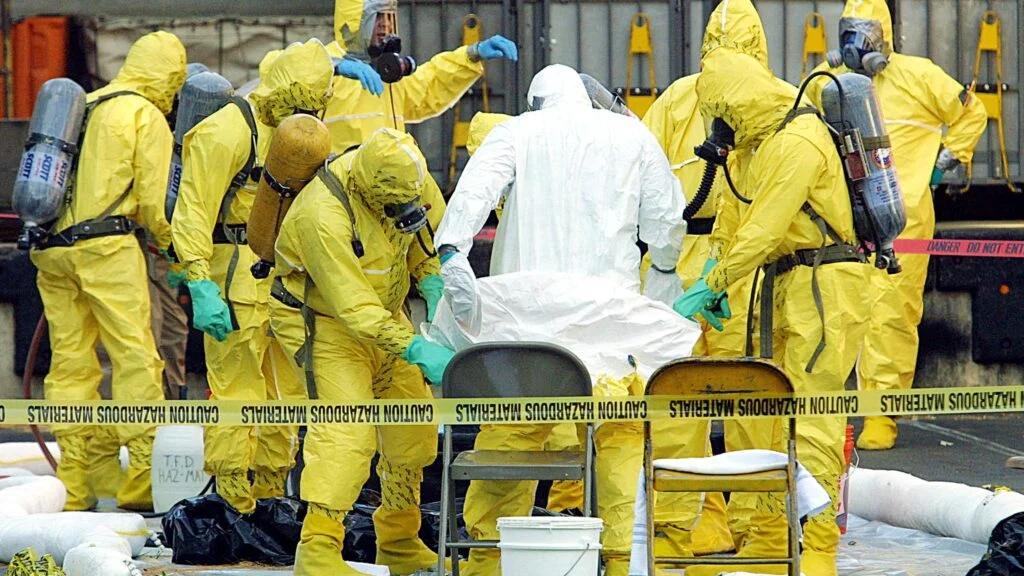
It has been a quarter-century since the United States faced a domestic biological crisis that fundamentally altered the nation’s perception of security and public health. In the weeks following the September 11, 2001, terrorist attacks, the American public was gripped by a second, silent wave of terror: the arrival of anthrax-laden envelopes delivered through the United States Postal Service. The subsequent investigation, which spanned several months and involved federal, state, and local agencies, revealed deep systemic vulnerabilities in how the country detects and responds to intentional biological threats. As the nation reflects on this anniversary, the lessons learned from the 2001 event remain critical, particularly as modern technological advancements, such as artificial intelligence, threaten to reshape the landscape of biosecurity.
A Chronology of the 2001 Attacks
The events began to unfold in September 2001, at a time when the nation was already reeling from the collapse of the Twin Towers. On September 18, the first wave of letters—containing a coarse, "crunchy" formulation of Bacillus anthracis—was mailed. These letters targeted major media outlets, including American Media Incorporated (AMI) in Florida and news organizations in New York City. The clinical impact was immediate but initially misidentified; it was only through the astute observation of a clinician who analyzed a spinal tap specimen that the diagnosis of inhalation anthrax was confirmed.
A second, more sophisticated wave of letters followed on October 9. These envelopes contained a refined, "fine" powder that was far more easily aerosolized. The consequences were devastating: the mailing route extended to congressional offices in Washington, D.C., and impacted postal workers along the distribution chain. By the conclusion of the crisis, 22 confirmed cases of anthrax disease had been recorded, resulting in five deaths. The economic toll was immense, involving billions of dollars in decontamination efforts, including the total closure and remediation of several major mail-processing facilities, most notably the Brentwood facility in D.C.
The Epidemiological Investigation
The response, led by the Centers for Disease Control and Prevention (CDC), necessitated the rapid establishment of an Emergency Operations Center (EOC). At the time, the agency lacked the specialized infrastructure for a prolonged bioterrorism response, forcing teams to operate out of auditoriums and makeshift command centers. The investigation was a masterclass in "shoe-leather epidemiology," as scientists worked to distinguish between the two mailings.
Molecular testing—a frontier technology at the time—was instrumental in proving that the samples recovered from the victims and the envelopes were indistinguishable, pointing to a common origin. The investigation revealed a chilling reality: the variations in the anthrax formulations suggested a deliberate attempt to test different dispersal methods. While this led to fears of a larger, coordinated attack, no further intentional releases were reported. However, the event left an indelible mark on the public health community, proving that the postal system, a pillar of American infrastructure, could be weaponized as a dissemination machine.
Shifting Paradigms of Exposure
Perhaps the most significant failure identified in the post-mortem of the 2001 crisis was the reliance on outdated scientific literature. Prior to the attacks, the prevailing consensus held that the risk of resuspension or re-aerosolization of anthrax spores was negligible. Consequently, initial guidance focused narrowly on individuals who opened the envelopes directly.
The tragic infection and death of postal workers—individuals who had not opened the letters but were exposed to the aerosolized particles during the sorting process—forced a radical re-evaluation of public health protocols. This realization triggered an unprecedented public health intervention: an estimated 32,000 individuals were placed on antimicrobial prophylaxis. Through rigorous monitoring and aggressive treatment, no further cases were identified among those who participated in the prophylaxis program. This underscored a vital lesson: in a biological event, the "intended" target is rarely the only population at risk. Investigators must look broadly at the entire chain of transmission.
The Modern Biothreat Landscape
Twenty-five years later, the tools available for detection are vastly improved. The mail system has been re-engineered with advanced screening technologies, and the implementation of strict "select-agent" regulations has curtailed unauthorized access to high-consequence pathogens. Yet, experts argue that the nation’s overall readiness is currently at a critical juncture.
The Center for Strategic and International Studies (CSIS) has warned that Americans face greater risks from biological threats today than at any point in the 21st century. This risk is compounded by the rapid development of artificial intelligence, which lowers the barrier to entry for the design and synthesis of dangerous pathogens. The Bipartisan Commission on Biodefense has noted that AI effectively transforms the biological threat landscape, enabling bad actors to bypass traditional hurdles in laboratory research.
Institutional Vulnerabilities and Human Capital
While technology has advanced, the human and institutional infrastructure required to respond to these threats has faced significant degradation. Current data indicates that the CDC’s workforce capacity has declined by approximately 28% since 2024. The loss of subject matter experts and seasoned scientific leadership represents a tangible risk to national security.
Furthermore, the integration of science into policy-making has become increasingly strained. Dr. Daniel B. Jernigan, who served as the lead for the Epidemiology and Surveillance Team during the 2001 response, emphasizes three pillars of preparedness that are currently under pressure:
- Detection to Action: The translation of a biological signal into rapid, evidence-based policy is essential. There is growing concern that independent, science-driven decision-making is being sidelined, potentially leading to delays in coordination between federal agencies and state or local responders.
- Managing Uncertainty: Preparedness requires a culture that welcomes dissenting dialogue and internal evaluation. If leadership demonstrates an intolerance for scientific debate, the ability to course-correct in the face of an evolving, unknown threat is severely compromised.
- Institutional Continuity: Preparedness is not a static state; it is a capability that must be maintained through practiced relationships and institutional memory. The slow pace of hiring and the erosion of budgetary support for high-consequence pathogen programs create widening gaps in public health readiness.
Implications for the Future
The recent outbreaks of diseases such as hantavirus, Ebola, and localized clusters of vaccine-preventable illnesses serve as reminders that the nation remains vulnerable to infectious threats, both natural and intentional. The 2001 anthrax attacks were a wake-up call that fundamentally reshaped the U.S. approach to biodefense. Today, that call is arguably more urgent than ever.
The strength of a national response does not rest solely on the sophistication of sensors or the speed of diagnostic machines; it rests on the people, the functioning networks, and the institutions capable of making defensible decisions under extreme uncertainty. As the nation observes the anniversary of the 2001 attacks, the focus must shift back to the fundamentals: cross-sector coordination, the protection of scientific integrity, and the continued investment in the human capital necessary to defend against the next, perhaps more complex, biological challenge. Without a commitment to these core principles, the vulnerabilities of the past remain the threats of the future.









Leave a Reply