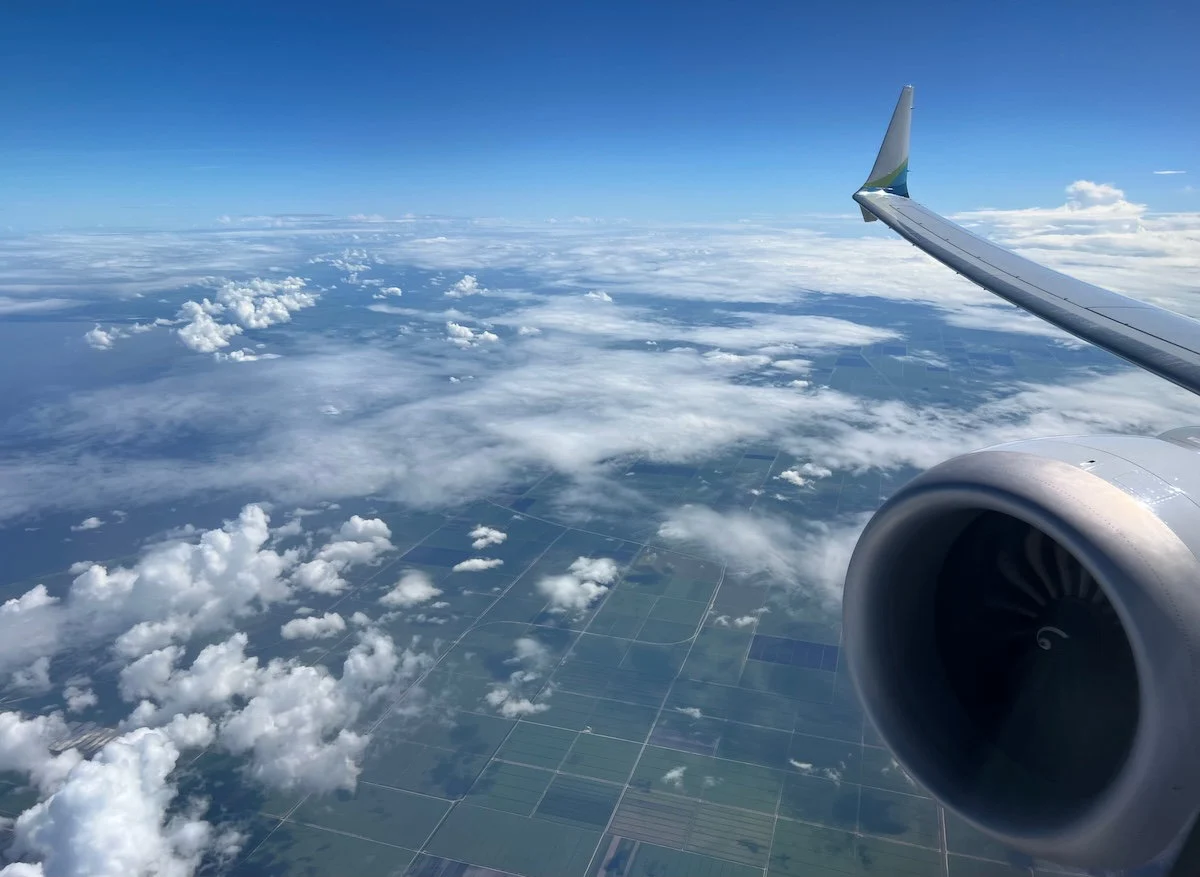
Alaska Airlines has announced a groundbreaking international expansion, confirming plans to introduce daily nonstop flights connecting Anchorage, Alaska (ANC) to Tokyo Narita International Airport (NRT). Scheduled to operate seasonally between May 13 and September 7, 2027, the route marks a historic milestone for the carrier as it bridges the United States Last Frontier directly with Japan utilizing narrow-body aircraft.
While the use of a Boeing 737 MAX 8 for a transpacific journey is unconventional, the route represents a significant logistical achievement and a major convenience upgrade for passengers traveling between North America and Asia. The announcement positions Alaska Airlines to capture growing seasonal leisure and VFR (Visiting Friends and Relatives) traffic while utilizing the advanced range and fuel efficiency of modern single-aisle fleets.
Flight Schedule and Aircraft Specifications

The seasonal service will operate daily in both directions. Flight AS21 is scheduled to depart Anchorage at 2:10 PM local time, arriving at Tokyo Narita at 3:25 PM the following day. The return leg, Flight AS22, is slated to depart Tokyo Narita at 9:45 PM, touching down in Anchorage at 12:00 PM on the same day.
The distance between Anchorage and Tokyo Narita spans approximately 3,434 miles. Westbound flights are blocked at eight hours and 15 minutes, while eastbound journeys are scheduled at seven hours and 15 minutes due to prevailing jet stream winds.
To operate this transpacific sector, Alaska Airlines will deploy its Boeing 737 MAX 8 aircraft. The cabin configuration accommodates 161 passengers, divided into 16 first-class seats and 145 economy seats. This deployment is part of a broader industry trend toward long-range narrow-body operations. It closely follows Alaska Airlines’ deployment of the Boeing 737 MAX on transatlantic routes, notably its previous seasonal service between Seattle (SEA) and Keflavik, Iceland (KEF), which covers a slightly longer distance of 3,622 miles.
Historical Context of Anchorage as a Transpacific Gateway
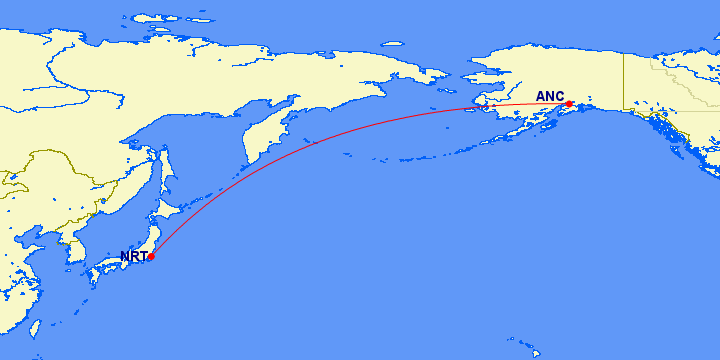
Anchorage’s Ted Stevens Anchorage International Airport has long served as a massive global hub for transpacific cargo operations, acting as a critical refueling and logistical stopover for freight carriers moving goods between Asia and North America. However, scheduled commercial passenger service connecting Anchorage directly to Asia has remained largely dormant for over a decade.
Historically, the airport saw regular passenger connectivity to Eastern Russia during the 1990s, operated by Alaska Airlines between 1991 and 1998. Subsequent passenger ventures proved intermittent. China Airlines maintained scheduled flights between Anchorage and Taipei (TPE) until the route was terminated in 2011. More recently, niche regional carriers like Russia’s Yakutia Airlines operated seasonal, once-weekly services between Petropavlovsk-Kamchatsky and Anchorage until 2019, utilizing specialized regional configurations.
Attempted revivals of Anchorage as a transpacific hub have faced severe financial hurdles. Most notably, New Pacific Airlines—initially launched as Northern Pacific Airways—was founded with the explicit business model of utilizing Anchorage as a connecting hub for passengers traveling between the United States and Asia using a fleet of Boeing 757 aircraft. However, mounting economic pressures and regulatory challenges ultimately forced the carrier to suspend operations and abandon its network plans.
Alaska Airlines’ new Narita service bypasses the hub-and-spoke complexities that plagued past independent startups. By leveraging its established domestic network in the Pacific Northwest and Alaska, the carrier can funnel regional travelers directly onto the flight without relying on a standalone international hub in Anchorage.

Operational Efficiency and Market Implications
Operating a narrow-body aircraft on an eight-hour international flight requires a careful balance of economics and passenger comfort. Wide-body aircraft have traditionally dominated transpacific routes to offer greater cargo capacity, dual-aisle boarding, and more expansive amenities for long-haul travelers. However, advancements in engine technology and aerodynamic efficiency on aircraft like the Boeing 737 MAX 8 allow airlines to service thinner international markets profitably.
For travelers, the alternative to Alaska’s new nonstop flight involves significant backtracking. Passengers traveling between Alaska and Japan previously had to route through major West Coast connecting hubs such as Seattle-Tacoma International Airport (SEA) or Vancouver International Airport (YVR). Such routings frequently double the total travel distance and significantly extend overall journey times.
The introduction of the ANC-NRT route is expected to stimulate bidirectional tourism. Alaskans gain seamless access to Japan’s cultural centers, while Japanese travelers gain direct entry into Alaska’s outdoor tourism market, which peaks during the summer months when the route is active. Furthermore, Alaska Airlines’ membership in the oneworld alliance and its extensive partnerships with international carriers could facilitate onward connections for passengers arriving in Tokyo.

Industry Analysis and Future Outlook
Airlines globally are increasingly looking at point-to-point narrow-body operations to test secondary international markets that cannot support the higher seat capacity of wide-body jets like the Boeing 777 or Airbus A350. By limiting the operation to the peak summer season—May through September—Alaska Airlines mitigates the risk of low winter demand while capitalizing on peak vacation travel periods.
While the physical comfort of an eight-hour flight aboard a single-aisle Boeing 737 MAX may draw scrutiny from frequent flyers accustomed to wide-body amenities, the unbeatable time savings and direct routing are expected to drive strong demand. Industry analysts view the move as a calculated, low-risk deployment of the airline’s fleet that cements Anchorage’s renewed relevance in international passenger aviation.
As the launch date in May 2027 approaches, aviation observers will monitor booking trends and operational metrics to determine whether narrow-body transpacific routes represent a viable long-term strategy for U.S. carriers seeking to expand their international footprints beyond traditional gateway hubs.