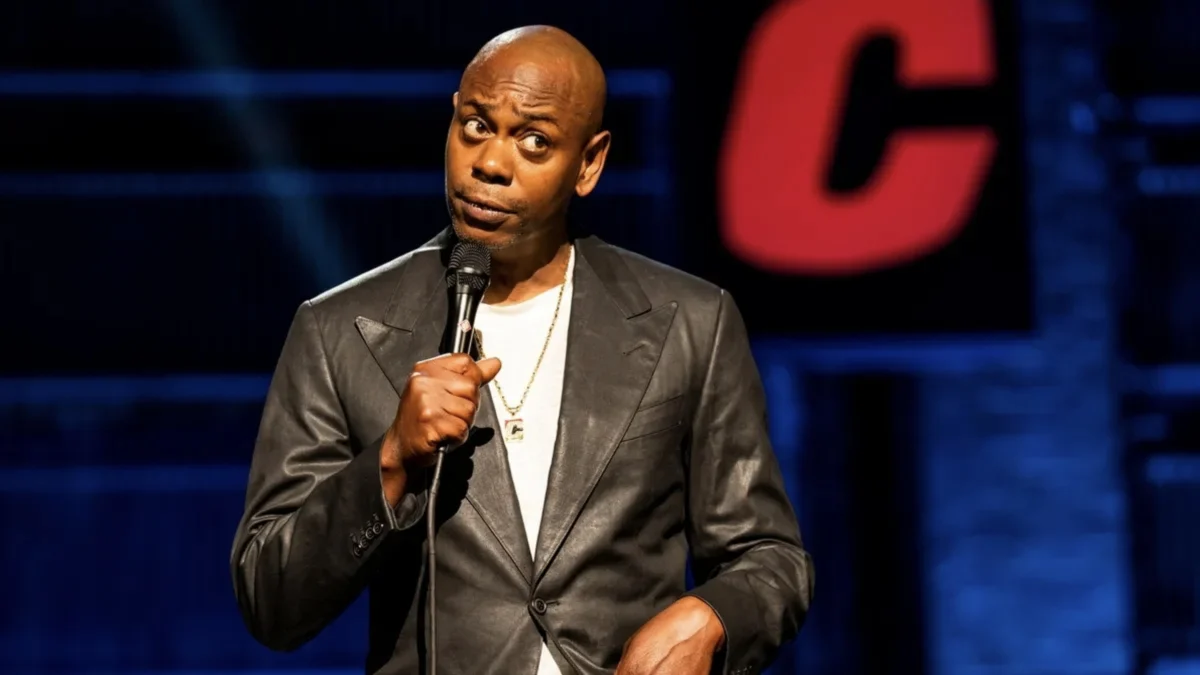
Dave Chappelle has once again ignited a national firestorm following a performance at Madison Square Garden this past weekend, where the veteran comedian reportedly made inflammatory remarks regarding the 2025 assassination of conservative activist Charlie Kirk. The comments, which allegedly surfaced during his set for the New York Comedy Festival, have triggered widespread condemnation, reigniting debates surrounding the boundaries of protected speech, the role of comedians in public discourse, and the volatile nature of political violence in the current American landscape.
The controversy centers on a leaked, low-quality video recording that appears to capture Chappelle addressing a sold-out crowd. In the footage, the comedian is heard stating, "I feel fucked up saying this. It’s scary being a public speaker… Ever since that guy Charlie Kirk got murdered, and I shouldn’t say this publicly, but, I feel better." The clip, which captures a sense of hesitation and sporadic laughter from the audience, concludes with Chappelle adding, "I know I shouldn’t say that. But, it’s just a feeling."
Chronology of the Controversy
The incident follows a period of heightened sensitivity regarding the legacy of Charlie Kirk, who was assassinated in 2025 while speaking at a university event in Utah. Kirk, a prominent figure in conservative media and founder of the organization Turning Point USA, had become a polarizing cultural lightning rod known for his staunch opposition to progressive policies, particularly those concerning transgender rights.
The timeline of the current escalation is as follows:
- 2025: Charlie Kirk is killed in an assassination event in Utah, sparking national debates over political extremism.
- Late 2025: Dave Chappelle releases his Netflix special, The Unstoppable, in which he dedicates a portion of his set to the psychological impact of Kirk’s death on other public speakers, including himself.
- November 2026: During the New York Comedy Festival at Madison Square Garden, Chappelle allegedly makes new, more direct comments regarding his satisfaction with Kirk’s death.
- November 8, 2026: Rob Henderson, a senior fellow at the Manhattan Institute, posts on social media platform X that he was present at the show and heard Chappelle claim, "I’m so happy Charlie Kirk was killed. I can’t help it, it’s involuntary."
- November 8, 2026: Elon Musk publicly rebukes Chappelle, writing, "Shame, shame, shame on Chappelle," marking a notable fracture in the alignment between the tech billionaire and the comedian regarding free speech principles.
The Role of Phone-Free Venues
A notable aspect of this controversy is the medium through which the footage emerged. Chappelle is well-known for enforcing a strictly phone-free policy at his live shows, utilizing Yondr pouches to ensure that audience members cannot record or photograph his sets. This protocol is intended to foster an environment where comedians feel safe to experiment with sensitive or taboo material without the fear of out-of-context clips going viral.
The existence of this video—which appears to be a recording of a screen rather than a direct stage capture—suggests a breach of these security protocols. Critics argue that the leak undermines the sanctity of the comedy club environment, while supporters of the leak maintain that public statements made by high-profile figures in large arenas like Madison Square Garden are matters of public interest that transcend the privacy of the performance space.
Contextualizing the 2025 Netflix Special
To understand the current backlash, one must look back at the material presented in Chappelle’s 2025 special, The Unstoppable. In that performance, Chappelle navigated the complex intersection of his own public controversies and the violent death of a figure like Kirk. At the time, Chappelle admitted to feeling vulnerable, expressing a fear that his own provocative jokes about transgender issues could make him a target for the same type of violence that claimed Kirk’s life.
During that special, Chappelle also pushed back against those who sought to elevate Kirk to the status of a martyr, explicitly rejecting comparisons between Kirk’s assassination and the murder of Dr. Martin Luther King Jr. "That’s a reach," Chappelle stated. "They both got murdered in a terrible fashion. They both got shot in the neck, but that’s about where those similarities ended." He went on to characterize Kirk as an "internet personality by design," arguing that the business model of such figures relies on generating outrage, a premise he suggested was fundamentally incompatible with the civil rights mission of leaders like Dr. King.
Public Reaction and Institutional Implications
The reaction to the Madison Square Garden comments has been swift and stratified. The involvement of Elon Musk represents a significant development in the broader culture war. Musk, who has frequently positioned himself as a "free speech absolutist" and has often defended Chappelle’s right to engage in provocative commentary, took a stance of moral censure this time. By publicly shaming the comedian, Musk has signaled that even within the "free speech" camp, there exists a threshold regarding the celebration of political violence.
Rob Henderson’s documentation of the event has served as the primary catalyst for the backlash. As a respected academic voice, Henderson’s framing of the incident as an "involuntary" expression of joy has been interpreted by many as an admission that the animosity toward Kirk is deep-seated and perhaps widespread among certain sectors of the cultural elite.
Conversely, some defenders of Chappelle argue that comedy is designed to be an outlet for subconscious, often dark, thoughts. They contend that the comedian is acting as a mirror to society, expressing a feeling that many share but few have the courage to articulate. However, this argument is increasingly being challenged by those who believe that normalizing the celebration of a murder—regardless of the victim’s political views—poses a danger to the stability of public discourse.
Analytical Perspective on Political Violence
The controversy highlights a concerning trend in the United States: the dehumanization of political opponents. When a comedian of Chappelle’s stature uses his platform to express satisfaction over the death of a political figure, it arguably contributes to the erosion of democratic norms.
Data from the past decade indicates a steady increase in political polarization, with studies from institutions like the Pew Research Center suggesting that voters are increasingly viewing the opposition not merely as wrong, but as an existential threat. When this sentiment is echoed or amplified by pop-culture icons, it can lower the barrier to radicalization.
The implications for the comedy industry are equally profound. The "Chappelle model"—which relies on intimacy, controversy, and a "no-phones" pact—is being tested. If performers can no longer trust their audiences to respect the privacy of their sets, they may become more cautious, potentially stifling the very transgressive nature that makes comedy a vital form of social commentary. Alternatively, if performers continue to push the boundaries into the territory of celebrating violence, they may face increasing pressure from venue owners, promoters, and corporate partners who are sensitive to the brand risks associated with such rhetoric.
Future Outlook
As of this writing, there has been no official statement from Dave Chappelle’s management team regarding the Madison Square Garden incident. The fallout is expected to continue as more witnesses come forward and as the debate over the clip’s authenticity and the morality of the joke continues to dominate social media discourse.
The incident serves as a stark reminder of the current state of American culture, where the line between satire, tragedy, and political expression is increasingly blurred. Whether this event marks a turning point in how comedians handle political figures or simply serves as another chapter in the ongoing saga of "cancel culture" remains to be seen. What is clear, however, is that the words spoken in the dark of a Madison Square Garden arena now carry the weight of a national conversation that refuses to be ignored.