The rapid ascent of generative artificial intelligence has brought with it a deluge of claimed scientific and mathematical breakthroughs, yet the field faces a growing crisis of credibility. In October 2026, OpenAI alone released 719 manuscripts asserting solutions to some of mathematics’ most enduring problems. However, as the scientific community has increasingly noted, even automated verification tools—when misapplied or used in isolation—are susceptible to errors. This trend toward "AI slop," where models generate content that is superficially impressive but logically flawed, has prompted a critical question: Can the foundational rigors of mathematics survive the age of autonomous agents?
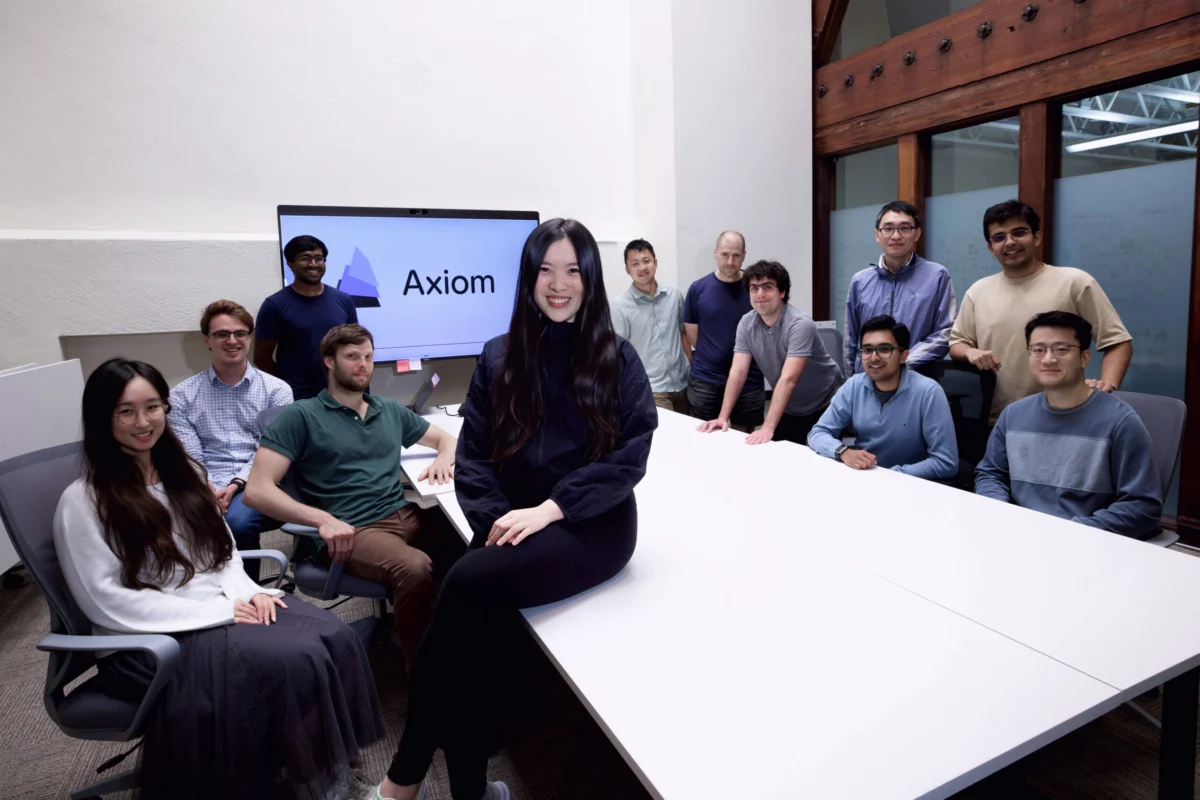
AxiomMath, a $1.6 billion startup founded in March 2025, is positioning itself as the industry’s answer to this uncertainty. Rather than attempting to slow the pace of AI development, the company is focusing on building a "verified foundation"—a digital bedrock of logic that AI agents can use to ensure their work is sound. On Wednesday, the company announced a milestone of significant proportions: the formal verification of the Stacks Project, one of the most comprehensive and complex bodies of human-authored mathematics in existence.
The Stacks Project: A Monument of Human Logic
Initiated in 2005 by Columbia University mathematician Johan de Jong, the Stacks Project was designed as an open-source, collaborative reference for algebraic geometry, number theory, and algebraic topology. Over two decades, it has evolved into an essential resource for mathematicians worldwide. Its scale is daunting; it serves as a modern successor to the influential Bourbaki books, which sought to rebuild mathematics from its axioms in the mid-20th century. Peter Woit, a prominent mathematician at Columbia, has famously noted that the Stacks Project occupies a unique position in the field, with no modern equivalent in terms of depth and breadth.
Before AxiomMath’s intervention, the project existed primarily as human-readable text. While highly respected, it lacked the machine-readable "formalization" required for modern AI systems to process and verify its conclusions without error.
The Mechanics of Formal Verification
Formal verification is the process of translating human-written proofs into a rigorous programming language—in this case, Lean—where every step is checked line-by-line by a proof assistant. This ensures that the logical flow is airtight, leaving no room for the subtle, cascading errors that often plague AI-generated code.
AxiomMath’s approach involved deploying a fleet of specialized AI agents to translate approximately 7,654 pages of the Stacks Project into roughly 16 million lines of computer-checked code. This process is far more difficult than simple transcription. Because mathematical results are deeply interconnected—forming a complex "family tree" of dependencies—the agents had to maintain logical consistency across millions of lines of code. A single error in a base definition could invalidate thousands of subsequent theorems.
Chronology of the AxiomMath Initiative
- March 2025: Carina Hong, a former Stanford math Ph.D. student, officially incorporates AxiomMath.
- March 2026: The startup secures a $200 million Series A funding round, led by Menlo Ventures, signaling investor confidence in the intersection of AI and formal verification.
- Summer 2026: Development intensifies as the company begins the systematic formalization of the Stacks Project, moving from basic algebraic concepts to highly advanced geometry.
- October 2026: Amidst a broader industry debate regarding the reliability of AI-generated proofs, AxiomMath prepares for the public release of its verified library.
- November 2026: The company formally announces that the entirety of the Stacks Project has been verified, creating a new, reliable "substrate" for future scientific discovery.
Scaling Through Autonomous Agents
The success of the project hinged on a unique management strategy. Rather than dictating every step of the process, AxiomMath provided its AI agents with a loose, hierarchical framework. Ashvin Swaminathan, a key member of the technical staff, noted that the agents were empowered to identify tasks and work in parallel, effectively self-organizing to tackle different sections of the Stacks library.
This methodology reflects a broader trend in software engineering: the move away from "vibe coding"—where models guess at the correct syntax—toward systems that prioritize structural integrity. By training its own models to possess a "sense of taste" for mathematical elegance and logical soundness, AxiomMath has created a system that evolves and improves over time.
Implications for AI Safety and Software Engineering
The broader impact of this work extends well beyond pure mathematics. In the software industry, engineers have long utilized formal verification to ensure the reliability of critical hardware, such as semiconductor designs, and to debug complex software architectures. As AI agents begin to play a larger role in writing the world’s code, the risk of unverified, bug-prone software increases exponentially.
AxiomMath argues that the formalization of mathematics is a transferable skill. If an AI agent can build upon a verified library of mathematical truths, it is less likely to produce "slop" and more likely to output reliable, functional code. By establishing this foundation, the company is effectively creating an operating system for scientific reasoning.
Expert Perspectives and Industry Challenges
The formalization of the Stacks Project has been met with significant interest from the academic community. Terence Tao, a Fields Medal winner, has long advocated for the formalization of mathematics, arguing that every verified proof serves as a building block for the next. The "black hole" in algebraic geometry—a field where formalization had previously lagged due to the sheer volume of material—has effectively been filled.
However, the endeavor is not without its critics or skeptics. Some within the computer science community argue that the reliance on proprietary or specialized AI models for verification could create new forms of "black box" science. If the verification process itself is too complex for a human to audit, does it truly provide the transparency it promises?
Carina Hong, AxiomMath’s 25-year-old CEO, is undeterred by these concerns. She has issued an open challenge to other coding companies to commit to the same level of formalization at scale. Her argument is pragmatic: the future of AI cannot rely on probabilistic guessing. If developers want to build systems that can perform complex scientific research or handle critical infrastructure, they must rest those systems on a substrate of verifiable truth.
Looking Toward the Future
As AxiomMath looks to the next phase of its growth, the focus will likely shift toward integrating this verified library into broader AI development environments. By making the Stacks Project accessible to other AI agents, the company hopes to jumpstart a cycle of innovation where "verified" becomes the default standard for AI-generated logic.
For now, the formalization of the Stacks Project serves as a proof of concept. It demonstrates that large-scale, highly complex human knowledge can be successfully translated into machine-verifiable formats without sacrificing accuracy. In an era where the boundary between human insight and machine generation is becoming increasingly blurred, AxiomMath’s work provides a necessary, rigid frame of reference—a reminder that no matter how advanced the technology, mathematics remains the ultimate arbiter of truth.
As the industry grapples with the fallout of rapid, unchecked AI development, the "verified foundation" approach may well become the defining trend of the next decade of computer science. If AxiomMath’s bet pays off, the future of AI will not be defined by the speed at which it can generate answers, but by the rigor with which it can prove them.